A Japanese Expat in Taiwan: the Freedom to Just Be Myself
Source:Shutterstock
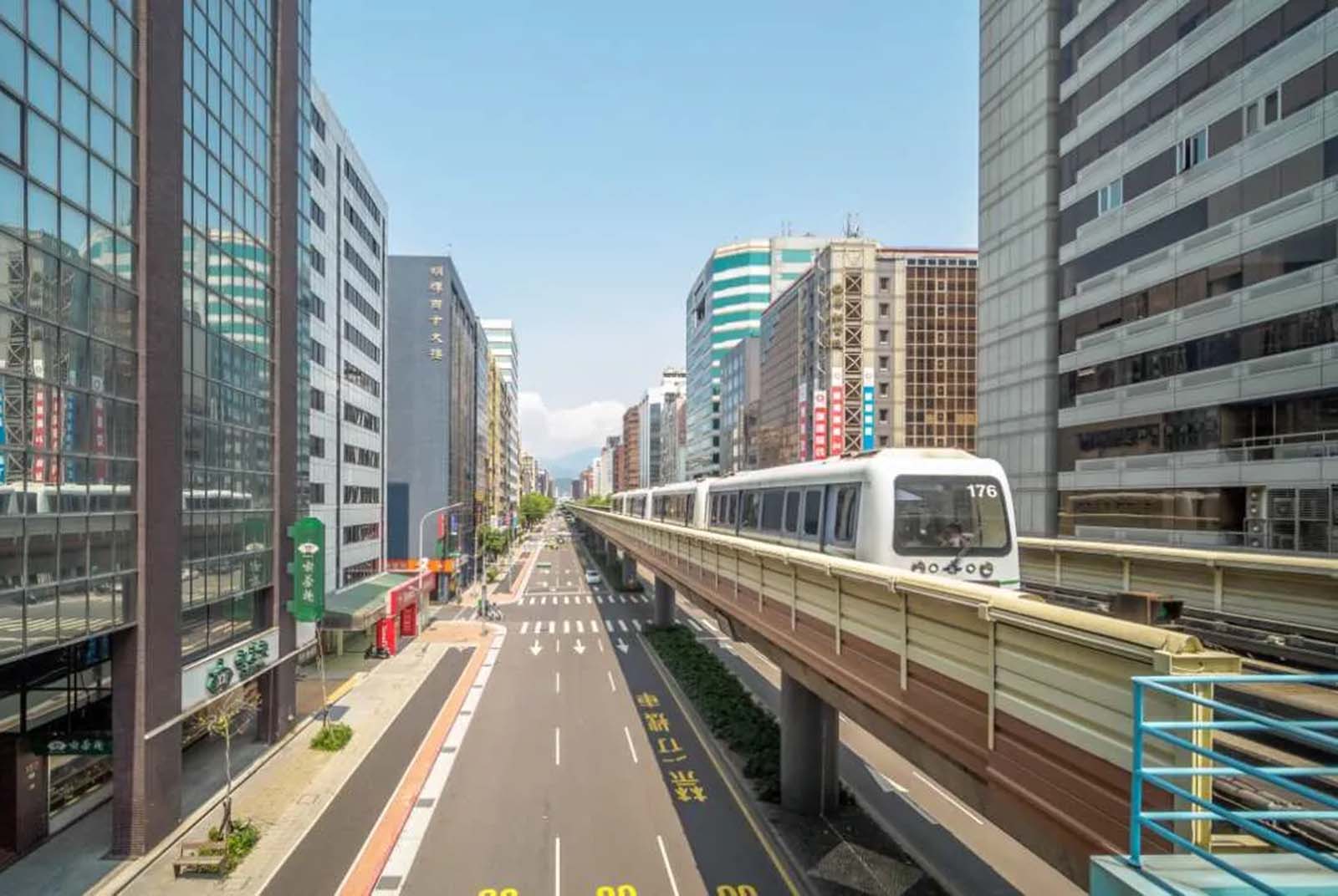
Recognizing the value of multilingualism, Sato Shun came to Taiwan a decade ago — just as the Taiwan-Japan working holiday visa program launched — to study Chinese. Taiwan felt liberating for him: a place where he didn't have to worry about what others thought of him. That feeling proved to be life-changing.
Views
A Japanese Expat in Taiwan: the Freedom to Just Be Myself
By Crossingweb only
As declining birth rates, aging populations, and rapidly shifting labor trends converge, nearly every developed nation is grappling with a talent shortage. Taiwan has topped global rankings as the world's most talent-scarce country more than once. Attracting international talent and building a more globally inclusive workplace has never been more urgent.
The following is a transcript of a 2024 episode of Crossing podcast featuring Leo Shun Sato, a Japanese who studied and worked in Taiwan before launching his own marketing business. He shares the highlights of his decade in Taiwan while offering firsthand observations on the differences between Taiwanese and Japanese workplace culture and daily life.
Q: Why did you choose to come to Taiwan ten years ago?
My main motivation was learning Chinese. But why Chinese? After graduating from university and working for two or three years, I wanted to go back to the United States. I attended middle school and high school in the States, then went to university in Tokyo — and parts of Tokyo life were hard for me to accept.
One memory stands out. Within my first two days in Tokyo, I tried to take the subway during rush hour. It was a nightmare. When the doors opened, people just kept pushing from behind — silently, without a word. In the US, someone would at least say "excuse me." In Tokyo, nothing. Just pushing. I thought: Tokyo people are so cold.
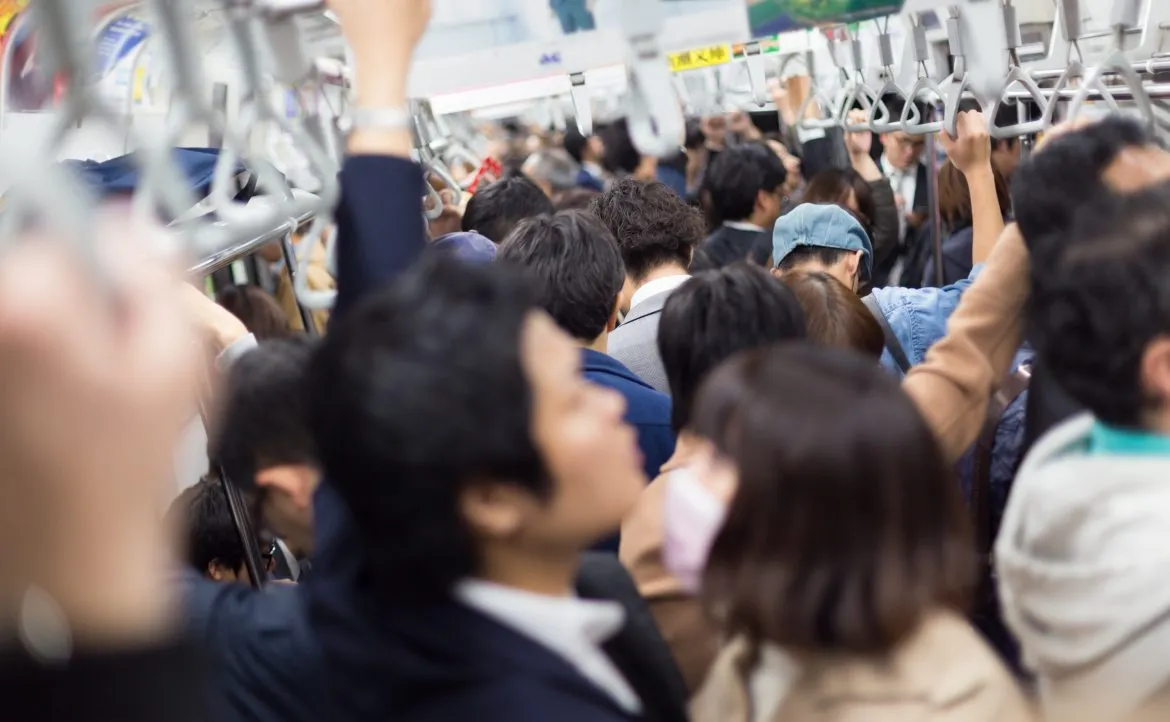 The first two days after arriving in Tokyo coincided with rush hour, and Tokyo after getting off work was a nightmare. (Photo: Matej Kastelic@Shutterstock)
After four years there, I felt the pressure was too much — too impersonal, too exhausting. I wanted to go back to America. But leaving without work experience, I knew I wouldn't be able to find a job. So I thought: why not build up my language skills first? In the US, I'm just another Asian face — people can't tell whether I'm Japanese, Chinese, or Korean. If I could speak Korean, Japanese, and Chinese fluently, I'd be a much stronger job candidate. A Korean friend told me Chinese was harder to learn, so I decided to tackle it first.
I briefly considered going to mainland China to study Chinese, but a long-term stay there requires a visa, and without money to enroll in a school, that wasn't possible. Then, right around that time, Japan and Taiwan launched a bilateral working holiday visa program (Editor's note: the Taiwan-Japan working holiday arrangement was formalized in 2009). That gave me a way in. The program I joined was run by an NPO promoting organic farming — you worked six hours a day at a partner farm, and in exchange the farm covered your accommodation and three meals. I figured it was a great way to save money while learning Chinese on the side.
I stayed in several places — Longtan, Hualien, Taitung, and Yilan. I started out in Fulong, where I spent most of my time studying Chinese rather than doing farm work. Later I moved to a coffee shop job, then eventually made it to Hualien, where I did real farm work and started connecting with people there.
I was also watching Taiwanese variety shows on YouTube — programs like Kangsi Coming — and whenever I came across a word I didn't know, I'd write it down. The next day at the farm, while packaging produce, I'd try to work it into conversation. Sometimes I'd force a word in just to test the pronunciation. If I said it wrong, the Taiwanese workers would look confused, and I'd know I needed to correct myself.
I made some Taiwanese friends along the way, and they eventually introduced me to an English teaching gig at a junior high school — just chatting with students in English for an hour or two, earning around NT$1,000 to $2,000 per session. It wasn't consistent work, maybe once or twice a week, but it helped.
After eight months, I returned to Japan and started working. Because I spoke English, I was assigned to handle the European market. I kept telling my manager I wanted to work with China or Taiwan instead — to keep improving my Chinese — but that never happened. Two and a half years later, I quit and came back to Taiwan for graduate school.
Q: You originally came to Taiwan to gain an edge in the American job market. So why, after learning Chinese, did you return to Taiwan for graduate school instead of heading to the US?
By that point, I'd come to realize that life in Taiwan was pretty good — and honestly, I stopped thinking about America altogether. What I love most about living here is that you don't have to worry about how other people see you. In Japan, especially in Tokyo, I always felt like I was being watched. Even just running out to a nearby convenience store or supermarket, you'd feel like you had to look put-together. You couldn't just go out casually — people would stare and think, what's wrong with this person? Taiwan felt freer.
 I later found life in Taiwan quite good, so I never really considered going back to the United States. (Photo: Tavarius@Shutterstock)
I came back to do a master's degree because I wanted to stay in Taiwan longer. My first visit was only eight months. At the time, I wasn't eager to start a full-time job here, partly because the yen was much stronger back then — working in Taiwan wasn't financially attractive. But I still wanted to live here, so graduate school seemed like the right path.
The program took two years. I spent about a year and a half in Taiwan and the final six months on exchange in Singapore. I did consider staying in Singapore for work, but I gave up on the idea pretty quickly — Singapore felt too boring, and entertainment was expensive. A single bottle of beer at a club cost SGD 19. Singapore can be a great place to live if you have money, but I didn't at the time. After two weeks, I knew it wasn't for me.
When I returned to Taiwan, working here still felt financially underwhelming, so I went back to Japan. During graduate school I'd developed an interest in digital marketing, and that's the field I entered when I returned to Japan. But after a year, I came back to Taiwan again — this time to work at a digital marketing company. My mindset had shifted. I wanted to actually experience working in Taiwan; I'd never done it before.
By then, I had a Taiwanese graduate degree, which was a major advantage when companies needed to apply for a work permit on my behalf. I also spoke Chinese. For a Japanese-affiliated company, someone who speaks both Japanese and Chinese, holds a Taiwanese graduate degree, and has digital marketing experience checks every box. I didn't spend much time job hunting — I happened to come across a Japanese digital marketing firm, applied, was invited to interview almost immediately, and had an offer within about a month.
Q: After finally landing a job that suited you in Taiwan, why did you decide to leave and start your own business?
At first, the conditions at the Japanese firm were good and I enjoyed the work. But about a year in, my manager suddenly called me into a conference room and told me I was being transferred to another department. No explanation — just that it was an internal decision. I later figured out that he'd grown frustrated with me, because I'd been constantly making suggestions. I was just trying to improve things, but from his perspective, I probably came across as too opinionated. The new department had nothing to do with digital marketing, so I thought: it's time to move on.
After leaving, I considered looking for another job — but I was already 29, almost 30. Back in university, I'd set a goal for myself: start a business before 30. It felt like the moment had arrived. If I let it pass, I thought I might never have the drive to try again. So at 30, I took the leap.
I chose to start the business in Taiwan partly because I was already here, but also because of my co-founder — a Taiwanese partner who couldn't easily work in Japan. He helped enormously with the practical side of things: accounting, company registration, all of it. Having him by my side made building something in Taiwan feel natural.
Q: As a foreigner running a business in Taiwan, what challenges have you run into?
 Even with government assistance, small and medium-sized enterprises (SMEs) still find it difficult to recruit talent. (Photo: BongkarnGraphic@Shutterstock)
There's a law in Taiwan that caps the proportion of foreign employees at 20%. To stay compliant, some of our team members have applied for the Employment Gold Card, while others came through standard work visas. On top of that, recruiting is genuinely difficult for a small company like ours — we only have six or seven people. For big names like Google or TSMC, hiring probably isn't a problem. Japan faces the same challenge. Governments try, but they haven't addressed the root issue. (Editor's note: Many countries' foreign talent recruitment policies are so restrictive in practice that only large enterprises can realistically meet the requirements. Yet the companies that most urgently need foreign talent are often the small and medium-sized businesses that are least equipped to recruit them.)
If you go to Tokyo today, you'll see a lot of foreign workers at convenience stores, or at beef bowl chains like Yoshinoya and Matsuya. These are mostly part-timers — people who love Japan and want to study or live there. One of our own employees is actually leaving in April to go on a working holiday in Japan in May. So for part-time roles, I don't think Japan has much of a shortage. But for full-time positions, small and medium-sized businesses and companies outside major cities face real difficulties.
Q: Many countries are now offering digital nomad visas, and Japan launched its Japan eVisa early 2024. What's your take?
I think it's viable — especially if you speak Japanese. Japan has two main types of employment arrangements: contract staff and full-time regular employees. The advantage of hiring contract staff is that the company isn't required to cover their social insurance. Running a company in Japan comes with a significant financial burden in this regard — if you hire someone on a regular basis, the actual cost to the company can be roughly double the base salary. A salary of ¥200,000 might translate to a total cost of around ¥400,000 once social insurance is factored in. With a contractor, you skip the insurance obligation and just pay the ¥200,000. So if digital nomads can secure contractor arrangements in Tokyo, Japanese companies are actually fairly open to it.
That said, if Taiwanese people are thinking about working in Japan, taxes are something to watch carefully. In Taiwan, if you earn NT$100,000, the take-home after taxes is still reasonable. But in Japan, a monthly salary of ¥300,000 might net you only around ¥260,000 — about ¥40,000 disappears in deductions. Japan has a lot of taxes: resident tax, consumption tax, and more. Another difference is housing. Many Taiwanese, especially those working in Taipei, can live with their families, but in Tokyo or other Japanese cities, rent is an unavoidable expense. Saving money is genuinely hard. And with the yen having weakened considerably, if you convert your Japanese salary back into New Taiwan dollars, the number can feel quite small.
 Compared to Taiwan, Japan's taxes are relatively high. (Photo: mapo_japan@Shutterstock)
Q: Overall, do you feel comfortable living in Taiwan as a foreigner? Or are there frustrations that most Taiwanese wouldn't be aware of?
Honestly, I don't have many complaints. There was one thing during the pandemic that left me a bit unsettled. I remember the Taiwanese government rolled out subsidies for businesses — NT$30,000 per Taiwanese employee. Foreign employees were explicitly excluded. What struck me was that by that point, I'd been running a business in Taiwan for several years and was paying significantly more in taxes than most Japanese residents here. Being left out felt hard to understand.
Outside of that, things have been fine. The main ongoing challenge is what I mentioned before — finding staff is tough. I'm genuinely open to hiring anyone: Taiwanese, Japanese, other nationalities. It's just that foreign hires come with work permit complications, so practically speaking, I end up looking at Taiwanese candidates by default.
For a small company like ours, we often reach out directly on 104 (Taiwan's major job platform), messaging people to ask if they'd be interested in an interview. If we just post a listing and wait, nobody applies. We have to be proactive. But even candidates who do come in can be surprising — showing up late with no apology, for instance. I suspect larger companies don't attract that kind of applicant as often.
One interview stands out. I asked the candidate to introduce himself, and after he said his name, he just stopped. When I followed up and asked why he wanted to work at our company, his answer was: "Oh, I just thought it seemed fine." I couldn't understand why someone would come to an interview and waste their own time like that. His resume looked decent — university graduate, Japanese speaker — so I thought it was worth a try.
Japanese ability isn't a strict requirement to work at my company, but it helps, because many of our clients are Japanese firms. We're contacted by Japanese businesses nearly every week now, asking for help with marketing to Taiwanese audiences. We have excellent Taiwanese employees too — it's just that as a small business, recruiting options are naturally limited. It would be great if the Taiwanese government could fully open the door, allowing companies to hire 100% foreign staff regardless of capital size. But I understand that doing so might undercut employment opportunities for Taiwanese workers, so it's probably not realistic.
I also hope Taiwan's labor regulations can keep pace with the times. After the pandemic, remote work became the norm for many of us. When people are working from home, what matters most is output, not hours logged. At our company, we have two work-from-home days per week. I tell our team they can go to a doctor's appointment or have lunch with a friend during those days — I don't mind, as long as the work gets done.
The problem is that labor law in both Taiwan and Japan still centers on fixed working hours, with overtime pay kicking in beyond a set threshold. But some people can deliver high-quality work in a fraction of the time — and their reward for being efficient is simply more work piled on. At our company, if someone's output is strong and they're working efficiently, we actively adjust their salary. One employee started at NT$48,000 and was earning over NT$60,000 three years later, purely because of the quality and efficiency of their work. Another fresh graduate started at just over NT$30,000 — and when they performed well, we raised them directly to NT$40,000. On the flip side, if someone is constantly working overtime, we don't see that as a sign of dedication. We see it as a sign of inefficiency.
The post-pandemic era has introduced entirely new ways of working, but labor laws in both Japan and Taiwan haven't kept up. These new realities deserve to be factored into how we regulate and think about work.
This article is reproduced under the permission of Crossing. Original content can be found on the website of Crossing.
Have you read?
- An Immigrant’s Defense of Taiwan
- Opening the Door: Europe’s Immigration Warning for Taiwan
- Does Taiwan Need Multiculturalism? Check your iPhone.
- Taiwan’s New Visa: Is It More of a Layover for Digital Nomads?
Uploaded by Ian Huang
Views

Subscribe to CWE Newsletter (every Thursday)
Stay abreast of what's happening in Taiwan with our weekly digest.
Keywords: