Why Low Electricity Prices Might Harm Taiwan in the Long Term
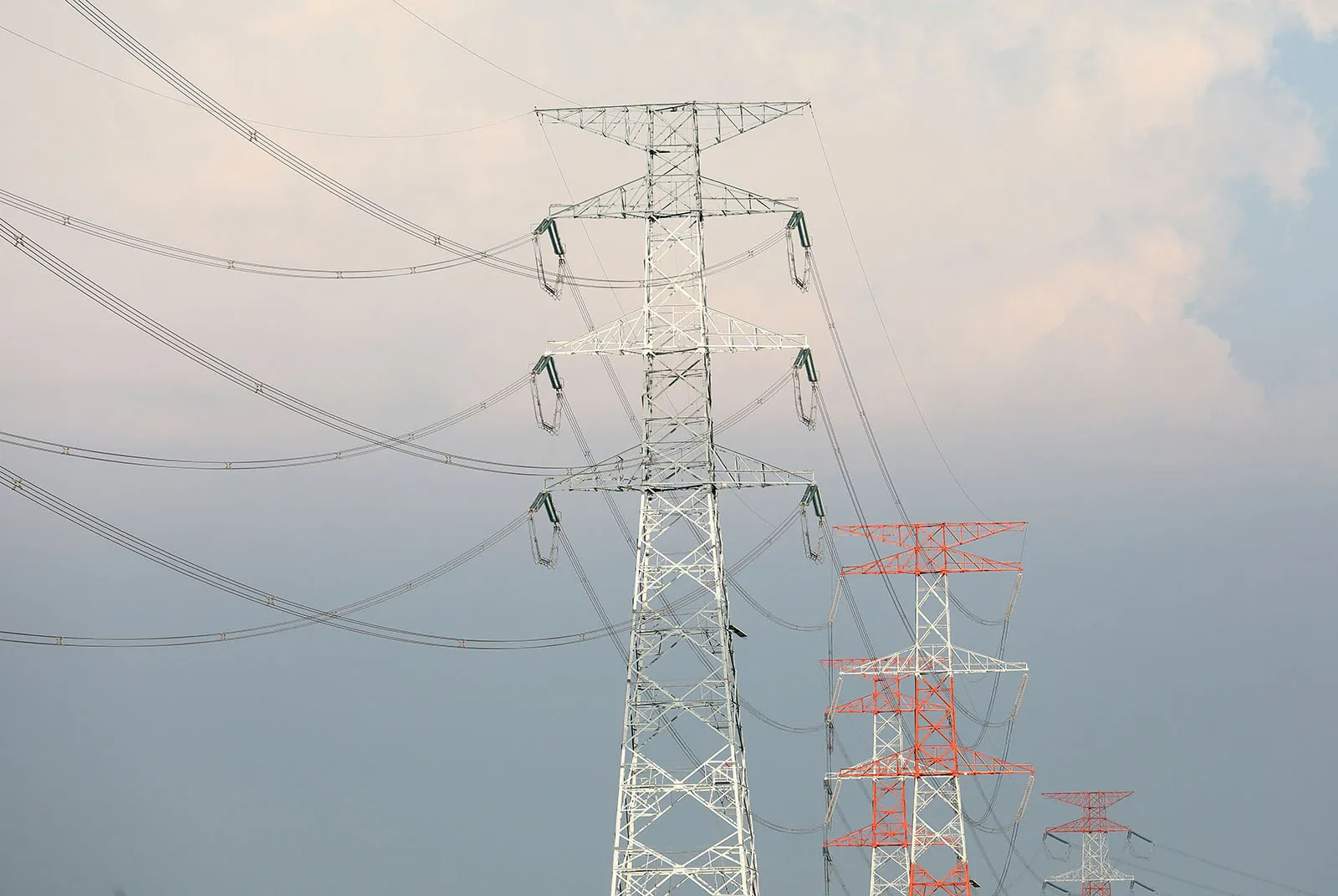
Source:Chien-Ying Chiu
Taiwan's artificially low electricity prices look like an industrial asset but may be quietly undermining the foundations they claim to protect. With Taipower absorbing billions in losses, renewable investment stalled, and AI-driven demand set to surge, the gap between tariff and true cost is not a subsidy—it is a debt. Can a freeze designed to shield industry end up being the thing that breaks it?
Views
Why Low Electricity Prices Might Harm Taiwan in the Long Term
By Romain Blachierweb only
Taiwan's energy debate centres on nuclear and renewables. A more decisive variable receives less attention: the price of electricity itself. The island has the third-lowest industrial and fifth-lowest residential electricity rates in the world. That cheapness is not a market outcome — it is a political choice, made without a financing architecture to match.
A frozen price, an unfinanced freeze
Industrial users in Taiwan pay an average of NT$4.27 per kilowatt-hour (kWh), held there since the last adjustment. Residential users pay around NT$2.77 per kWh, while the average generation cost at Taiwan Power Company (Taipower, 台灣電力公司) has stood at NT$3.8 per kWh since the start of 2025. Each kilowatt-hour sold to a household leaves the utility one Taiwan dollar short. In March 2026, the Electricity Rate Review Committee chose to keep the average rate unchanged at NT$3.78 per kWh, citing Middle East volatility and the need to support industrial competitiveness.
Taipower has carried the gap alone. Its accumulated losses reached NT$417.9 billion (around US$13 billion) by the end of July 2025, even after multiple rate hikes since 2022 and a NT$72.9 billion post-tax profit in 2024 helped by easing fuel costs. A NT$100 billion subsidy package was blocked by the Legislative Yuan. The structural deficit has been postponed, not resolved.
Protecting consumers and regulating retail tariffs is a legitimate policy choice. The European Union's electricity market reform of May 2024 was designed precisely to expand the toolkit for shielding consumers from short-term volatility. But a freeze that is not backed by a financing architecture eventually erodes whoever absorbs the gap.
What the unfinanced freeze costs
The renewables business case weakens.
Offshore wind, solar and geothermal developers in Taiwan compete against a regulated grid tariff that does not reflect the true cost of fossil-fuelled marginal generation. Cheap incumbent power makes corporate power purchase agreements (CPPAs) harder to negotiate at scale and slows the renewable build-out that the President Lai Ching-te (賴清德) administration's 2030 climate targets require.
Artificially low prices, framed as a tool of industrial competitiveness, end up taxing the energy transition.
Locational signals are missing. When tariffs do not say where the grid is saturated, administrative rationing has to do the work. Since August 2023, the Ministry of Economic Affairs (MOEA, 經濟部) and Taipower have stopped approving new data centres above 5 megawatts (MW) north of Taoyuan (桃園), where the grid is constrained. A blunt cap replaced a missing price signal.
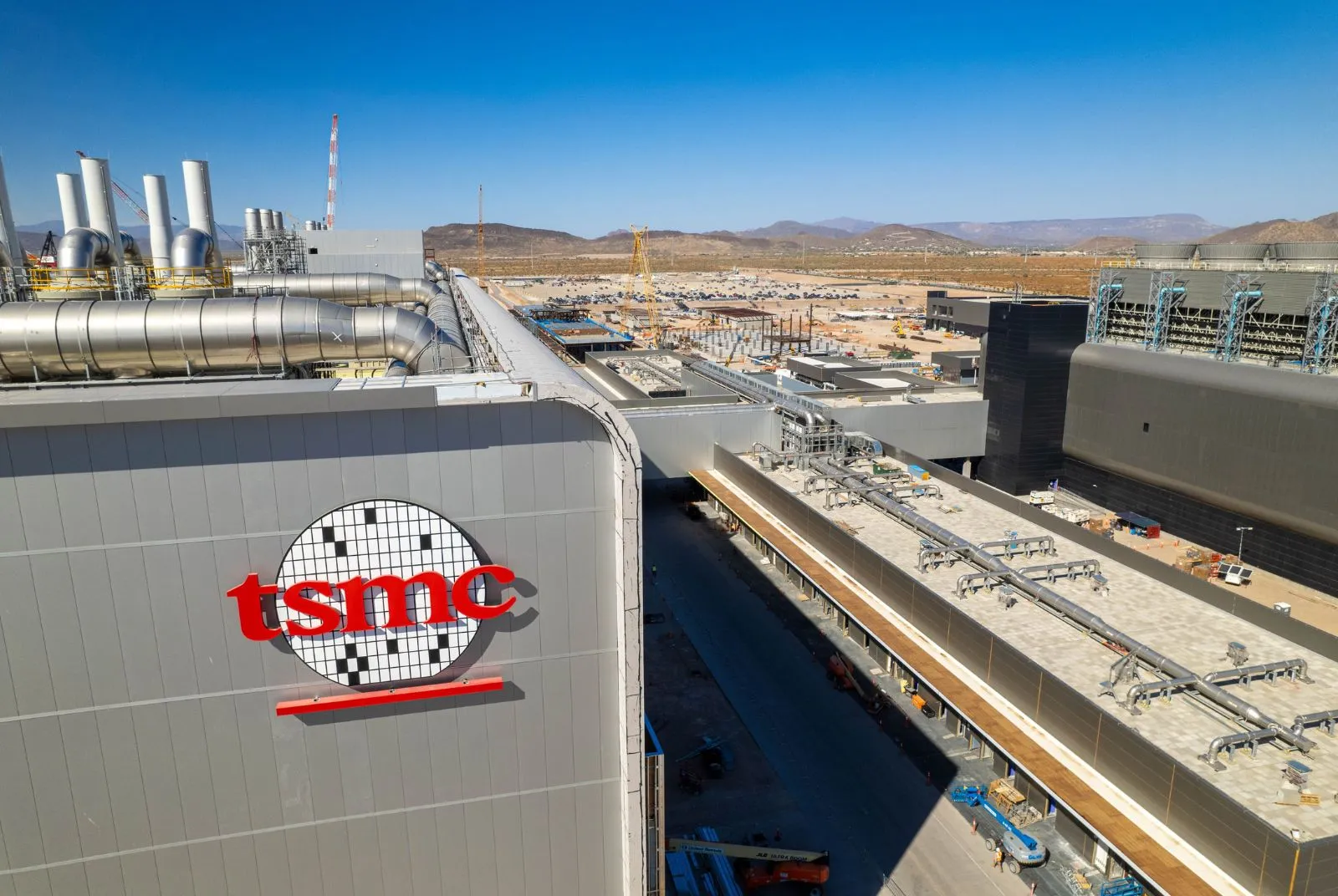
Taiwan Semiconductor Manufacturing Company (TSMC, 台灣積體電路製造) now pays more for electricity in Taiwan than at its US, Japanese or German fabs after industrial rate increases of 25–39% since 2024, while power for the system as a whole remains under-priced relative to its real cost of delivery in saturated zones.
The grid itself is starved. Taipower's losses have reduced its capacity to invest in transmission, storage, and resilience, just as AI and semiconductor demand are projected to add the equivalent of nearly a Taichung Power Plant by 2030, according to estimates compiled by READr and the Earth Journalism Network (EJN). A utility that cannot recover its costs cannot finance the grid that AI ambitions require, and cannot accelerate the integration of renewables.
What the European reform offers
The 2024 EU electricity market reform introduced three instruments that are directly relevant here.
First,long-term contracts between producers and large consumers — power purchase agreements, or PPAs — are actively promoted by the reform. A 10-to-15-year PPA on renewable or low-carbon power offers multi-year price predictability for both producers and large consumers, and gives renewables the revenue visibility they need to attract investment.
Secondly, from 2027, two-way contracts for difference (CfDs) — or equivalent schemes with the same effects — will become mandatory for any direct price support granted by EU member states to new investments in wind, solar, geothermal, run-of-river hydro and nuclear, including life-extension of existing reactors. The producer sells on the market and receives a guaranteed strike price when wholesale prices fall below it; surplus revenue is returned to consumers when prices rise above. The mechanism stabilises producer revenue, protects the public budget, and channels excess revenue back to households and industry.
Thirdly, conditional grid access for large energy users is illustrated by Ireland. From January 2022, EirGrid effectively halted new grid connections for data centres in the Dublin region. Hyperscalers had grown to 22% of Irish electricity consumption by 2024. In December 2025, after nearly four years of de facto moratorium, the Commission for Regulation of Utilities (CRU) lifted the ban, but only for operators able to install on-site generation or batteries covering their full demand and feed power back to the grid when needed.
What this could mean for Taiwan
PPA frameworks are particularly attractive for semiconductor fabs and data centres. A long-term PPA gives the kind of price stability that short-term tariff regulation cannot deliver, and finances renewable capacity at the same time.
Two-way CfDs for new low-carbon capacity — offshore wind, geothermal, and any new nuclear development — would stabilise producer revenue without piling the cost onto consumers or onto Taipower. When wholesale prices spike, surplus revenue flows back to consumers, building the buffer that current losses cannot.
Conditional grid access, on the Irish model, would gradually replace the 5 MW northern cap with an obligation for new data centres and fabs to bring their own generation, storage or demand-response capacity. Part of the resilience burden then shifts onto the users that create the load.
A franco-Taiwanese channel already exists
France and Taiwan have an active scientific cooperation framework on green energy and industrial decarbonisation, anchored in the November 2023 convention between the Bureau Français de Taipei (BFT, 法國在台協會) and the Bureau de Représentation de Taipei en France (BRTF, 駐法國台北代表處). The most recent expression of that framework was the second franco-Taiwanese symposium on Green Energy and Sustainable Industry, held at the Université de Lorraine in Nancy on 25–26 November 2025, co-supported by France 2030 (Programme et Équipements Prioritaires de Recherche, or PEPR SPLEEN) and Taiwan's National Science and Technology Council (NSTC, 國家科學及技術委員會). The channels to translate European tariff and grid experience into Taiwanese policy options are open, and underused.
A narrow window
Taipower's 2025 profit was a respite, not a reset. AI-driven demand is projected to grow 12–13% by 2030, fuel costs remain exposed to Middle East volatility, and the grid needs tens of billions of NT dollars in upgrades. The longer the price-financing gap persists, the more expensive it becomes to close.
(This piece reflects the author's opinion, and does not represent the opinion of CommonWealth Magazine.)
CommonWealth Magazine welcomes op-ed submissions. Please send your article proposals to [email protected]
About the author:

Romain Blachier is a French energy sector professional, a lecturer in energy geopolitics, a contributor to think tank publications, and president of Association France-Formosa.
Have you read?
- Taiwan’s Economy Is Soaring. Its Energy Strategy Could Hold It Back.
- Why America’s Left and Right Should Love Taiwan
- Tuned to Perfection: China’s Irregular Warfare at Sea Exploits Bureaucratic Disharmony
Uploaded by Ian Huang
Views

Subscribe to CWE Newsletter (every Thursday)
Stay abreast of what's happening in Taiwan with our weekly digest.
Keywords: