How DJ Swallow Set the Tempo for Taiwan’s Women DJs

Source:Danny Chu
Kaohsiung-born DJ Swallow shattered the assumptions that kept women on the dance floor rather than behind the decks, building her career through grinding discipline. But with the ceiling she broke now the floor the next generation stands on, how far can they go?
Views
How DJ Swallow Set the Tempo for Taiwan’s Women DJs
By Julien Oeuilletweb only
A swallow is a smart bird.
One of Taiwan's biggest DJs, the Kaohsiung-born woman has achieved international recognition and pioneered such a career for women and for southern Taiwanese.
“I think music can touch people's heart,” she says when we meet in a deserted nightclub in the middle of the afternoon. “I want to say something with the music. The music I play is my personality.”
This is the first thing you need to understand about DJ Swallow: she is burning with passion for music.
And the other thing is: she is full of self-confidence.
“Kaohsiung is hot! Like me!” she says with an immense smile.
Around us, the dark nightclub is ready to explode with neon and music. A DJ set is installed at the end of the room. This is Swallow's universe.
“In the beginning, a lot of girls in Taiwan in the nightclub culture were dancers, not DJ,” she explains. “My idea is that I love music and it's my passion, so what if I became a DJ? Doing something I want to do, and break that culture and that idea that females can only be dancers and not a DJ? Dancing a lot at these events made me know the culture more. And then at one of these events someone gives me a hand.”
She was already passionate about dancing as a child, and named “Don’t Cha” by the Pussycat Dolls as her first musical shock.
Vivacious, sparkly, exactly the kind of person you would imagine capable of pumping up the atmosphere at a party, Swallow eagerly talks about her career, all of which testifies to an extremely strong will and a capacity to work hard toward her goal.
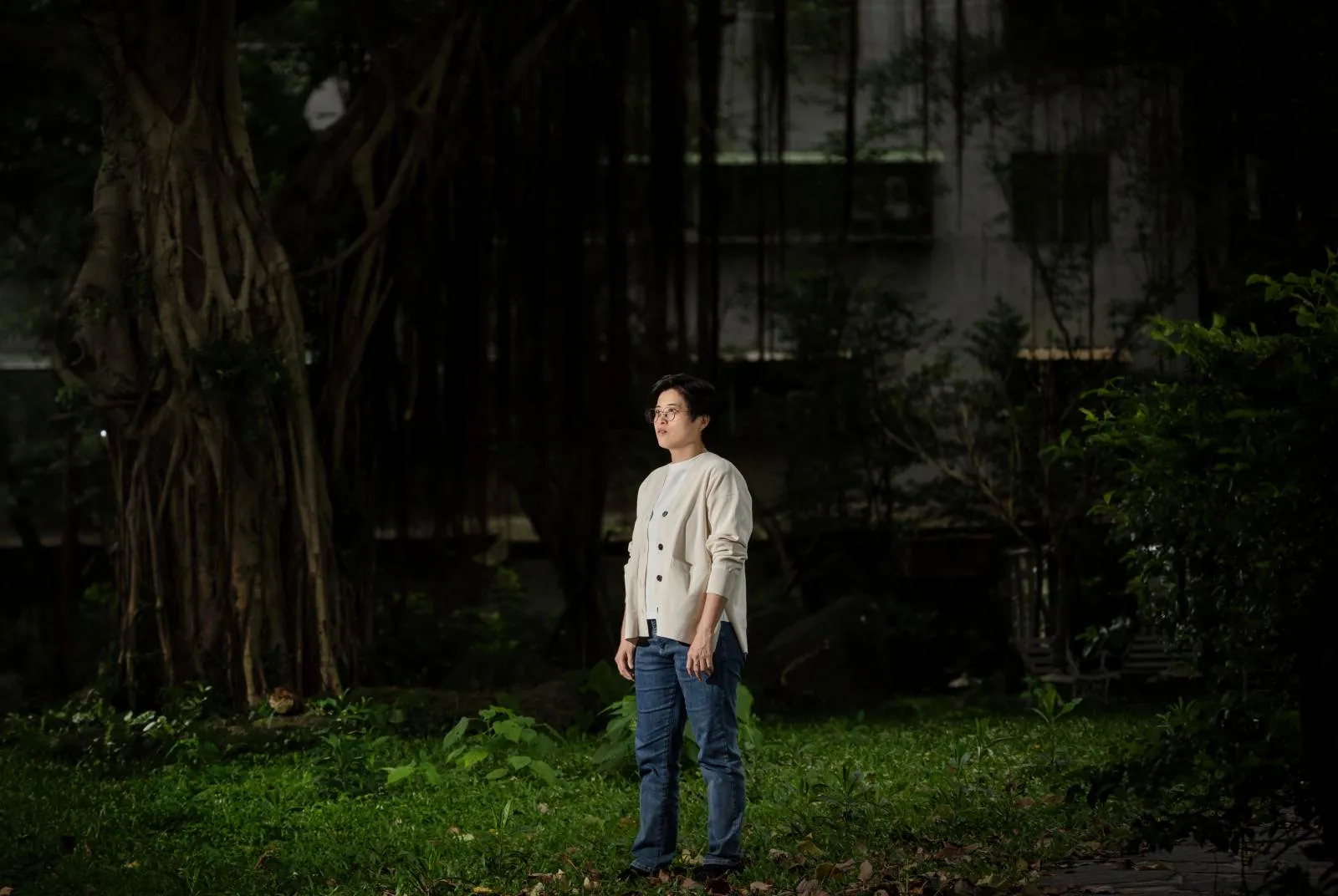
 (Photo: Danny Chu)
“I spent six months to a year working on this, and then started doing my own shows,” she recalls. “I tried my best to show all I can do, I tried to change that culture and idea about women in the Taiwanese night club culture.”
It is no mystery that Taiwan still suffers a lot from misogynistic reflexes. An attractive young woman will often be told she needs nothing else but to be pretty. And if you want to be seen as skilled and professional, then your appearance must be neutral and tamed. Swallow rejected both these ideas.
“When I became a female DJ, there was a lot of sexism in Taiwan, they looked at me more sexually rather than having a skill set,” she says. “They think you just use your body but the music is so-so. Most people were thinking like that but I wanted to change this idea. So I was working hard and using music to prove it!”
Swallow has become an example of a rising generation of women who prove that you can have it both ways: she worked hard to build a career as a professional entertainer, and she keeps her ultra-feminine, partygoer allure — and those who make assumptions about her based on looks are soon proven wrong.
The work of DJs is already often misunderstood in the first place. Many people fail to see the hard work behind it. Next to us as we discuss Swallow's career is a DJ machine, and to an untrained eye it appears as a mind-blowing collection of switches and buttons that may as well be the control panel of a space shuttle. And yet, Swallow could move an entire crowd of demanding partygoers with this thing — and she will do it with shiny, manicured fingers on the switches.
It is not easy to satisfy a crowd who came — and potentially paid for entry — to spend a night away from normal life, taken to another planet by rhythm and soundscapes. Many aficionados of the kind of events where DJ Swallow works expect something that will take their feet off the ground effortlessly. They know who is a real DJ and who is a phony, and you can lose the crowd's favour easily if you do not know how to keep them bouncing.
“Some DJs are like a jukebox,” Swallow says, “they just sit behind a machine and press play. They don't do any type of mixing or turning tables, etc. They don't have a skillset. But I wanted to prove everyone wrong about me when they thought it was just about looks, I wanted to show the whole skillset!”
And the skillset is large: being able to read the room, gauge the mood of the crowd, have a vast knowledge of music, be technically competent with the equipment, and know how to prepare for any situation — because a party night is like a battle, and it rarely goes according to plan.
When Swallow talks about her craft, she becomes a music strategist. The Napoleon of electronic music: “I strategise my music in as many layers as possible. I won't go crazy in the beginning, I build it up slower. I look at what the audience does before I decide what the next track will be. You must not break that synch, not break that connection. So I connect the music smoothly with transitions, while studying what the audience wants. Make the whole event smooth!”
Swallow recalls how she started as a dancer. “When I was a child I was very much into dancing. When I was 18, my friends asked me if I wanted to be a dancer and I thought maybe I can try.”
This was the first step in her path to turn her passion for music into a career. “Being a dancer made me feel more connected to the music, and more connected to DJs. Hearing all these different kinds of music made me feel: this is what I am! Everyone has a different personality and different genres of music. So I danced to the music I love, and let go, enjoying every moment as a dancer. And seeing me perform, people feel more optimistic and positive.”
When she talks about her early years as a dancer, it seems like she was already a DJ scholar doing a field experiment, keeping her eyes open and observing what was going on. “I've been to Tomorrowland and such big shows,” she says, “and I studied how the DJ did it and how the audience reacted to the music. I learnt I can control the crowd with music but also respond to them: if I see the audience dancing to something I will go in this direction, and if they do not move too much, then I take another direction. I have to be with them instead of just being with myself on the stage, meeting the crowd where it is.”
And when asked how someone could become a DJ, Swallow is absolutely clear: you need a teacher. “I would need to stay behind you!” she says with a laugh, “you absolutely need a teacher! So, you play your music and I push you in the back!”
Swallow was initiated into the art of DJing by a long-time friend, Woody, whom she met when she was a dancer. “He started thinking that female DJs could become popular. In 2014, he believed I could become a DJ, so I became his student.”
Her relationship with him sounds like the dynamic between a kung fu master and his apprentice. “He is a nice person,” she says, “but when he is my teacher, he is very tough and strict. We have been friends for 20 years. I am the only student he ever had. He did not speak much but I felt his passion for music, which is the same as mine. So I was very happy he invited me to be a DJ.”
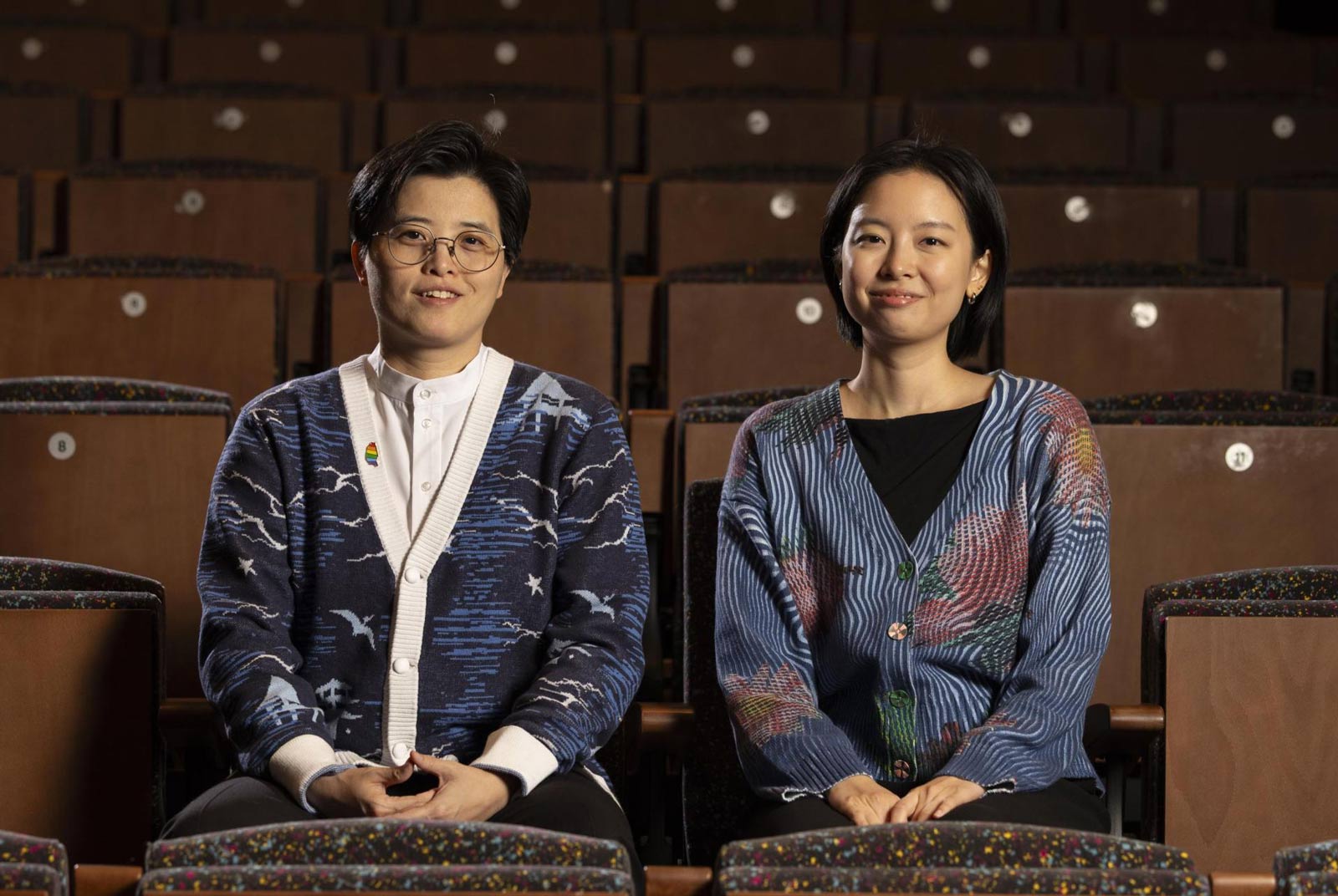
 (Photo: Danny Chu)
Swallow shares with us what was the hardest thing for her to master during her training as a DJ: “Tempo! The tempo is the most difficult thing!”
And at the time, technology was even harder to handle: over a decade ago, CD players were still needed, whereas contemporary DJ equipment can use digital files. “I remember my beginnings,” she says, “the teacher and I were together and we both had a DJ set, and he told me to put on the CD, then he told me to put on my headphones and to study tempo song by song.”
“That was very hard,” she adds, “I had to practice for 3 months just on this! Every day, tempo to tempo, for two hours!” Before the dazzling performer took the stage and got the crowd moving with cameras flashing around her, Swallow had to spend months alone in her room, painfully learning to tame those wild machines.
“I had to figure it out myself, too,” she says. “My teacher is tough! He says: we can't explain this, you have to find it yourself! He showed me once, and then I had to practice until he thought I was good enough to move on to the next level.”
Swallow's stories about her teacher sound like a Shaolin master-style initiation.
And all of this was rewarded during the last Olympic Games, when DJ Swallow was invited to perform in Paris.
“When the organisers phoned me to invite me to perform in Paris, I thought it was a prank call!” she says with a laugh.
She soon got confirmation that it was not a joke: she was selected as a performing DJ at the Taiwan Pavilion during the Paris Olympics.
“I was so happy to be invited to perform in Paris,” she says, “I was so honoured, I spent a lot of time preparing my music and my costumes. I was pretty nervous but very optimistic.”
She recalls the fantastic atmosphere: “In Paris I was touched by the passion of people, I felt the energy, from children to older people, everyone was full of passion, screams and shouts! I'd say make some noise and they would do it! Really perfect! I really loved that!”
Although Paris 2024 marked the return of a more open Olympics after the pandemic, Swallow remembers the experience as logistically difficult, with health-control arrangements and separated spaces adding pressure to an already demanding international performance.
But there, she felt a sense of community.
“I wasn't alone,” she says, “there were a lot of Taiwanese people, including representatives of Taiwan. It was a whole team. There were even these tables like we have in front of temples! The whole Taiwan culture was represented. I did not feel alone at all. I was so happy to represent Taiwan as the first female Taiwanese DJ at the Olympics. I felt connected to the people, using the music to connect with everyone.”
At that stage, Swallow had already overcome a lot of stereotypes and prejudices, as a woman and as a southern Taiwanese, in a DJ scene then dominated by men and primarily centred in Taipei.
And now, she was going to meet another ceiling to break: being Taiwanese.
“We encountered problems with politics,” she says about her time in Paris, “with China stopping us from calling ourselves Taiwan. We constantly have to tiptoe and use the name Chinese Taipei. But I did not care, me and the others just kept using the word Taiwan! We were being ourselves and representing Taiwan! I even shouted: "We are from Taiwan!”
The fierce young woman blasted an entire geopolitical conundrum with the power of music, right there in the middle of the City of Lights, and during one of the world's biggest events.
“In the beginning nobody dared to say it because of the Chinese, but the moment i start saying it, others also say they are from Taiwan too.”
By the time of our meeting, Swallow considered her time in Paris to be the best experience of her DJing career.
And she remains close to her roots: in July, she will also attend the Kaohsiung Beer Rock Festival.
“I was born in Kaohsiung and I am very proud of this city,” she says. “The people have passion here, like me! They are warm to each other, there is mutual trust.”
So what remains to be done for such a performer at the top of her game?
“Now I'm trying to make music,” she says, “to become a producer. This is my next life goal. It's the next step, you don't need to be a DJ forever, you can grow into a producer.”
Swallow works with producers and is walking her way into the Korean music industry. She is even learning the Korean language, confirming once more her dedication to learning and growing.
And as if it were not enough, she adds a few sentences in Japanese, too.
Through hard work and perseverance, DJ Swallow has paved the way for other women. “When I became the first female DJ I had a lot of pressure," she says, “now it's easier to become a female DJ, I see many of them now.”
Her advice to other young women who would want to follow her path is to “listen to more and more songs, a lot of songs! You must know their style, their tempo, etc. And second: practice, a lot, a lot, a lot!”
But her final words before she goes back to her turntables are perhaps the most important for any young Taiwanese: “Do what you love to do. Don't do things you are forced to or what people tell you to do. Don't do things just for the image. Do it for passion, not for looks or what people say. Do what you love!” DJ or not DJ, these are words to set the tempo for your life.
Have you read?
- Cartoon Cats and Robots, Made in Kaohsiung, With an Indonesian Heart
- From North to South: Joan Yang's Taiwanese comic book odyssey
- From 50 Cent to a Fistful of Taiwanese Dollars: The Story of Star Photographer Danny Chu
Uploaded by Ian Huang
Views

Subscribe to CWE Newsletter (every Thursday)
Stay abreast of what's happening in Taiwan with our weekly digest.
Keywords: