The Star Ingredient
Source:Joshua Roberts
A camping trip and a lifetime of watching cooking shows taught the author something about why companies, and cooks, struggle to leave anything out.
Views
The Star Ingredient
By Joshua Robertsweb only
We camped by a river a while back, a beautiful secluded spot in a deep canyon, mountains tall on either side. It had a crystal clear river cutting through it, littered with driftwood. It was that picture perfect kind of place you hope to find after a long hike, and we were lucky to find a nice camp spot to pitch a tent and cook dinner. All I had with me was a couple of raw ingredients, steak, mushrooms, bell peppers, red onion, pineapple, zucchini, plus some salt and oil.
Cut it up on a rock with a camp knife, skewered it, set it over a dugout fire. The smoke added an incredible flavor, better than any sauce I could have added.
Trying to Do Too Much
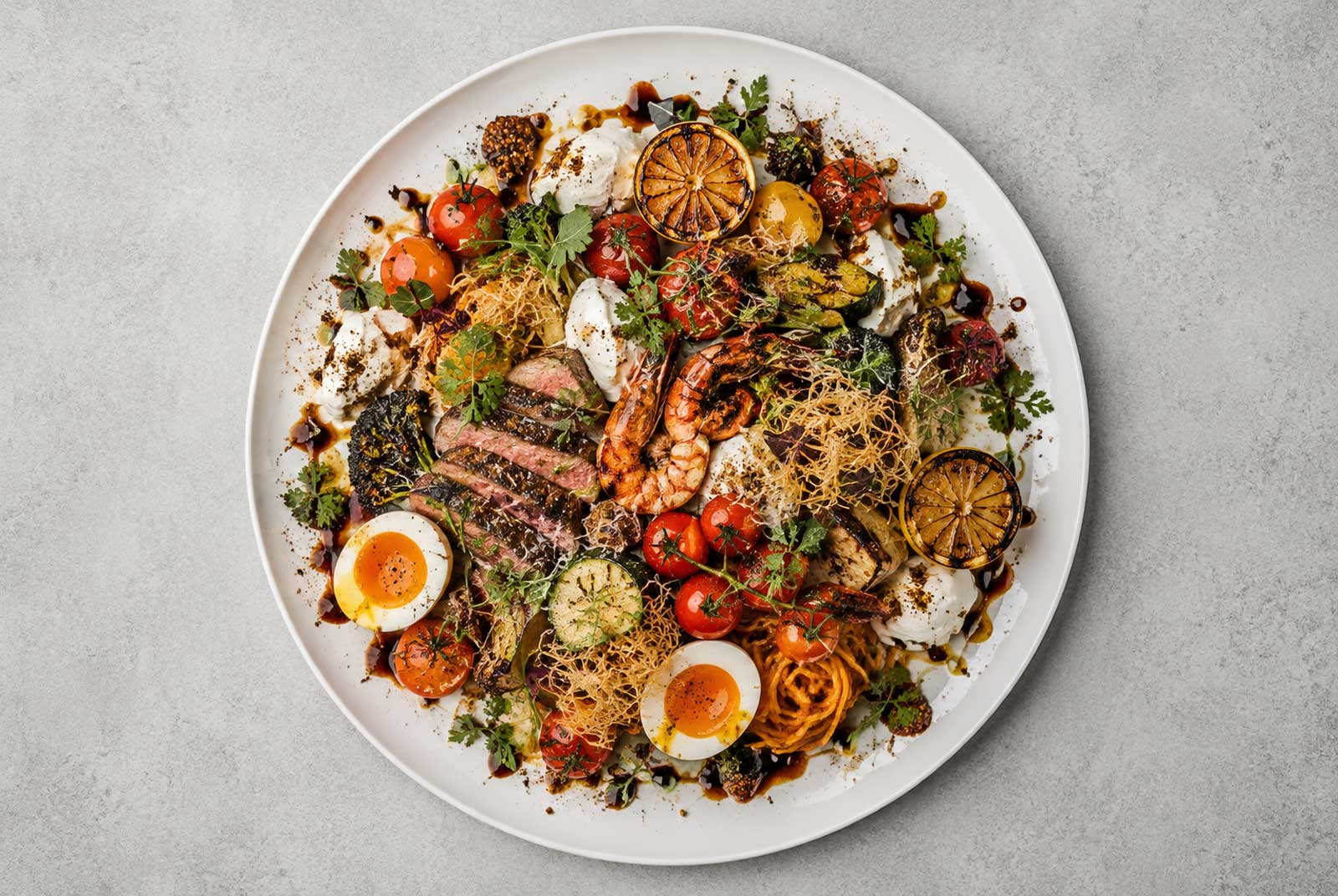 A plate with this much on it leaves no room for one thing to be the point.
I watch a lot of cooking shows. MasterChef, Top Chef, the big Korean chef competitions, even Drink Master, the cocktail series. I enjoy them because they're really about creativity under pressure, and that has everything to do with design. A good contestant has to think about who's going to eat the dish, what will actually appeal to that person, not just cook something technically correct. Plating is part of it too. Knowing what to put on the plate, and just as much, what to leave off. Watching that has made me a better home cook.
It's also taught me something about people. One note comes up across nearly every one of these shows, from very different judges, on very different dishes. This is trying to do too much. Or, the star ingredient is getting lost. Watching enough of it, I think I've figured out why. Contestants get in their own heads. Under pressure, they start cooking to prove something to themselves, and somewhere in that, they lose track of who they're actually cooking for. The judge. The guest. The person who just wants to taste the mushroom.
It's rarely about having too many ingredients on the plate. It's about nothing being clearly the point anymore. A dish built around mushrooms, with six other things all competing for the same attention, stops being about the mushrooms. Everything on the plate is still technically good. Nothing is the star.
Why Adding Feels Safer Than Leaving Room
Everyone's heard some version of keep it simple, or less is more. Neither is new advice, and most people would agree with both if you asked them directly. And yet the instinct to add persists, in cooking, in business, in most things I can think of.
Some of it comes from genuinely believing more is better. Another feature, another flavor, another product tier, each one framed as an improvement rather than a risk. It's not always a failure of nerve. Sometimes people really do think they're making something better by adding to it, right up until the dish or the lineup stops making sense.
The rest of it comes down to what an empty space on the plate, or an empty line in a product catalog, seems to be saying. Room left unfilled can look like something forgotten, or worse, like a lack of effort. Adding one more thing feels like generosity, or thoroughness, or just covering yourself in case someone asks why it wasn't there. Leaving something out on purpose doesn't feel the same way. Nobody notices restraint. They notice what's missing, or think they might.
So the extra ingredient goes in. The extra product line stays. Not because anyone thinks it will make things worse, but because taking something away feels like it requires a defense, and adding it never does.
The Portfolio Version of a Muddled Plate
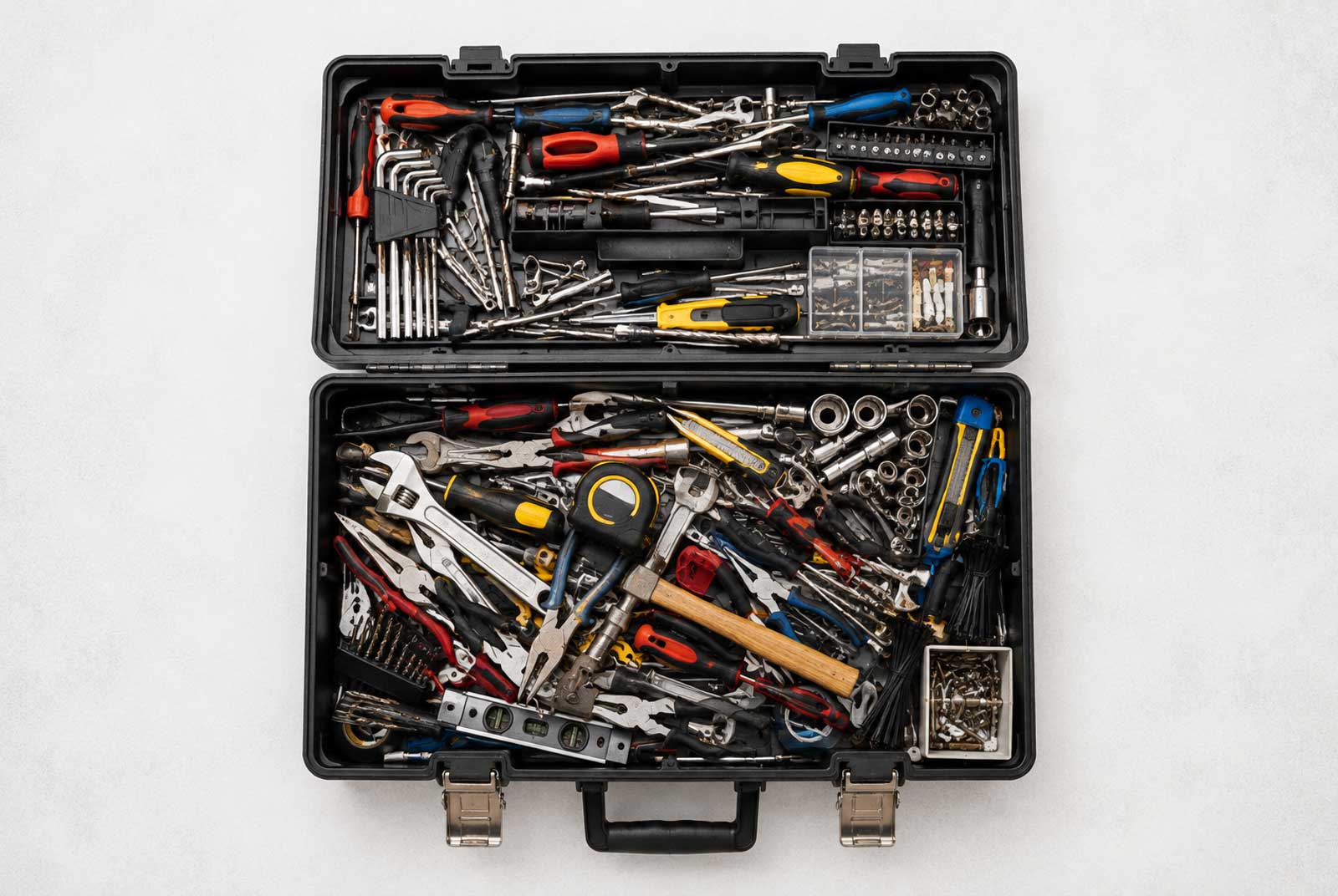 A toolbox with everything in it is still a toolbox where nothing's easy to find.
I see common or related issues in business. I notice it most in Taiwan, though I'll admit I can't say for certain if it's actually more common here or if it's simply where I've spent nearly all of my working life. Most of what I've seen, I've seen from inside this market.
Often it starts reasonably enough. A client asks for something specific, it gets built, spec'd out, delivered. Since it already exists, it becomes a line on the menu going forward. Show everything you've ever made, because you never know what a future client might want. That logic isn't wrong, exactly. Sometimes it does make sense. But a portfolio built this way, one addition at a time, each one defensible on its own, can end up polluted without anyone deciding it should be. Every item was a reasonable yes. The sum of all those yeses is often something nobody would have chosen on purpose.
The costs are real, even when they're not obvious right away. Support gets stretched thin across marketing, sales, aftermarket service, translation, returns, more than any team can actually manage well. Products start to cannibalize each other instead of competing with anyone else. Even naming becomes difficult, since a name is supposed to tell you where something sits. BMW's 3, 5, and 7 series tell you the size and price tier before anyone explains anything. A portfolio spread too thin loses that structure, and everything ends up needing an explanation instead of speaking for itself.
I don't think this is usually a strategy. It's more often the absence of one. Saying yes is easy and immediate. Saying no requires believing something else is worth more than the sale in front of you, which is a harder thing to feel certain about in the moment than it looks afterward.
Where Reduction Goes Too Far
I fight this in my own work constantly. Adding is the easy instinct, another page, another message, another way to say the same thing in case the first way didn't work. Thoughtful reduction is usually one of the last steps in any strategic or design project I take on, not the first. What can we take out that won't erode the clarity of what's left. Can we keep going? Can we go further than that?
There's a point where it stops working, though, and it isn't always obvious in advance. Take the salt off those skewers and the whole thing falls apart, not simpler, just worse. The same is true in the work. Cut past a certain point and you're not left with something focused, you're left with something thin, missing whatever it actually needed to make sense. Knowing where that point is might be the actual skill. Not reducing, but knowing when to stop.
What the Fire Did
The skewers worked, but not because there was almost nothing on them. There was plenty. Steak, mushrooms, peppers, onion, pineapple, zucchini, all together on one stick over the same fire. What made it work was that nothing was hiding behind anything else. No sauce to cover a mistake, no side dish pulling attention away from what was actually cooking. Salt, heat, smoke, and whatever was close enough to the fire to char properly. Every ingredient had nothing to hide behind, which is a different kind of simple than just having less.
Simplicity doesn't mean insufficient. It doesn't mean less than what's needed. I think of it more like an iceberg. What sits above the surface should be simple enough to take in at a glance, the star ingredient, clearly the point. Everything else, the complexity, the depth, the work that actually made the dish or the product good, can sit below, still there, still real, just not competing for attention it doesn't need. In a world that keeps showing us more of everything, at the surface at least, that's a relief.
I don't think reduction is really about doing less. It's about deciding, ahead of time, what's actually supposed to be the point, and then having the discipline to let everything else serve that instead of competing with it.
This piece reflects the author's opinion, and does not represent the opinion of CommonWealth Magazine.
CommonWealth Magazine welcomes op-ed submissions. Please send your article proposals to [email protected]
About the Author:
Joshua Roberts is the Founder of Level Interactive™, a Taipei-based brand strategy and design consultancy helping B2B and technology companies get clear on their story and communicate it well. A former Global Creative Director at Acer, he has worked across agency and in-house roles over more than 20 years in Taiwan. Outside of client work, he spends his time hiking, traveling, and practicing close-up magic, a habit that goes back further than his design career does. Contact: [email protected] or connect on LinkedIn.
Have you read?
- How Taiwan Can Build Global Brands Without Losing Itself
- Line Logic: Why Trust in Taiwan is Earned Not Announced
- What Hiring Reveals About a Company’s Brand
Uploaded by Ian Huang
Views

Subscribe to CWE Newsletter (every Thursday)
Stay abreast of what's happening in Taiwan with our weekly digest.
Keywords: