When the Homeland Changed: Waishengren, Memory, and Taiwan
Source:Meng Kit Tang
For decades, Taiwan's waishengren have often been portrayed as politically tied to a homeland they left behind. But what if their loyalty was never really about China itself?
Views
When the Homeland Changed: Waishengren, Memory, and Taiwan
By Meng Kit Tangweb only
A Loyalty in Search of Its Object
In May 2026, KMT heavyweight Jaw Shaw-kong (趙少康) stood before Taipei's Foreign Correspondents' Club and made an argument that was strange coming from a co-founder of Taiwan's pro-unification New Party. He didn't talk about returning to China.
He talked about waiting it out: unification would come eventually, but not soon, and not under the current system. "You think your system is good, but we feel our system is better," he told the room. "So for now, we rule Taiwan with our system. But in China's history, 100 or 200 years is a very short time."
Jaw was born in Keelung in 1950, not long after his parents arrived from the mainland, and has spent his life on the island. His politics have spent decades gesturing past. Beijing's state media and Jaw's critics at home tend to read him the same way, as evidence that inherited attachment to a lost homeland still pulls Taiwan's mainlander descendants toward China.
What he actually said in May doesn't fit that story. It isn't the language of homesickness. It's the language of an institution asking for more time.
Neither One Migration Nor One Class
The term waishengren (外省人), "people from other provinces," covers several distinct communities: soldiers and civilians who arrived with the 1949 Nationalist retreat, Dachen evacuees, remnant Kuomintang (KMT) forces from Thailand and Myanmar, and Korean War prisoners who chose Taiwan over repatriation. Even the largest wave was less uniform than the label suggests, including civilians fleeing chaos alongside committed Nationalists and unwilling conscripts.
Their experience after arriving was just as mixed. Waishengren dominated the KMT's security services and bureaucracy, a system many benshengren (本省人) experienced as rule by outsiders.
They also made up nearly forty percent of White Terror victims despite accounting for only about thirteen percent of the population. By the 1960s, roughly sixty-three percent of those arrested under martial law were mainlanders.
That political order was already weakening before democratization. International recognition shifted to Beijing during the 1970s, and by the time martial law ended in the late 1980s, the institutional privileges built on the Republic of China (ROC)'s claim to represent China had largely disappeared.
Democratization also transformed memory.
For nearly forty years, waishengren experiences of displacement remained largely private. Only after martial law ended did they begin to appear openly in memoirs, oral histories, and fiction. The same transition that removed political privilege also gave this community permission to tell its own story.
From Continent to Courtyard
Historian Dominic Meng-Hsuan Yang, in The Great Exodus from China, traces how those memories evolved. He identifies three turning points: the 1949 exodus, Washington's refusal in the late 1950s to support a Nationalist return to the mainland, and the reopening of travel in the late 1980s, when many found that the places they remembered had changed beyond recognition.
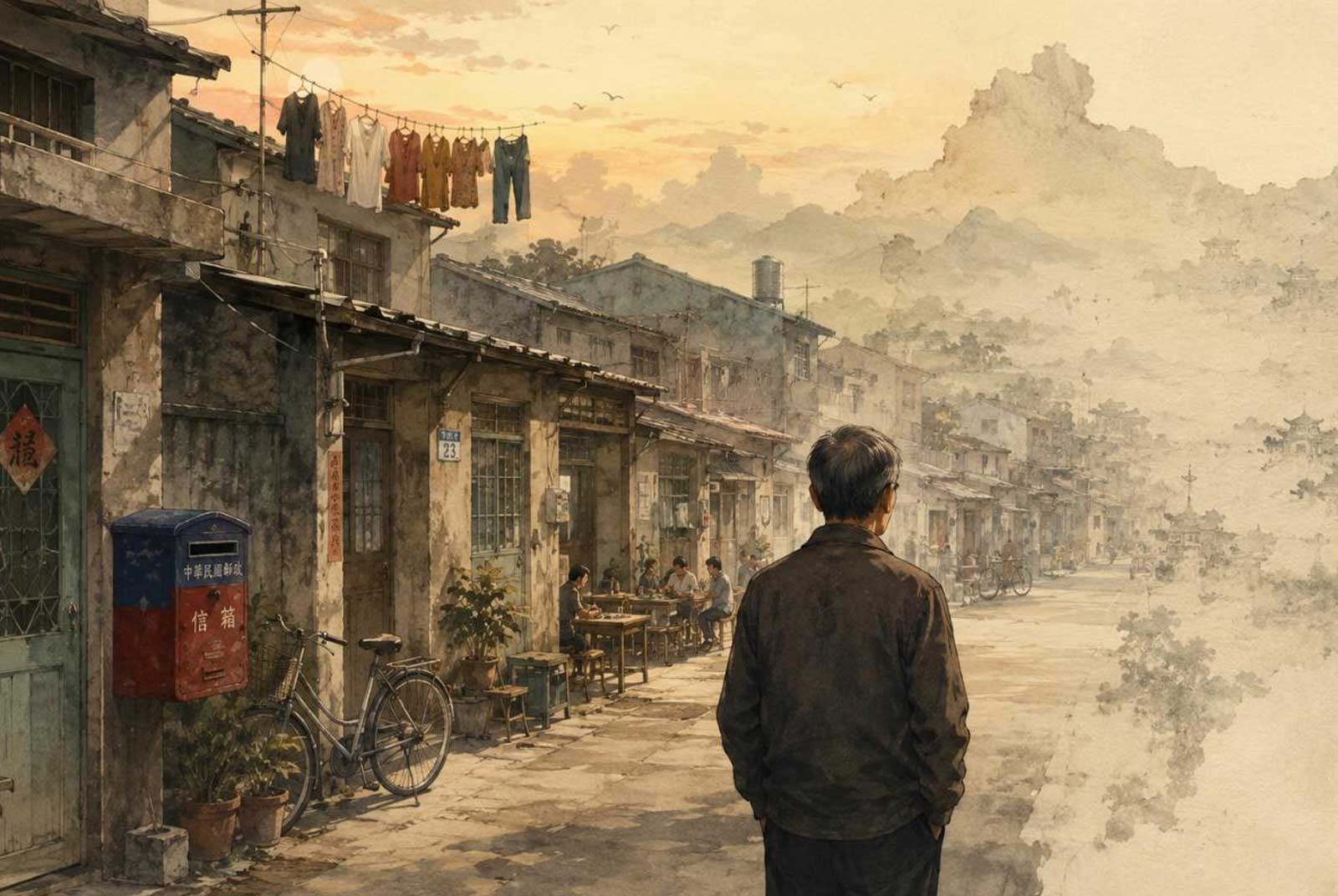
The clearest evidence appears in juancun (眷村) literature, the fiction and memoirs of Taiwan's military dependents' villages. By the 1990s, the confidence of earlier writing had given way to uncertainty. More striking was what these writers mourned. Rarely was it China itself, a country most of the second generation had never seen.
It was the juancun (dependents’ village): the alleys, shared kitchens, and neighborhoods where they had grown up.
The homeland they grieved for had already contracted from a continent to a housing compound before they had cast a vote on Taiwan's political future.
That shift sits at the center of Yang's argument. Diasporas usually preserve memories of exile to sustain a claim on the place they left behind. Taiwan's waishengren gradually did the opposite. Memories of displacement became the basis for belonging where they had settled rather than for returning to where they had come from.
It would be easy to conclude that waishengren identity was never really about China. That goes too far. Family history, language, regional culture, and memory remained deeply important.
What changed was its political meaning. As the hope of recovering the mainland faded, loyalty increasingly centered on the ROC itself.
The identity endured, but the object of that loyalty changed.
The Vehicle, Not the Origin
Jaw's remarks fit this pattern better than explanations based on homesickness or inherited privilege. His support for eventual unification reflects loyalty to the institution that carried his family's political identity more than attachment to a homeland he has never known.
The China his parents left bears little resemblance to today's People's Republic. The ROC, however diminished internationally, remains the institution through which that identity is expressed.
Voting patterns tell a similar story. Support for unification-leaning parties remains strongest among waishengren, while support for the Democratic Progressive Party (DPP) is strongest among benshengren, a pattern that has appeared in Taiwan's voting data for years. Yang's framework explains this better than the familiar idea of lingering Chinese nationalism. It is loyalty to the vehicle, not the origin.
Whether this will continue is less certain. Younger Taiwanese have generally shifted toward preserving the status quo and away from the DPP, but that trend extends across the electorate, not just waishengren families.
Current surveys cannot yet tell us whether a distinct post-ROC identity is emerging or whether younger mainlander descendants are simply following broader political trends.
The Homeland Changed, the Loyalty Didn't
Both supporters and opponents of unification often assume that waishengren identity has stayed essentially the same, and that only its political language has changed. The record says otherwise.
The juancun writers, the White Terror experience, and the way nostalgia narrowed over generations all point in the same direction. What people were attached to change over time. First it was the hope of returning to the mainland. Then it was the military villages where exile became everyday life. Finally, it was Taiwan itself, where those memories took root. Yet the language of loyalty changed very little.
The Republic of China remained the institution through which each generation expressed its sense of belonging.
What Jaw Was Actually Saying
This history changes how to read Jaw's remarks. Beijing and many of his critics hear a man still drawn to a lost homeland. His words suggest something else: loyalty to an institution whose future now depends on Taiwan, not the mainland.
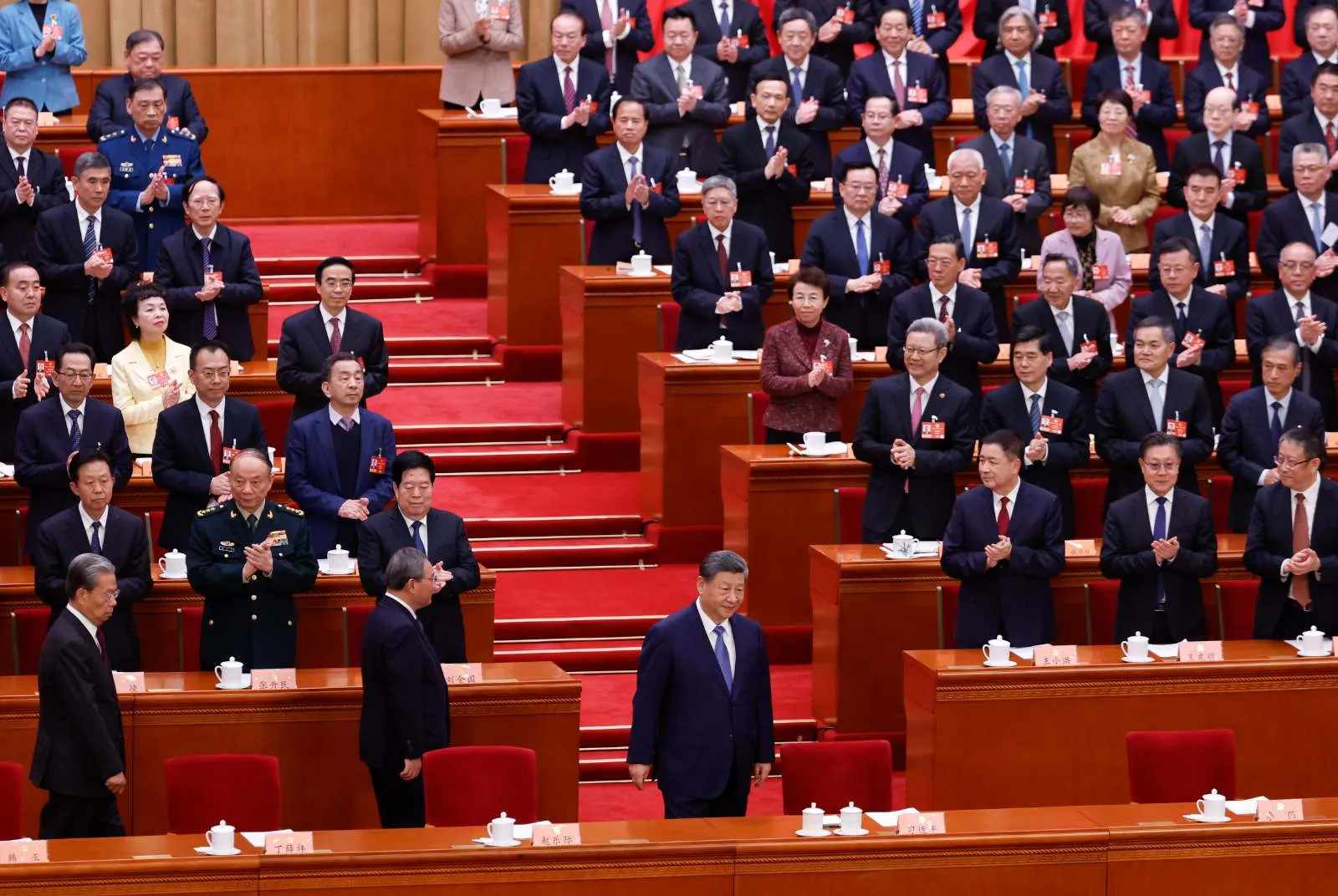
Recent KMT polling backs this up. Before KMT Chairperson Cheng Li-wun met Chinese President Xi Jinping in April, most voters expected the meeting to hurt her party. Instead, her approval rose by more than seven points. That was not enthusiasm for Beijing. It was confidence that the KMT could manage the ROC's position across the Strait.
The old reading, that this politics is residual homesickness or latent attachment to Beijing, has run its course. It flattens a complicated history into a simple story of unfinished exile, and keeps the debate stuck in old binaries. What endured was never longing for a lost continent. It was attachment to the ROC as the political home actually built on this island.
Taiwan does not need a new narrative. The material for a more accurate one is already in the history this essay has traced: homeland contracting from continent to courtyard to the ROC itself.
Jaw's parents left a country they could never return to. What survived the crossing was never the destination. It was the ship, and it is still steered from Taipei.
This piece reflects the author's opinion, and does not represent the opinion of CommonWealth Magazine.)
CommonWealth Magazine welcomes op-ed submissions. Please send your article proposals to [email protected]
About the author:
Tang Meng Kit is a Singaporean and works as an aerospace engineer. He graduated from the S. Rajaratnam School of International Studies (RSIS), Nanyang Technological University (NTU), Singapore. His research interests include cross-Straits relations, Taiwan politics, policy issues and aerospace technology.
Have you read?
- I Fear the Compatriots Even When Bearing Gifts
- Harmony or Autonomy? The KMT’s China Visit and the Search for Openings Across the Strait
- Taiwan's Freedom Is Not a Fixation
Uploaded by Ian Huang
Views

Subscribe to CWE Newsletter (every Thursday)
Stay abreast of what's happening in Taiwan with our weekly digest.
Keywords: