Can Civic AI Save Democracy Before Algorithms Destroy It?
Source:CommonWealth Magazine
Taiwan's first cyber ambassador, Audrey Tang, has spent the past year taking the island's hard-won playbook on digital democracy to governments and parliaments around the world—and finding that it works. But as AI agents proliferate and social media algorithms perfect the art of manufacturing outrage, is the window for civic AI still open?
Views
Can Civic AI Save Democracy Before Algorithms Destroy It?
By Taiwanologyweb only
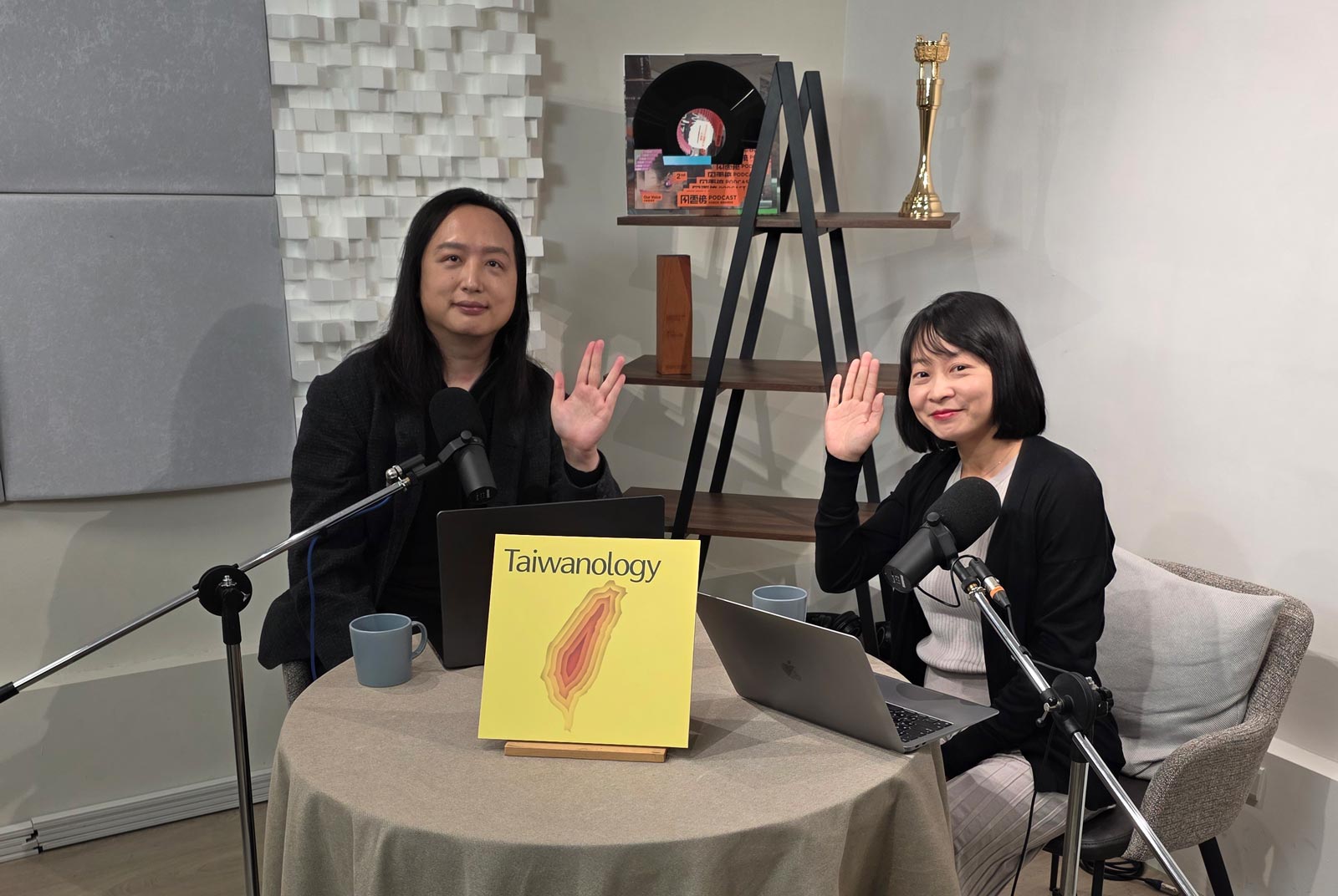
The following is the transcript of the latest episode of the Taiwanology podcast. It was produced by CommonWealth Magazine, hosted by Kwangyin Liu, and was first aired on March 23, 2026. The guest was Audrey Tang, Taiwan's first Cyber Ambassador, former Minister of Digital Affairs, 2025 Right Livelihood Laureate, and Global Champion of Civic AI.
Listen to the episode: Why Audrey Tang Has No Fear for AI Agents and the OpenClaw【Taiwanology Ep.58】
The Taiwan Model Goes Abroad
Kwangyin Liu (Host): "Most people know you as the first ever Minister of Digital Affairs. But now you have the role as the first ever cyber ambassador. In plain English, what does a cyber ambassador do?"
AT: "Three plain verbs: I translate, I demonstrate, and I connect. Translate is about what worked in Taiwan—we translate across cultures and political vocabularies, so it lands in California, in Tokyo, in London. Demonstration is to show that Taiwan's methods are portable. And then I connect the people who want to implement this."
The Taiwan model of civic participation—built around e-petition platforms, large-scale public consultations, and AI-assisted listening—has been a decade in the making. But Audrey's current role as cyber ambassador is about stress-testing whether it can survive transplantation into entirely different political soils.
The most concrete recent example is California. Governor Gavin Newsom consulted Audrey during her time as Minister of Digital Affairs, and the result is engaged.ca.gov—a platform that Taiwanese users would immediately recognize as a cousin of the Join platform, the government portal where citizens propose, debate, and shape policy. The California version was originally designed to tackle a very specific problem: teenagers growing too attached to their screens through doomscrolling and AI companions like Character.ai. The state wanted to consult both teenagers and their parents rather than impose rules on them—a founding principle of the Taiwan model's "nothing about them without them" ethos.
AT: "But on the week of launch, we did not get to launch because the wildfire happened in Los Angeles. So instead, we changed the platform to consult survivors in Eaton and Palisades about how to mitigate future wildfires and how to regroup."
The pivot turned out to be a proof of concept in the most pressured circumstances imaginable. Blame and anger over the fires were running high, but the platform channeled that polarizing energy into co-creation—producing concrete community proposals rather than political recrimination. After that success, the platform shifted again to the question of government efficiency, inviting all California state employees to weigh in on how to steer AI transformation in the public sector.
AT: "It's like a DOGE, but with not a chainsaw—a chain reaction."
Extractive AI vs. Civic AI: The Gym Analogy
KL: "I'm going to the realm of AI anxiety right now. You've been spending time at Oxford as an accelerator fellow talking about civic AI. Can you explain what distinguishes civic AI from the kind of AI most people are worried about?"
The question matters because most public debate around AI conflates two fundamentally different models—one that optimizes for individual or corporate gain, and one designed to serve collective decision-making. Audrey draws a sharp line between them.
AT: "Imagine if you send a robot to the gym with your membership card, because your gym has a scoreboard that rewards people who can lift the most weight. The robot gets a perfect score—but your muscles are atrophied. The friends you could have made are now no longer friends because the robot is only interested in getting the top spot. Extractive AI works this way. Each agent optimizing for some abstract score—but taken together, it fractures society, reduces human agency, and leads to distrust."
Civic AI, she argues, is the spotter rather than the competitor: it builds collective muscle by enhancing human relationships rather than replacing them.
Taiwan's 2024 response to a wave of deepfake investment scams is her sharpest illustration of what this looks like in practice. Fake videos of Jensen Huang offering cryptocurrency or investment tips were circulating on Facebook and YouTube, costing Taiwanese users millions. The instinctive government response—a simple yes-or-no poll on whether to hold big tech accountable—would have produced a polarized, inconclusive result. Instead, Audrey's team sent 200,000 SMS messages to random numbers across Taiwan, asking a single open question: what should we do together to maintain information integrity online?
AT: "Thousands of people volunteered. We invited 447 people, representative of the Taiwanese public, into 44 online rooms. The civic AI served as timekeeper and summarizer. Each table's ideas would propagate upward only if they convinced the room. If you held a radical extreme idea that your room didn't like, it didn't make it out."
The ideas that survived the filter were practical and legally precise: mandatory digital signatures for all advertisements, joint platform liability for unsolicited fraudulent ads, and the authority to throttle connection speeds for platforms that refused to comply. All of it became law—the Digital Signature Act and Counter Scam Act, both passed in 2024. Within twelve months of taking effect, impersonation scam ads dropped by more than 94%.
AT: "So once we use AI not to optimize for engagement through enragement, but instead to do broad listening and get those overlapping ideas, it can draw a red line around malicious uses of AI."
Plurality vs. Singularity: The Philosophy Behind the Politics
KL: "If there's one thing you want people to take away from your book Plurality, what would it be?"
AT: "Plurality is the claim that conflict is not a bug in our democratic life—conflict is a source, it is energy. The task is to build a geothermal engine that can turn this heat of conflict into energy for co-creation, but not to evacuate from it like some volcanic eruption."
The geothermal metaphor is one Audrey returns to repeatedly, and it connects Taiwan's physical geography—earthquakes, tectonic pressure, the slow upward growth of Yushan—to its democratic character. The same pressure that builds mountains, she argues, is what makes island democracies resilient. It's also what drew Japan into the orbit of Taiwan's civic AI work: both nations share an intimate relationship with geological instability, and both have developed a particular kind of civic reflex in response.
That connection has taken on a concrete political form through Takahiro Anno, a science fiction writer and AI researcher who read Plurality and wrote to Audrey asking whether he should run for Tokyo governor as a virtually unknown 33-year-old—using broad-listening technology to run his campaign. She told him to go for it. He didn't win, but he built enough momentum to found Team Mirai, which went on to win 12 seats in the Japanese parliament.
The philosophical stakes of Plurality are also what draws Audrey to Oxford, where she is currently working with Caroline Green at the Institute for Ethics in AI on a new book presenting a full civic AI framework—to be unveiled at a conference in Rhodes House on March 25. Oxford's philosophy department, she noted, has spent two decades mapping the dangers of AI: superintelligence, singularity, takeoff. But the logical follow-up question—given that we understand the danger, what do we actually do—is what the new work addresses.
AT: "The wrong question is, will AI take away human meaning? The right question is, will AI force me to act like a machine? Or can civic AI actually foster more curiosity, more collaboration, more civic care?"
Those three qualities—curiosity, collaboration, and civic care—are what Audrey identifies as the intrinsically human virtues that no machine can automate, a conclusion Taiwan's educators reached in 2016 after AlphaGo's victory over the world's best Go player made clear that any skill defined by rules and scores would eventually be surpassed. Taiwan rewrote its national curriculum accordingly, with the 2019 twelve-year basic education framework placing these relational virtues at the center.
Fighting the Algorithm: From Grayscale Phones to Platform Portability
KL: "Is there one problem in the world that you're most excited to try and hack next?"
AT: "Synthetic intimacy—the feeling people have toward their screens. That is the root of much of the chaos, polarization, and outrage in the world. Depolarization starts when we start to value real human-to-human connections more than virtual connections to pixels and screens."
The problem, as Audrey frames it, is not technology itself but a specific design choice embedded in almost every major platform: the recommendation algorithm that identifies differences between users and amplifies them, because outrage drives engagement. Every viral controversy, every radicalized feed, every political schism deepened by social media is downstream of that single optimization decision.
Her personal countermeasure is disarmingly simple: she turns all her screens to grayscale, stripping away the color saturation that makes digital content visually competitive with the real world.
AT: "It makes sure that you look more vivid than the screen. The idea is not to say abstractly, scroll less, sleep more—but to practice life hacks so we can return our attention to reality."
At the policy level, she is pursuing two complementary strategies. The first is her collaboration with X (formerly Twitter) on collaborative notes, where AI tools including Grok help draft bridging context for controversial posts—context that users from opposing ideological camps can both endorse. Instead of a divisive viral post generating a schism, it generates a shared clarification.
AT: "So instead of each controversial tweet becoming a division among people, it becomes a healing or a bridging presence. Anyone can join the jury at collaborative notes—that's like an alignment assembly, a civic AI running continuously."
The second is a structural intervention on platform competition itself. Working with the Project Liberty Institute in Utah, Audrey helped shape a law—taking effect this July—that requires social networks to forward followers, replies, and reactions to users who migrate to competing platforms, just as telecoms are required to port phone numbers.
AT: "It means that platforms, at least in Utah, now have to compete to serve people better—a race to the top, not to the bottom of the brainstem."
The thread running through everything Audrey described—the California wildfire platform, the scam ad crackdown, the grayscale phone, the Utah portability law—is a single underlying wager: that the same democratic instincts Taiwan forged under pressure can be made portable. From Sunflower Movement protesters occupying a parliament in 2014 to a cyber ambassador presenting at Oxford in 2026, Taiwan has been running a twelve-year experiment in whether civic energy can outpace extractive technology. The evidence, at least so far, suggests it can—but only if enough people choose to build the geothermal engine instead of waiting for the volcano.
Have you read?
- What Giant’s Forced Labor Case Means for Taiwan
- Watching the Dragon: How Taiwan Decodes China's Internal Fragility
- Will Europe Choose Taiwan as Trust in China Fades?
Uploaded by Ian Huang
Views

Subscribe to CWE Newsletter (every Thursday)
Stay abreast of what's happening in Taiwan with our weekly digest.
Keywords: