2020 Economic Forecast
Bearish Internationally, Bullish on Taiwan - What’s Behind the Discrepancy?
Source:Ming-Tang Huang
“The money is returning!” As the global economy lays stagnant, and international organizations constantly make downward revisions to forecasts, Taiwan is suffused with an atmosphere of money in the air. After decades of flagging private investment, can Taiwan exploit this cutthroat competition between countries to once again forge economic prosperity?
Views
Bearish Internationally, Bullish on Taiwan - What’s Behind the Discrepancy?
By Jo-wen Li, Yi-shan ChenFrom CommonWealth Magazine (vol. 688 )
As a country reliant on exports, it is quite rare for Taiwan to be so aloof.
In November, the Organisation for Economic Cooperation and Development (OECD) lowered its global economic growth rate forecast to 2.9 percent. This is barely the same level as 2019.
Previously, in October, the World Bank also lowered its global economic growth forecast for 2020, to 2.6 percent. The International Monetary Fund (IMF) further predicted just 1.9 percent economic growth for Taiwan in 2020, lowering its previous April forecast by 0.6 percent.
But Taiwan’s economists are singing a different tune.





In November, the Directorate General of Budget, Accounting and Statistics (DGBAS) made an upward adjustment to its 2020 forecast to 2.72 percent, while forecasts from private think tanks ranged between 2.3 and 2.5 percent. These were all more sanguine than 2019 numbers.
Why is there such a contrast between Taiwan and the international community?
The answer is investment.
“Our data is more precise than the International Monetary Fund’s, because of Taiwanese businesses returning to Taiwan,” offersLiu Meng-Chun, research fellow and director of the First Research Division at the Chung-Hua Institution for Economic Research. Liu explains that even if the base period set a high benchmark in 2019, the outlook for investment growth in 2020 is similarly good.
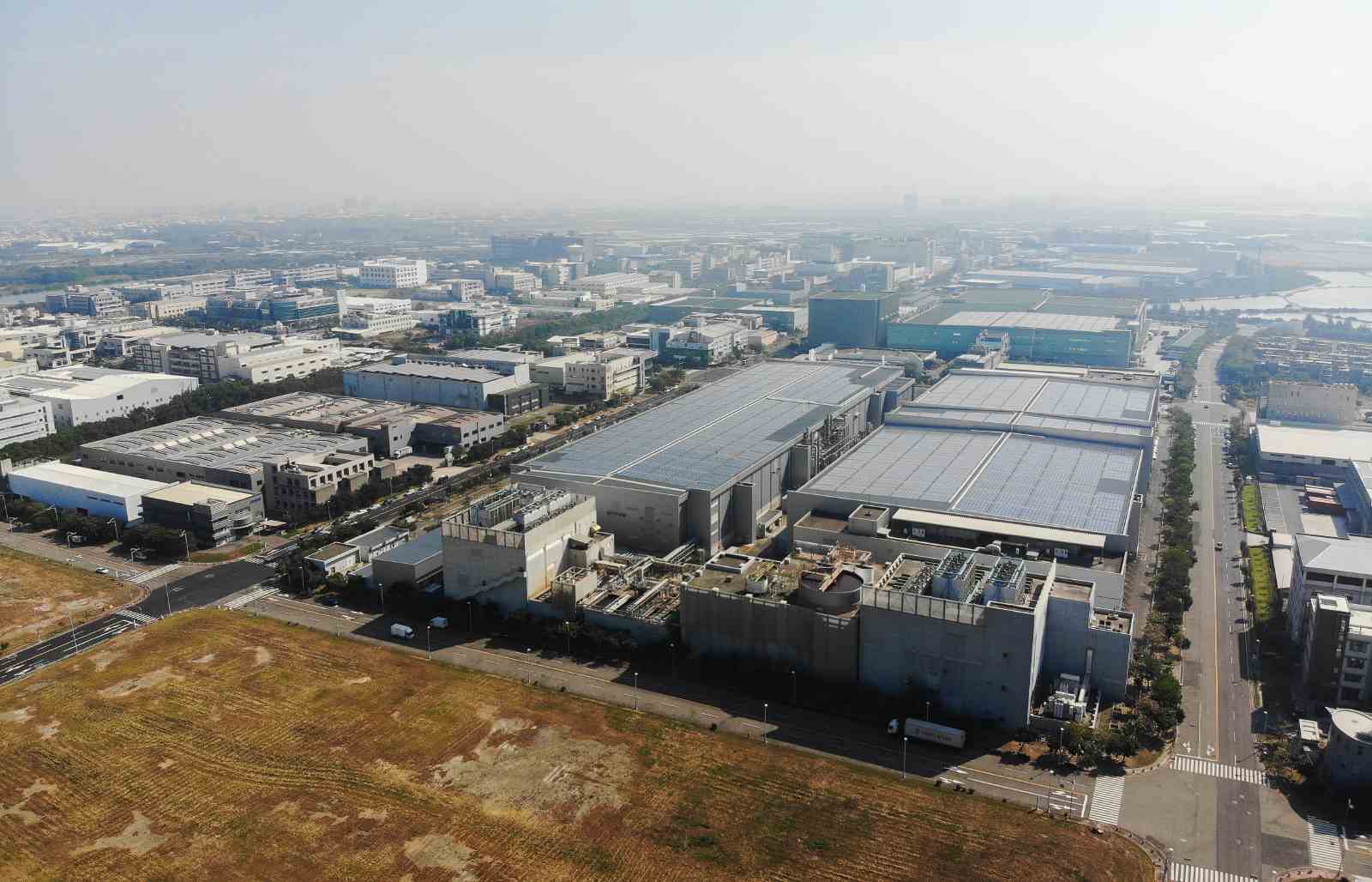 Taiwanese businesses are streaming back, local and overseas enterprises are upping the ante, and land is scarce at the Tainan Technology Industrial Park. AUO Solar, Tainan’s largest rooftop solar panel manufacturer, will soon be squeezed out by new tenant, Google. (Photo by Ming-Tang Huang/CW)
Several Good Years Ahead for Return Investment Flow to Taiwan
With the worsening Chinese manufacturing industry investment climate, the continued U.S.-China trade war, and persistent ambiguity surrounding the outcome, along with the arrival of Industry 4.0 smart production, the ground rules have been rewritten. As a result, Taiwan is experiencing an investment wave the likes of which it hasn’t seen in years.
“The odds of happening to be director general of the Industrial Development Bureau at a time like this are truly exceptionally low!” chuckled Director General Leu Jang-hwa following an interview with CommonWealth magazine.
Leu Jang-hwa is an old hand at the Industrial Development Bureau. After Taiwan permitted the notebook computer industry to move across the strait to China in late 2001, the lights went out on the last domestic notebook production line in 2004, extinguishing investment in nearly every industry with the exception of semiconductors. No matter how much effort was expended, investment in Taiwan could simply not be revitalized.
Over the last two years, the global semiconductor industry, led by Taiwan Semiconductor (TSMC), has continued to invest in Taiwan. On top of this, Taiwanese businesses have returned with investment, and both domestic and foreign enterprises have upped the ante, making Leu a very busy man helping businesses solve land, utilities, and human resources issues. Although he rarely has a moment to spare, he is more than willing to help vendors resolve various issues, from land acquisition to utilities and human resources.
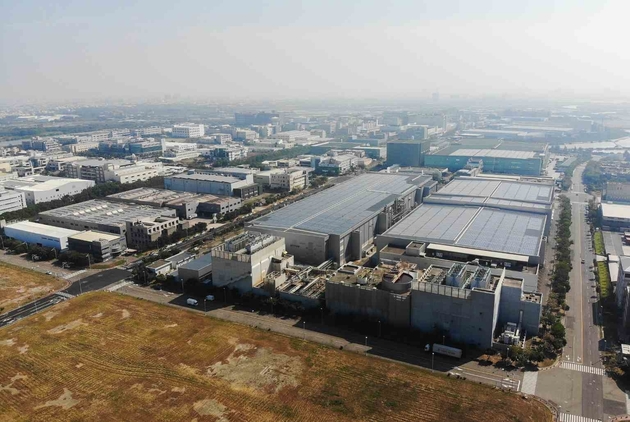
The Tainan Technology Industrial Park is situated on an old salt flat less than three kilometers from the Lu’ermen Empress of Heaven Temple. Although vendors’ concerns about the high salt content have been difficult to alleviate, every available plot of land in the zone except one was sold right away. In order to accommodate the Google data center’s need for 20 hectares of land, the industrial park had to resort to filling in a flood detention basin.
Google spent NT$3.2 billion to purchase land here, equal to the total revenue from land sales the industrial zone made over the past three and one-half years, and making Google the area’s biggest tenant.
“The U.S.-China trade war is really just the straw that broke the camel’s back,” says Wang Jiann-Chyuan, vice president of the Chung-Hua Institution for Economic Research, predicting another two to three years of prosperity ahead as Taiwanese businesses continue to return.
Lin Chi-chao, chief economist at Cathay United Bank, conservatively projects that the Taiwanese business return project spearheaded by the Ministry of Economic Affairs (MOEA) can bring in an additional 90 to 180 billion NT dollars in returning investment in 2020, accounting for a 0.5 to 0.7 percent contribution to GDP growth.

National Enterprise Investment Sets 30-year High
In 2020, a new force for growth will join private sector investment, namely state-run enterprises.
As of 2020, state-run enterprises are mandated to invest a certain proportion of budget in research and development in accordance with the provisions of the Statute for Industrial Innovation. In light of this, plus energy transformation getting underway, the Taiwan Power Company (Taipower) will undertake a large-scale update to the entire country’s electric power system. State-run enterprise investment is projected to achieve 16.91 percent growth in 2020, setting a nearly 30-year high.
As for exports, the DBAS notes that the momentum of emerging technology put into motion by the implementation of 5G, combined with Taiwanese businesses returning to Taiwan as a manufacturing base and increased U.S.-bound exports, Taiwan’s exports are expected to grow 2.69 percent in 2020, representing steady growth.
Exports: Some Winners, Some Losers
Similar to 2019, in 2020 there will be some winners and some losers in Taiwanese exports. For the winners, their stock prices will continually set record highs, while the losers will be forced to take unpaid leave.
“The steep rise in semiconductors (stock prices) is closely related to the phenomenon of order transfers from Huawei,” says Wang Jiann-Chyuan.
According to Wang, even if order transfers dissipate in 2020, the rise of 5G is not far behind, signalling tangible demand in semiconductors, network communications, and information technology. Consequently, the outlook for exports remains good.
On the other hand, industries highly correlated with Chinese trade suffered badly in 2019, including heavy industries like tooling machines, machinery, and chemicals. Chuang Ying-jui, research associate at the Industrial Technology Research Institute’s (ITRI) Mechanical & Mechatronics Systems Research Laboratories, predicts that tooling machinery industry orders will continue to suffer from poor visibility, possibly remaining in the doldrums through the first half of 2020.
As for the petrochemical industry, according to an ITRI survey, nearly 70 percent of domestic petrochemical industry operators are pessimistic about prospects in 2020. Only if petrol prices remain stable in 2020 and the trade war shows signs of abating, thus promoting economic growth, could industry players see improved prospects for profitability over the coming year.
Trade war remains biggest variable for 2020 exports.
Lo Wei, chief economist for Fubon Financial Holdings, sees the trade war as a persistent long-term phenomenon, necessitating adjustments in the industrial supply chain. Consequently, those Taiwanese firms that have opted to return to Taiwan will mostly remain in Taiwan and export from Taiwan. If the trade war abates, then Taiwan’s exports to China and Southeast Asia will increase, bringing better prospects for Taiwanese exports in 2020.
Consumption: Stock Market Wealth Effect Diminished
Buoyed by investment, private sector consumption has begun to recover. However, it has not yet begun to drive tangible demand for manpower and full-scale wage increases. According to DBAS forecasts, the growth rate of Taiwan’s domestic demand will only be 2.02 percent.
“Taiwan is a place where (people) complain every day, yet they can still live peaceful, prosperous lives,” remarks Lo Wei. Consumption in Taiwan has reached a state of rationality associated with a mature economy, as consumers spend money when they need to.”
As reflected in the numbers, Taiwanese consumer spending has maintained a two-percent growth rate since 2016. Consequently, although he is sanguine about Taiwan’s stock market in 2020, the sort of climate where restaurants are filled to capacity for afternoon tea whenever the stock market rises is a thing of the past, indicating that the stock market’s impact on wealth has shrunk.
Generally speaking, although the growth momentum of the Taiwanese economy will likely remain essentially the same in 2020 as in 2019, the difference is that Taiwan’s economists, analysts, and enterprises all speak to how Taiwan can exploit the current U.S.-China trade war, return capital flow, and Industry 4.0 to stage an economic turnaround.
“An opportunity like this hasn’t presented itself for the past 30 years. And it’s not likely to appear again over the next 30 years,” exclaims Lin Chi-chao as he addresses the return of capital flow to Taiwan. What concerns Lin the most is that the next year or two are critical for the transformation of Taiwanese industry. Compared to the short-term numbers, it is this aspect that most interests economists.
Order Transfer Effect: Racing against Time
“The caliber of Taiwanese labor is excellent; when they decide to do something, they do it well!” exclaims Chen Chen-chi, chairman of Chung Jih Industrial Plastic Inc., as he stands next to a constant stream of plastic zip-lock bags emerging from machines at his company’s facility in the Yunlin Technology Industrial Zone.
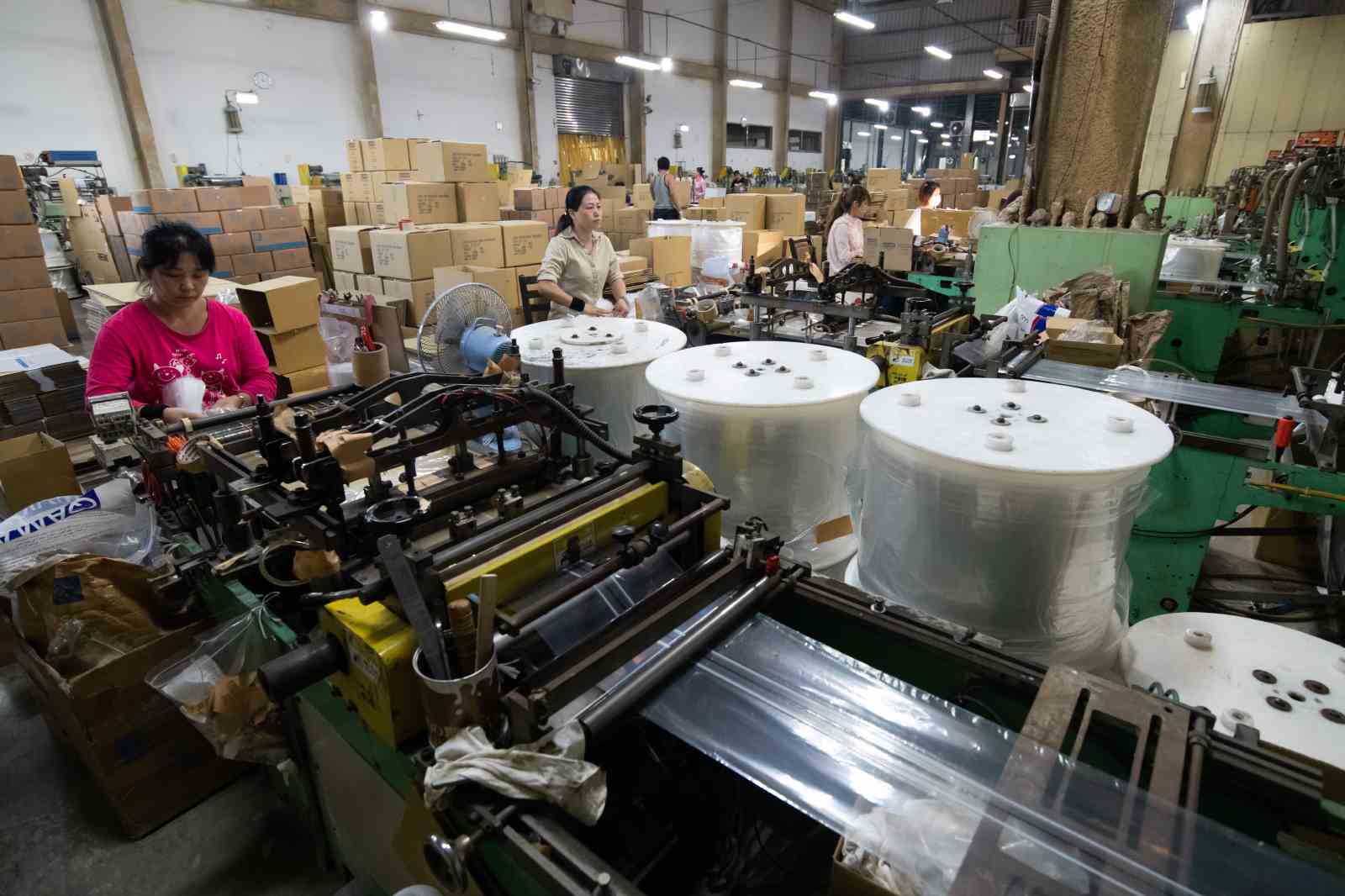 Located in the Yunlin Technology Industrial Park, Chung Jih Industrial Plastic can customize zip-lock bag orders to customers’ specifications. Under the current climate of the US-China trade war, businesses race against time. (Photo by Ming-Tang Huang/CW)
Twenty years ago, Chen Chen-chi opted not to join the fray of Taiwanese businesses moving across the strait to China. Relying on constant production line tweaking and in-house automation of the production line, Chen lowered costs while developing the capacity for total customization. As a result, Chung Jih commands 95 percent of the market share for zip-lock bag exports to the U.S.
And zip-lock bags have been caught in the crossfire of the U.S.-China trade war, with tariffs raised to 25 percent.
U.S.-based customers rushed to transfer orders to Taiwan. However, due to limited production capacity, Chen Chen-chi can only ship two containers instead of the customer’s preferred five. Still, total exports have doubled over last year. “If I’d just expanded the plant a little earlier, I could have captured this market,” he says.
In fact, Chen Chen-chi did purchase a plant facility in 2018 and began drawing up plans to complete expansion in 2019 and 2020. Right now he and Chung Jih are running a race against time, because the current wave of order transfers is cresting around the globe. And as numerous PRC-based manufacturers move machinery to production facilities in Vietnam, if Vietnam ramps up production before Taiwan, all momentum could be lost.
Other than the usual issue of “five shortages” (water, land, power, talent, and labor) to deal with, Taiwan faces greater urgency to undertake “talent transformation” with the arrival of AI and 5G.
The manpower demands of the AI and 5G era differ from those of the OEM contract manufacturing era.
Can the Taiwanese Economy Be Rekindled?
Chen Hsin-hui, a research assistant at Academia Sinica, notes that in the past, due to low profit margins, Taiwan’s highly competitive consumer electronics products had trouble pivoting from a cost-down model to an R&D-oriented approach. However, AI and 5G products have a long lifespan, with emphasis on cross-field applications, and innovative business models, value chains, and cross-industry integration - none of which are particular strengths of Taiwan.
“When every opportunity is in front of you, if you fail to seize them, there’s no one to blame but yourself,” says Lin Chi-chao frankly.
Even the United Nations has noted that Taiwan stands to gain the most from the U.S.-China trade war. Whether Taiwan can seize the opportunity to engender such a transformation is the most crucial factor.
【More economic prospects of Taiwan in 2020】
♦ Top 2000 CEO survey: Optimism over Taiwan at 9-Year High
♦ In 2020, Taiwan’s Green Energy Will Power Tech Giants Like Apple and Google
♦ Unwrapping the Secret Behind the Multi-Million Dollar Faux Meat Industry
Translated by David Toman
Edited by TC Lin, Sharon Tseng
Views

Subscribe to CWE Newsletter (every Thursday)
Stay abreast of what's happening in Taiwan with our weekly digest.
Keywords: