Can Sightseeing Flights Save Airlines?
Starlux Boss: Pandemic Forces Us to Do Unusual Business

Source:Chien-Tong Wang
As international tourism flights remain mostly suspended due to the COVID-19 pandemic, sightseeing flights have become very popular. Can such charter “flights to nowhere” actually save the airlines? How can Taiwan’s newest carrier, Starlux Airlines survive this crisis? Starlux Airlines Chairman Chang Kuo-wei is not ready to throw in the towel just yet.
Views
Starlux Boss: Pandemic Forces Us to Do Unusual Business
By Yi-chih Wangweb only
To announce its second-generation smartphone with a foldable screen, the SAMSUNG Galaxy Z Fold2, Samsung Taiwan generously chartered a Starlux Airlines plane for a round-the-island flight. At an altitude of 26,000 feet, the new phone’s price tag of NT$70,000 was announced. It was the first time that a company had chartered a plane for a “pseudo trip abroad”.
“Starlux Airlines was our first choice because the airline is positioning itself as top-class just like Samsung flagship smartphones. We had the idea a month ago, and it took us less than ten days from inquiry to closing the deal,” notes Jacob Chen, vice president of the mobile and information business unit at Samsung Taiwan. Chen didn’t reveal the price of the charter flight but asserts that it was less expensive than expected, costing about as much as a typical press conference for the release of a new flagship smartphone.
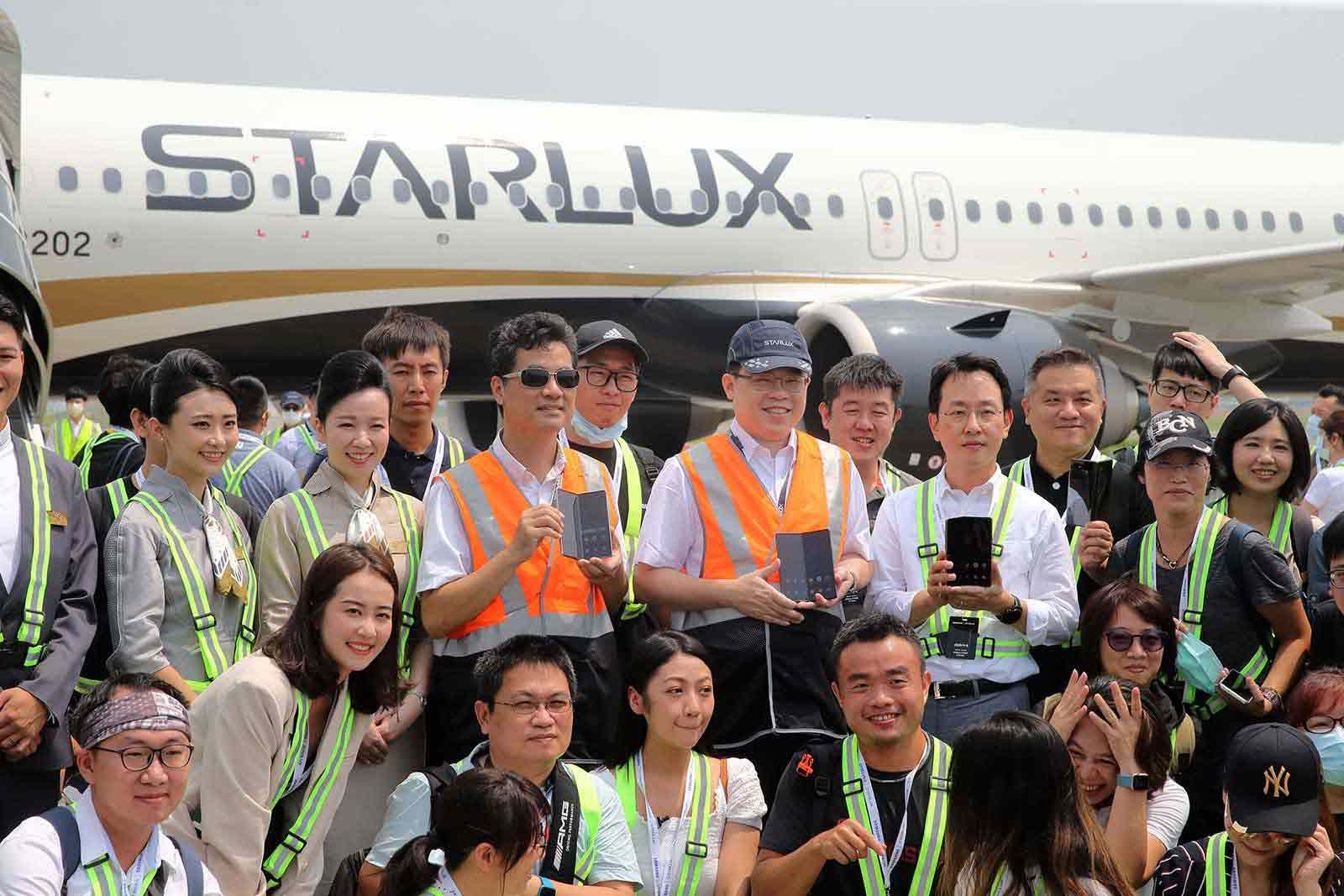
The charter flight took off from Taoyuan International Airport and flew in a northeastern direction toward Miyakojima, the fourth-largest island in the Okinawa archipelago. The plane flew two circles in the skies above the Japanese island before turning around for a sightseeing tour of Taiwan. Passing Turtle Island off the northeastern tip of Taiwan and then the Ilan Plain, the aircraft cruised along the panoramic east coast all the way to the Hengchun Peninsula in the south and then flew back to its home base in Taoyuan. The entire trip took three and a half hours.
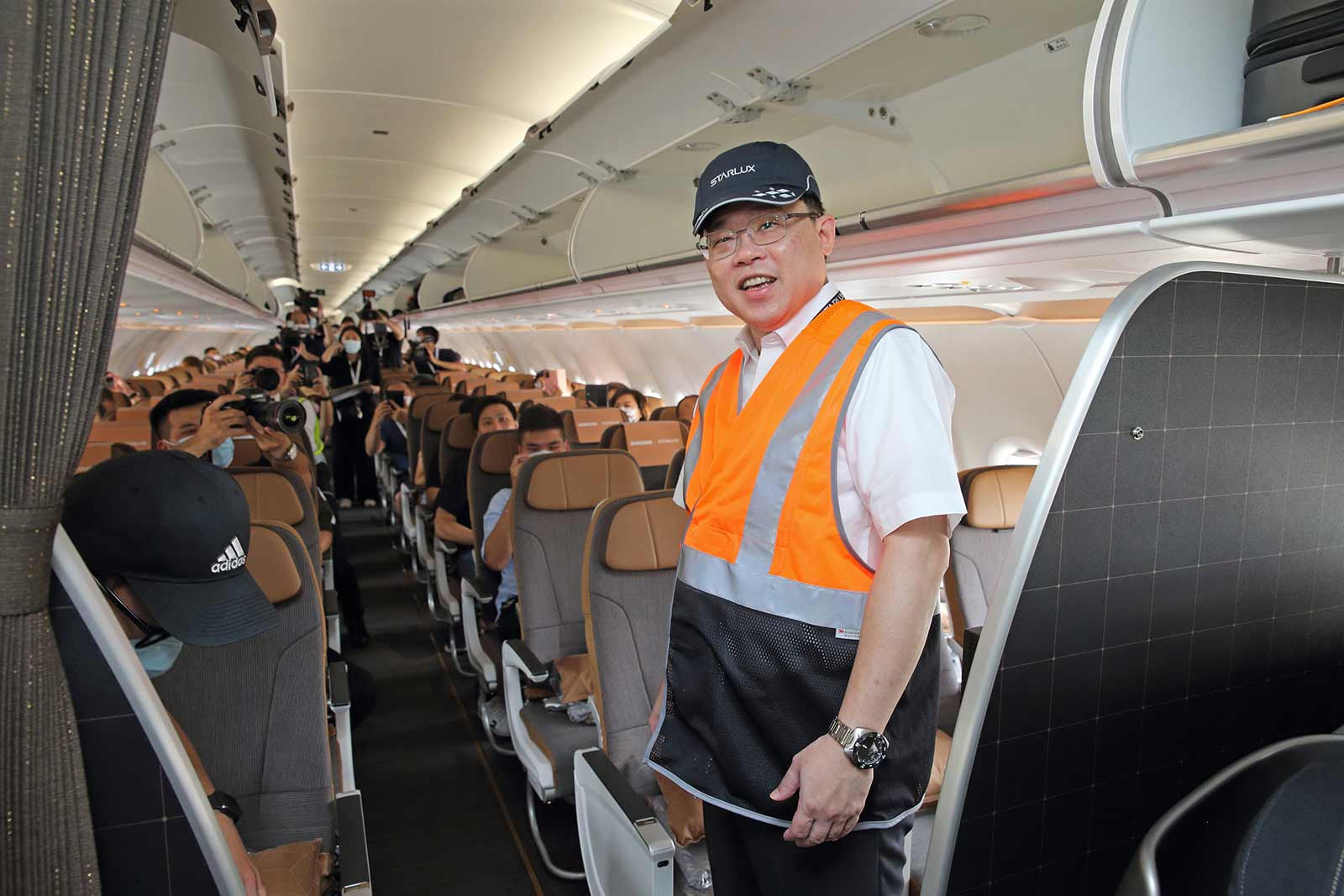
In contrast to the first “flight to nowhere”, Starlux Airlines Chairman Chang Kuo-wei did not fly the aircraft himself but attended the entire product launch press conference, which was held at an airport lounge before the plane took off.
He revealed that the airline is currently in talks with five or six more companies, including potential clients from the direct sales sector, regarding round-the-island charter flights.
Since August 6, when budget carrier Tigerair Taiwan operated the first “pseudo trip abroad”, Starlux Airlines, China Airlines and EVA Airways have all offered sightseeing flights around Taiwan. The flights to nowhere, which Taoyuan Airport personnel jokingly call “one-day trips in the sky”, have become hugely popular over the past few weeks.
“These pseudo trips abroad can’t be called a business opportunity; they only create marketing buzz but won’t have any decisive influence on airline revenue,” says Chang. Worldwide, the coronavirus pandemic is far from being under control. The sightseeing flights can satisfy people’s desire to go abroad and provide an opportunity for grounded aircraft to take to the skies again.
Starlux had to suspend flights to its three destinations of Macao, Penang (Malaysia) and Da Nang (Vietnam) due to the pandemic immediately after they began operating regularly in January. For the time being, flights to Okinawa, Japan, and Cebu in the Philippines, which were scheduled to begin in the second half of the year, are not likely to go ahead.
Yet Chang says long-term planning remains unchanged. In October, the airline will take delivery of four Airbus A321neo aircraft as scheduled. Another six aircraft will be added to the fleet next year. The first wide-body Airbus A350-900 jetliner, which will have a first-class section, is slated for delivery in the fourth quarter of 2021.
Chang is not planning to emulate Eva Airways, where he once served as chairman, by turning passenger aircraft into cargo planes. He believes that the recent rise in air cargo demand can be attributed to the pandemic, but will not prevail for the long run: “Cargo transport has not been a money-making business for more than a decade. These airlines have been losing a lot of money. One should not be tempted to believe that cargo transport is going to be good forever just because of these past few months of pandemic-related business,” notes Chang. He does not, however, expect the pandemic to be brought under control before the middle of next year.
So which countermeasures is Starlux planning to take to hold out until regular passenger flight can resume?
“Not taking countermeasures amounts to just lying down to die,” remarks Chang.
On top of offering sightseeing flights, Starlux has focused its efforts on developing new business opportunities, and relaunched its e-commerce platform Starlux Shop. A limited offer of mooncakes packaged in a miniature air cargo box in collaboration with popular Taiwanese cookie brand “but. we love butter” quickly sold out earlier this month.
During the upcoming Moon Festival holiday, Starlux is offering six “moon sighting” flights to let fans watch the moon close up, landing a marketing coup that created a great deal of attention in the airline industry.
“None of these campaigns constitute our genuine business; they contribute only a tiny profit to our revenue, but as long as the pandemic drags on, we can only rely on our creativity to maintain some buzz,” explains Chang. He does not take credit for the campaigns. He says they were all brainstormed by the Starlux team and that he is only responsible for signing off on them.
At the beginning of this year, the airline had just completed a capital increase from NT$6 billion to NT$8.3 billion as it prepared to launch regular flights. Now ticket sales are frozen, but running costs keep piling up. Personnel costs such as salaries and rent for the corporate headquarters alone amount to NT$500 million per year. And this does not include US$6 billion (NT$180 billion) for the procurement of 17 Airbus A350 jetliners and a monthly leasing fee of US$300,000 to US$350,000 (NT$10 million) for one Airbus A320 aircraft.
Not a few people worry that the startup aircraft won’t survive the pandemic, but Chang seems undeterred. “Why shouldn’t we be able to hold out?” he asks incredulously. After all, airlines around the world are starved for business, but he is somehow confident that better days are coming.
Have you read?
♦ Can Taiwan’s New StarLux Airlines Soar Amidst the Air Travel Slump?
♦ Taiwan’s Tesla Boom, and Looking for More
♦ Taiwan’s Domestic Tourism Challenge: Going High End
Translated by Susanne Ganz
Edited by TC Lin
Uploaded by Penny Chiang
Views

Subscribe to CWE Newsletter (every Thursday)
Stay abreast of what's happening in Taiwan with our weekly digest.
Keywords: