Going global: Starlux’s mission impossible
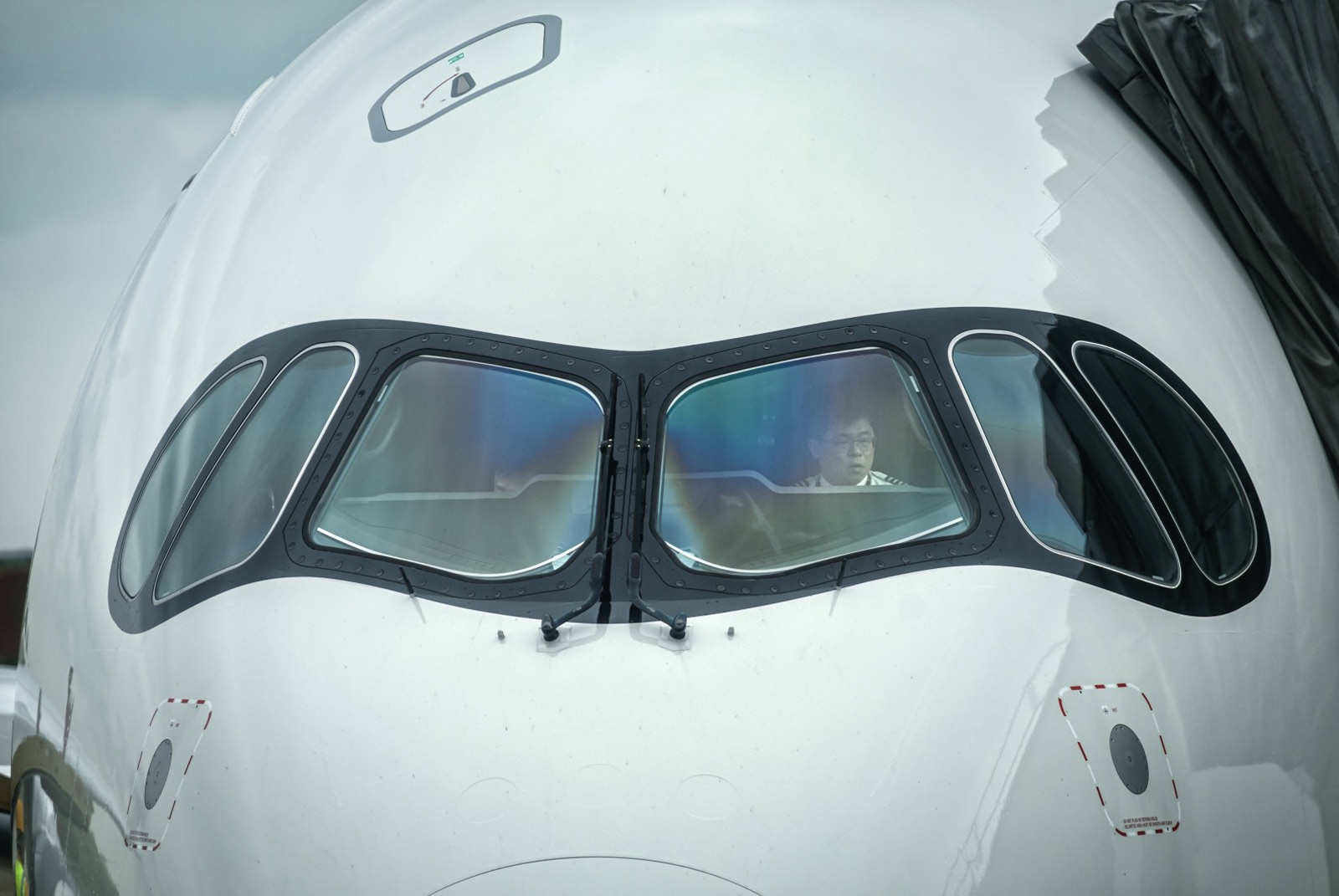
Source:Pei-Yin Hsieh
Starlux Airlines ended its days as a regional carrier when it made its maiden flight to Los Angeles in late April. As it goes international, can the airline compete in a crowded market? What are its potential opportunities and pitfalls?
Views
Going global: Starlux’s mission impossible
By Wang Yi-chih, Allison Hsu, Li-hsun TsaiFrom CommonWealth Magazine (vol. 772 )
On April 26, 2023, Starlux Airlines’ founder and chairman Chang Kuo-wei (張國煒) personally flew the carrier’s maiden long-haul flight from Taipei to North America, jetting Starlux into a new era.
The flight to Los Angeles signaled that Starlux, a regional carrier in its first few years in existence, had become an international carrier. It also evoked a time 40 years ago when Chang’s father, the late Chang Yung-fa (張榮發), went out on a limb in launching trans-Atlantic and trans-Pacific global shipping routes, turning Evergreen Marine into a world leader in container shipping.
The North American route opened the door to a critical element of Starlux’s business model: transit passengers.
Decades ago, Chang Yung-fa boldly expanded his maritime shipping network because he foresaw Asia emerging as the world’s factory. Similarly, according to Starlux CEO Glenn Chai (翟建華), Chang Kuo-wei felt that “Taiwan is well-situated geographically, and if good use is made of that, the market has unlimited potential.”
The vision is anything but a pipe dream. When Chang Kuo-wei was with EVA Air, the airline founded by his father, passengers traveling between North America and Southeast Asia through Taiwan came to account for 40 percent of EVA Air’s revenue and helped turn what was a money-losing carrier profitable.
Today, Taiwan’s two established international airlines – EVA Air and China Airlines – provide ample connections between the two regions, but Starlux believes Taiwan’s aviation market is a long way from being saturated.
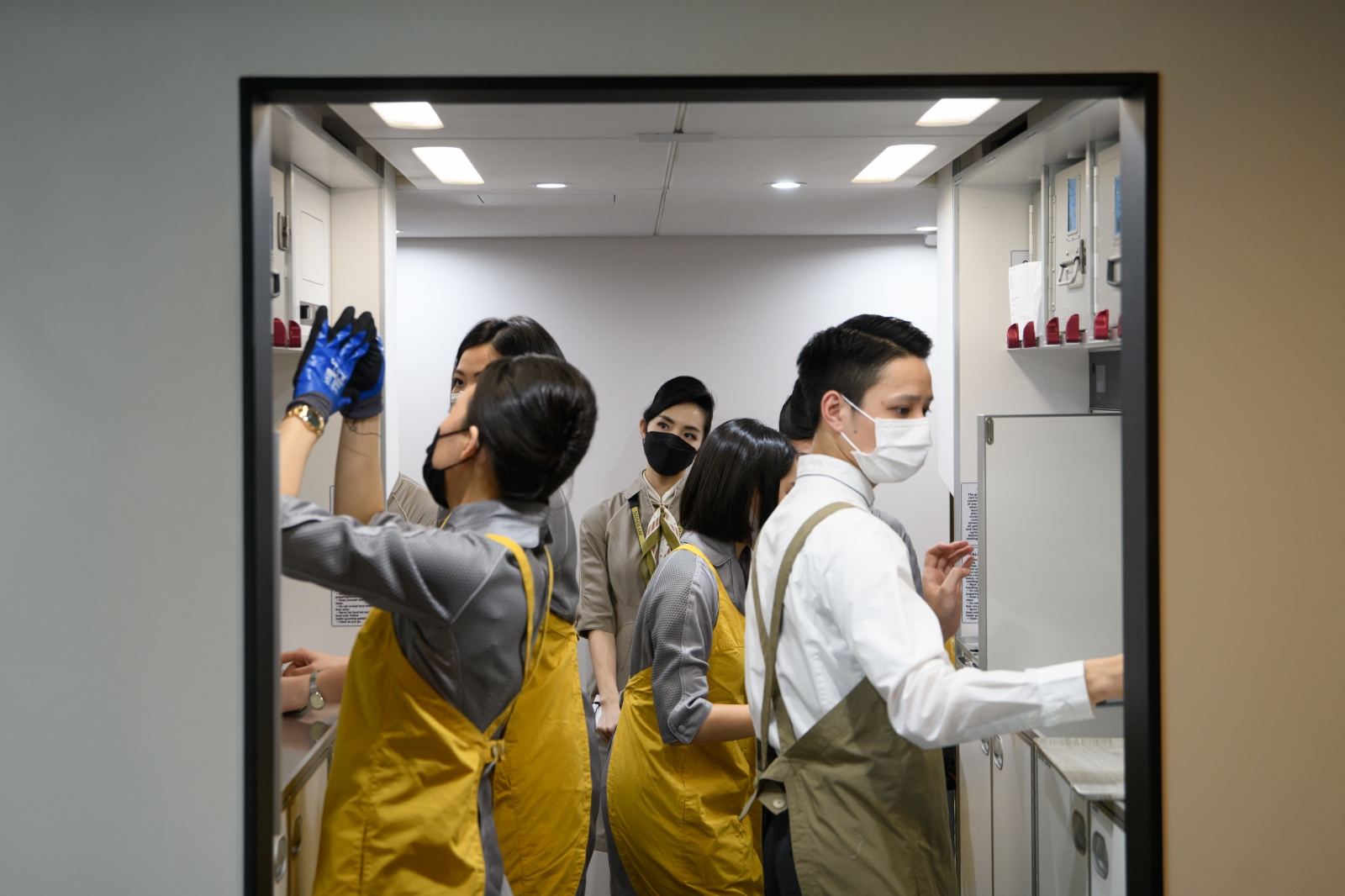 Starlux's staff training (Source: Pei-Yin Hsieh)
According to Chai, there are currently no direct routes connecting Southeast Asia’s 1.2 billion people to North America, and Taiwan’s position between the two makes it an ideal transit passenger hub.
Despite that advantageous position, the capacity of Taiwan’s six airlines combined is not even two-thirds that of Singapore Airlines or Cathay Pacific. Taiwan’s population is roughly four times bigger than Singapore’s, but in 2019 before the COVID-19 pandemic shut down air travel, the city state’s Changi Airport handled 65.63 million passengers, compared to 48.69 million for Taiwan’s main international gateway, Taoyuan International Airport.
“Before the pandemic, there were more than 200 flights a day from Asia to North America. Starlux flying 10 flights on that route wouldn’t be too many,” Chai said.
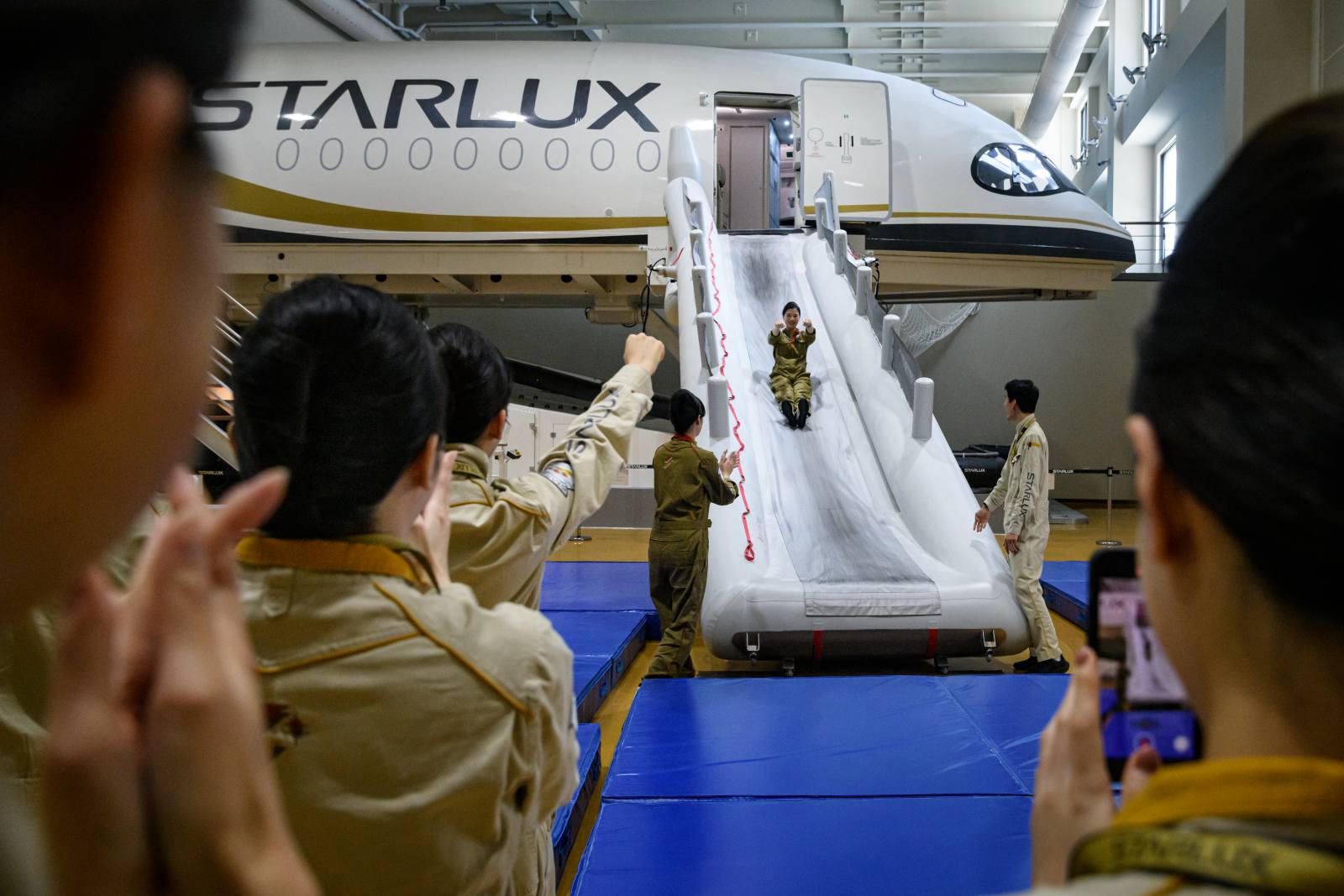 The emergency descent training. (Source: Pei-Yin Hsieh)
Starting with biggest money-maker: TPE-LAX
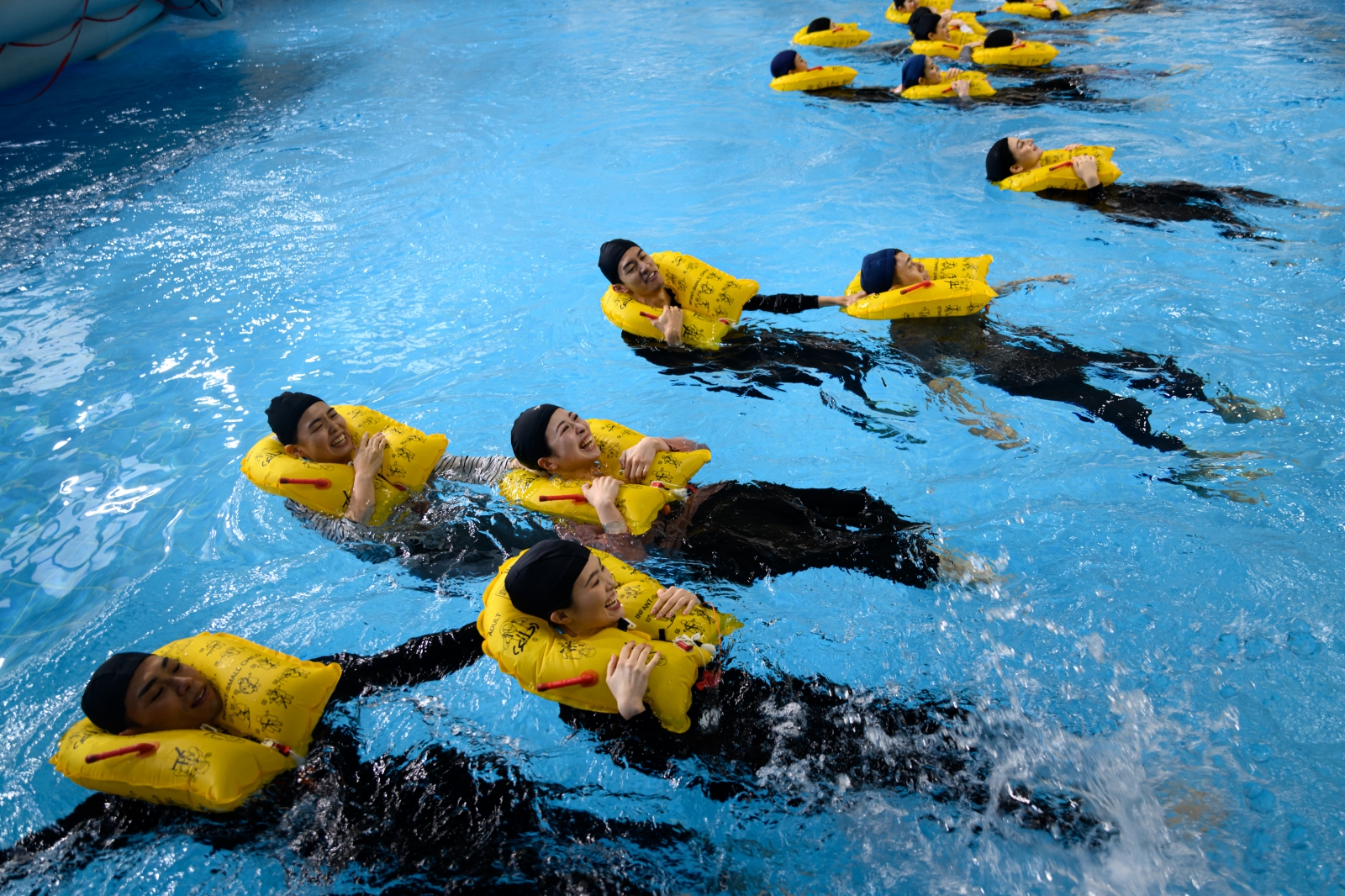 Starlux's safety training pool. Including the first crew of foreign flight attendants recruited from Japan. (Source: Pei-Yin Hsieh)
Civil Aeronautics Administration (CAA) Director-General Lin Kuo-shian (林國顯) believed that Starlux chose Los Angeles as its first North American destination because “it’s a money-making route.”
He also had no doubt that the transit passenger strategy was a high priority for Starlux.
“Of all the passengers China Airlines and EVA Air bring to Taiwan from North America, the final destination of about 70 percent of them is Southeast Asia,” he said.
EVA Air currently offers 21 flights a week from Taipei to Los Angeles, while China Airlines has 10. Starlux will go to seven flights a week from the current five starting in June. It then expects to add to its North American network San Francisco (by the end of the year), a city in the central part of the United States (by 2024), and New York (by 2025), and has not ruled out adding European and Australian destinations.
“We’ll add one long-haul destination a year until the 39 planes are all delivered,” Chai said. “If it hadn’t been for the pandemic, we would have moved faster.”
Walter Liang (梁文龍), chief passenger commercial officer of Starlux’s Passenger Sales & Marketing Division, added, “as long as we have the right strategy, we’re not worried about not getting enough customers.”
And what is his strategy? Doing what his competitors will not or have yet to do.
No rush for an alliance
China Airlines and EVA Air, for example, have focused on Southeast Asia as the source of transit passengers to North America, but Starlux is working the Northeast Asia and Macau markets as well, given that it has 16 destinations throughout East Asia.
Another difference is that other local carriers have been reluctant to accept group tour passengers on North American flights because of the manpower demands it would put on their ticketing operations. Starlux, however, remains willing to work with groups.
Finally, Starlux has yet to join one of the three major airline alliances, giving it flexibility. Emirates and Etihad have yet to join an alliance, Liang said, and “having not yet joined an alliance, I still can negotiate with all three.”
On the day of Starlux’s first flight to Los Angeles, it announced an alliance with America’s fifth biggest carrier, Alaska Airlines, giving it access to 110 U.S. destinations.
“I’m not worried there won’t be customers,” said a confident Chang Kuo-wei that day. He highlighted the importance of flying to North America. “Building up a new route usually takes at least six months,” he said. “We’re already pretty quick.”
Partnering with Delta on maintenance
Starlux has also looked to one of the world’s three biggest airlines to repair and maintain its aircraft in the United States.
At the beginning of 2022, Starlux Maintenance Department Director William Chen (陳世康) began making contact with three aircraft maintenance groups at Los Angeles International Airport (LAX), but Delta Airlines, one of the world’s big three carriers that has 30 Airbus 350 and a 120-person maintenance team at LAX, never replied.
In October 2022, when Chen flew to the U.S. to visit Delta, the first reaction he got to the name Starlux was “I’ve never heard of it.”
Delta, with its fleet of 900 aircraft, had little interest in collaborating with a carrier with fewer than 20 planes, until Chen presented a video showing Starlux’s three types of aircraft flying in formation.
“That was when they knew Starlux was serious and not a low-cost carrier,” Chen said.
To save money, most airlines’ videos of flying aircraft are computer simulations, but Chang insisted on filming real aircraft flying. He had an A350, an A330-900 and an A321-200NX from the Starlux fleet delivered at the same time in Europe and asked Airbus to film it.
“It was really, really expensive. We held countless coordination meetings in advance,” Chen recalled.
As part of his pitch, Chen also told Delta about the time a leading-edge slat (a movable panel on the wing that helps with a plane’s lift) of a Starlux A321 suffered surface damage from a bird attack. While most airlines would have chosen to repair it, Chang decided to replace the slat, because repairs would have required patches on the plane’s surface, hurting the airline’s image.
Chang’s insistence on quality, Chen said, resonated with Delta, and it finally agreed to maintain Starlux’s aircraft.
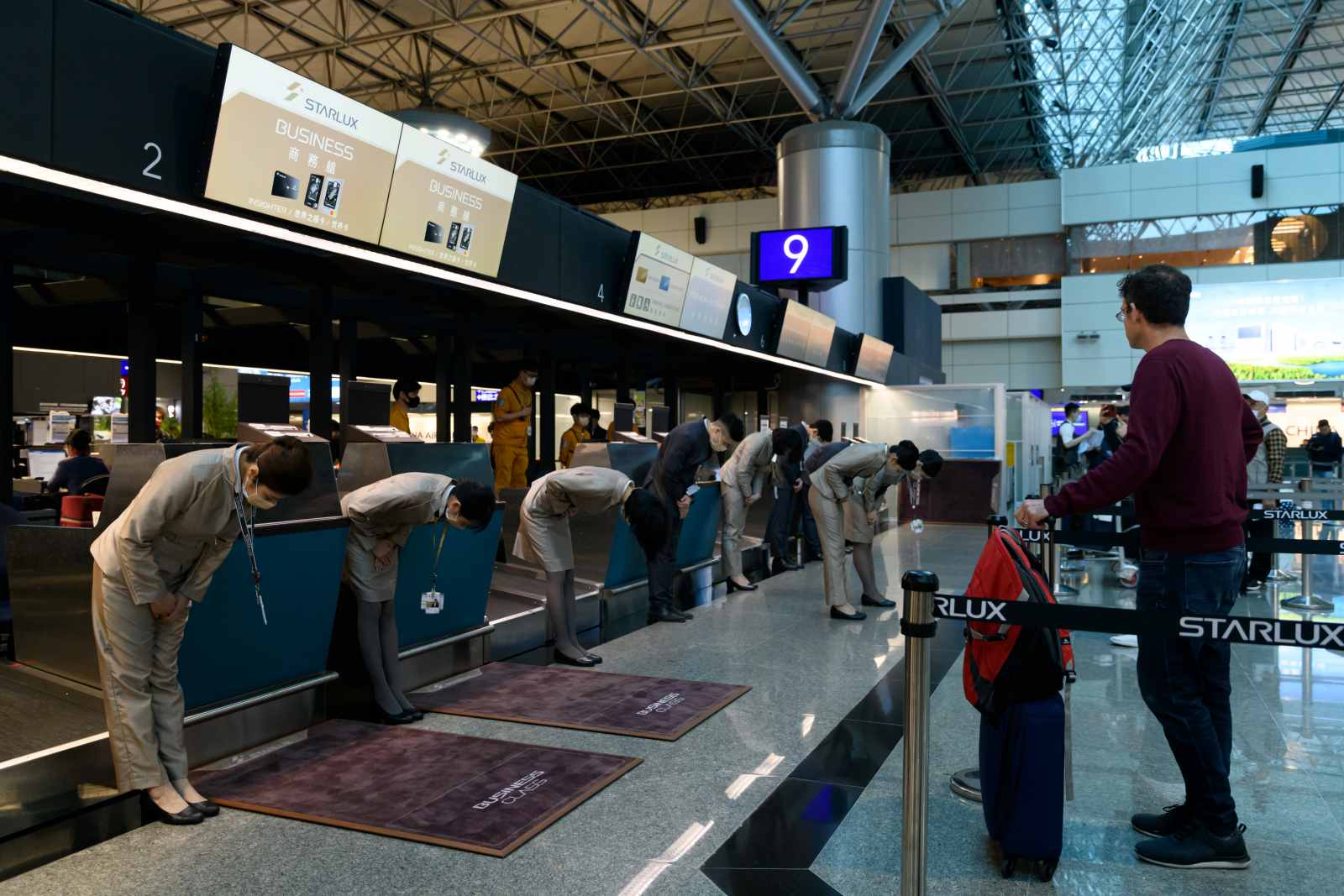 Starlux's opening at LAX airport. (Source: Pei-Yin Hsieh)
Reviving first class
In trying to set itself apart from the competition on its North American route, Starlux has also revived first class, the first time it will be available at a Taiwanese airline in 20 years. Demand has existed in Taiwan for a cabin service between a private jet and business class, Chai said, but no airline has offered the product.
Starlux will furnish each of its long-haul A350 aircraft with four first class seats, and the run-up to their introduction has been meticulous. The airline spent two years planning the upscale service, and it selected 150 of its 600 flight attendants to be retrained for the new offering that has left little to chance, including preparing seven types of wine glasses to accommodate different wines.
To perfect the level of service, Chang even invited travel industry executives to pose as passengers in a dry run of first class service prior to the maiden flight, and asked them to give feedback on how flight attendants performed, from serving meals to making up beds.
This new first class product has also led Chang to collaborate with EVA Air for the first time since he left his former company.
China Pacific Catering Services (華膳空廚), which is partly owned by China Airlines, is Starlux’s main caterer. But Winnie Chiou (邱韻如), director of Starlux’s Catering Management Department, said the supplier is nearly at full capacity, and it decided to have its long-haul flights catered by Evergreen Sky Catering Corp., an affiliate of EVA Air.
In business for only five years, Starlux has undoubtedly emerged as the new Taiwanese brand most adept at attracting interest, but it still faces several challenges that could still thwart its prospects.
Challenge No. 1: Managing the brand
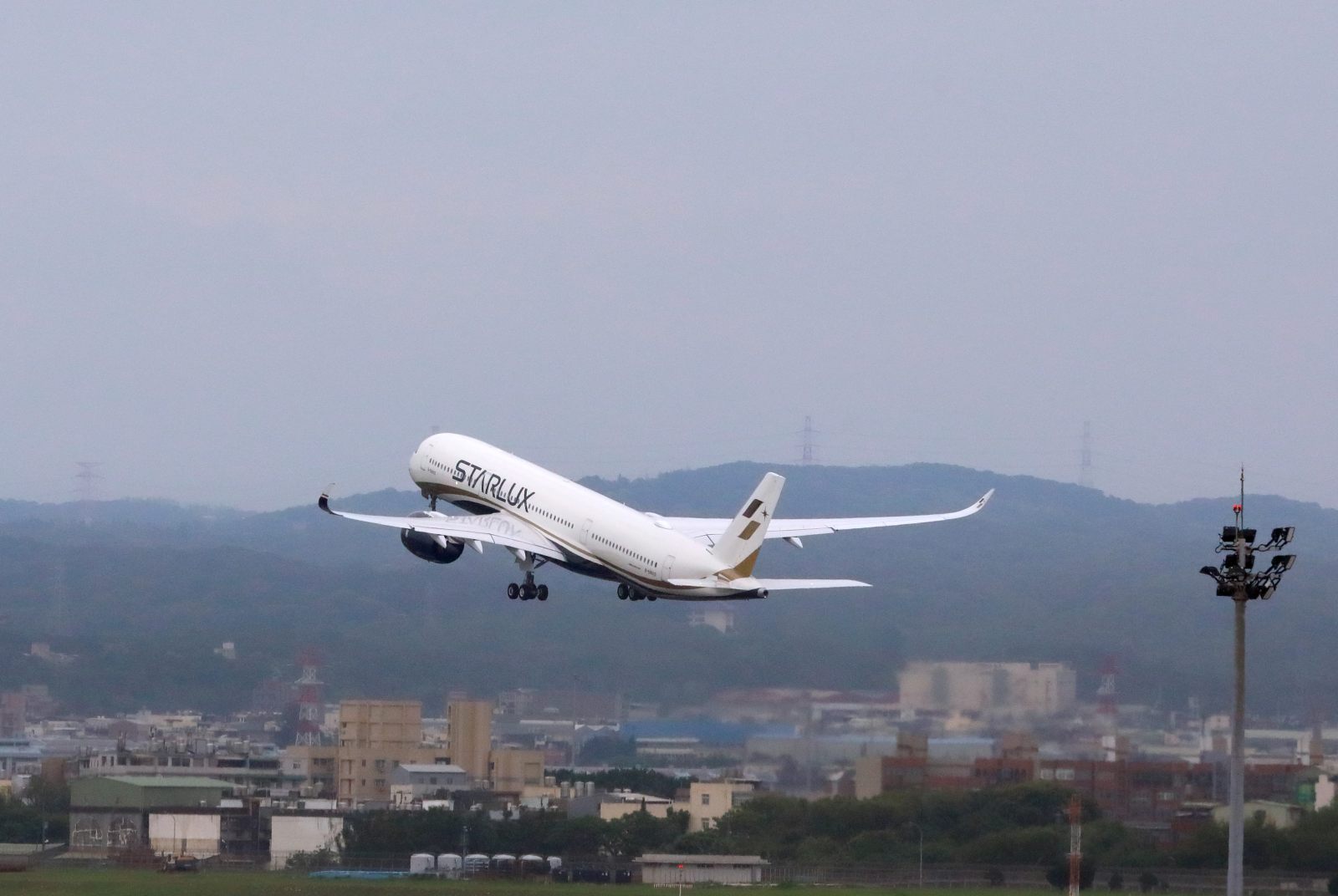 (Source: Chien-Tong Wang)
“Starlux’s brand building has been really strong,” said Lion Travel general manager and spokeswoman Ann Lai (賴一青). She found that whenever Starlux opens a new route, 10 out of 10 consumers surveyed will say they are willing to give it a try.
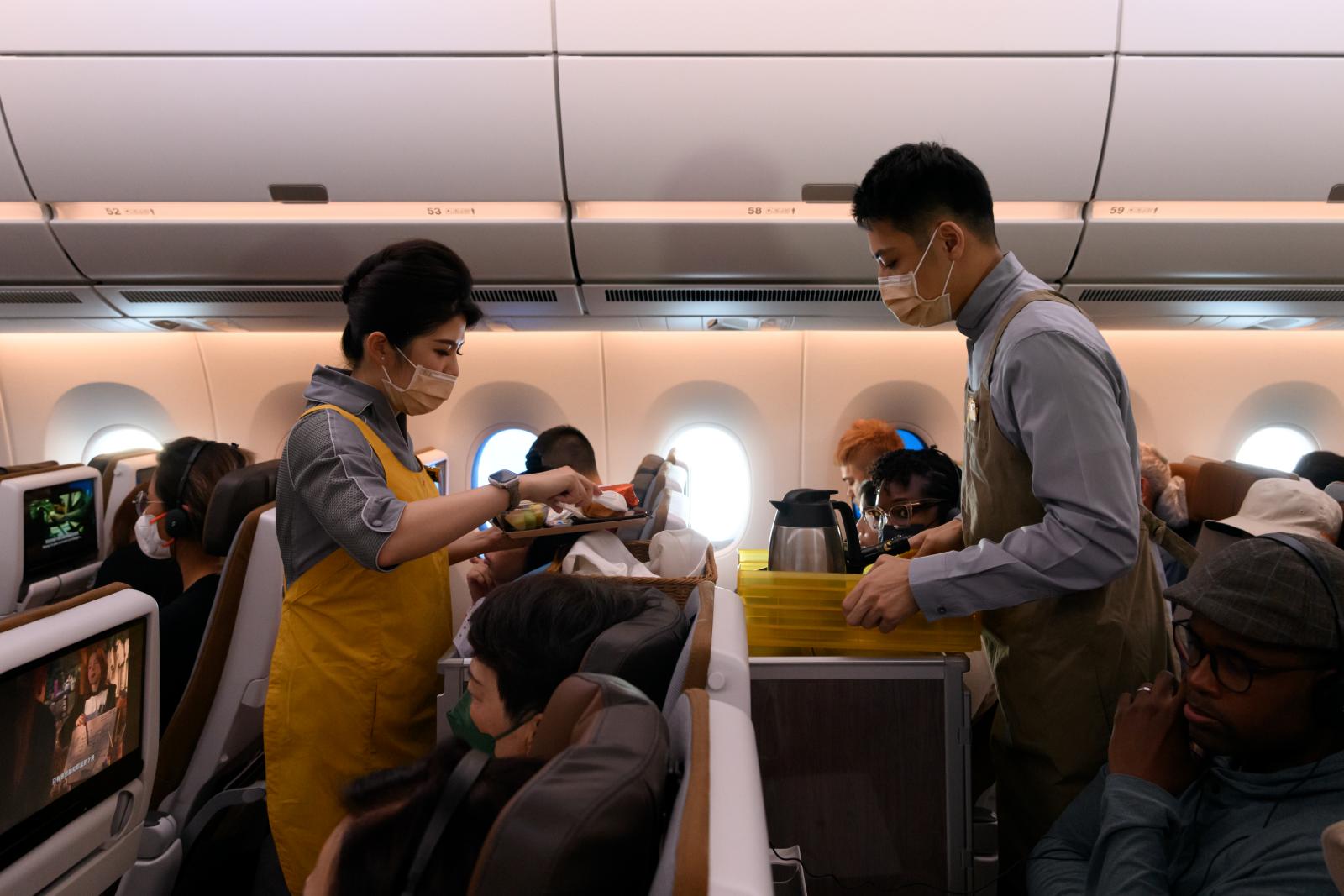
Starting in October 2022, however, negative comments about Starlux began appearing online, belying the airline’s carefully sculpted brand image. “We have to change what we are not doing well. But our customer numbers suddenly soared after the pandemic ended, and everybody is doing their best,” Chang said.
Chai did not deny that once COVID-19 restrictions were lifted, customer inquiries shot up 30-fold and several problems emerged, including customer service not answering calls and customers being unable to change a seat selection online. That left many Starlux supporters disappointed.
Chai said he is currently engaged in 40 projects that he expects will resolve those issues.
 (Source: Pei-Yin Hsieh)
Challenge 2: Looming money pit
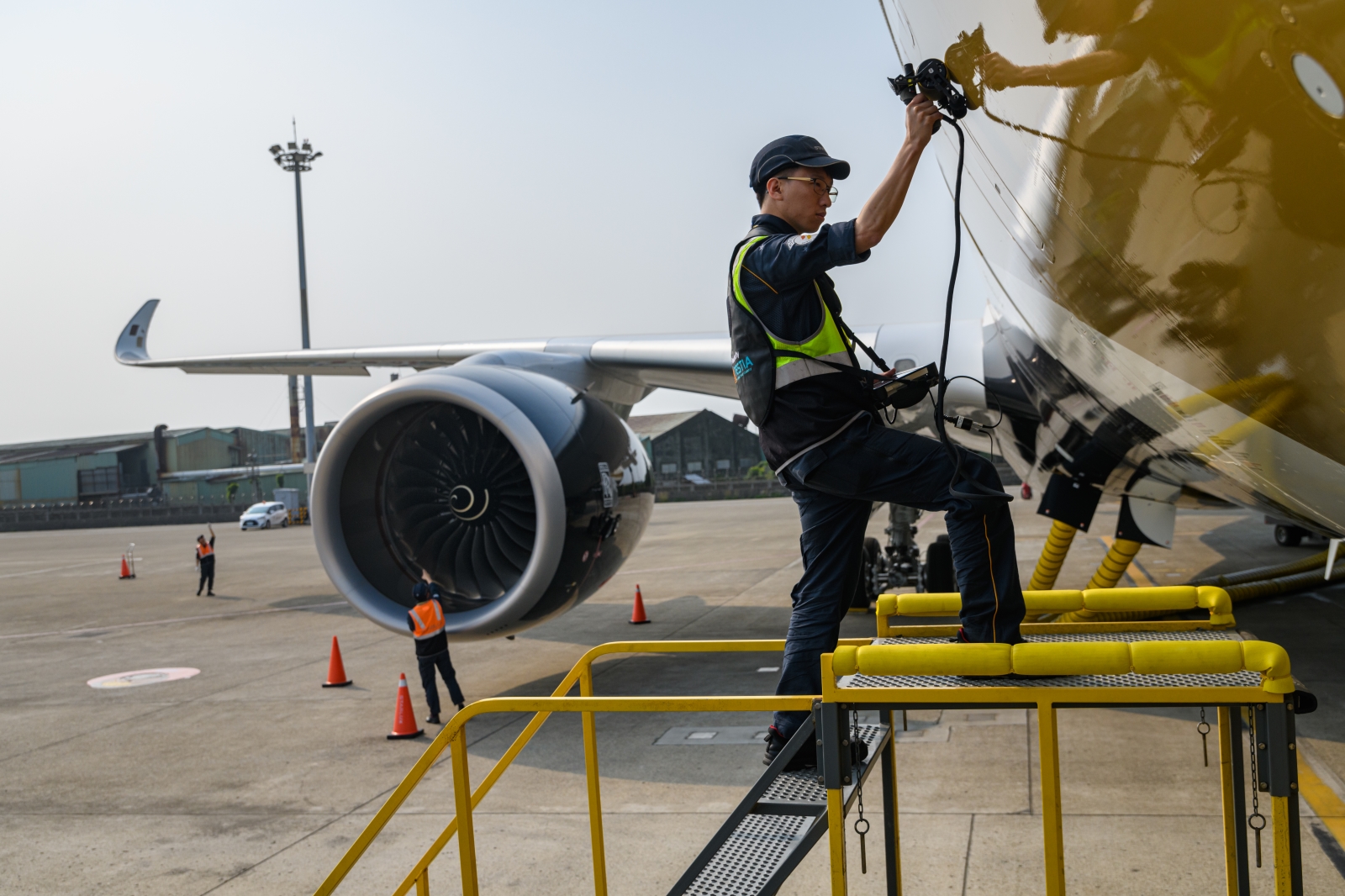
Finances represent another potential roadblock. Capital expenditures are sure to rise as new aircraft are delivered and a maintenance hangar is built, meaning that for a company already saddled with accumulated losses of more than NT$10 billion since its founding, its financial pressures are only beginning.
 (Source: Pei-Yin Hsieh)
Chang had been Starlux’s only shareholder since the airline was established in May 2018 until last year, when it began seeking funds from institutional investors. It applied to be listed on the Taipei Exchange’s Emerging Stock Market and launched a NT$4 billion cash capital increase.
Earlier this year in February, Starlux announced a second capital increase aimed at raising NT$4.86 billion.
Yet these moves could just be the start, even if Chang gets an inheritance of NT$14 billion as recently ruled by a local court. Just in terms of aircraft purchases, Starlux has committed to buy planes worth more than US$5.8 billion (or about NT$174 billion).
Starlux has taken delivery of three A350s, at a cost of nearly NT$10 billion apiece, and their depreciation is already showing up on financial statements. The other 14 A350 on order should start arriving in Taiwan in the second half of the year, and the cost of those aircraft, combined with the costs already incurred to build an operations center, maintenance hangar and bonded warehouse building, means more money flowing out the door.
At the same time, the pandemic disrupted Airbus production lines, leading to delayed deliveries that could stall Starlux’s expansion. Starlux has been pushing Airbus to speed up deliveries, Reuters reported on April 20, and the understanding the two companies reach will determine when Starlux launches new routes and new sources of revenue.
Yet according to Chai, “the pandemic lasted for three years, and the worst of our financial situation is behind us.”
Noting that the airline’s load factor averaged 70 percent in the first quarter of 2023, he was hopeful that the airline could break even for the year.
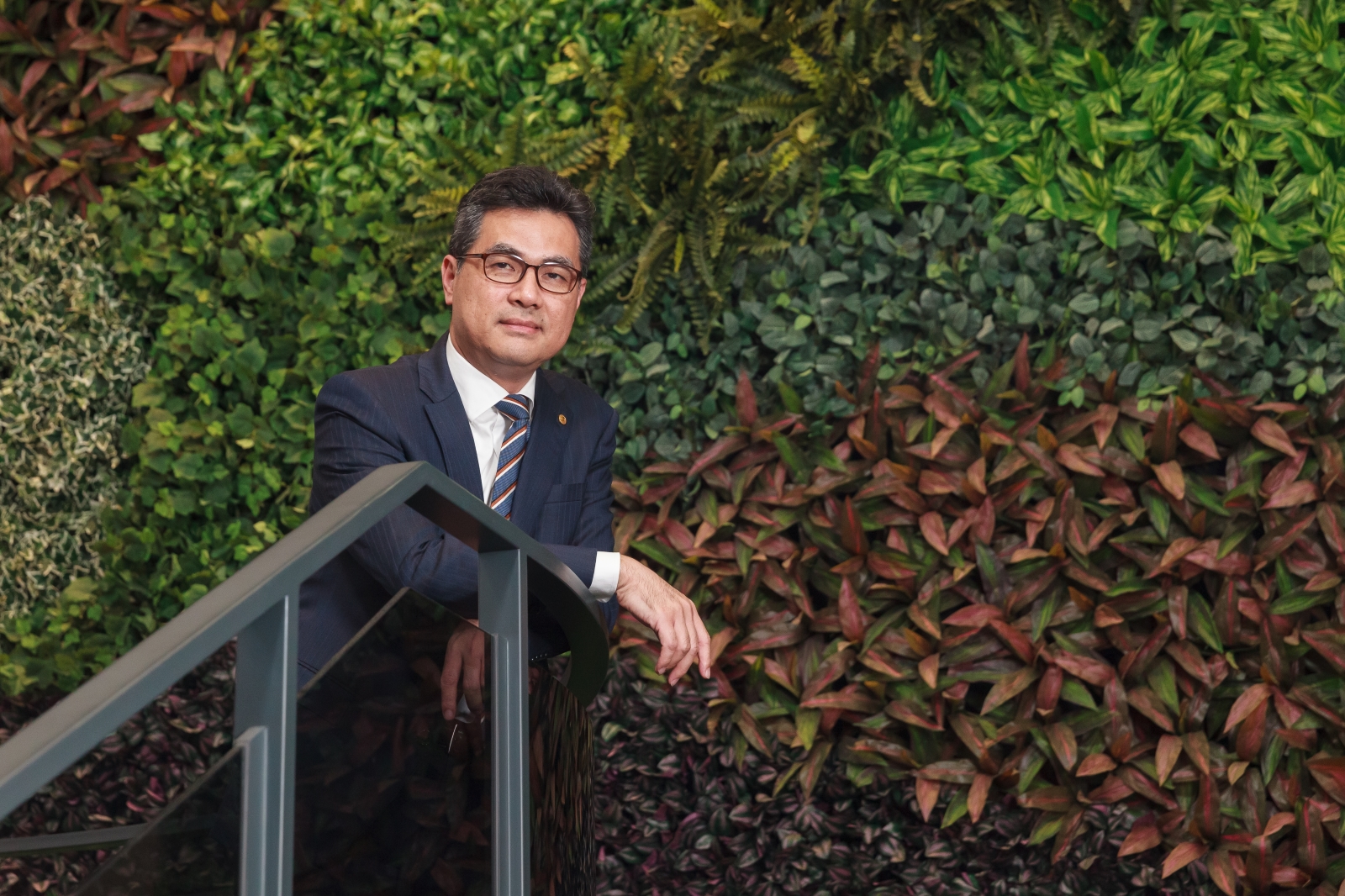 Glenn Chai, CEO of Starlux Airline (Source: Chien-Ying Chiu)
The biggest uncertainty: The government
The one factor out of Chang’s control that could determine his airline’s fate is Taiwan’s development of basic infrastructure.
To launch its new North American route, Starlux had to move into Taoyuan International Airport’s Terminal 2, but its flights to Southeast Asia have departed from Terminal 1. For passengers flying Starlux between North America and Southeast Asia and transiting in Taiwan, that could be an off-putting inconvenience.
Chang has also wanted to provide Starlux’s own first class and business class lounges at the Taoyuan airport, but space constraints have forced him instead to collaborate with Huan Yu VIP Terminal for lounge services.
Starlux had pinned its hopes for airport berths and space on the airport’s planned third terminal. But that terminal has faced major delays, caused by the failure of three successive tenders for the terminal building’s construction to produce a contractor and the labor shortage resulting from the pandemic.
At present, the terminal’s North Concourse is scheduled to be completed next year and the project as a whole should be done by 2026. That simply is not fast enough for Starlux, which wants to introduce a new route every six to eight months.
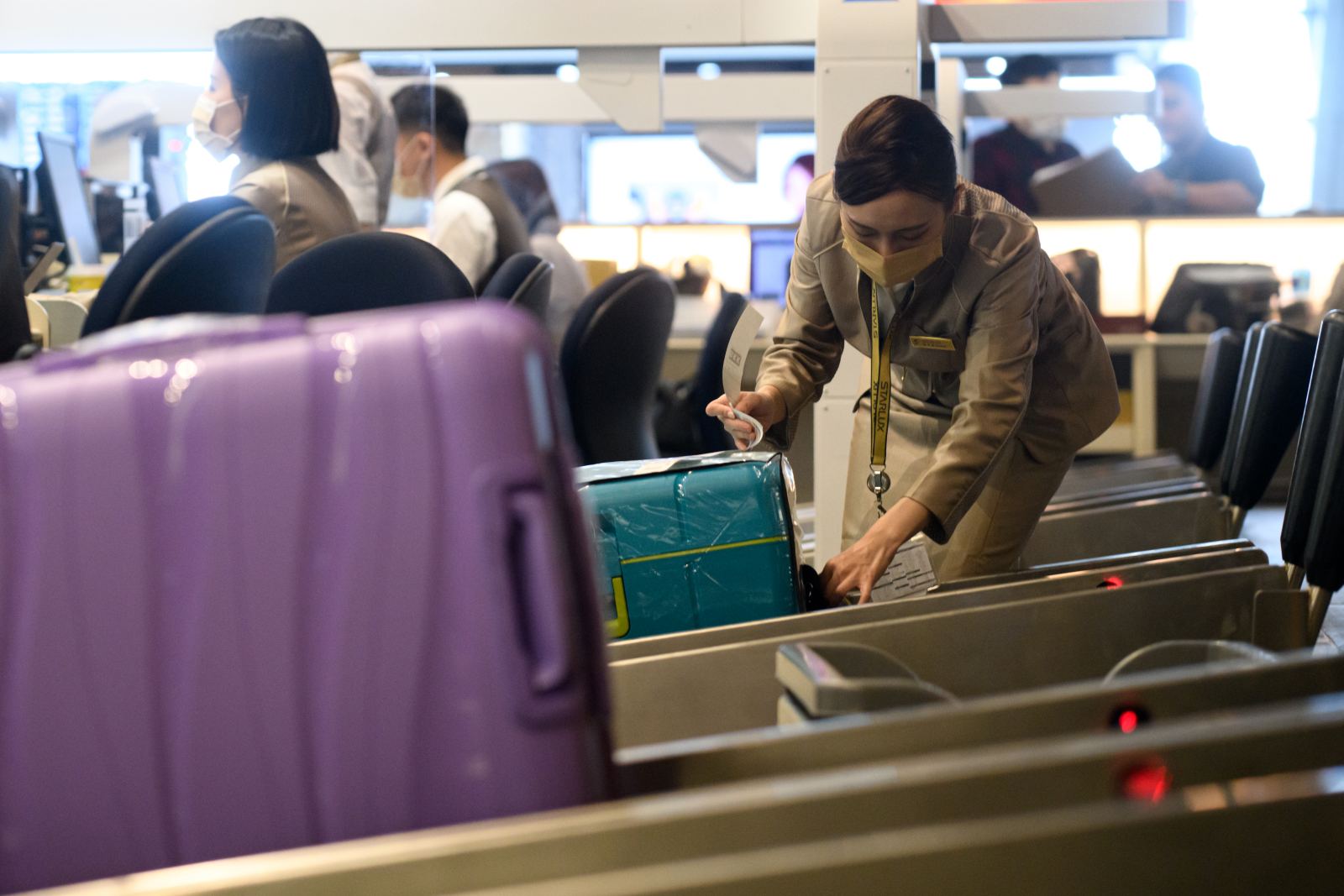 Despite Starlux's vision of providing better quality services, the infrastructure in the Taoyuan airport still comes with its challenge. (Source: Pei-Yin Hsieh)
It was not surprising, then, that Chang complained on Starlux’s first flight to Los Angeles that while most countries around the world are developing tourism, Taiwan stands out as one that does not seem to prioritize the sector.
“Singapore’s Changi Airport originally copied Taoyuan International Airport. It’s now built five terminals, but it’s still unclear when Taiwan will complete its third terminal,” he said.
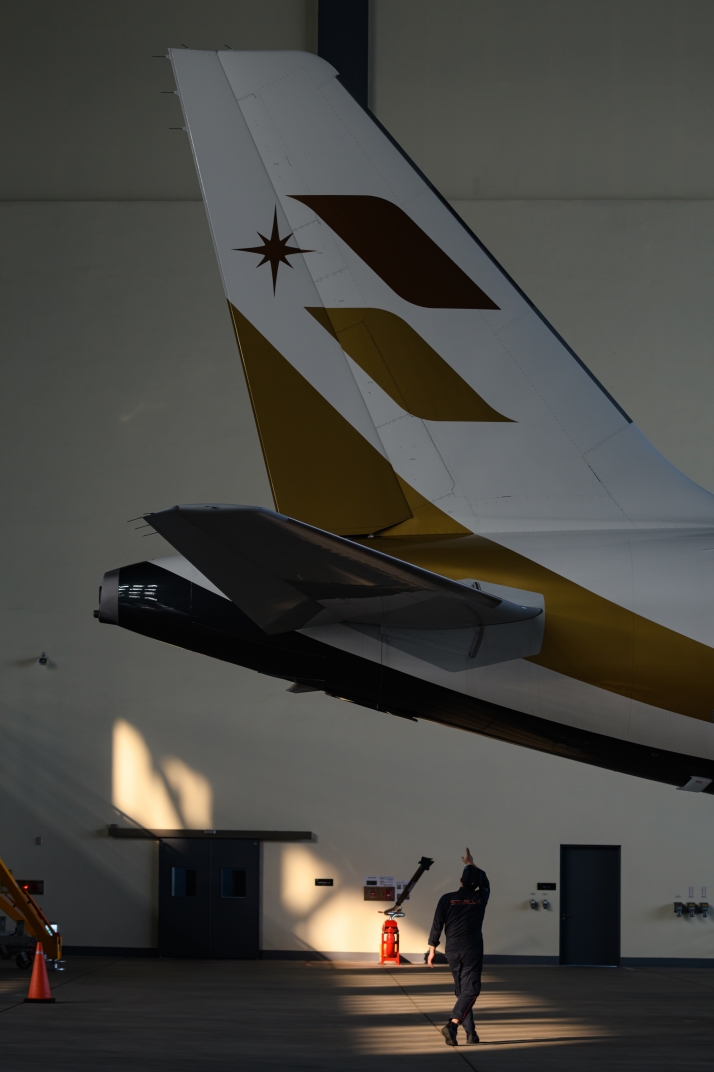 During the pandemic, in order to train its flight crowds, Starlux once flew an empty flight. (Source: Pei-Yin Hsieh)
Starlux has achieved a new milestone, successfully launching its first long-haul route. But can it overcome the turbulent currents it faces in the near future and reach its destination smoothly? That journey is just beginning.
Have you read?
- Starlux Boss: Pandemic Forces Us to Do Unusual Business
- Can Taiwan’s New StarLux Airlines Soar Amidst the Air Travel Slump?
Translated by Luke Sabatier
Uploaded by Ian Huang
Views

Subscribe to CWE Newsletter (every Thursday)
Stay abreast of what's happening in Taiwan with our weekly digest.
Keywords: