Taiwan Must Raise Consumption Tax to Narrow Wealth Gap
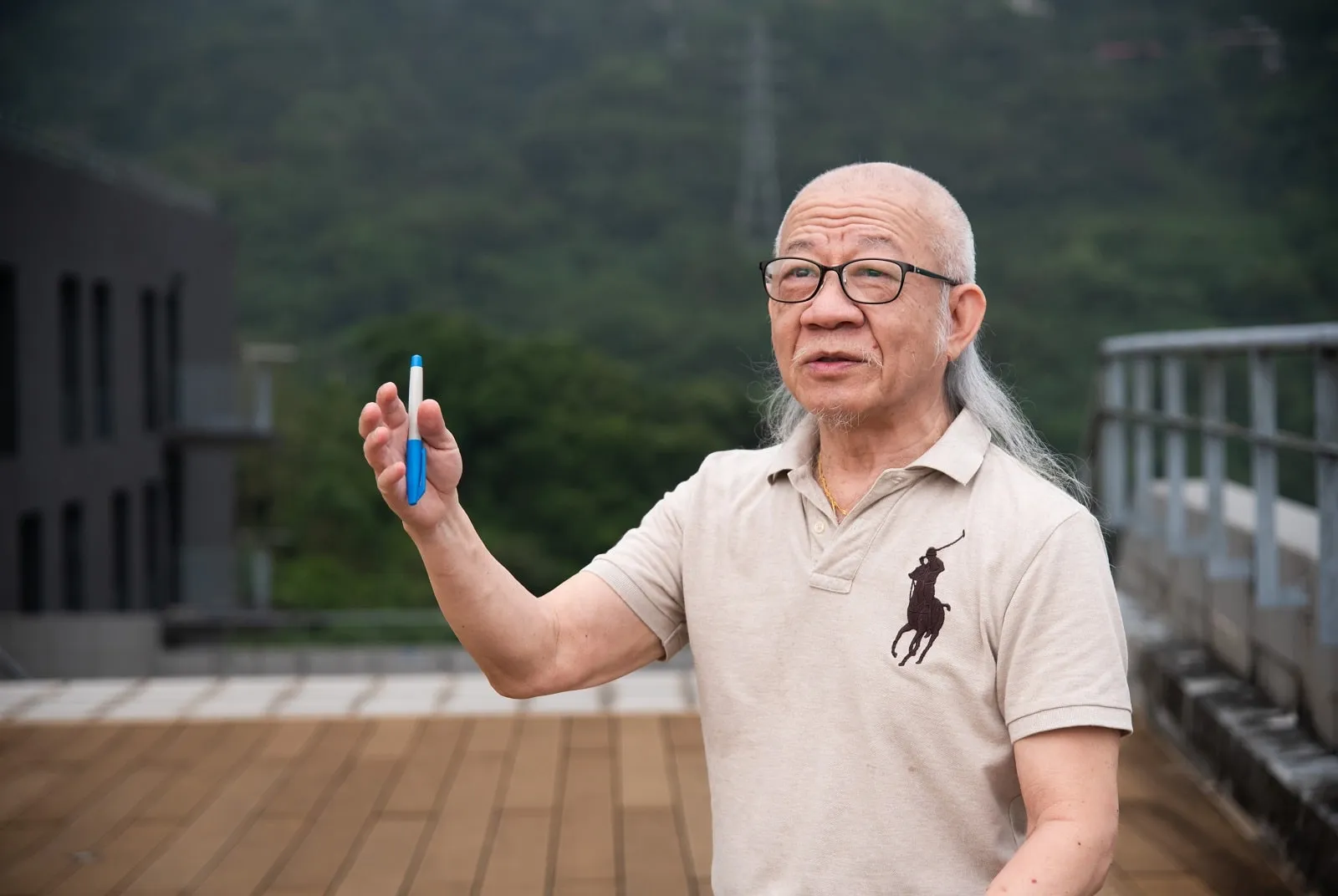
Source:Ming-Tang Huang
The truth about Taiwan’s wealth gap is that the rich use their money to make more money but only pay a small amount in taxes, making the wealth gap increasingly severe. But why does taxation expert and former legislator Tseng Chu-wei argue that the business tax, not the income tax, is the key to reforming the taxation system?
Views
Taiwan Must Raise Consumption Tax to Narrow Wealth Gap
By Pei-hua Luweb only
After a hiatus of 30 years, the government has released a family wealth survey. It shows the real face of the wealth gap in Taiwan.
The Directorate General of Budget, Accounting and Statistics (DGBAS) used its Survey of Family Income and Expenditure 2021 to calculate the Gini coefficient of family wealth, which stands at 0.606. At the same time, the Gini coefficient of family income stands at only 0.341. The Gini coefficient or index is an indicator that measures the degree of inequality in the distribution of income or wealth in an internationally comparable way. The higher the coefficient, the greater the inequality. In other words, the wealth distribution in Taiwan is more inequal than the income distribution.
Scholars have done similar surveys for some time. Economists with Academia Sinica and National Chengchi University have calculated the Gini coefficient of wealth based on taxation data and assets that were accumulated over time or inherited, such as stock holdings and real estate. They not only found that the Gini coefficient of wealth is higher than the Gini coefficient of income, but also that the younger a generation is, the bigger the wealth gap becomes.
“The problem with tax reform is that it has always let the rich off lightly,” says former legislator Tseng Chu-wei.
The taxation system, in particular the income tax, can be seen as a redistribution tool to reduce the wealth gap. With the release of the Survey of Family Income, tax reform has again taken center stage. During his time in the Legislature, Tseng, who participated in many meetings of the Tax Reform Commission under the Executive Yuan, pushed for the securities transaction tax. He believes that Taiwan needs to rely on a consumption tax to reform the taxation system in the future. Why is this the case? The following are excerpts from a CommonWealth interview with Tseng:
The wealth gap has not been a topic of discussion for a long time. I have spent my whole life thinking about how to change the situation, but the problem has continually grown worse over the past decades. From the alternative minimum tax and the securities transaction tax to the dividend tax, these schemes were all wealth taxes that were hoped to counteract inequal income distribution, but the wealth gap has nonetheless widened further.
Income tax schemes won’t narrow the wealth gap
In the past 30 years, 90 percent of redistributed after-tax income in Taiwan stemmed from the social welfare system, and only 10 percent from taxation. To put it bluntly, income redistribution means robbing the rich and helping the poor; taxation is robbing the rich, while social welfare is helping the poor. But we depend too much on handing out money [to those in need] without taking money from the rich. That’s not right.
Because this means that we take money from the middle class to save the poor while letting the rich off lightly. Those who make a lot of money in the stock market don’t pay a single cent in tax. Before the introduction of the combined tax on house and land transactions, people who made money from real estate did not have to pay tax either.
But to be honest, there is not much room left to do the job of taking from the rich if you want to achieve this through income taxes.
This is because after house and land transactions were taxed based on actual prices, the real estate transaction tax has already improved; all that remains [to be taxed] are securities.
We don’t have a securities transaction tax, and dividends are again taxed separately from other taxable income; therein lies the problem. Given Taiwan’s special environment, I personally deem the possibility of a revival of the securities transaction tax to be extremely low.
If we don’t rely on the income tax [to redistribute wealth], we need to rely on the consumption tax and change the uniform business tax rate to a progressive tax rate as is done abroad.
Back then, we levied a tax on specifically selected goods and services, which actually aimed to tax real estate transactions. Subsequently, this tax was replaced by the house and land transaction tax. What is left now are taxes on imported luxury cars, yachts, aircraft etc., and tax revenue has shrunk significantly. The idea is to increase the “rob the rich” effect within the consumption tax system.
Designer bags should be taxed more, salary hikes should lead to tax credits
That the business tax rate is too low is an old problem, one we have not managed to touch for decades, but no matter how, Taiwan must face this situation. Once a discriminatory tax rate has been introduced for the business tax, we should look for taxes on specifically selected goods. For instance, designer bags are for sure only bought by rich people; everyone acknowledges that, so these could be slapped with a higher tax rate.
However, the trouble is that rich people can buy these outside of Taiwan, and then Taiwan can still not impose taxes.
Aside from taking from the rich, low salaries will also must be raised. Low salaries are very unfair toward young people. The Ministry of Finance probably believes that it has nothing to do with low salaries, but you can use tax incentives to encourage companies to raise salaries.
The Legislative Yuan is currently reviewing an amendment to the Act for Development of Small and Medium Enterprises; it has deleted business-indicator-related thresholds for triggering tax incentives to hire more people and raise salaries. On top of that, the deductions have been increased from the original 130 percent to 150 percent [of the annual gross salary payments to newly hired employees]. This is wrong. Employment should of course only be encouraged [with tax incentives] when the economy is not good.
Salary hikes are not related to the economic cycle, so the business-indicator-related thresholds can be scrapped. But companies do not raise salaries just for one year, so the deductions should be given for three to five years. However, the additional amount [eligible for deductions] should be reduced year after year and not increased as lawmakers keep demanding right now.
Moreover, the Statute for Industrial Innovation could be amended. Currently, when companies use their money for investments, they do not have to pay five percent tax on retained earnings. I would recommend that the same should apply if employee salaries are raised. If companies don’t follow through, the Ministry of Finance could still demand that companies pay five percent in taxes.
Have you read?
- Can Taiwan Afford to Rescue Its Middle Class?
- Rescuing Taiwan's Anxious Middle Class
- How can Taiwan’s National Health Insurance program be saved?
- The fight in Taiwan for better migrant worker conditions
Translated by Susanne Ganz
Edited by TC Lin
Uploaded by Ian Huang
Views

Subscribe to CWE Newsletter (every Thursday)
Stay abreast of what's happening in Taiwan with our weekly digest.
Keywords: