Taiwan's Semiconductor Industry in the Trump 2.0 Era: Challenges and Prospects
Source:shutterstock
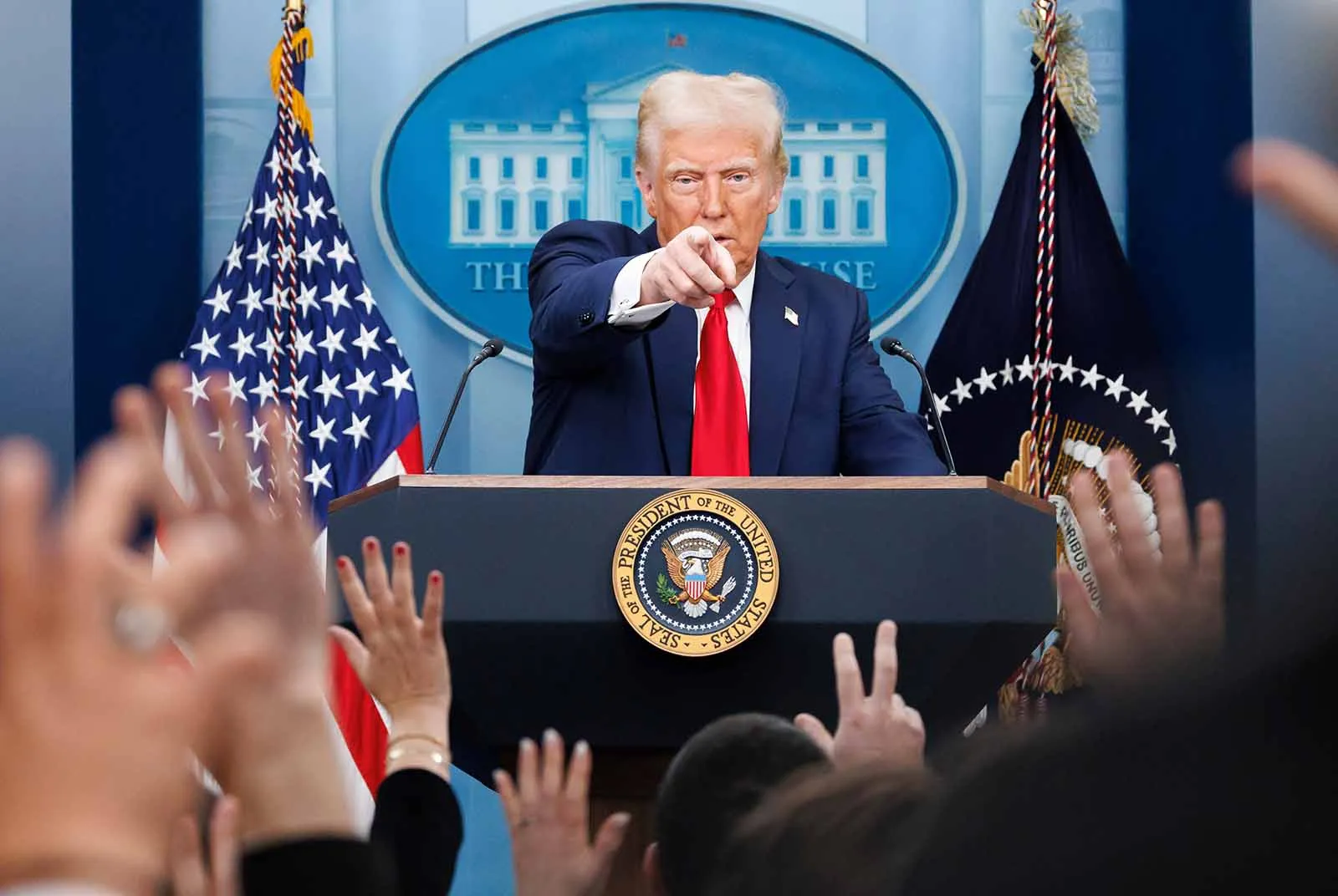
Donald Trump’s return to the White House is shaking up the global semiconductor industry. Rumors are swirling that he wants TSMC to bail out Intel, raising big questions about Taiwan’s role in the U.S.-China tech war. Could TSMC realistically “save” its American rival? And what does this mean for Taiwan’s long-term competitiveness and the so-called Silicon Shield?
Views
Taiwan's Semiconductor Industry in the Trump 2.0 Era: Challenges and Prospects
By CommonWealth Magazineweb only
The following is the transcript of the 45th episode of the Taiwanology podcast. It was produced by CommonWealth Magazine, hosted by Kwangyin Liu, and was first aired Feb. 25, 2025.
 Rocky (LingXiang Wu) Uriankhai(left), Kwangyin Liu(right).
Listen to the episode:【Taiwanology Ep.45】TSMC, Intel, and Trump’s Chip Gambit
Taiwanology: How did you transition from media professional to geopolitics expert?
I was originally in media, but my background is in electrical engineering. I studied at the University of Michigan and later pursued a PhD in political science. When Trump initiated the tech war with China in 2018, I realized that technology lay at the core of U.S.-China competition. This inspired me to focus on the intersection of geopolitics and technology, leading to my research on tech power and Taiwan's strategic role in this global rivalry.
What role does Taiwan play in the global tech industry?
Taiwan has two major strengths: its ICT industry and semiconductor manufacturing. Historically, Taiwan's tech sector evolved from game console manufacturing in the 1980s. When arcade gaming was banned, manufacturers pivoted to personal computers, setting the foundation for the industry we see today. Companies like Foxconn and TSMC have since grown into global leaders. TSMC, in particular, is at the forefront of semiconductor production, making chips that power everything from smartphones to advanced AI systems.
What are the implications of Trump’s return for Taiwan’s tech sector?
Trump has signaled a shift in U.S. policy by suggesting tariffs on Taiwanese chips and even hinting that Taiwan should pay a “protection fee” for U.S. military support. Additionally, there are rumors that the U.S. government is pressuring TSMC to assist Intel, a struggling American semiconductor giant. This is part of a broader push to bring semiconductor production back to the U.S. and reduce dependency on Taiwan.
Is there a real possibility that TSMC could be forced to assist Intel?
It’s a complex situation. The U.S. sees Intel as too important to fail, and there are two ways to support it: financially or technologically. TSMC, the leader in semiconductor manufacturing, naturally becomes a key player in this equation. Trump’s main tool for pushing TSMC is tariffs, but he also needs to offer incentives like tax breaks or subsidies.
A potential scenario is that Intel’s manufacturing division gets separated from its design division, with the former potentially merging with or receiving assistance from TSMC. However, a full acquisition by TSMC is unlikely due to the cost, cultural differences, and the complexity of merging multinational corporations. The U.S. government may try to incentivize TSMC to take a partial stake, but this would still create competition between Intel and TSMC, which could negatively impact TSMC’s stock value.
Why is Intel so crucial to the U.S.?
Intel plays a critical role in the U.S. economy and national security. The Department of Defense (DoD) relies on advanced chips for military applications. Currently, U.S. contractors can only produce chips at 12nm, far behind the 3nm and 5nm technology needed for modern AI and defense systems. While TSMC is already building fabs in Arizona, the U.S. government wants chip production to be handled by an American company, making Intel’s survival a national priority.
How might this impact TSMC’s competitiveness?
If TSMC is forced to assist Intel, it could end up creating a direct competitor. We’ve seen TSMC successfully segment markets before—such as its investment in Vanguard Semiconductor—but in this case, the U.S. government’s goal is to establish an alternative to TSMC for advanced chip manufacturing. If Intel successfully adopts TSMC’s technology, it could reduce TSMC’s dominance in the long run and affect its stock value.
Does this situation resemble past instances of forced technology transfers to China?
Yes, there are parallels. In the past, Western and Taiwanese companies were required to form joint ventures and share technology when investing in China. Now, we’re seeing similar behavior from the U.S. government. Trump’s administration is prioritizing national interests in a way reminiscent of China’s industrial policies. From a realpolitik perspective, all great powers behave similarly when it comes to securing technological advantages.
Does the idea of the 'Silicon Shield' still hold?
The notion that TSMC’s importance will deter China from attacking Taiwan is a myth. China’s decisions regarding Taiwan are driven by broader political and strategic factors, not just semiconductor access. Similarly, the U.S. will act in its own interests rather than protecting Taiwan solely for its chipmaking capabilities. While Taiwan’s semiconductor industry remains a strategic asset, it is not an impenetrable shield.
What can Taiwan do to navigate these challenges?
Taiwan has limited leverage in negotiations with the U.S., especially under Trump. The best strategy is to delay decisions and slow down processes while looking for opportunities to shift the dynamics. Taiwan already runs a significant trade surplus with the U.S., which could make it a target for further demands. With Trump’s unpredictable nature, Taiwan must stay vigilant and flexible in its responses.
Conclusion
Taiwan’s semiconductor industry stands at a critical juncture. Trump’s policies could reshape the global semiconductor landscape, with potential consequences for TSMC and Taiwan’s economy. While TSMC remains a global leader, the political pressures from the U.S. introduce new risks. How Taiwan navigates this evolving landscape will determine its future role in the high-tech sector.
Have you read?
- Why Intel Never Caught Up to TSMC
- Trump 2.0: Three Factors Impacting China-Taiwan Relations
- Talent Shortage Threatens Trump’s Chip Plans as TSMC Struggles in Arizona
Uploaded by Ian Huang
Views

Subscribe to CWE Newsletter (every Thursday)
Stay abreast of what's happening in Taiwan with our weekly digest.
Keywords: