Can Student Interns Keep Taiwan’s Hotels Running?
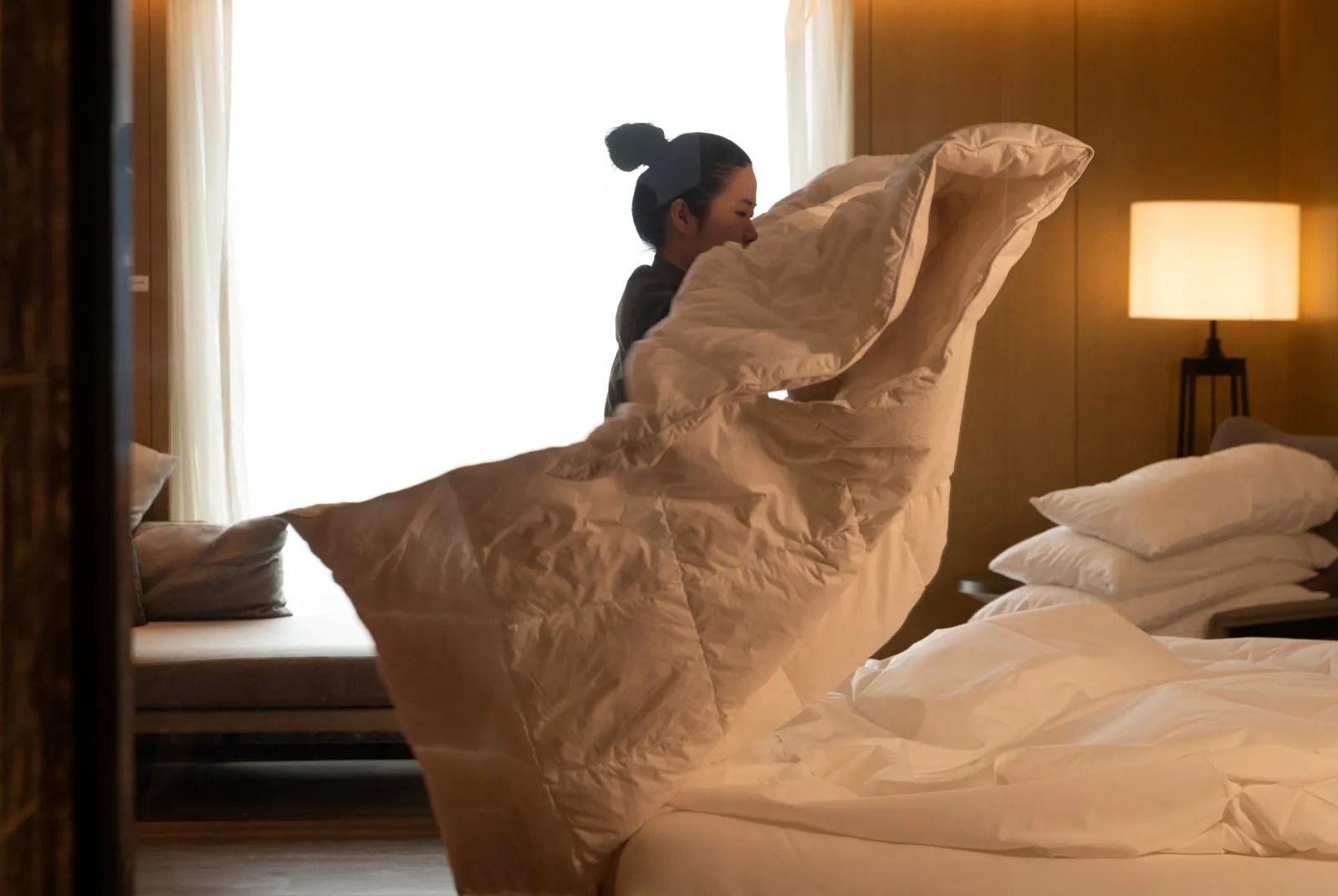
Source:Pei-Yin Hsieh
As Taiwan’s service industry faces a severe manpower shortage, five-star hotels are filling vacancies with student interns from Southeast Asia. Can such programs be more than a stop-gap measure?
Views
Can Student Interns Keep Taiwan’s Hotels Running?
By Yi-chih Wangweb only
Southeast Asian Students Flock to the Hospitality Industry
In recent years, five-star hotels across Taiwan have tried to alleviate their manpower shortages by hiring students from Southeast Asia under two special training programs. At major five-star hotels such as the Grand Hyatt Taipei, Regent Taipei, and Kaohsiung Marriott, foreign students already account for 10 percent of the workforce, making them indispensable to daily operations.
“Fortunately, we have these foreign students, or else we would not be able to solve our manpower shortage,” admits Tsai Ying-hua, general manager at the Grand Hyatt Taipei.
Employers generally observe that foreign students are highly motivated, willing to work overtime, and eager to learn. However, retaining these workers is difficult since internship recruitment schemes come with limited-term contracts. “Foreign students have a good work ethic, but training them is costly since they eventually have to leave. This means we must adjust to a new batch of interns every six months, which does not support the long-term development of the hotel,” explains a housekeeping supervisor.
Hotels and Schools – A Delicate Dependency
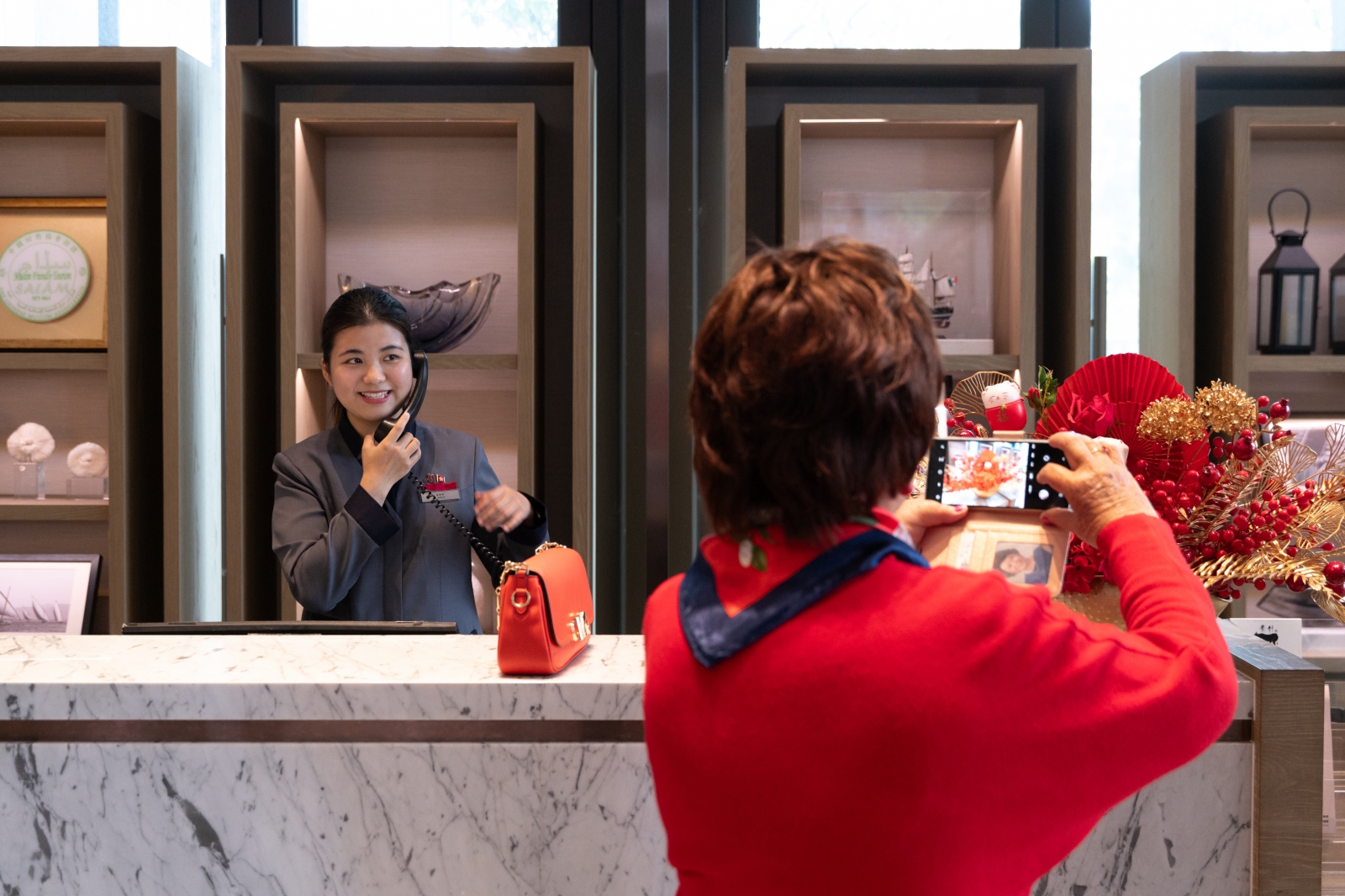 The hotel industry favors the 3+4 foreign student who stay in Taiwan the longest. If they learn Mandarin well, they can be transferred to the front desk to serve guests or promoted to junior supervisors. (Photo: Pei-Yin Hsieh)
Hotels in northern Taiwan use recruitment agencies that directly scout for students in Southeast Asia willing to work as interns. Meanwhile, hotels in southern Taiwan collaborate with vocational high schools and technical colleges, enrolling foreign students in industry-academia cooperation programs. These arrangements create a mutually beneficial yet delicate dependency, as hotels secure labor while schools attract students.
“At schools’ year-end parties, we often sponsor hotel stay or meal vouchers, and when teachers dine at our hotel, it's common for them to discreetly receive gift vouchers worth up to NT$20,000 (US$607),” reveals a hotel’s head of human resources. On the other hand, when hotels are short-staffed, teachers may send students to catering events under the guise of “off-campus training,” effectively supplying hotels with additional labor.
While this relationship benefits both hotels and schools, it raises concerns about education quality. Some students complain that their coursework is structured more around hotel labor demands than actual professional training.
Running the “Six Plus Six” and “Three Plus Four” Recruitment Schemes
To combat labor shortages, hotels hire interns through the “six plus six” program, where students work for six months, leave for seven to ten days, and then return for another six-month stint. Over the past four years, more than 4,000 foreign students have participated, keeping a steady flow of new workers but offering little long-term stability.
In contrast, the “three plus four” industry-academia cooperation program allows students to stay in Taiwan for seven years—three years in vocational school and four years at a technical college. Hotels are more willing to invest in training these students because they have a higher likelihood of staying in the industry. “Young Taiwanese cannot necessarily work in the industry for seven years, but overseas students have this potential,” says Wang Che-lin, deputy director of housekeeping at Kaohsiung Marriott Hotel.
However, even with a longer stay period, turnover remains high. Kaohsiung Marriott recruits 50 foreign students per year, yet only a handful stay after graduation. “We once helped five Vietnamese students obtain work permits, but in the end, they either returned home or married Taiwanese citizens and left the job,” recalls Rebecca Lee, head of human resources at Regent Hotels Group.
Root of the Manpower Shortage: Lack of a Long-Term Vision
Currently, foreign graduates under the “six plus six” internship program are not allowed to stay in Taiwan long-term for work. Industry insiders see this restriction as the main reason behind talent loss. According to the Ministry of Labor, only 770 overseas students remain employed in Taiwan’s hospitality industry—likely even fewer in reality.
“The contribution of foreign students to Taiwan’s tourism industry is limited because they ultimately had to leave,” says Wayne Liu, professor at the Graduate Institute of Tourism Management at National Kaohsiung University of Hospitality and Tourism.
While the hospitality industry relies on short-term solutions to address labor shortages, these measures fail to address the root cause. HR executives agree that while foreign students are hardworking and quick learners, they are forced to leave after their internships, creating a perpetual cycle of hiring and retraining that adds to operational costs.
Is Opening the Industry to Migrant Workers the Solution?
Many hotel operators argue that allowing migrant workers into the industry is the only viable long-term solution.
They suggest applying conditions such as restricting recruitment to hotels with over 300 rooms or capping the proportion of foreign workers. “Taiwan should follow the examples of Singapore and Japan by adopting an open, structured approach, rather than relying on short-term fixes,” says the general manager of a five-star hotel.
Taiwan’s labor shortage in the hospitality sector is not a temporary issue. Policymakers must explore long-term solutions rather than depending on short-term foreign student support.
While allowing migrant workers remains a sensitive topic, well-designed policies could help stabilize the industry, improve service quality, and enhance Taiwan’s competitiveness in global tourism.
Have you read?
- Why Korean Tourists Are Going Crazy for Taiwan
- Taiwanese Potsticker King Bafang Dumpling: Looking to Become the McDonald’s of Chinese Cuisine
- How Taiwan Dumplings Is Making Inroads in Europe
Translated by Susanne Ganz
Uploaded by Ian Huang
Views

Subscribe to CWE Newsletter (every Thursday)
Stay abreast of what's happening in Taiwan with our weekly digest.
Keywords: