One Slide at TSMC’s Forum Reveals the Fate of Apple-Linked Stocks
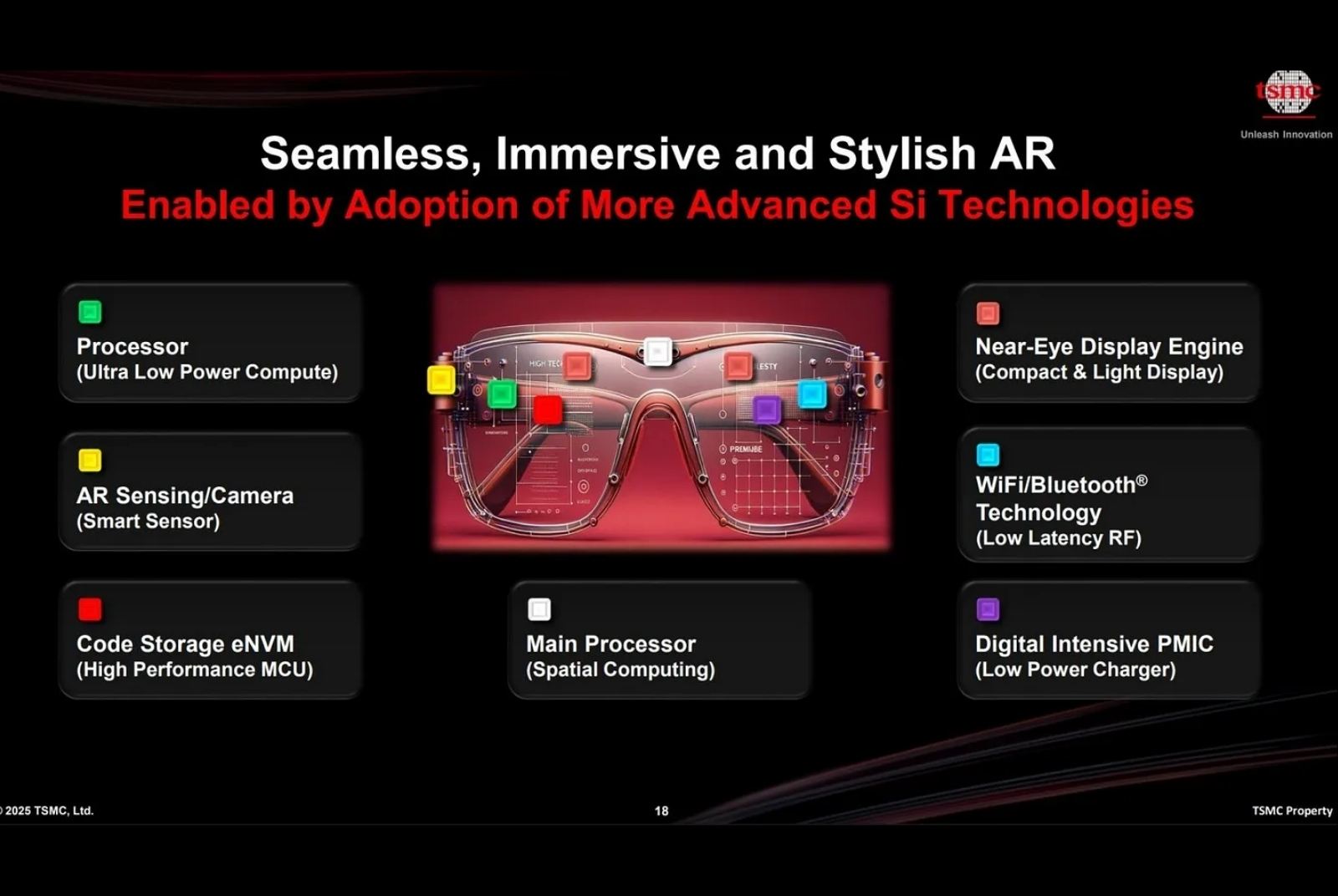
Source:TSMC
Once the pride of Taiwan’s stock market, Apple-linked suppliers now face three diverging paths. A single slide at TSMC’s recent tech forum hints at what’s coming next: some have pivoted to AI, others have lost ground to China’s red supply chain, and a few are quietly betting on the rise of AI glasses. The question is—who will survive the next shift?
Views
One Slide at TSMC’s Forum Reveals the Fate of Apple-Linked Stocks
By Liang-rong Chenweb only
On last week’s episode of my podcast Tech Taiwan, we welcomed Yu-chao Wang(王昱超), the newly appointed 38-year-old chairman of Radiant Opto-Electronics (瑞儀光電), a key Apple supplier. In a candid and sincere conversation, he shared his thoughts on a tough question: when your company’s core product is on the verge of being replaced by new technology, how do you lead a successful transformation? I wrote about this story in last year's column.
Before recording the episode, I came across a surprising figure. Although Radiant is the world’s largest supplier of LCD backlight modules, and despite the LCD market shrinking as it is gradually replaced by more energy-efficient and higher-performance OLEDs, Radiant’s full-year profit in 2024 hit a record high of NT$7.27 billion.
In the 2025 CommonWealth Taiwan Top 2000 Survey, this ranks 46th in the manufacturing sector, comparable to AI server giant Inventec (英業達).
What explains this?
First, credit goes to Radiant’s founder Ben-ran Wang (王本然) for his correct strategy implemented years ago. The company exited the small-sized (iPhone) and large-sized (TV) markets, which were most susceptible to OLED replacement and had lower technical barriers, to focus on mid-sized markets (tablets and laptops).
More importantly, it has been an industry consensus since 2017 that as iPhones began adopting OLED panels, backlight modules would gradually be phased out.
Therefore, despite Radiant’s strong profitability, there have been no new entrants vying for market share. “No one wants to invest a large sum of money—to build a plant—only to earn profits for just three or four years,” said Yu-chao Wang (王昱超).
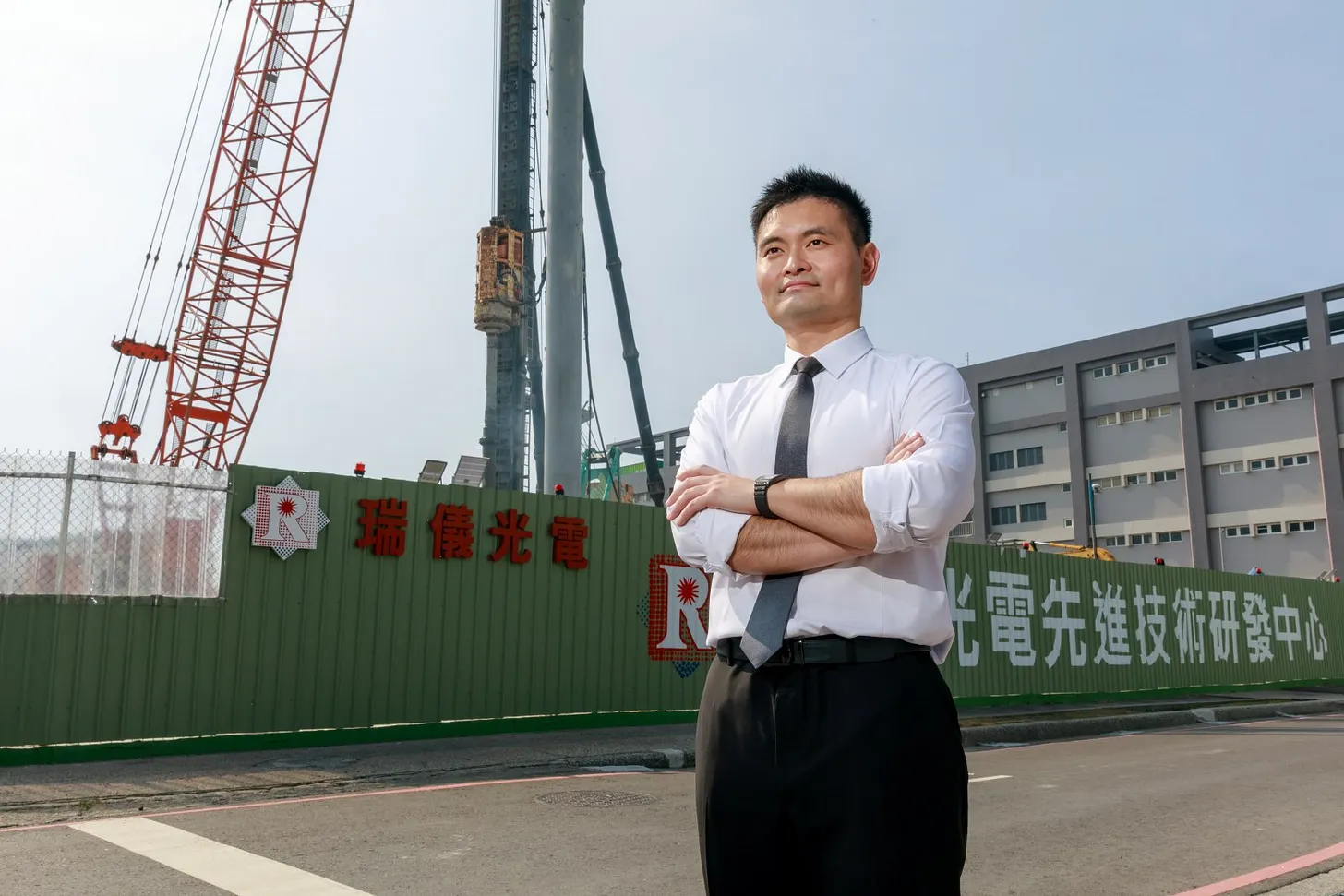 (Source: Chien-Ying Chiu)
In other words, being in a sunset industry has “to some extent, become one of our moats,” he said.
Radiant derives up to 70% of its revenue from Apple, making it arguably the purest Apple-linked stock.
This made me realize just how far the prestige of Apple-linked stocks has fallen.
Curious, I took a look at how the once-leading Apple-linked stocks have fared over time.
Fate #1: Transitioned to NVIDIA-linked stocks
These can be grouped into three categories. The first category includes Taiwan’s three tech giants: TSMC, Foxconn and Quanta. They were respectively Apple’s exclusive chip foundry and main assembly partners for the iPhone and MacBook. As Apple hit a growth plateau, they seamlessly rode the next technological wave, transforming from Apple-linked stocks into AI or NVIDIA stocks.
TSMC’s revenue composition best illustrates this shift. In Q3 2022, smartphones were still its primary revenue source, accounting for 41%.
But after ChatGPT’s debut in Q4 2022, the industry landscape changed dramatically. Just two and a half years later, in Q1 this year, high-performance computing (mainly AI-related products) accounted for 59% of TSMC’s revenue, while smartphones dropped to 28%.
Similar shifts occurred with the other two companies. In a recent earnings call, Foxconn Chairman Young Liu (劉揚偉) projected that AI server revenue would exceed 50% this year, surpassing iPhone for the first time. Quanta expects cloud-related revenue to account for 70%, while laptops will drop to 20%.
Fate #2: Bye-bye Apple, ceded ground to the red supply chain
The second category of companies chose to part ways with Apple under pressure from the advancing Chinese red supply chain.
The most well-known example is Catcher Technology (可成科技), a major aluminum alloy casing manufacturer.
(Continue reading the full story on Tech Taiwan Substack.)
Have you read?
- Radiant Opto-Electronics: On a Mission to Shake Things Up
- How Micron Built TSMC’s Key CoWoS Link Beside a Taiwanese Theme Park
- [Exclusive] “China’s Nvidia”: Cambricon and SiCarrier’s Disruption of the Chip Supply Chain
Uploaded by Fiona Lin
Views

Subscribe to CWE Newsletter (every Thursday)
Stay abreast of what's happening in Taiwan with our weekly digest.
Keywords: