From BYD to Ferrari: How Taiwanese Connector Maker Hulane Raced to the Top
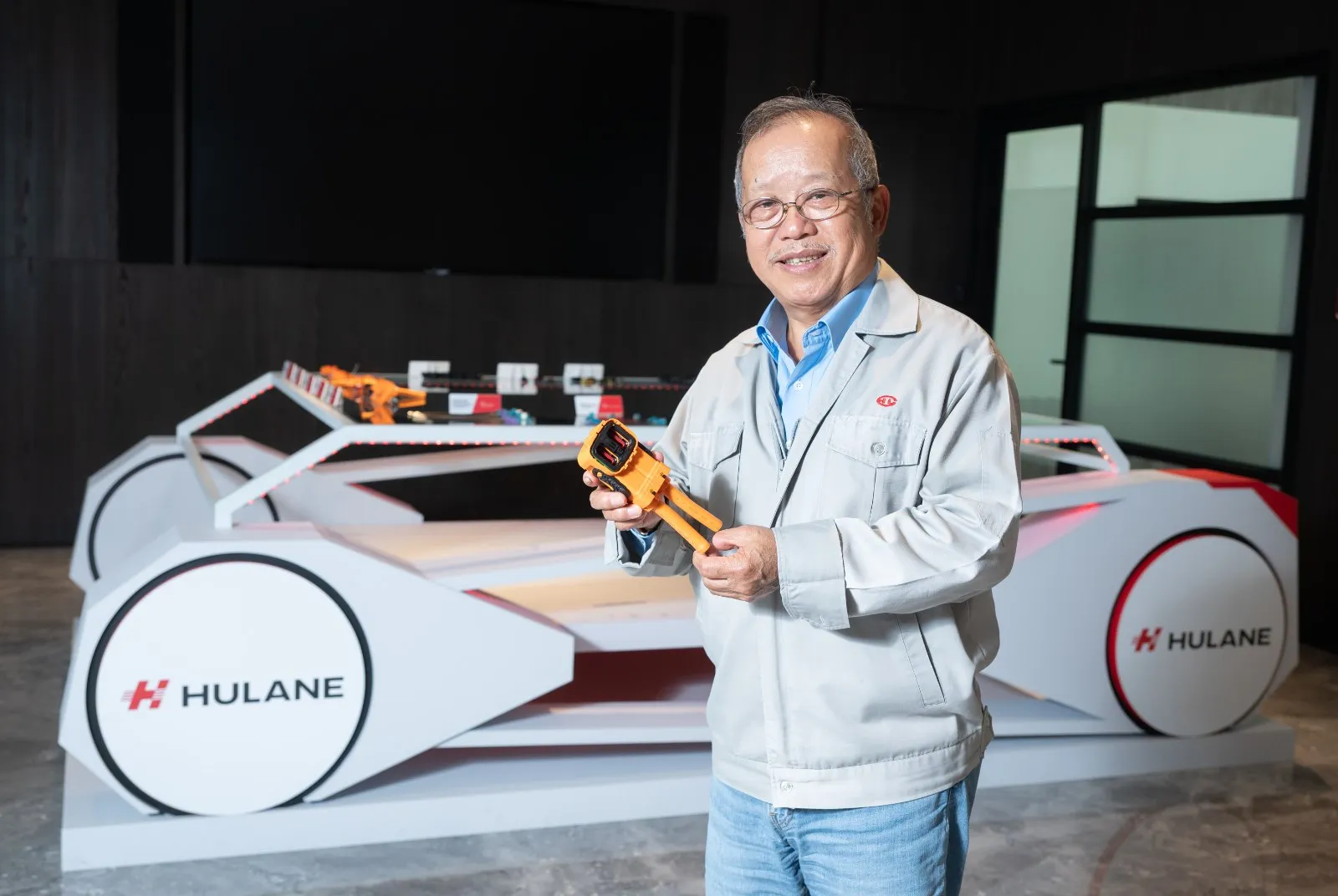
Source:Ming-Tang Huang
Hulane's revenue was less than 4 billion NTD in 2020, but approached 10 billion last year. How did they manage to achieve record revenue for six consecutive years despite the headwinds in the car market, and even attract Ferrari as a customer?
Views
From BYD to Ferrari: How Taiwanese Connector Maker Hulane Raced to the Top
By Chiung-chih Kangweb only
Despite a downturn in the global auto market over the past two years, Taiwan-based automotive connector maker Hulane Precision has continued to grow against the tide. From less than NT$4 billion in revenue in 2020, the company generated nearly NT$10 billion last year, setting record highs for six consecutive years. Gross margins have remained above 30 percent, and the company has even secured orders from Ferrari.
“China’s top 15 automakers are all our customers,” said Hulane Chairman Chang Tzu-hsiung. China accounts for roughly 80 percent of the company’s revenue, with electric-vehicle (EV) leader BYD alone contributing about 10 percent.
Much of this success can be traced back to Hulane’s early expansion into China more than 30 years ago.
In its early days, Chang and his partners manufactured connectors for Nintendo game consoles. Intense competition, however, forced the company to pivot to the automotive sector within two years. Starting with Renault and China Motors, Hulane embarked on a more than 40-year journey in automotive components.
Seeing China’s massive mobility demand, Hulane first established manufacturing operations in Shenzhen, then chose Nanjing as its base 20 years ago. Within a 300-kilometer radius of Nanjing are major automakers such as SAIC-GM, SAIC Volkswagen, and Geely. In recent years, Hulane has further deepened its presence in the auto-manufacturing clusters of eastern China.
The rise of EVs has amplified this advantage. As powertrains shift from internal combustion engines to electric motors, “one of the traditional weakest links of Chinese auto brands has effectively been bypassed,” said an industry observer who has followed China’s auto market for years.
In the post-pandemic period, the market share of domestically produced vehicles in China has surged from around 40 percent to nearly 70 percent. This shift has forced European, American, and Japanese brands to loosen their once-closed supply chains and turn to more cost-competitive local suppliers.
As a result, Hulane has not only penetrated the supply chains of emerging Chinese automakers such as BYD, Geely, Li Auto, XPeng, Xiaomi Auto, and AITO, but has also gained entry into global brand ecosystems. Jack Cheng, co-founder of NIO, noted that Hulane’s key advantage lies in its “lack of a language barrier with Chinese automakers and its shorter development cycles.”
Yet the real driver behind Hulane’s resilient margins is not cost, but product mix.
Seven years ago, Hulane began laying out its strategy in high-voltage and high-frequency connectors. In 2018, the company consolidated its R&D teams in Taipei, Nanjing, and Shenzhen into a single global R&D center, while increasing R&D spending from 3.6 percent of revenue to more than 5 percent.
Its product portfolio has expanded from wire-to-wire connectors to board-to-board connectors, PCB fuse boxes, and power distribution modules. A PCB fuse box, for example, can command a unit price up to ten times that of a traditional connector, allowing Hulane to move from “selling parts” to “selling systems.”
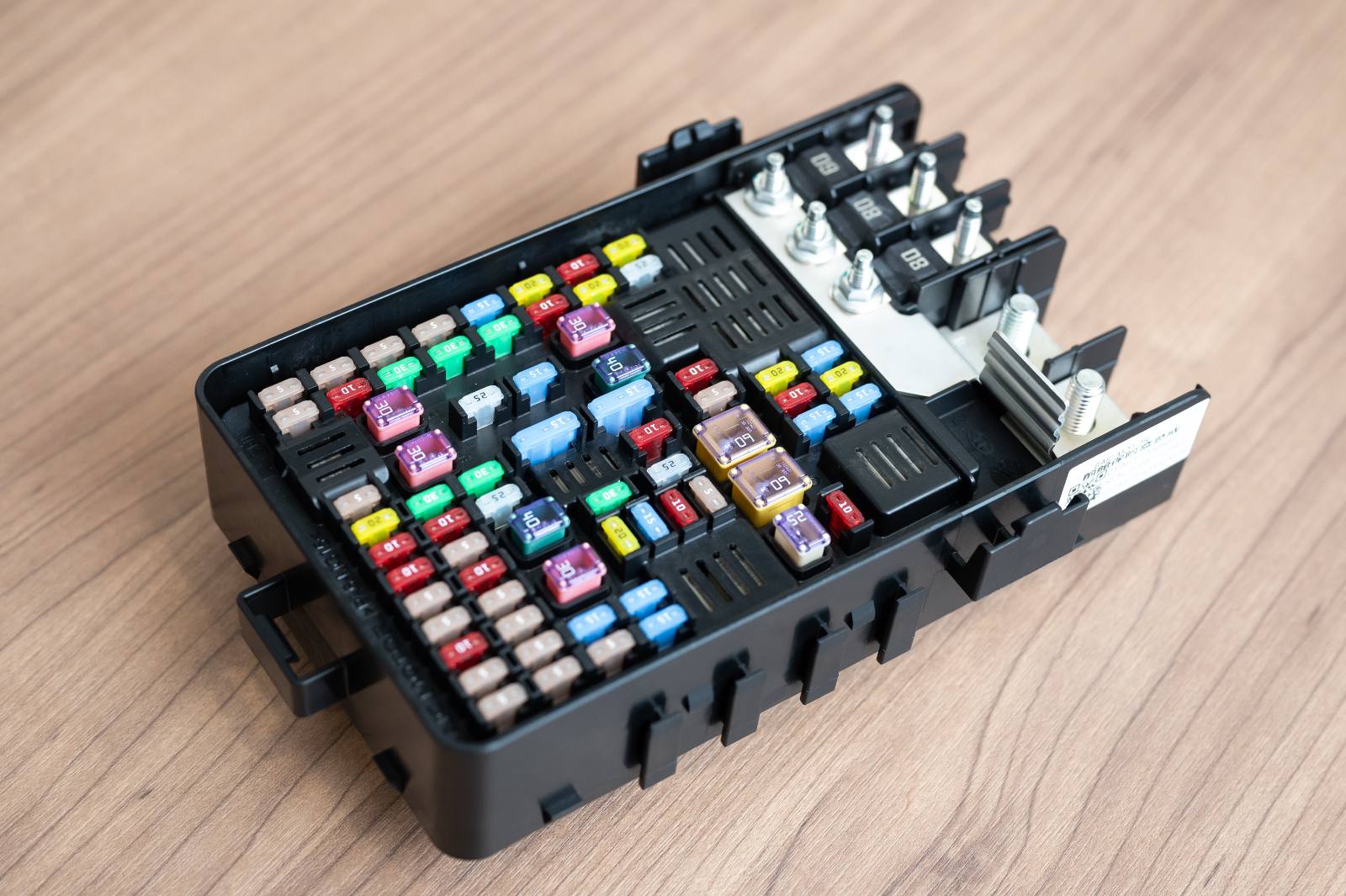 PCB fuse box. (Photo: Ming-Tang Huang)
To build a premium brand image, Hulane established a presence in Italy in 2018 and recruited former Delphi senior executive Luca Cammisa to lead its European operations. After four years of cultivation, the company entered Ferrari’s supply chain, with mass production scheduled to begin in March. While monthly output will be limited to around 100 vehicles, Chang said the milestone signals that Hulane is “no longer just a second-tier contract manufacturer.”
An EV typically requires between 1,500 and 2,000 connectors—three to four times more than a conventional gasoline-powered car. Hulane is now able to supply more than half of these components. It has also replicated the manufacturing know-how accumulated in China in Vietnam and Indonesia, following clients such as BYD and Honda in establishing localized production.
From Taiwan’s largest to a global contender, Hulane is now aiming to secure its place as a Tier 1 supplier.
Have you read?
- Quantum Computing Was Supposed to Take 30 Years. One Company Proved Otherwise.
- Taiwanese Chemical Supplier Chemleader Secures Position on CoWoS Value Chain with Round-the-clock R&D
- From Shoe Insoles to Semiconductor Consumables: How Praise Victory Industrial Multiplied the Value of Polyurethane
Translated by David Toman
Uploaded by Ian Huang
Views

Subscribe to CWE Newsletter (every Thursday)
Stay abreast of what's happening in Taiwan with our weekly digest.
Keywords: