Stateless in Her Birthplace: Vanessa Miles’ Fight to Reclaim Her Taiwanese Citizenship
Source:Damon Martin
Adopted to Australia in 1980, Vanessa returns to Taiwan in search of her roots—only to face a bureaucratic battle over citizenship, identity, and the truth behind a controversial cross-border adoption network.
Views
Stateless in Her Birthplace: Vanessa Miles’ Fight to Reclaim Her Taiwanese Citizenship
By Judy Linweb only
In 1980, Vanessa Miles was adopted by an Australian family and taken from Taiwan as an infant. Decades later, in 2025, she returned to the island to submit her DNA, hoping to trace her origins and reunite with her birth mother. She believed that when she came back to Taipei this year, that long-awaited reunion might finally become possible.
Instead, she found herself confronting an unexpected and deeply personal crisis.
 (Source: Vanessa Miles)
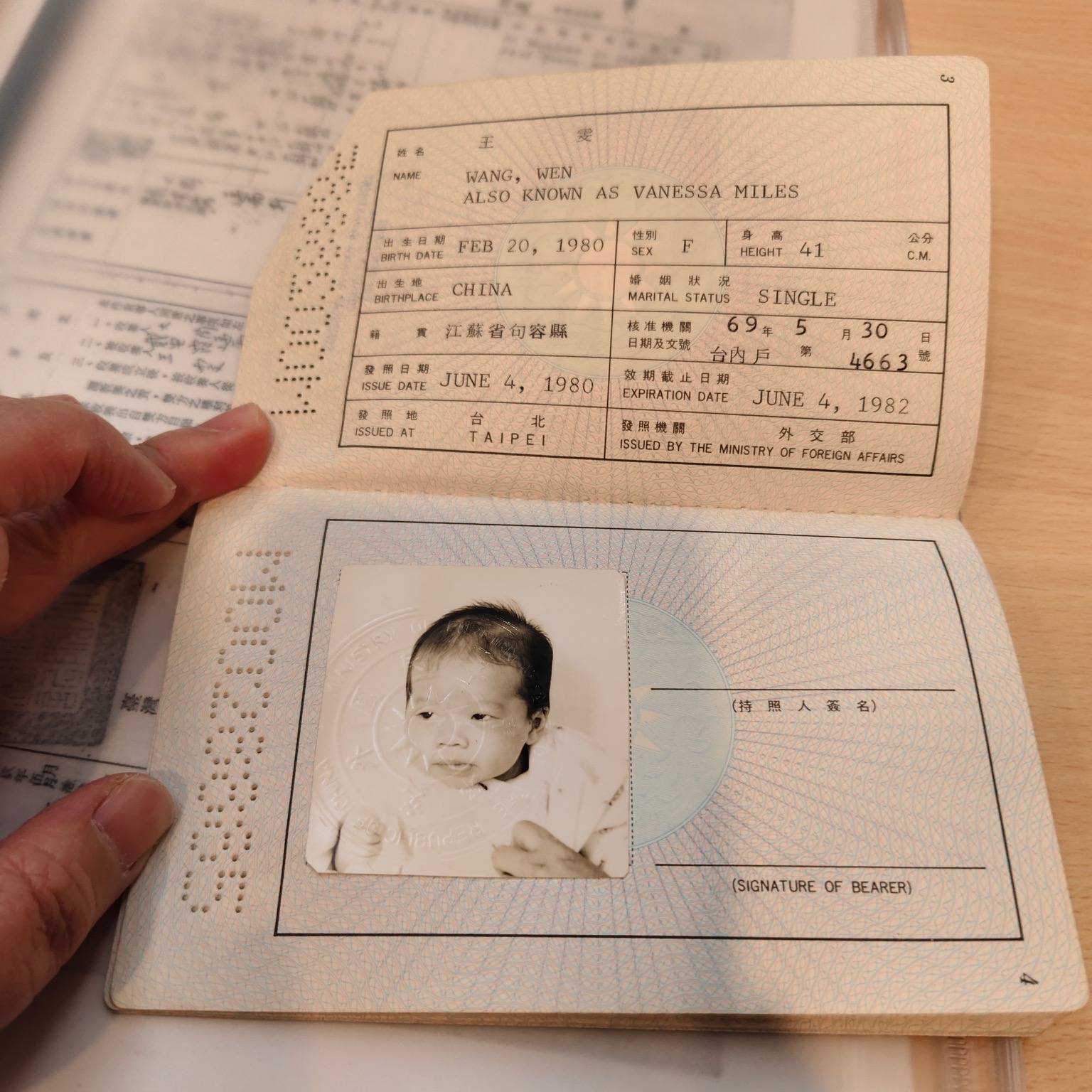
When Miles presented her long-expired Republic of China (Taiwan) passport—bearing an exit stamp from 1980—at the Taipei Economic and Cultural Office in Sydney, she was initially told a renewal would be straightforward. The clerk clipped a corner of the expired passport as part of standard procedure and asked her to return in a few days.
But when she did, the outcome was shocking: Taiwan’s Ministry of Interior had revoked her nationality.
Authorities claimed that her grandfather had requested the cancellation of her household registration and identity number in 1983, citing the existence of another individual with the same name and asserting that no legal adoption had taken place. No supporting evidence was provided nor requested.
Despite submitting extensive documentation—including her birth certificate, the address of the Taipei clinic where she was born, the name of the attending gynecologist, and her documented mother’s name—Miles’ request to restore her nationality was denied.
In early 2026, Miles traveled back to Taiwan with her husband, determined to appeal her case.
 (Source: Judy Lin)
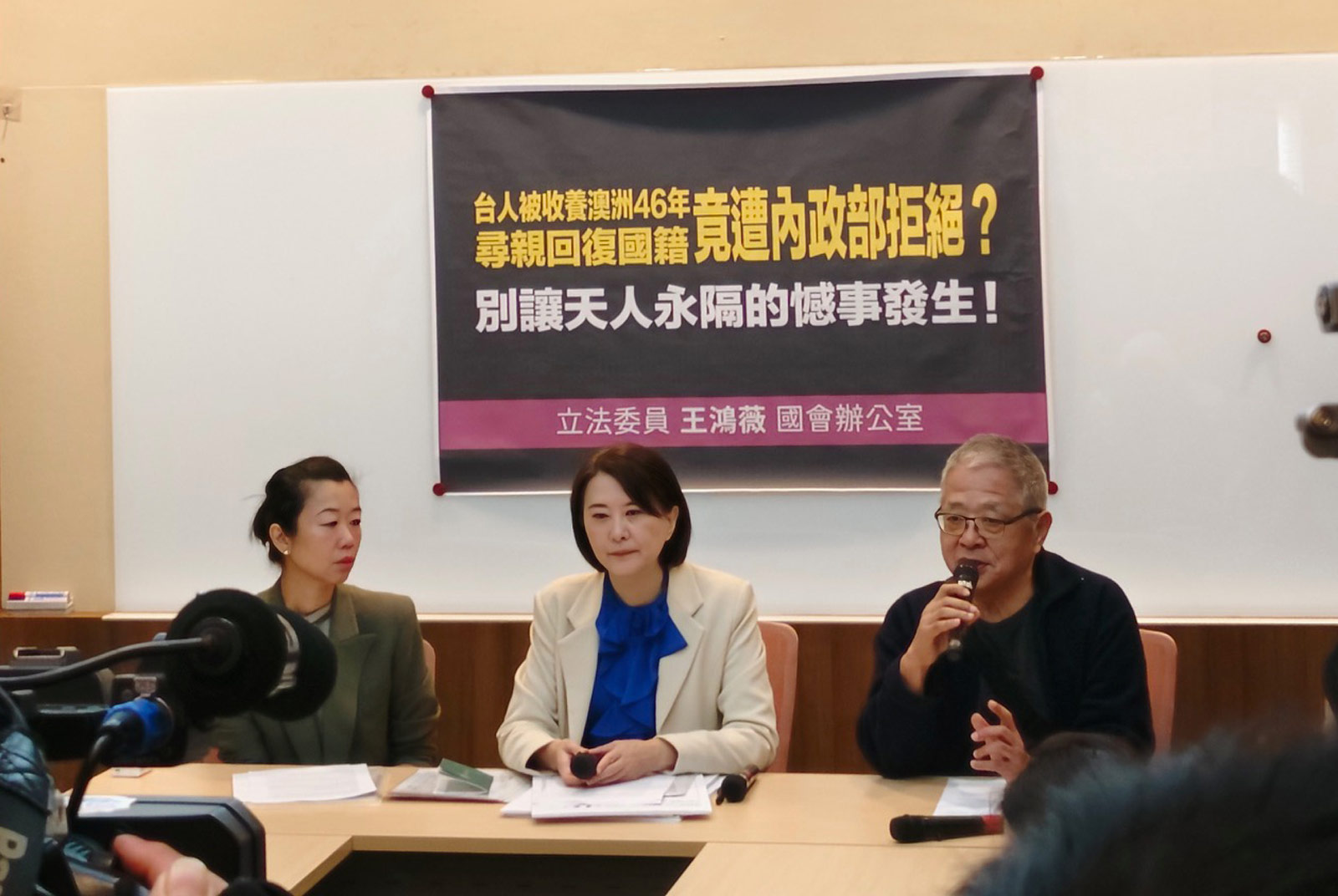
At a public hearing, Interior Minister Liu Shih-fang stated that officials were verifying the authenticity of her birth certificate and suggested that DNA testing could resolve the matter if it confirmed her Taiwanese parentage. KMT legislator Wang Hung-wei challenged this position, arguing that DNA evidence is not a legal requirement for nationality under Taiwan’s constitution.
“What happens if her biological mother refuses to come forward?” Wang asked. “The law clearly states that anyone born in this country holds its nationality. DNA is not a prerequisite.”
Outsider in Her Own Adoptive Home
Growing up in Australia, Miles often felt like an outsider—even within her own home. As a Taiwanese child raised by white parents in a largely homogeneous community, she struggled with questions of identity from an early age.
Adopted at just three months old, she was never encouraged to explore her cultural roots or understand the circumstances of her birth. She recalls a childhood marked by emotional distance, experiences of racism, and a persistent sense of not belonging.
“I was too young to process the emotions that come with being adopted,” she said. “I grew up in a family that struggled to recognize me as their child, and I faced racism from a very young age—something that continued into adulthood.”
For years, she internalized a painful belief: that something must be inherently wrong with her.
It was not until the age of 18, after watching an investigative program on (Australia's) 60 Minutes, that she began to suspect her adoption may not have been legal. Her adoptive father discouraged her from returning to Taiwan when she shared what she had seen. This decision has caused Miles deep regret and possibly cost her the reunion she is now hoping for.
The Quest for Identity
Her suspicions were not unfounded.
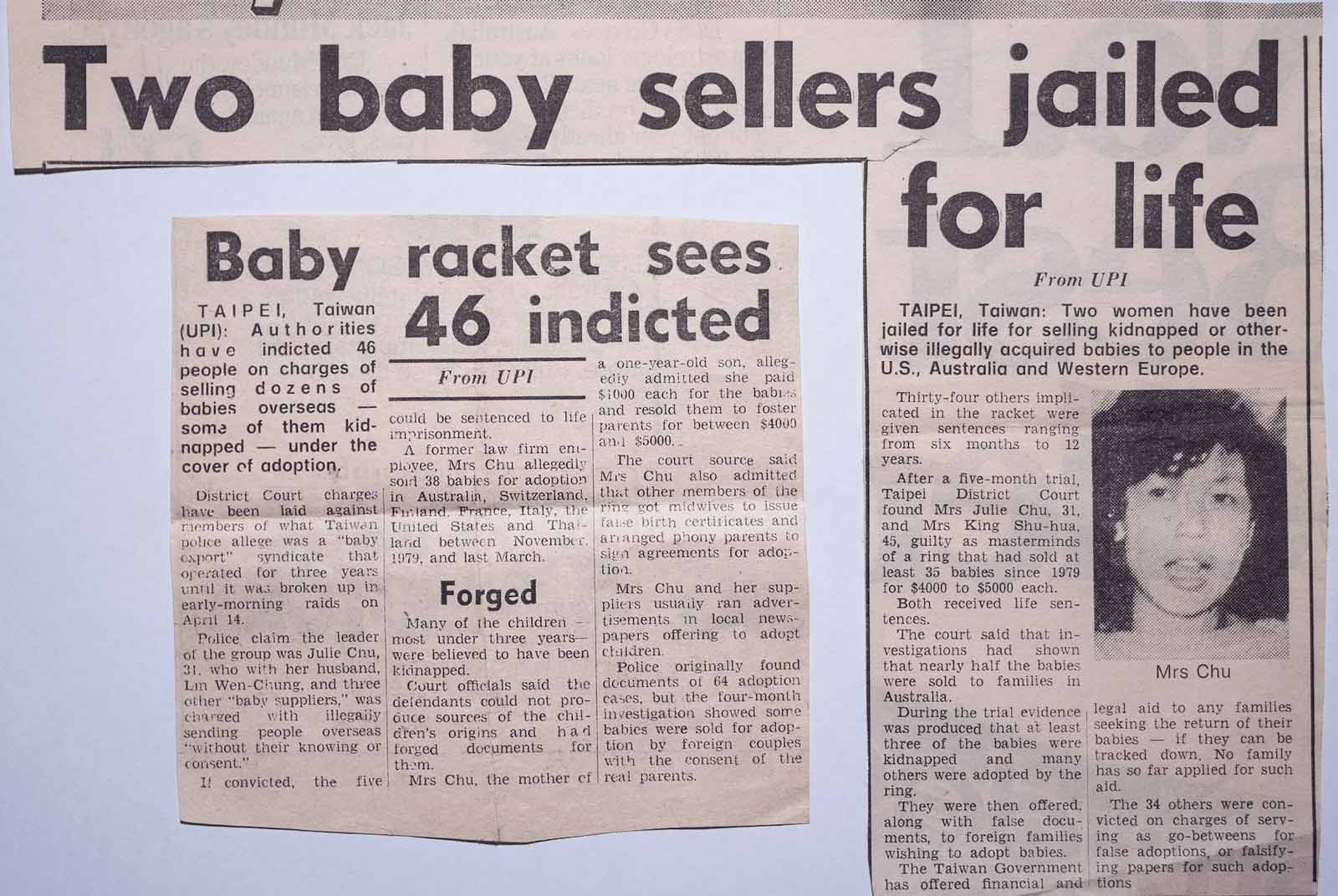
The Chu Li-ching infant trafficking case (褚麗卿跨國販嬰案) was exposed and investigated. Chu was arrested and convicted for life in prison in April 1982. She later appealed and served only six years.
Through intermediaries, Chu and her husband allegedly sold at least 63 infants to adoptive families overseas, mainly in the United States, Australia, and Europe. Some babies were relinquished by impoverished families, while some others were believed to have been taken through deception—mothers falsely told their newborns had died.
In 1998, veteran journalist George Gao of Taiwan’s United Daily covered the story of Kartya Wunderle (the victim interviewed in the Australian 60 Minutes feature on illegal baby adoption) and other Julie Chu babies, including more than 20 to Australia.
Gao’s reporting traced many of these children, including Miles, and documented their lives overseas. Over the years, he has helped numerous adoptees search for their biological families in Taiwan, often with limited success.
“Many of these children grew up without a clear sense of identity,” Gao said. “Even those raised in loving homes carried the same question: why were they given up?”
Miles’ registered mother, Wang Li-mei, was just 17 years old when she gave birth in 1980—a time when Taiwanese society stigmatized teenage pregnancy. In such cases, families often chose secrecy, and children were quietly given away.
For some adoptees, reunions have brought healing. For others, the search has ended in silence.
By telling her story to the media, Miles hopes that more children will get the chance to be united with their parents.
Caught Between Identity and Bureaucracy
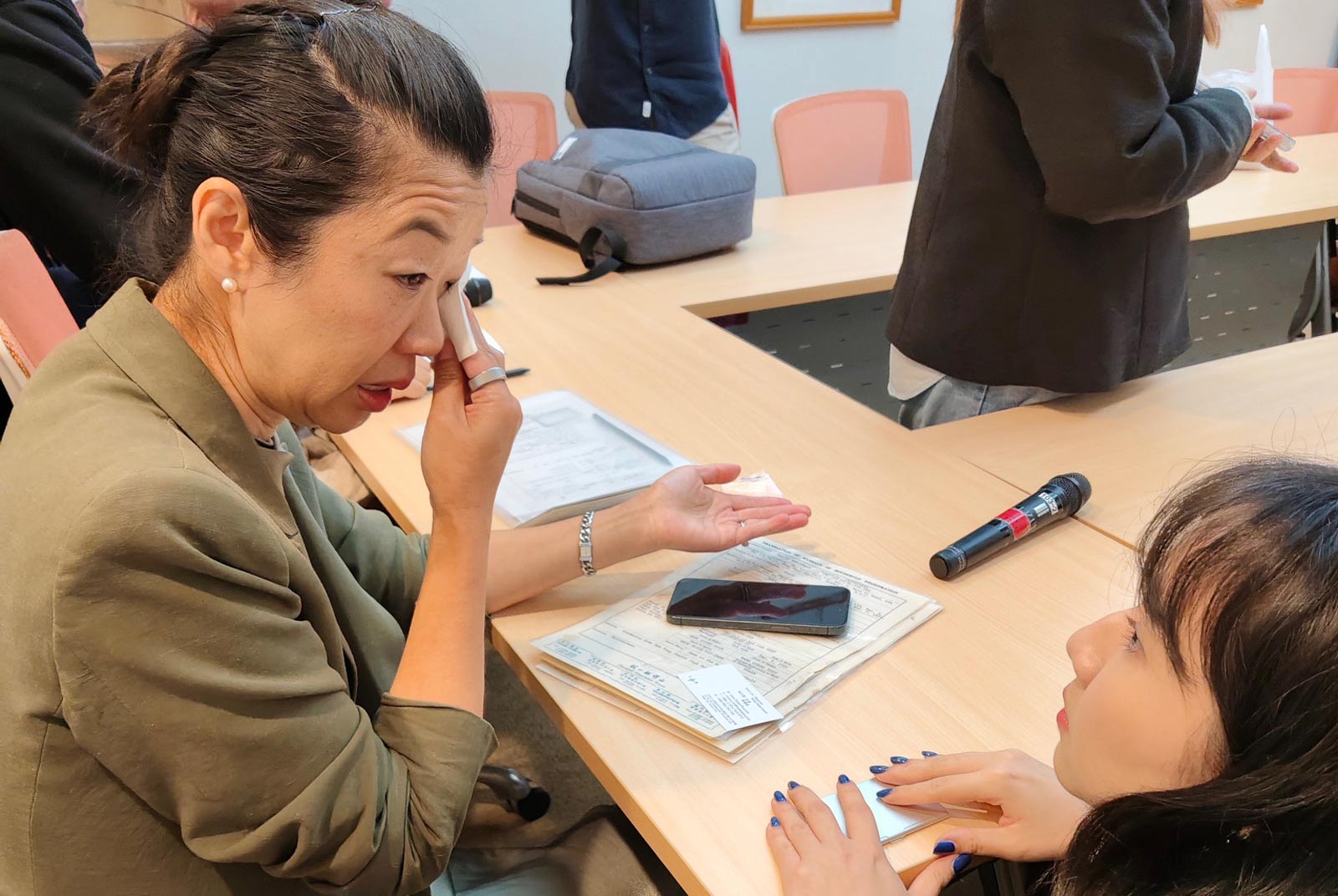 (Source: Judy Lin)
Now, more than four decades after she left Taiwan, Miles is still searching—not only for her mother, but for recognition.
Her case has become a flashpoint in a broader debate over identity, legality, and human rights. While Taiwan’s Ministry of Foreign Affairs has acknowledged the validity of her passport, the Ministry of the Interior continues to deny her claim to citizenship.
Legislator Wang Hung-wei has called on authorities to act with compassion and uphold the law.
“These individuals were separated from their homeland as infants,” Wang said. “To deny them their identity now is to compound that injustice.”
For Vanessa Miles, the search for her mother was never just about reunion—it was about understanding where she came from and reclaiming a sense of self that had long been denied.
Now, that search has expanded into something even more fundamental: the right to belong.
As Taiwan positions itself as a defender of human rights and democratic values, her case poses an uncomfortable question—whether those principles extend to those who were once its most vulnerable citizens, sent away before they ever had a choice.
Until an answer is given, Vanessa remains caught between two worlds: claimed by neither, yet shaped by both, still waiting for a place she can finally call home.
Have you read?
- The Empty Cradle: Why Cash Incentives Can’t Fix Taiwan’s Birth Rate
- Iran War Reveals Taiwan’s Natural Gas Crisis
- Watching the Dragon: How Taiwan Decodes China's Internal Fragility
Uploaded by Ian Huang
Views

Subscribe to CWE Newsletter (every Thursday)
Stay abreast of what's happening in Taiwan with our weekly digest.
Keywords: