The Gilded Shell: Can Taiwan’s AI Dominance Outlast Its Demographic Crisis?
Source:Judy Lin
Bridging the gap between a trillion-dollar semiconductor empire and a deepening demographic crisis.
Views
The Gilded Shell: Can Taiwan’s AI Dominance Outlast Its Demographic Crisis?
By Judy Linweb only
Taiwan is, without question, the beating heart of the global semiconductor industry. By early 2026, its stock market eclipsed Germany’s to become the world’s 8th largest by market capitalization. Yet, beneath this "silicon shield" lies a deepening demographic crisis. In February 2026, newborn totals hit a historic low of just 6,523, marking the 26th consecutive month of population decline.
The Threat of the "Gilded Shell"
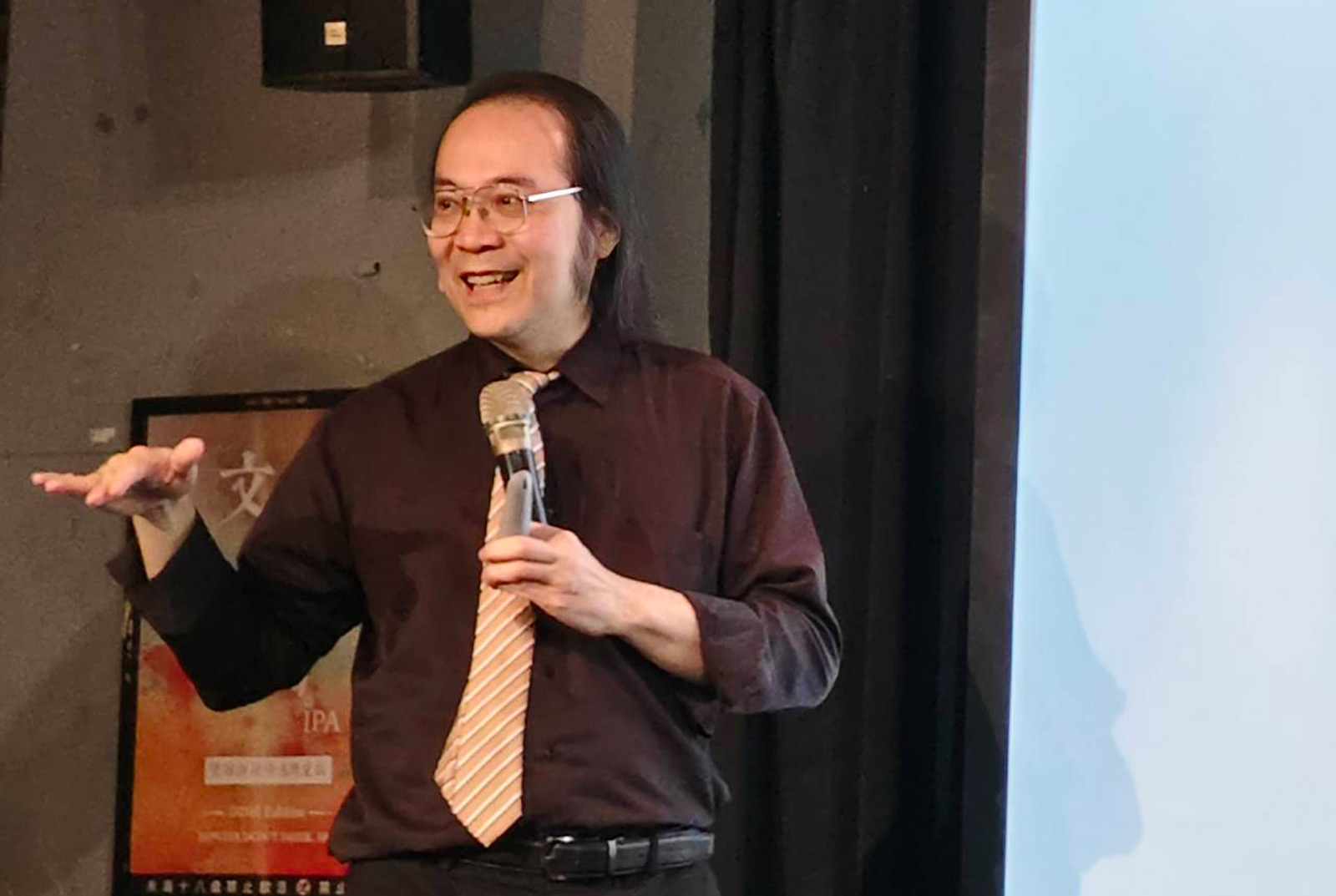
Lee-feng Chien, former Google Taiwan CEO and current independent director at Appier, warns that Taiwan’s economic success is precarious. Speaking at a recent Taiwan Foreign Correspondents’ Club event, Chien urged the nation to adopt inclusive foreign talent policies to combat a crippling labor shortage.
“Otherwise, Taiwan will be left with a gilded shell—wealthy, but without enough people to sustain its success,” Chien remarked, using the poignant Chinese idiom “窮得只剩下錢” (so poor that only money remains).
Chien argues that Taiwan must redefine its national identity to include global talent. He noted the anomaly of TSMC: “There is no other multinational in the world that ranks 6th in market cap while keeping the vast majority of its staff strictly local.” For Taiwan to maintain its "Sovereign AI" as a pillar of national resilience, Chien insists it must embrace international alliances. “There is no such thing as self-sufficiency in modern manufacturing. We must exchange our advantages for the things others do better.”
A Concentration of Power
The stakes are high. In 2025, just four giants—TSMC, Foxconn, Delta Electronics, and MediaTek—accounted for 99% of Taiwan’s corporate R&D expenditure. This imbalance means any instability in these "four pillars" could trigger a national crisis. However, they remain indispensable to the global AI ecosystem: TSMC handles the foundry, Foxconn the systems, Delta the power management, and MediaTek the edge AI.
Cultivating a Global Talent Pool
As geopolitical pressures and trade incentives drive Taiwanese firms to diversify into Japan, the US, and Europe, these companies are becoming engines of local economic growth. In Dresden, Germany, where the auto industry faces layoffs, TSMC’s expansion offers a rare beacon of stability.
Pascal Simon, a student at the Technical University of Dresden (TUD) currently in Taiwan for the Semiconductor Talent Incubation Program (STIP), sees his future at ESMC (TSMC’s European venture). Similarly, an Indian PhD student at TUD noted, “I signed up knowing ESMC is where I want to be. That certainty means everything.”
The "Third Way" for AI
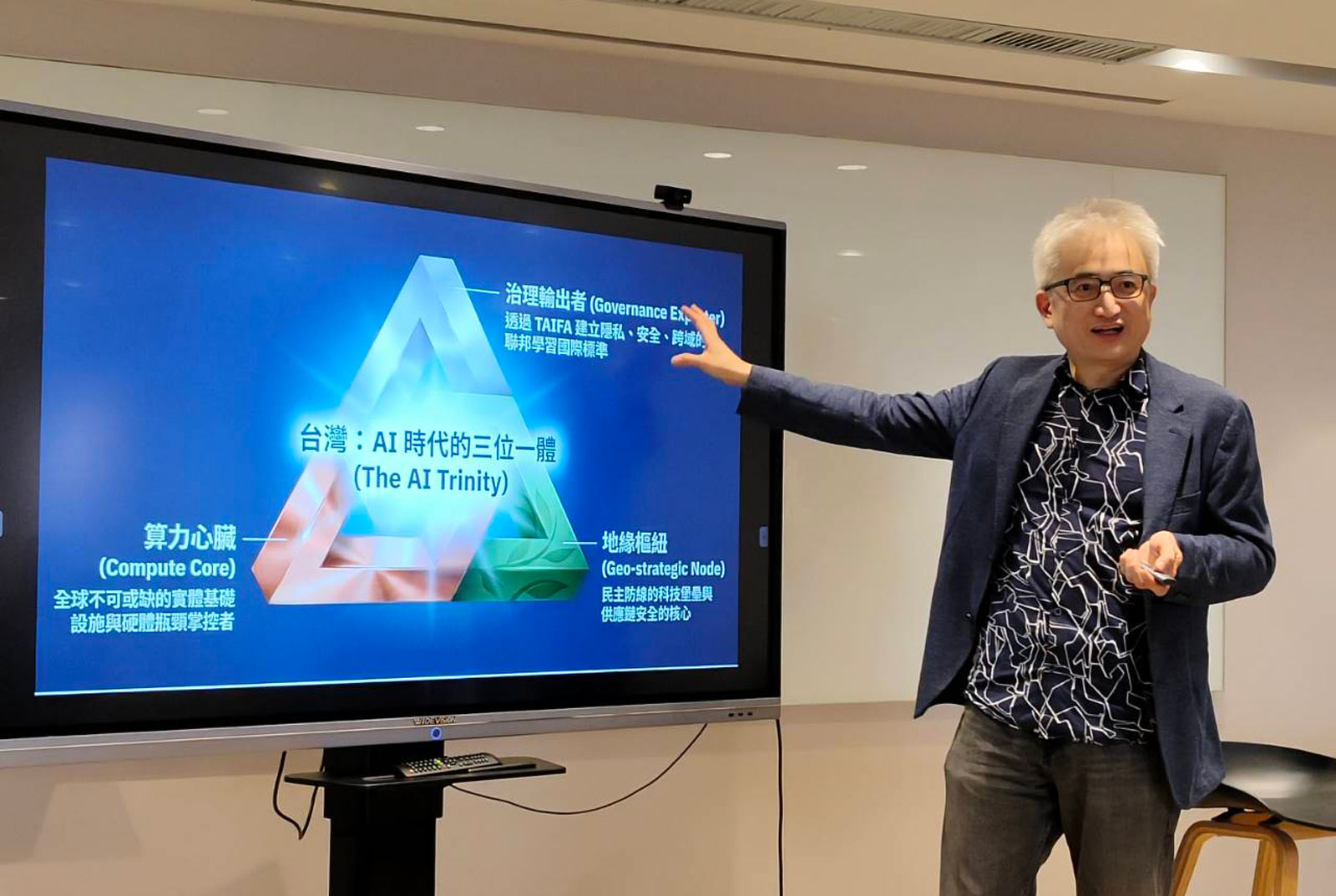
Beyond hardware, Taiwan is offering the world a moral and technical alternative to the AI models of the US and China. Ethan Tu, founder of Taiwan AI Labs, explains that while the US and China models require users to surrender data to Big Tech or the state, Taiwan champions "Regenerative AI."
“We offer a sovereign solution—both technical and political—that allows you to train AI exclusively on your own domain data,” Tu told a panel hosted by the Saxon Science Liaison Office. By utilizing "Federated Learning," Taiwan allows institutions like hospitals to collaborate on AI models without ever sharing sensitive patient data.
By adhering to GDPR standards and prioritizing transparency, Taiwan has demonstrated that a nation can develop world-class AI without sacrificing data autonomy.
If Taiwan can bridge the gap between its shrinking population and its expanding global footprint, it will avoid the 'gilded shell' Chien fears. The world needs Taiwan’s hardware, but more importantly, it needs Taiwan’s vision of a trustworthy AI future. In return, Taiwan needs the world’s people to keep its engine running.
Views

Subscribe to CWE Newsletter (every Thursday)
Stay abreast of what's happening in Taiwan with our weekly digest.
Keywords: