India’s Growing Engagement in the Indo-Pacific and What it Means for Taiwan
Source:Shutterstock
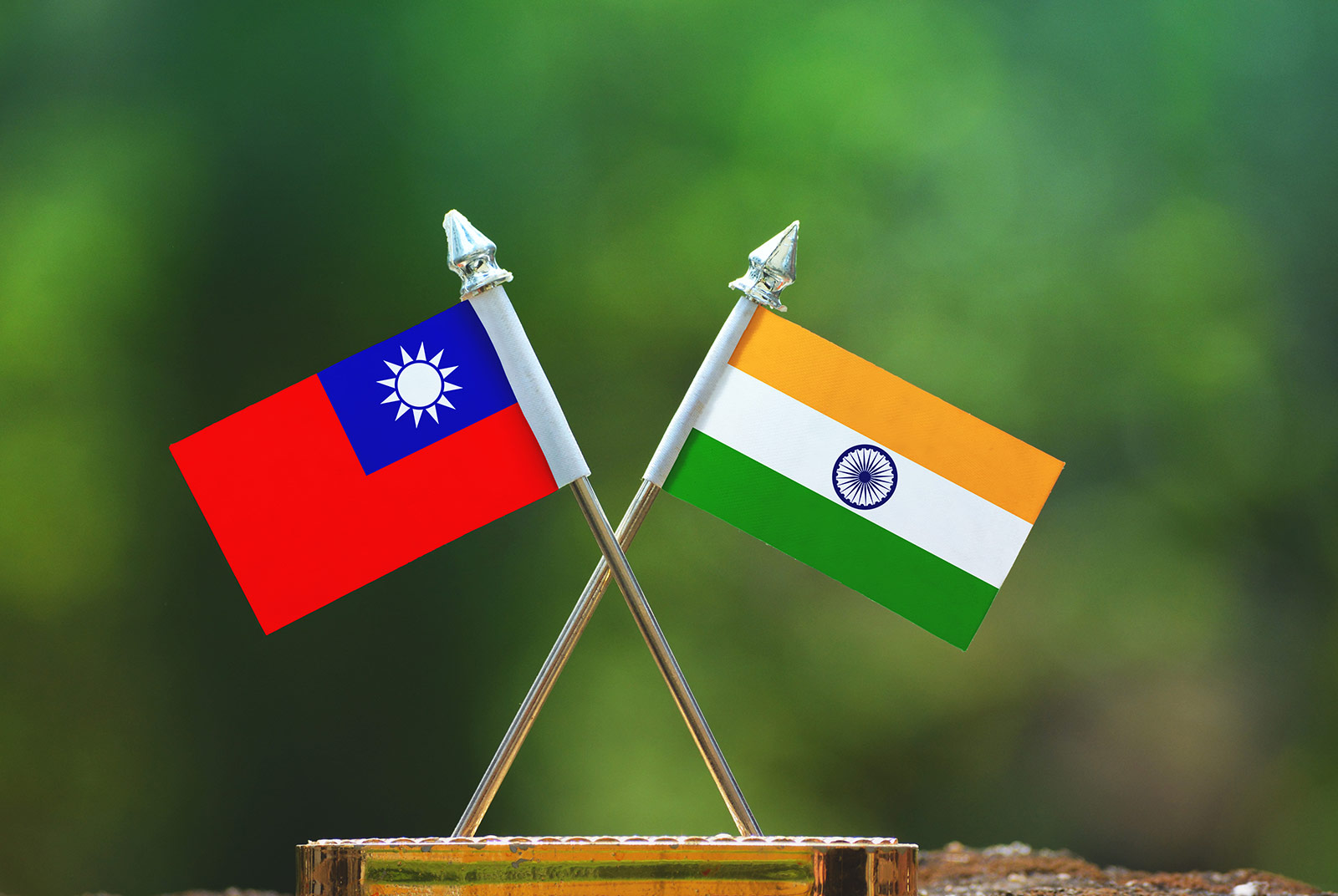
As India expands its role across the Indo-Pacific through stronger regional partnerships and strategic cooperation, its relationship with Taiwan is also entering a new phase. What does India’s growing regional engagement mean for Taiwan?
Views
India’s Growing Engagement in the Indo-Pacific and What it Means for Taiwan
By Manoj Kumar Panigrahiweb only
August 2026 will be a remarkable month for India-Taiwan relations.
Eva Air, Taiwan’s air carrier, announced that from December 1, it will start a five-day a week direct flight to Delhi. The direct flights between the two sides will mark a significant improvement in people-to-people connections and help in boosting tourism and business.
It also reflects the importance of both sides towards each other. The previous direct flights between Taipei and New Delhi were cancelled during COVID-19, and since then it was not revived. As the ties progress between the two, India has also boosted its presence in the Indo-Pacific region through several engagements which involved multi-party parliamentary delegation visits to Taiwan.
India’s Engagement in Indo-Pacific in 2026
In the first half of 2026, the Indian Prime Minister did a series of foreign tours boosting India’s presence in the larger Indo-Pacific region. PM Modi began his 2026 country tour by visiting Malaysia in February, highlighting the evolving bilateral ties. Located next to the South China Sea (SCS), hosting a significant Indian diaspora, and a growing trade partner, Malaysia plays a crucial role in the region. Additionally, Malaysia is seen as a country with a robust semiconductor exporter ranking sixth worldwide. With India developing its own semiconductor production facilities the knowledge sharing from Malaysia’s experience can be useful.
Followed by in June 2026, India’s PM Modi visited three countries marking a unique trip to Indonesia, Australia, and New Zealand. The visit can be seen at a time when India and other countries have been facing difficult choices in world politics. With the ongoing conflicts from Ukraine-Russia, and Western Asia countries worldwide have been constantly on their toes to secure their supply routes. As the conflicts have seen an extended timeline, the costs attached to it have also kept getting higher. India’s strategic positioning and its rising importance beyond its traditional South Asian region needs to be further studied. Highlighting India’s vision of Indo-Pacific, PM Modi in his pre-departure press statement, stated that the visit aims to strengthen India’s Act East Policy (AEP), Mutual and Holistic Advancement for Security and Growth Across Regions (MAHASAGAR) vision, and towards a free and open Indo-Pacific (FOIP).
The highpoints of the three-nation visits include several key agreements. With Indonesia, the signed pacts on defense, critical and rare earth minerals, agriculture, maritime security, and space cooperation were the key highlights. Along with the same, India’s support for renovation of UNESCO World Heritage Prambanan Temple in the city of Yogyakarta reflected a whole-round approach to the ancient partner. In his visit to Australia, PM Modi, signed a long-term agreement for a steady supply of uranium. This is key for the energy security for India and directly addresses to reduce dependency on fossil fuels. And in his last leg of the visit, India and New Zealand became the strategic partners and target to double the trade by 2030.
What does India’s growing engagement in the region mean for Taiwan?
The increased engagement should be looked at as a positive insight for Taipei. First, it brings India a likeminded partner which shares the common values of democracy, freedom, rule of law, and FOIP. These norms have been shared among both India and Taiwan putting a strong foundation on the established partnership. This has led to the visit of an Indian multi-party delegation, including former lawmaker Priyanka Chaturvedi to Taiwan. Such visits reflect India’s growing interest in the region.
Second, leadership in Taiwan can look into how the India-Japan ties have evolved into strong people-to-people ties. Beside the usual agreements, one key outcome of the recent leadership visits in 2025 and 2026 was the “Next Gen People-to-People Partnership” which includes exchange of more than 500,000 personnel bilaterally in both sides in next five years, including 50,000 skilled talents from India to Japan. With Japan facing a similar decline in population like Taipei, the agreement with India can be seen as a boost to its workforce.
India and Taiwan can look into revive the labor mobility between the two sides signed in 2024. Since then, the program has seen multiple ups and downs. With Taiwan becoming an super aged society, Indian workers can play a part to fill the larger gaps which will be occurring in Taiwan's industrial and agricultural industry. With Indian workers in Taiwan, it will push Indian policymakers to pay more close attention to the region and build further engagements which brings both sides further closer.
Third, the rising cooperation on semiconductors with India. Multiple Taiwanese companies have now begun to look to India as a preferred partner for their investments under “Make in India” policy. This is necessary as New Delhi has been attempting to diversify its traditional industrial output.
By investing in high-end semiconductors, India is becoming future ready and Taiwanese companies are becoming part of it. Taiwan has been crucial in nurturing the “semiconductor talents” of India, as it has been offering “industry internship” to “language training” to Indian students, and this number is only growing year by year.
Indo-Pacific nations have gradually come(ing) to the realization that given the ongoing strategic competition between the United States and China. With a rising income and among the youngest population in the world, India along with other major powers offers an US-China alternative to the region and to the world. Countries including India and Taiwan have built partnerships on trust and shared values. Such cooperation can only increase with time as both sides steer through the complex geopolitics of the world.
This piece reflects the author's opinion, and does not represent the opinion of CommonWealth Magazine.)
CommonWealth Magazine welcomes op-ed submissions. Please send your article proposals to [email protected]
About the author:

Dr. Manoj Kumar Panigrahi is an Associate Professor at Jindal School of International Affairs, OP Jindal Global University, India. He is currently a 2026 MOFA Taiwan Fellow at National Chengchi University.
Have you read?
- Teaching Taiwan in India
- India’s AI Strategy in a Changing Global Technology Landscape
- Racism or Cognitive Warfare: Speed Breakers in India-Taiwan Relations
Uploaded by Ian Huang
Views

Subscribe to CWE Newsletter (every Thursday)
Stay abreast of what's happening in Taiwan with our weekly digest.
Keywords: