Leveraging capital to establish a credible transition path
Yuanta Sustainable Finance Forum—Focusing on transition finance

Financial Supervisory Commission officials, financial industry executives, international rating agency experts, and corporate sustainability chiefs attended the Yuanta Sustainable Finance Forum, co-hosted by Yuanta Financial Holdings and CommonWealth Magazine, to discuss new paths for companies to advance their long-term sustainability.
Views
Yuanta Sustainable Finance Forum—Focusing on transition finance
By Yuanta FHCSponsored Content
With the deepening influence of global net-zero targets and sustainability-related disclosure regulations, the low-carbon transition has entered a new phase. As companies deal with the challenge of setting carbon reduction targets, they need to balance sustainable development and competitiveness.
Faced with enormous demand for transition funding, the key question is no longer which industries deserve support for their sustainability efforts—it is how to leverage financial power to help different industries establish feasible paths forward. In the process, the financial industry is evolving from a provider of funds into a crucial partner in driving industrial transition to greater sustainability.
In light of this, Yuanta Financial Holdings and CommonWealth Magazine jointly organized a forum focused on transition finance. To discuss how policy, capital, and industry needs can be linked to leverage financial influence in support of greater sustainability, they invited Yen-Liang Chen, Vice Chairperson of the Financial Supervisory Commission (FSC); Hsi-sheng Lin, Director General of Development and Innovation at the FSC; Bobby Hwang, President of Yuanta Financial Holdings; Tsung-Sheng Liu, Chairman of Yuanta Funds; Michele Leung, Head of Greater China ESG & Climate at MSCI; Sam Lin, Board Member at KPMG Sustainability Consulting; and Shelly Yeh, Chief Sustainability Officer at the TCC Group.
The FSC's Chen stated that the government is using the Green and Transition Finance Action Plan to guide financial institutions toward a NTD6 trillion investment target for 2030. The transition to sustainability, he said, requires collaboration between the government, the financial industry, and companies to jointly build a more resilient and competitive sustainable economy.
Yuanta's Hwang echoed this view, pointing out that for the financial industry, it's essential that financing not exclude companies in high-emission industries, but instead help them establish concrete, feasible transition paths. Beyond providing funding, he said, the financial industry should leverage its influence to become an important partner in corporate transformation and sustainable development.
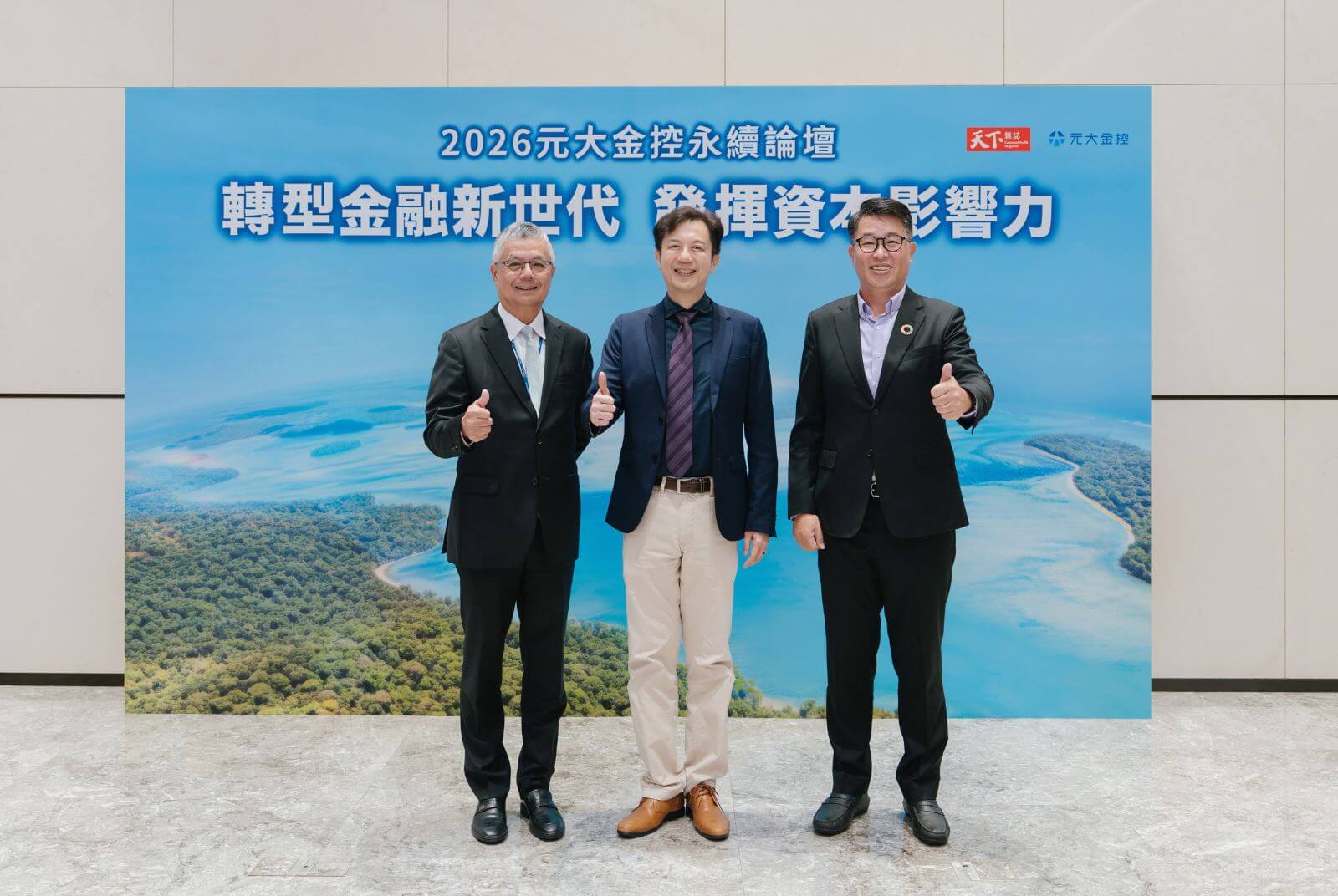
Financial Supervisory Commission Vice Chairperson Yen-Liang Chen (center) stated that there is no one-size-fits-all solution for the transition to sustainability—it instead relies on flexibility and concerted effort from all parties.
Building credible transition paths
As extreme weather events become more frequent, climate risks such as high temperatures, floods, and droughts are affecting business operations and supply chain stability. Volatility in raw material prices, rising insurance losses, and the implementation of carbon pricing mechanisms have transformed climate issues from environmental concerns into financial ones that companies must address. KPMG's Lin pointed out that as climate risks are increasingly reflected in corporate cost structures and profitability, financial institutions and investors are no longer focused on whether companies make net-zero commitments, but rather on the credibility of their transition plans.
Lin stated that for financial institutions, "what they fear most is empty numerical targets for decarbonization." For companies to obtain financing for transition, they cannot simply declare a net-zero target for 2050—they must present a clear business and financial strategy, explaining how the board of directors will oversee the transition process, how carbon reduction measures correspond to capital investment, and what results and targets are expected at each stage. Companies can demonstrate the feasibility of their transition path through verifiable data and performance metrics: acknowledging emissions hotspots, describing technological solutions, and reporting decarbonization progress.
Lin further pointed out that the core of transition finance is not labeling or applying a one-size-fits-all approach to companies in high-carbon industries, but rather assessing their chosen transition path, their ability to execute it, and their actual results—supporting companies in establishing a way forward that aligns with the target of limiting global warming to 1.5°C. It's only by effectively linking carbon reduction targets with governance mechanisms, financial planning, and concrete action that companies can reduce future compliance risks, strengthen operational resilience, and uncover new growth opportunities and competitive advantages as they shift to a sustainable, low-carbon model.
International capital shifts its attention from commitment to validation
MSCI's Leung stated that international investors are changing their perspective when evaluating companies' sustainability efforts. Rather than simply examining current emissions levels, they are placing greater emphasis on whether companies possess clear transition strategies, governance mechanisms, and resource investments, and whether they can translate commitments into concrete action. She pointed out that when assessing a company's transition capabilities, investors check not only whether carbon reduction targets cover key emission areas and are subject to third-party verification, but also whether the board of directors and compensation systems incorporate climate indicators, whether capital expenditures include low-carbon technologies, and whether emissions performance continues to improve.
Leung noted that with changes in climate policies, technological developments, and market demands, transition risks are increasingly being factored into investment decisions and asset pricing. For investors, beyond examining current performance, it is even more important to assess a company's future ability to meet transition challenges. She also described the MSCI Energy Transition Framework, which draws on two main perspectives to assess a company's capabilities and vulnerabilities in transitioning to low-carbon operations: "transition readiness" and "transition pressure." MSCI research shows that most companies with higher transition readiness are able to achieve both reduced emissions and better financial performance, indicating that decarbonization and maintaining business competitiveness are not mutually exclusive. The capabilities needed to successfully transition are becoming an important indicator by which capital markets assess companies' long-term value.
Creating an industrial transition ecosystem
During the general discussion session, participants drew on their experience in government program implementation, financial practices, and corporate transformation to explore how transition finance can connect policy, capital, and industry needs, accelerating the establishment of feasible transition paths for companies.
The FSC's Lin stated that in recent years, the FSC has expanded its promotion of green finance to include transition finance, with the goal of guiding investment toward companies with decarbonization potential and transition needs. He pointed out that carbon emission data remains a significant challenge for transition finance. The FSC has therefore consistently urged wider disclosure of greenhouse gas inventories and, through inter-ministerial collaboration, established a carbon emission data platform. This platform helps companies provide reliable data, enabling the results of corporate transitions to be evaluated, verified, and tracked.
KPMG's Lin pointed out that a key factor in companies securing funding is proposing a clear, actionable transition path. He stated that transition-related investments not only help reduce compliance risks but also strengthen operational resilience and long-term competitiveness. Only by effectively linking transition planning with concrete action can financial institutions and investors see a company's long-term value.
Yuanta's Liu observed that global sustainability efforts are gradually moving from sustainable finance and climate finance into a transition finance phase. Companies are required not only to reduce carbon emissions but also to confront long-term challenges such as business model shifts and talent development. Liu stated that financial institutions, beyond providing financing, should act like personal fitness coaches during the transition process, also drawing on investment, negotiation, and risk management as they guide companies in making their operations more sustainable and digitalized.
Liu also pointed out that ESG has gradually shifted a focus on the sustainability of financial data toward the financialization of sustainability data, as sustainability performance increasingly becomes an important factor in investment decisions and company assessment. Financial institutions should not rely solely on rating scores or other single-value indicators, but instead draw on continuous engagement and risk management evaluation. They can thereby gain a deeper understanding of a company's direction and potential vulnerabilities, using this as the basis for exerting financial influence to encourage corporate transformation.
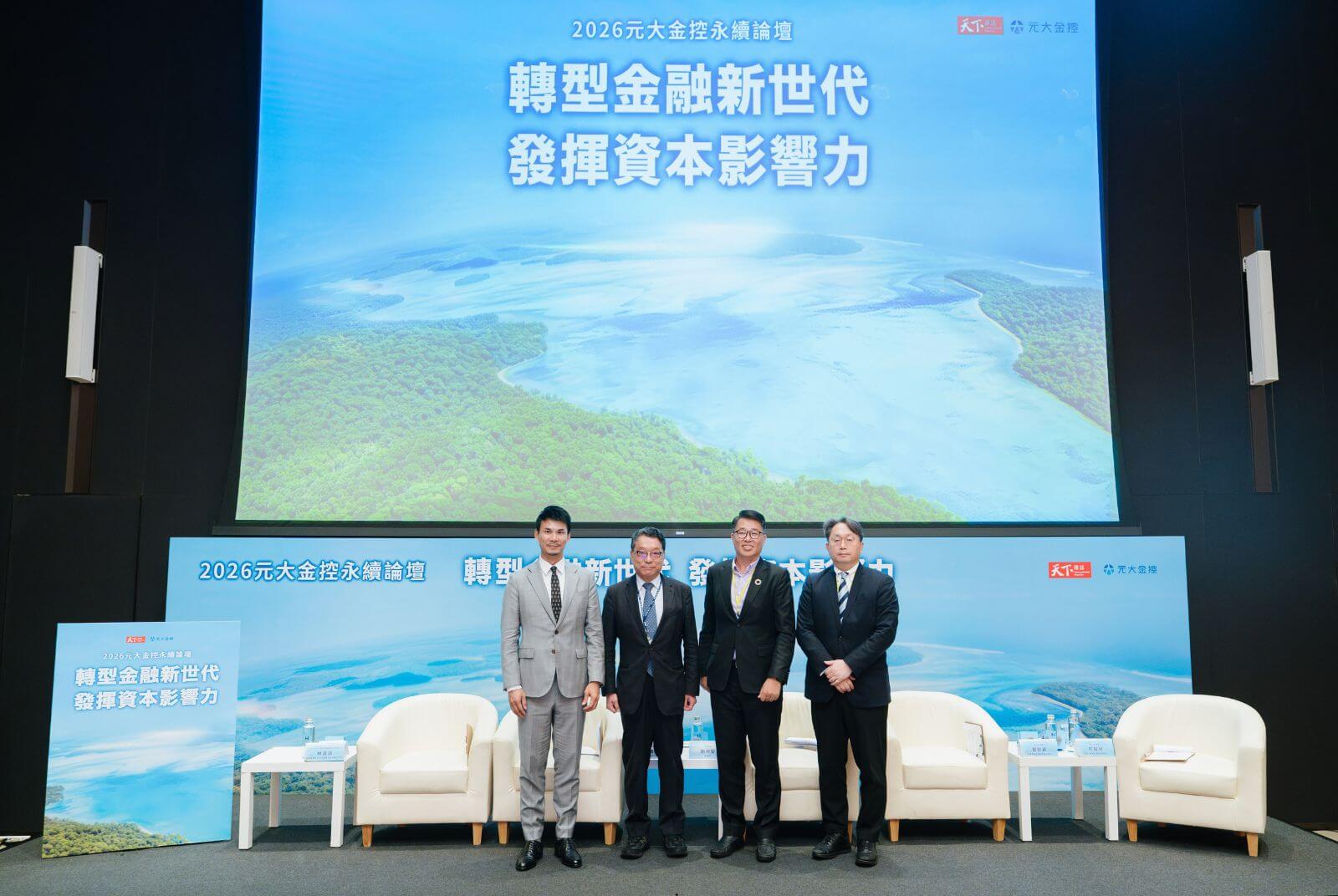
ESG investment has evolved from its original form, with a change in emphasis. Tsung-Sheng Liu, Chairman of Yuanta Funds (far right), pointed out that while the focus was previously on the environment (E), the new challenges of the Trump era have led to a rapid rise in the importance of social (S) and governance (G) factors, requiring companies to continuously adjust their sustainability strategies accordingly.
The TCC Group's Yeh shared her company's transition experience, explaining that for the TCC Group, transition was not an option but a matter of long-term survival. In recent years, through international expansion and investments in its energy business, the TCC Group has gradually reduced its reliance on the traditional cement business where it had its origins. The European market now accounts for over 40% of its revenue. The company has also introduced AI-powered autonomous electric mining trucks at its mines, which not only reduce diesel consumption and the resulting carbon emissions but also improve workplace safety and help address labor shortages. The TCC Group thus demonstrates the potential of transition investments to deliver both environmental benefits and business value.
There was a consensus among forum participants that for transition finance to truly have an impact, several things are necessary alongside policy backing: reliable data sources, long-term support from financial institutions, and sustained action by companies. Only through collaboration between government, the financial sector, and industry can feasible transition paths be developed that enhance companies' overall resilience and competitiveness.
Views

Subscribe to CWE Newsletter (every Thursday)
Stay abreast of what's happening in Taiwan with our weekly digest.
Keywords: