Sunlit Fluo & Chemical: The Critical, Under-the-Radar Cog in Taiwan's Semiconductor Sector

Source:Sunlit Fluo & Chemical
Sunlit Fluo & Chemical is a little-known but critical player in Taiwan’s semiconductor supply chain. As the largest producer of semiconductor-grade hydrofluoric acid outside Japan, it has helped strengthen Taiwan’s resilience against global supply disruptions.
Views
Sunlit Fluo & Chemical: The Critical, Under-the-Radar Cog in Taiwan's Semiconductor Sector
By Hung-ta Linweb only
Sunlit Fluo & Chemical is the most mysterious company in Taiwan's semiconductor materials sector. It is not publicly listed and has never before given an interview.
Yet, Sunlit is one of only two companies in the world to receive certification from the U.S. Food and Drug Administration (FDA) for the pharmaceutical-grade sodium fluoride it produces, and has a more than 80 percent share of the global market. Multinational brands Colgate and Procter & Gamble are among its customers.
It is also the only enterprise outside Japan using its own technology to make semiconductor-grade hydrofluoric acid and has the largest production capacity outside Japan for the chemical.
Hydrofluoric acid is indispensable in the production of semiconductors because it can selectively eliminate oxide layers and contaminants from wafer surfaces, "just like beauty treatments removing dead skin cells," said C.P. Huang (黃靜萍), a deputy division director at the Industrial Technology Research Institute's (ITRI's) Material and Chemical Research Laboratories.
Taiwan's importance in the sector became apparent during the 2019 trade war between Tokyo and Seoul. At the time, Tokyo instituted export controls on hydrofluoric acid shipments to South Korea, with exports that usually totaled 3,000 metric tons per month falling to zero in August 2019.
The value of South Korean imports of similar products from Taiwan rose to 4.5 times its previous level during the same period due to the efforts of Sunlit, enabling Korea's semiconductor sector to avoid a supply chain crisis.
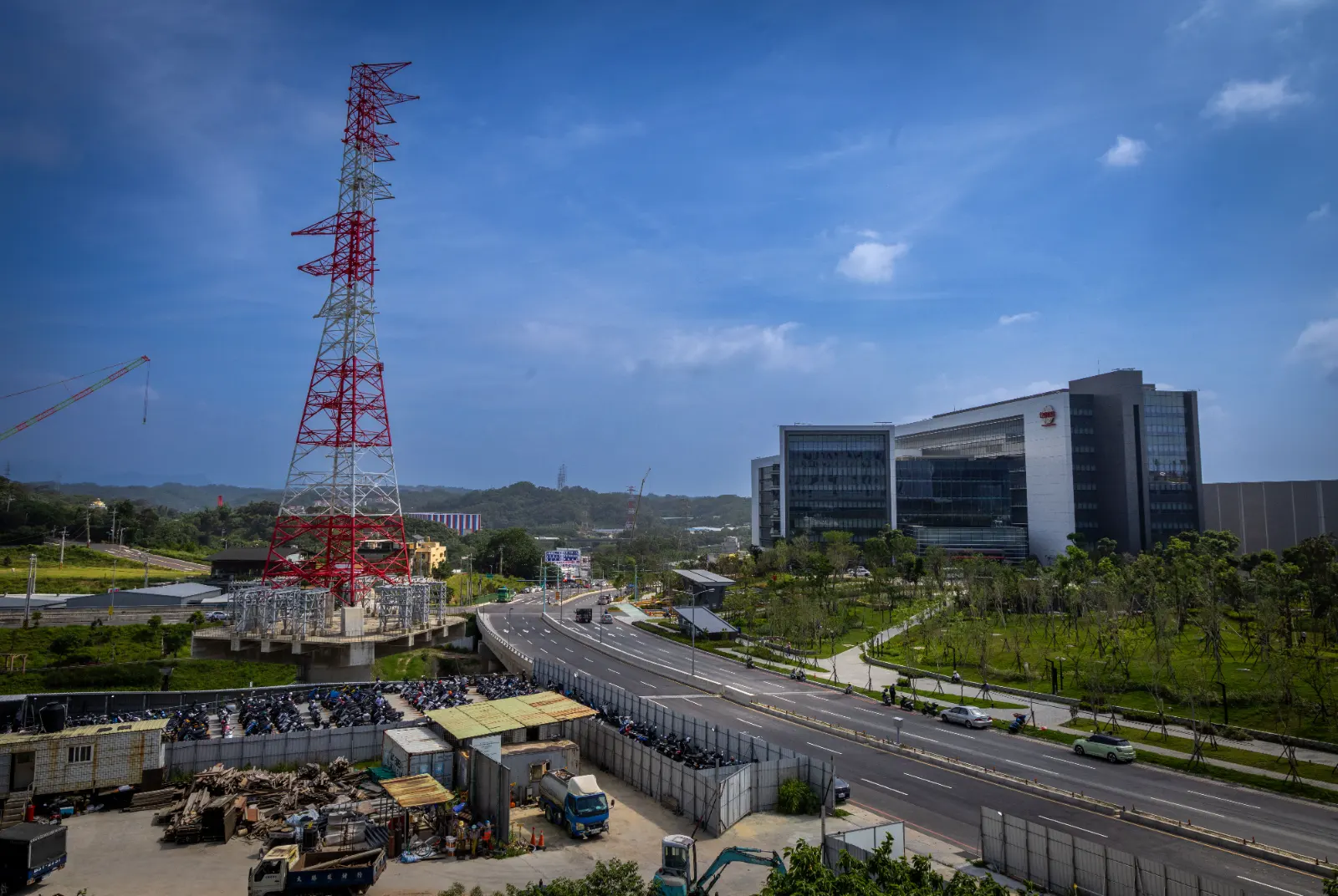
 Sunlit Fluo & Chemical’s products excel at “exfoliating” chips, and in 2019, the company also emerged as a key supplier during the Japan-South Korea trade dispute. (Source: Sunlit Fluo & Chemical)
The company's founder, Jack Lin (林文崇), died in 2025, and his son Bryan Lin (林建瑋), who is now Sunlit's chairman and CEO, gave his first-ever interview this year.
Born in 1945, the father worked as a sales agent for chemical materials after completing his military service before obtaining the right to represent fluorides from Japan in Taiwan and establishing Sunlit Fluo & Chemical.
The United States requires that sodium fluoride used in toothpastes receive FDA approval. Because of that, the original Japanese manufacturer transferred the technology for making the substance to Sunlit.
"The first time the FDA came, it gave us a list of more than 100 deficiencies," Bryan Lin recalled.
The company's founder insisted on using equipment made of expensive stainless steel.
"This is something that enters people's bodies," Jack Lin cautioned at the time in explaining his high standards.
After obtaining FDA certification, however, Sunlit entered a 10-year period of stagnation as revenue failed to grow from 1995 to 2005. Jack Lin persevered, asserting that "to run a business, you have to have a strong foundation."
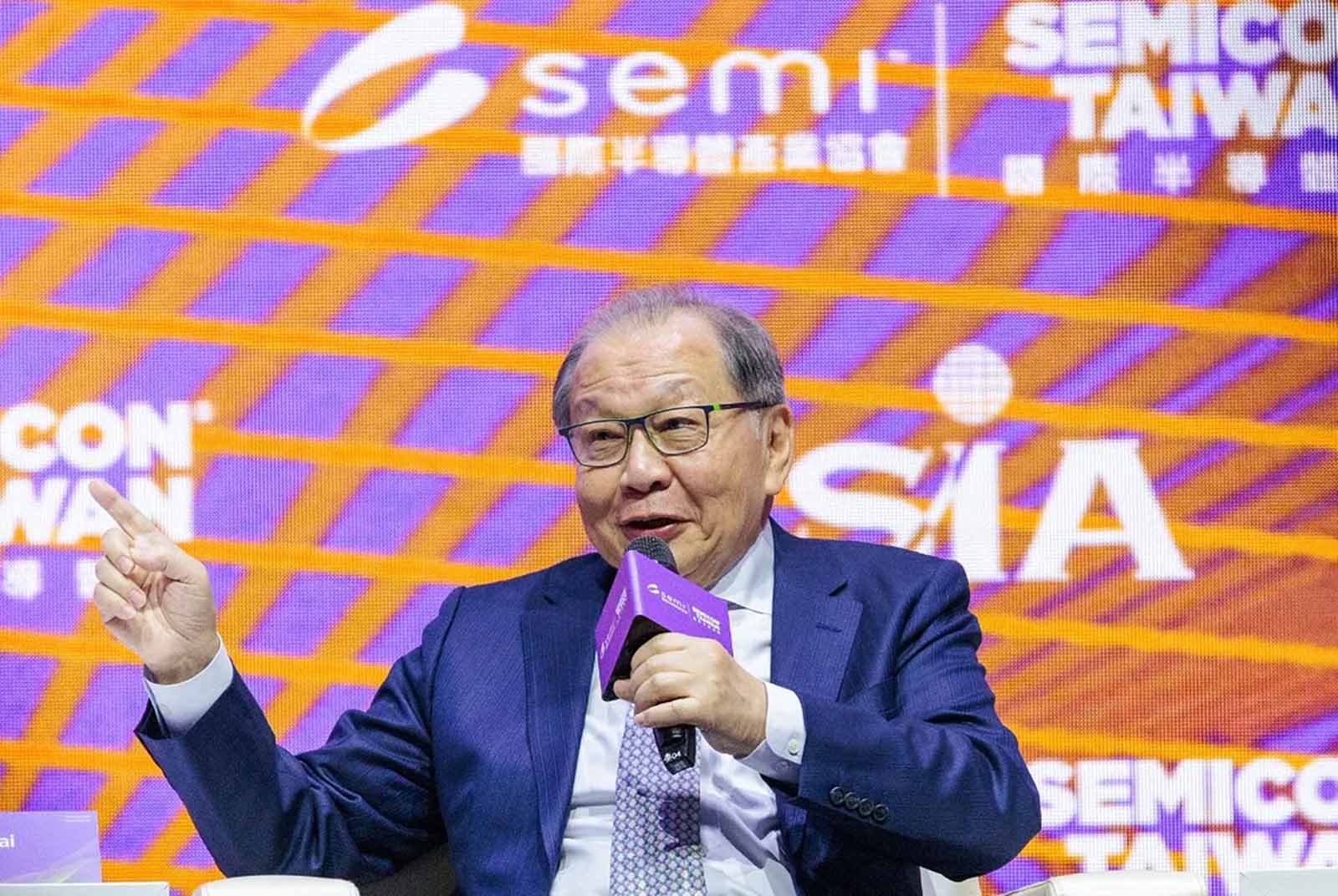
 Bryan Lin said his father insisted on developing the technology in-house, overcoming numerous challenges to produce high-quality semiconductor-grade hydrofluoric acid while also cultivating Taiwan’s domestic supply chain. (Photo: Chien-Tong Wang)
From 1999 to 2006, Japan was unwilling to help Sunlit with electronics-grade technologies, so the elder Lin decided to develop products in-house. By 2002, the company's revenues had remained in the doldrums for seven consecutive years and its profits were down by 50 percent.
It was at that time, however, that the solar power sector took off, and Sunlit bypassed sales representatives and began supplying end users directly, gaining footholds in the supply chains of major Taiwan-based solar players including Motech Industries, E-Ton Solar Tech, and Gintech Energy. In 2006, sales finally began to show growth.
Meanwhile, Jack Lin put a priority on cultivating domestic suppliers rather than relying on Japanese valve components. In 2013, Sunlit finally cracked open TSMC's supply chain, and in 2016 Lin defied conventional wisdom, building a second production line despite only 50 percent of its existing capacity being used.
It was that additional capacity that became the foundation for supporting South Korean clients in 2019. On the day Japan imposed its export controls, the chairman of South Korea's largest hydrofluoric acid supplier flew to Taiwan and booked the new factory's entire capacity.
Sunlit was also recognized as a top supplier by TSMC in 2023 and 2025.
Today, the company is building a new facility in Tainan, and by 2028, its annual semiconductor-grade hydrofluoric acid capacity will reach 100,000 metric tons, making it one of the world's largest producers of the chemical.
ITRI's Huang said Sunlit's strength lies in controlling trace metal impurities at a parts-per-trillion (ppt) level. With countries actively developing semiconductors and South Korea and China beginning to develop their own hydrofluoric acid supply chains, Sunlit's position is even more critical, she said.
As the largest producer of semiconductor-grade hydrofluoric acid outside Japan, Sunlit means Taiwan need not be exposed, as South Korea was in 2019, to the risk of export controls imposed by a single country, Huang added.
Have you read?
- Taiwan Think Tank: AI Infra Growth Not Slowing Down; DRAM Capacity Crunch to Last Until 2030
- TSMC's Baipu Plan: Advanced Packaging, Hidden in Plain Sight
- Can China Catch Up with Memory Chip Leaders? What CXMT’s Breakthrough Means for Taiwan
Translated by Luke Sabatier
Uploaded by Ian Huang
Views

Subscribe to CWE Newsletter (every Thursday)
Stay abreast of what's happening in Taiwan with our weekly digest.
Keywords: