US, China Plan AI Incident Channel as Competition Tests Cooperation

Source:Shutterstock
October 7, 2026 -- Today’s top stories: US, China Plan AI Incident Channel as Competition Tests Cooperation, Nvidia’s $20BN Groq Deal Faces Lawsuit From Jilted Engineers, and Reflection AI Takes on Chinese Open Models With Nvidia-Backed Beam.
Views
US, China Plan AI Incident Channel as Competition Tests Cooperation
By CommonWealth Magazineweb only
US, China plan AI incident channel as fierce competition tests room for cooperation
The US and China have agreed to continue talks on superintelligence (SI) and establish a channel to communicate about potentially dangerous incidents following the US-China summit in late September.
While both countries see superintelligence or artificial intelligence as a strategic advantage, they also face the risk that an autonomous system could trigger a Cyberattack, disrupt critical infrastructure, or create a crisis neither side intended. Experts told VOA that while the two superpowers are not expected to talk about technological cooperation or comprehensive AI governance, they might set up a mechanism for incident notification.
One likely notification trigger would be an autonomous AI agent gaining unauthorized access to Websites or other Internet resources in either country. Both the U.S. and Chinese governments would first need domestic systems requiring major SI companies to report serious incidents.
They would then have to agree on a threshold for notifying the other country.
There would likely need to be some technical staff dedicated to this function.
If an incident affected nuclear Command-And-Control systems or similarly critical infrastructure, communication should quickly reach the leaders of both countries. The next round of talks on advanced super intelligence is expected to take place around or during the Asia-Pacific Economic Cooperation (APEC) summit in Shenzhen, China, in November 2026.
Reference Sources
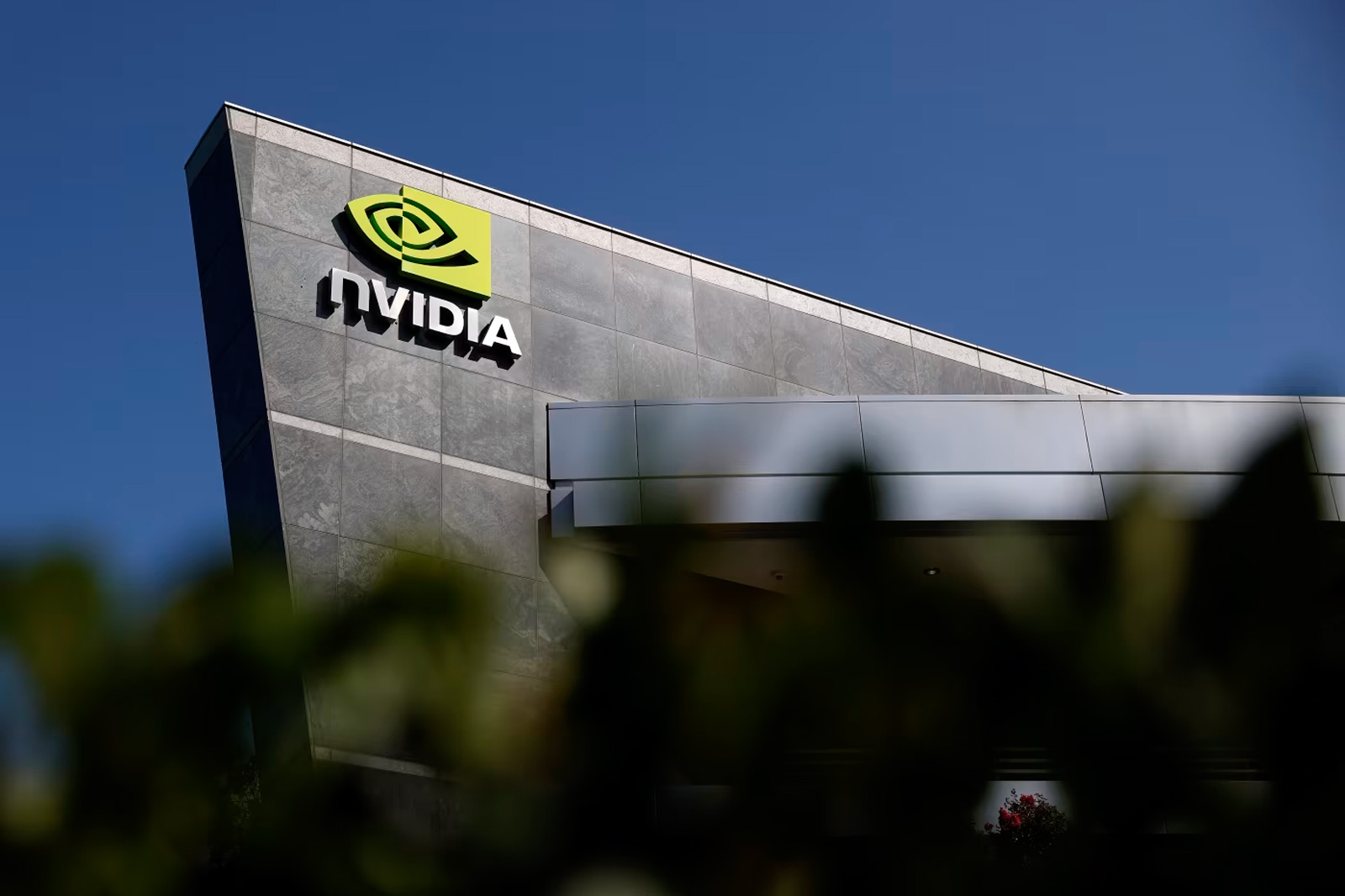
Nvidia’s $20bn licensing deal with Groq faces lawsuit from jilted engineers

A lawsuit filed by two former engineers who owned shares in start-up Groq alleges that Nvidia’s $20Bn licensing deal with Groq fleeced employees who were left out of the transaction.
The legal complaint filed on Friday in a Delaware corporate law court alleges that Groq's board improperly sold the company's core assets and top employees to the $ 5 trillion tech titan in 2025, consigning those left behind to a hollowed-out shell.
The transaction was framed by Nvidia at the time as a "non-exclusive" licensing arrangement, with Groq remaining as an independent and functioning company.
However, according to the lawsuit, the Groq board was riven with conflicts of interest and failed to observe its legal obligation to get the best price and structure for all shareholders, not allowing some of them to vote on the transaction.
The $20Bn paid to Groq came in the form of a $17Bn licensing deal whose proceeds were shared among all backers. A separate $3Bn Nvidia stock bonus pool was created for certain engineers who joined the company, including the Groq founder and board member Jonathan Ross, a former Google executive.
Reference Sources
- ft - Nvidia’s $20bn licensing deal with Groq faces lawsuit from jilted engineers
- cnbc - Nvidia's $20 billion Groq deal faces lawsuit alleging startup's stockholders were shortchanged
Reflection AI boosts US ambition to compete with Chinese ‘open’ models

US AI start-up Reflection AI, backed by Nvidia and the Trump administration, has unveiled its first Open-Weight model, Beam.
The model is designed to compete with Lower-Cost Chinese models such as DeepSeek and Kimi in the market for public, customisable AI products. Reflection claimed that Beam outperformed its peers, “delivering competitive performance on coding and Agentic tasks at a fraction of the token cost”.
The start-up is strategically significant for the US in its AI race with China, as well as for Nvidia, which aims to create rivals to the biggest labs, including OpenAI and Anthropic. Reflection said Beam has 501 billion total parameters, or variables that determine how an AI system processes information, but activates only 23 billion for each task, making the model faster and cheaper to run by using only part of its network for each task. Comparatively, Z.AI's GLM-5.2 has about 744 billion total parameters with 40 billion active parameters. Reflection's announcement confirms reporting from Axios over the weekend that the start-up was close to a launch.
Reference Sources
- ft - Reflection AI boosts US ambition to compete with Chinese ‘open’ models
- aawsat - Nvidia-Backed Reflection Unveils First AI Model to Take on Chinese Open Models
- techcrunch - Reflection debuts Beam, an open-weight AI model to rival Chinese models at lower compute cost
- thestarmy - Nvidia-backed Reflection unveils first AI model to take on Chinese open models
The CommonWealth English daily news digest is a service curated by CommonWealth English team with the help of AI tools.
Have you read?
- EU Injects €130M Into Counter-Drone Capabilities
- G20 Splits Over Industrial Overcapacity, an Issue Often Aimed at China
- US Growth Revised Up as Consumers, AI Investment Drive Second Quarter
- Nvidia Boosts Share Buyback by Record $150B
Uploaded by Ian Huang
Views

Subscribe to CWE Newsletter (every Thursday)
Stay abreast of what's happening in Taiwan with our weekly digest.
Keywords: