How TECO, TECRO and AIT Work
Why Doesn’t Taiwan Have an Embassy in the United States?
Source:MOFA
Taiwan and the United States cooperate on semiconductors, trade, security and technology, yet neither side operates a formal embassy in the other’s territory. Instead, an unusual system built around TECRO, TECO and the American Institute in Taiwan has managed their unofficial relationship since 1979. Here is how it actually works.
Views
Why Doesn’t Taiwan Have an Embassy in the United States?
By CommonWealth Magazineweb only
Taiwan is opening another representative office in the United States.
Foreign Minister Lin Chia-lung is visiting Phoenix, Arizona, from October 3 to 5, 2026 to attend the opening of the new Taipei Economic and Cultural Office, meet Arizona Governor Katie Hobbs and Phoenix Mayor Kate Gallego, and engage with Taiwanese companies expanding in the region.
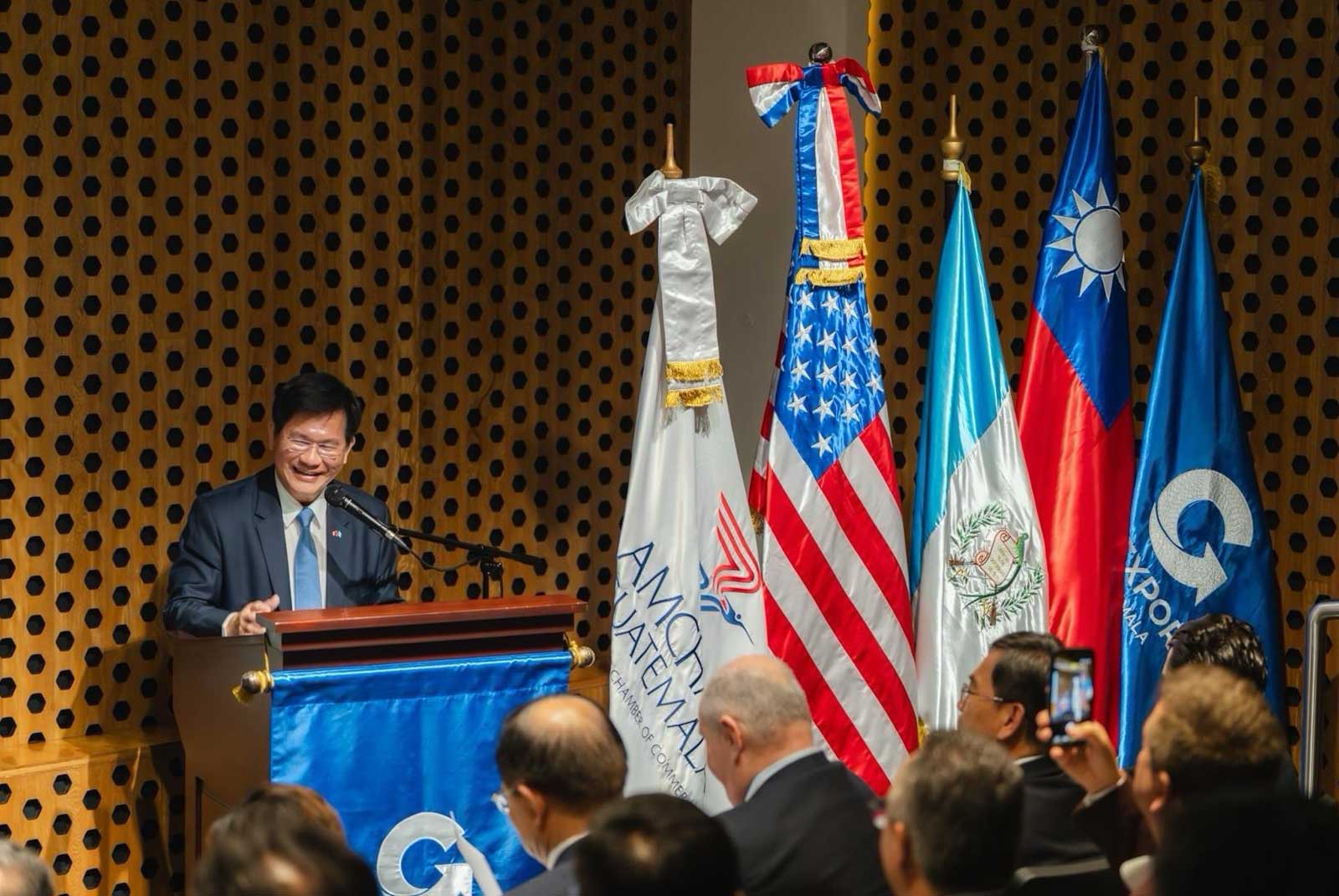
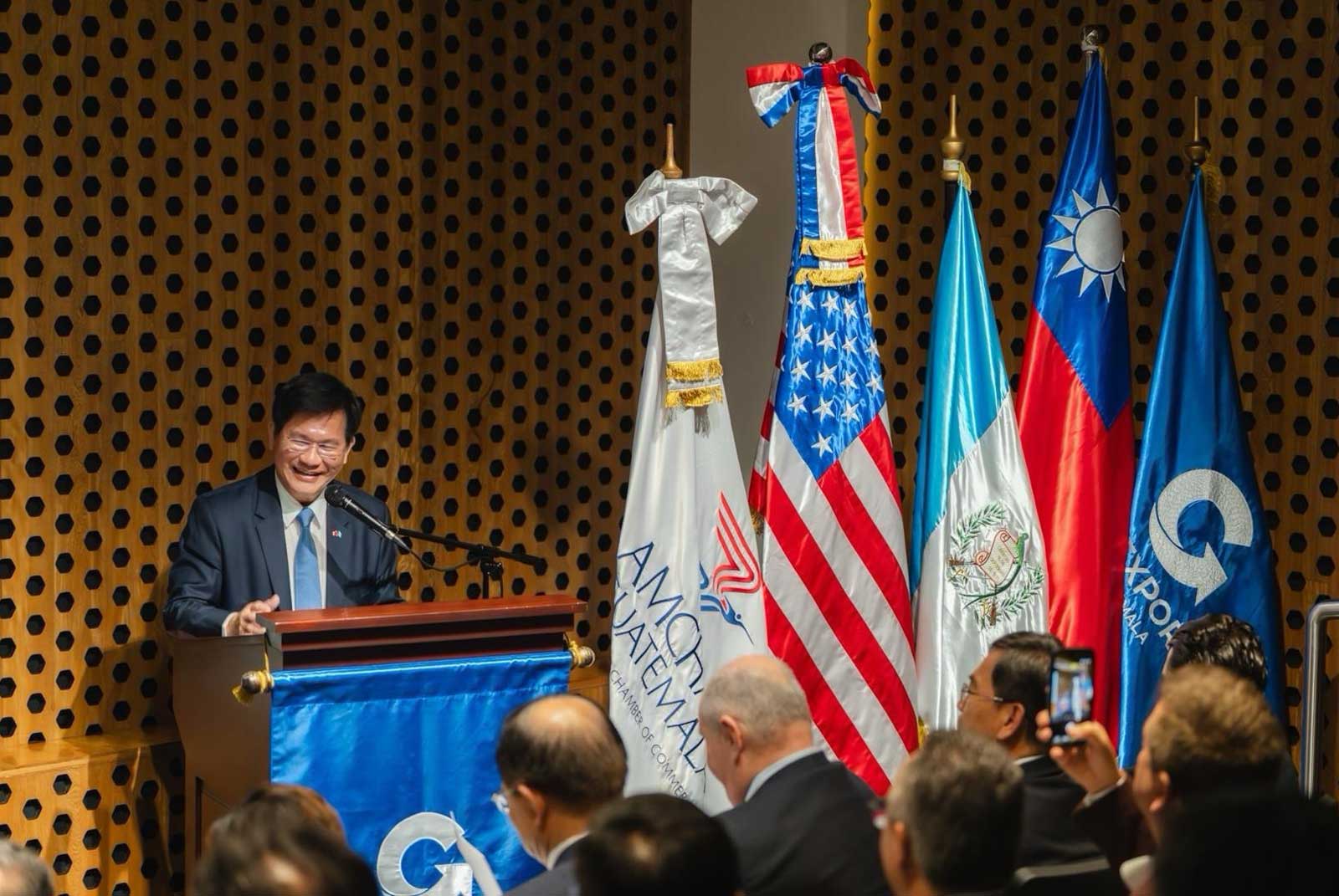 Taiwan's Foreign Minister Lin Chia-lung attended the opening of the new Taipei Economic and Cultural Office in Phoenix, Arizona.
Once established, Phoenix will become Taiwan’s 14th office in the United States.
The expansion raises an obvious question.
If Taiwan and the United States have such extensive political, economic and security ties, why does Taiwan not simply have an embassy in Washington?
The answer begins in 1979.
Why doesn’t Taiwan have an embassy in Washington?
The United States formally recognized the Republic of China, whose government is based in Taiwan, until the end of 1978.
On January 1, 1979, Washington established diplomatic relations with the People’s Republic of China.
In the normalization communiqué, the United States recognized the PRC government as the sole legal government of China while stating that Americans would continue to maintain cultural, commercial and other unofficial relations with the people of Taiwan.
Formal U.S.-Taiwan diplomatic relations therefore ended.
That meant the Republic of China embassy in Washington could no longer operate as an embassy recognized by the United States.
But economic, cultural and political interaction did not disappear.
Congress passed the Taiwan Relations Act in April 1979 to provide a domestic legal framework for continuing commercial, cultural and other relations with Taiwan.
The result was an unusual diplomatic architecture that still exists today.
What is TECRO?
The Taipei Economic and Cultural Representative Office in the United States, or TECRO, is Taiwan’s principal representative office in Washington.
It is the closest functional equivalent Taiwan has to an embassy in the United States—but it is not formally an embassy.
The U.S. State Department’s current Foreign Affairs Manual is explicit: the United States does not maintain diplomatic relations with Taiwan, and U.S.-Taiwan economic, cultural and other relations are conducted through the American Institute in Taiwan and its counterpart, TECRO.
TECRO therefore performs many of the practical functions normally associated with an overseas diplomatic mission.
It communicates with U.S. institutions, promotes economic and political ties, supports Taiwanese citizens and businesses, and serves as the main institutional channel connecting Taiwan with the U.S. government.
Its unusual name reflects the unusual legal relationship.
What is a TECO?
TECO stands for Taipei Economic and Cultural Office.
These are Taiwan’s regional offices across the United States.
The State Department describes TECOs as subsidiaries of TECRO that maintain U.S.-Taiwan relations at the subnational level.
Before Phoenix, Taiwan already maintained offices in Washington, New York, Boston, San Francisco, Los Angeles, Atlanta, Seattle, Houston, Chicago, Honolulu, Denver, Miami and Guam.
The Phoenix office will become the 14th location and will serve Arizona and New Mexico.
These offices provide many practical services associated with consulates, including assistance for Taiwanese citizens and overseas communities, while also promoting trade, investment, technology, education and local-government relations.
So while a TECO is not formally called a consulate, much of what it does will look familiar to anyone who has used one.
What is the American Institute in Taiwan?
The system works in both directions.
The United States does not maintain an embassy in Taipei.
Instead, U.S. relations with Taiwan are conducted primarily through the American Institute in Taiwan, or AIT.
The Taiwan Relations Act created the legal framework under which U.S. government programs, transactions and other relations involving Taiwan could continue through AIT.
Although AIT is structured as a nonprofit corporation rather than a formal diplomatic mission, it performs many functions normally associated with an embassy.
Historically, these have included visa services, assistance for U.S. citizens, commercial relations, cultural exchanges and communication between U.S. and Taiwanese officials.
That is why AIT is often described informally as America’s de facto embassy in Taiwan, even though that is not its legal status.
The distinction between the two can be explored further through the broader question of how Taiwan operates with many characteristics of a sovereign state despite limited formal diplomatic recognition.
Is TECO basically an embassy?
Functionally, there are many similarities.
Legally and diplomatically, there is an important difference.
An embassy represents one state to another state with which it maintains formal diplomatic relations.
The United States does not maintain such relations with Taiwan.
The State Department’s July 2026 guidance states that the United States does not recognize Taiwan as an independent sovereign state or maintain diplomatic relations with Taiwan.
Instead, relations are maintained under the U.S. one-China policy, the Taiwan Relations Act and related legal arrangements through AIT and TECRO.
Calling TECRO an embassy would therefore not simply be a cosmetic name change.
It would raise much larger questions about diplomatic recognition and U.S. policy toward Taiwan and China.
For that reason, Washington and Taipei have developed a system in which much of the substance of diplomatic relations can take place without the formal titles usually associated with them.
Why is Taiwan opening an office in Phoenix?
This is where a diplomatic arrangement created in 1979 meets the semiconductor economy of 2026.
Taiwan’s Ministry of Foreign Affairs says the Phoenix office is being established partly because Taiwanese semiconductor manufacturers and their suppliers are rapidly expanding in Arizona.
The state has become a major center of Taiwan-U.S. technology cooperation as TSMC and other Taiwanese companies build out their American operations.
MOFA said the new office will help Taiwanese businesses with investment and operational needs while expanding cooperation in trade, technology, supply chains, culture and education.
Taiwan’s representative to the United States, Alexander Yui, has also stressed that the office is not being created only for TSMC. Arizona has a growing Taiwanese community and an increasing number of Taiwanese companies that require local services.
Still, the semiconductor connection is difficult to miss.
TSMC’s dramatic Arizona expansion has already pushed more Taiwanese equipment, materials and AI-hardware companies to establish a U.S. presence, creating a broader Taiwanese semiconductor supply-chain cluster around Arizona.
The new TECO is effectively following that economic geography.
Can unofficial relations still produce real agreements?
Yes.
“Unofficial” does not mean insignificant.
Under the Taiwan Relations Act and related executive arrangements, U.S. government dealings with Taiwan are generally conducted through AIT.
Taiwan’s counterpart is TECRO.
The two organizations have been used to conclude agreements and manage cooperation across a wide range of policy areas.
The United States and Taiwan today cooperate on trade, technology, semiconductor supply chains, education, public health and security despite the absence of formal diplomatic relations.
This is one reason the U.S.-Taiwan relationship can seem contradictory from the outside.
Its diplomatic form remains deliberately unofficial.
Its practical substance can be extensive.
Does the United States have an embassy in Taiwan?
No.
The United States operates AIT offices rather than an embassy.
AIT carries out many embassy-like functions, but it exists within the unofficial framework created after diplomatic recognition shifted from Taipei to Beijing in 1979.
Taiwan follows the same basic model in the United States through TECRO in Washington and regional TECO offices.
The arrangement allows both sides to conduct a broad relationship without establishing formal diplomatic ties.
Why the Phoenix office matters
The most revealing aspect of Taiwan’s new Phoenix office may not be its title.
It is the reason Taiwan needs another office at all.
When the current structure was created in 1979, U.S.-Taiwan relations had just been formally downgraded.
Nearly five decades later, Taiwan is adding offices because commercial, technological and people-to-people ties have become more complicated—not less.
Arizona is a particularly clear example.
Semiconductors, investment and supply-chain localization are creating new demand for Taiwanese representation even though the formal diplomatic framework has not changed.
That captures the central paradox of U.S.-Taiwan relations.
Taiwan does not have an embassy in Washington.
The United States does not have an embassy in Taipei.
Yet behind the names AIT, TECRO and TECO is a relationship that increasingly performs many of the functions normally associated with diplomacy.
FAQ
Does Taiwan have an embassy in the United States?
No. Taiwan’s principal representative office is the Taipei Economic and Cultural Representative Office, or TECRO, in Washington.
What is the difference between TECRO and TECO?
TECRO is Taiwan’s main representative office in Washington. TECOs are regional Taipei Economic and Cultural Offices located elsewhere in the United States and handle local relations and services.
Is TECO a consulate?
Not formally. The United States and Taiwan do not maintain diplomatic relations, so TECOs are not officially consulates. However, they perform several similar practical functions, including services for Taiwanese citizens and promotion of trade and local ties.
What is AIT?
The American Institute in Taiwan is the principal organization through which the United States conducts its unofficial relationship with Taiwan.
Why did the United States stop recognizing Taiwan in 1979?
The United States switched diplomatic recognition from the Republic of China government in Taipei to the People’s Republic of China government in Beijing on January 1, 1979. The Taiwan Relations Act subsequently created a legal framework for maintaining extensive unofficial relations with Taiwan.
How many Taiwan offices are there in the United States?
Once the Phoenix office is established, Taiwan will have 14 representative offices in the United States, including its main office in Washington and regional offices across the country and Guam.
Why is Taiwan opening a TECO in Phoenix?
Taiwan says Arizona’s growing semiconductor cluster, expanding Taiwanese business community and increasing local-government ties have created demand for a permanent representative office serving Arizona and New Mexico.
Have you read?
- “Deterrence Requires Resources”: AIT Director on Taiwan’s Critical Role in the First Island Chain
- How a Taiwanese Family Firm Powers America’s AI Boom
- What Is Taiwan’s “Silicon Shield”—and Does It Still Protect Taiwan in 2026?
Uploaded by Ian Huang
Views

Subscribe to CWE Newsletter (every Thursday)
Stay abreast of what's happening in Taiwan with our weekly digest.
Keywords: