Taiwan AI Nexus 2026 Unveils Key Insights into Enterprise AI Governance
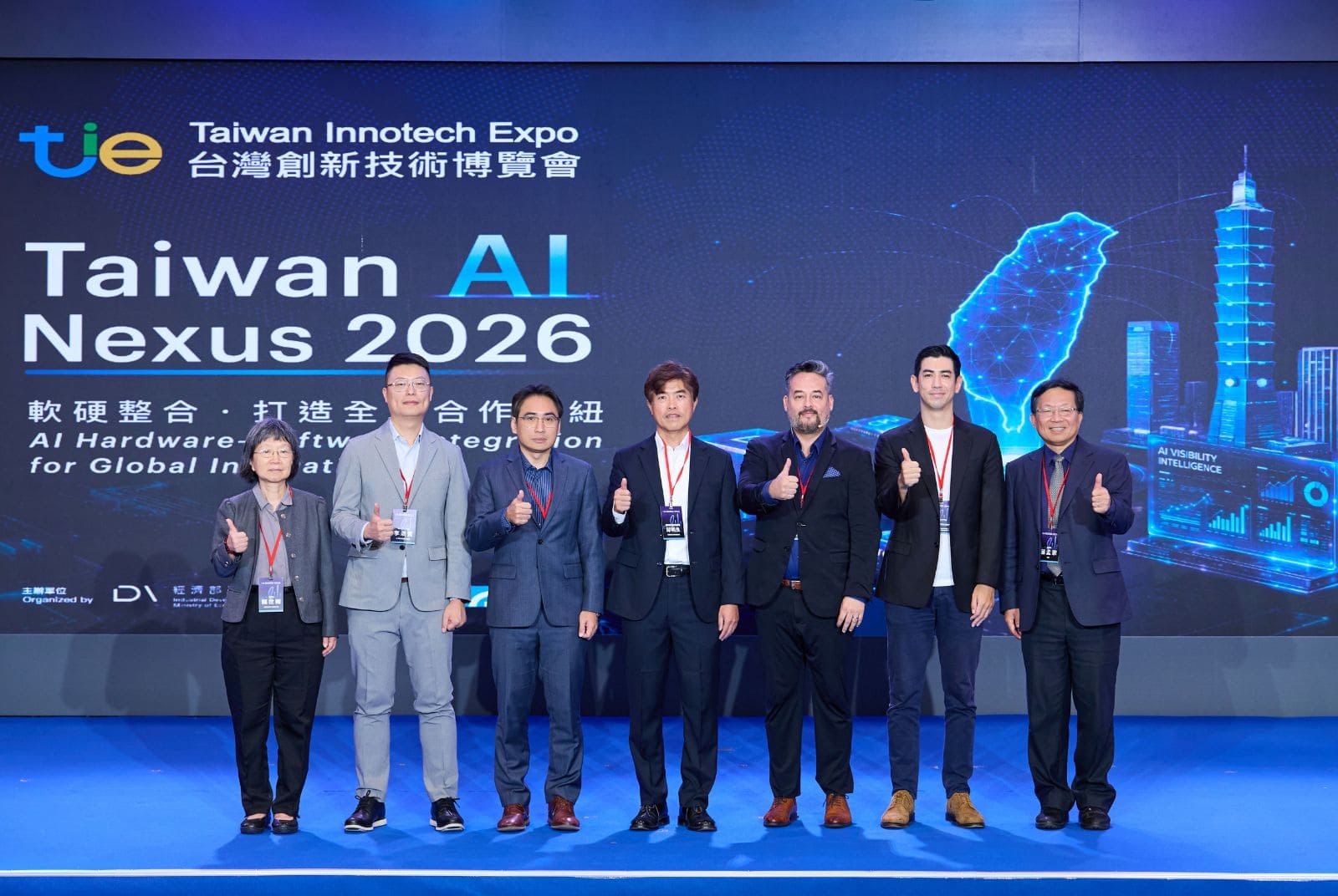
On September 18, the Taiwan AI Nexus 2026 International Forum and Technology Matchmaking Event, held during the Taiwan Innotech Expo (TIE), focused on the development of Taiwan’s AI industry and opportunities for international collaboration. International experts were invited to share insights into AI governance, industrial applications, Taiwan’s competitive strengths, and future prospects.
Views
Taiwan AI Nexus 2026 Unveils Key Insights into Enterprise AI Governance
By Taiwan Innotech Expo (TIE)Sponsored Content
AI experts from Taiwan and abroad gathered at Taiwan AI Nexus 2026. MOEA's Chiou Ming-Liang (fourth from left) delivered the opening remarks. Other speakers (from left) were Shih-Ching Lai, Deputy Executive Director of the Technology Transfer and Law Center at ITRI; Google Cloud's Ben Lee; Microsoft Taiwan's Kai-Lung Hua; AIAPI's Luis F. Gonzalez; Plug and Play's Phillip Vincent; and ITRI's Stephen Su. They discussed AI development trends and international business opportunities.
Thanks to its semiconductor industry, Taiwan has become an important part of the global AI supply chain. Chiou Ming-Liang, Deputy Director of the Knowledge Economy Industry Division at the Industrial Development Administration, Ministry of Economic Affairs (MOEA), pointed out in his opening remarks that the Executive Yuan has launched the Ten AI Initiatives Promotion Plan to strengthen Taiwan's AI-related hardware and software infrastructure and foster collaboration among industry, government, academia, and research institutions. Held alongside TIE, the forum fostered cross-sector collaboration to advance Taiwan’s AI industry.
Taiwan’s AI Ecosystem Advances Smart Manufacturing
Discussing AI governance, Luis F. Gonzalez, Director of the AI Asia Pacific Institute (AIAPI), noted that Taiwan combines strong ICT capabilities, AI hardware and software expertise, and a diverse industrial base. With companies of all sizes across multiple supply chains, Taiwan is well positioned to advance AI-powered smart manufacturing. Integrating information technology (IT) and operational technology (OT) enables manufacturers to use production data and process parameters to train industry-specific AI models. Positioning Taiwan as a model for AI governance in smart manufacturing could further strengthen its international competitiveness.
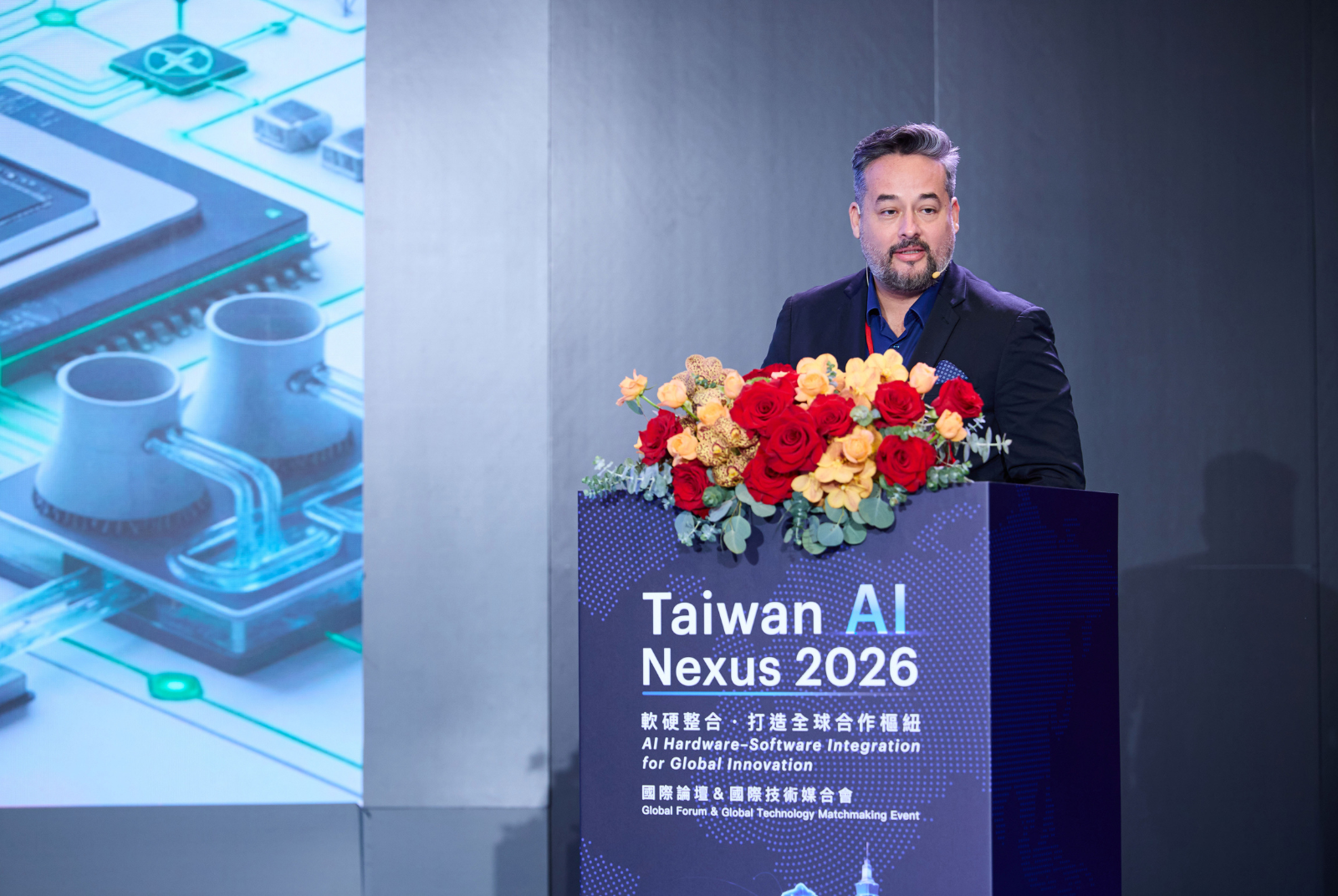
AIAPI’s Gonzalez emphasized the importance of establishing demonstration sites for AI governance and AI model training.
Breaking down data silos helps AI deliver business value
Ben Lee, Senior AI Solution Specialist at Google Cloud, discussed insights from a 2025 MIT report, “Business Models in the AI Era.” He explained that the challenges of deploying AI agents often lie not in model capabilities but in organizational issues such as fragmented enterprise data. Consolidating data on a unified platform can support AI training, improve model performance, and make enterprise AI applications more effective.
"Many long-established companies in Taiwan have accumulated a great deal of operational data. Once that data is used to train models, AI agents can better support day-to-day operations and deliver tangible results," said Lee.
Safe and Trustworthy AI at the Core of Governance
“Building a safe and trustworthy AI environment is central to AI governance,” said Kai-Lung Hua, Chief Technology Officer of Microsoft Taiwan. To protect internal data, Hua recommended a dual-agent approach in which one AI agent performs tasks while another reviews and monitors its work. He also urged companies to exercise caution when using free AI platforms to avoid exposing sensitive information. Comparing AI agents to digital employees, Hua stressed that companies need to define their responsibilities and access permissions, establish oversight mechanisms, and provide ongoing training. Like human employees, AI agents can make mistakes and require appropriate management to deliver productivity gains safely.
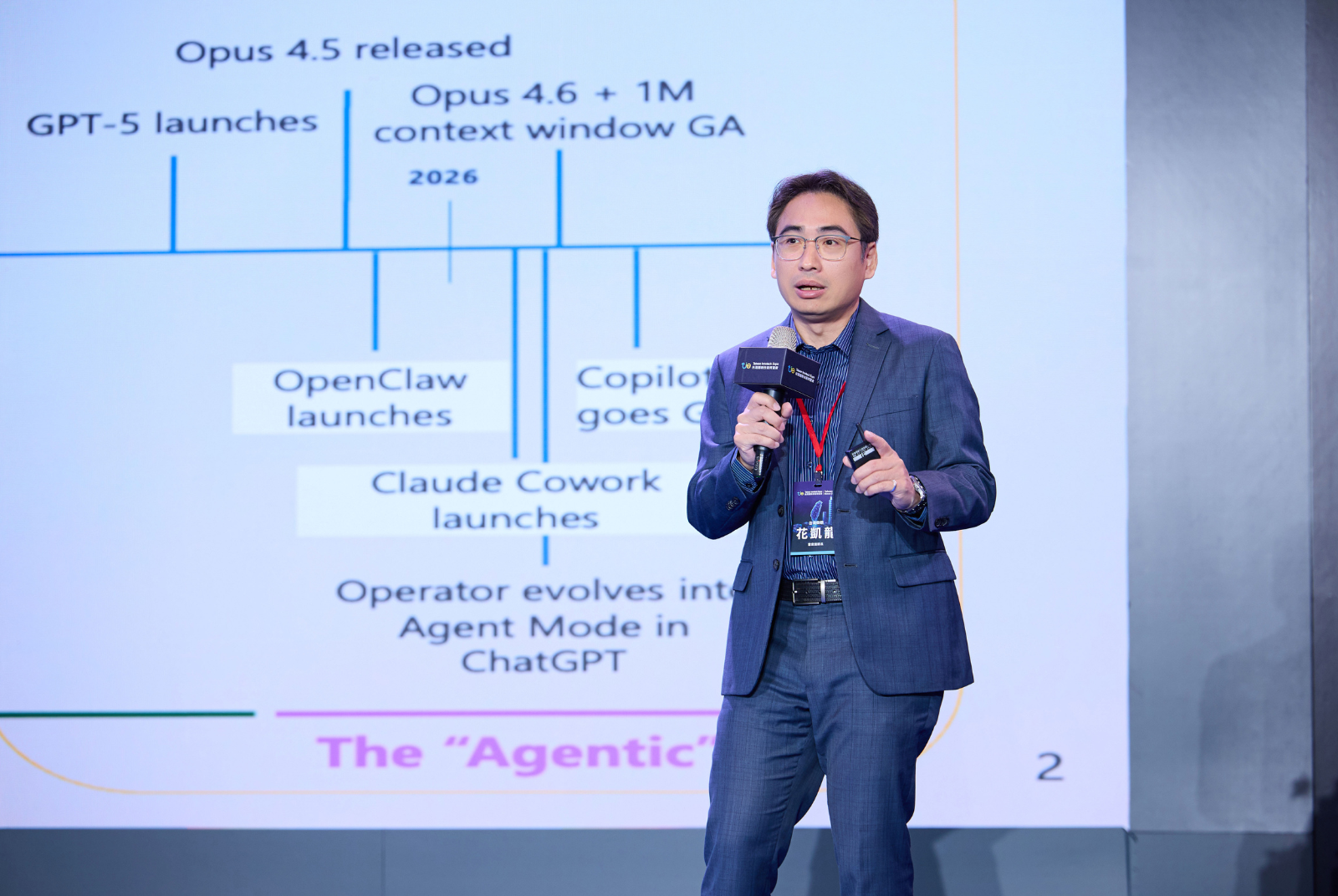
Microsoft Taiwan's Hua noted that as the era of AI agents begins, AI will shift from supplying information to carrying out tasks, taking on more of the actual work inside companies.
Human–AI Collaboration and Adaptive Governance Drive Competitiveness
Phillip Vincent, Managing Partner at Plug and Play APAC and CEO of Plug and Play Japan, said that companies should adopt AI not to replace existing jobs but to create environments where humans and machines work together. One example is a customer service system in which humans audit and supervise what an AI agent does to ensure effective and responsible AI use.
"AI governance and risk management also require input from people who understand the company's business and its risk landscape. Taking into account each project's structure and priority level, a company should regularly review an AI system's effectiveness to determine whether it needs to be upgraded or retired," said Vincent.
Integrating AI and Renewable Energy for Smarter Grids
Gonzalez, Hua, and Vincent exchanged views on cross-domain AI trends in Taiwan during a panel discussion moderated by Stephen Su, Senior Vice President of the Industrial Technology Research Institute (ITRI).
As AI evolves, Su said he expects human-machine collaboration to increase significantly. Beyond hardware-software integration, a "wetware" model—in which the human brain and AI work together—will gradually take shape.
The panelists emphasized that a reliable energy supply is essential to AI development. By combining renewable energy with AI-enabled smart grids, Taiwan could improve the management and efficiency of renewable power generation while supporting the growing energy needs of AI applications. Such solutions could also create new opportunities for international collaboration. Su highlighted the Shalun Green Technology Demonstration Site in Tainan as an example of innovative renewable-energy applications that could support the development of Taiwan’s energy and AI industries.
Taiwanese AI innovations featured at international B2B matchmaking event
That afternoon, 10 technology teams from Taiwan, including companies and ITRI research units, presented AI and related innovations at an international B2B matchmaking event.
Featured technologies from Taiwanese companies included Darwin Precisions’ AI-powered facial recognition advertising system; ZiG’s integrated smart IoT management system; Memorence AI’s Operagents high-reliability AI smart manufacturing system; Coretronic Intelligent Robotics’ AI-based object recognition and positioning technology for drones; Transnet’s 5G smart manufacturing solutions; Jin-De Heat Exchange Technology’s AI cooling system and water treatment solutions; and Rapidtek’s low-Earth-orbit satellite communications integration solutions.
ITRI also showcased hydrogen fuel cells for drones developed by its Mechanical and Mechatronics Systems Research Laboratories; lithium batteries for drones from its Material and Chemical Research Laboratories; and DiaTrack biomedical technology for uremic toxin detection from its Center for Measurement Standards.
The forum highlighted key challenges in enterprise AI adoption, while the matchmaking session connected businesses with innovative solutions and R&D teams. Companies seeking partnerships can explore technologies showcased at TIE based on their specific needs and engage directly with R&D teams to explore potential applications and partnerships.
For more information on featured technologies and participating teams, visit the official TIE website: https://tie.twtm.com.tw/.
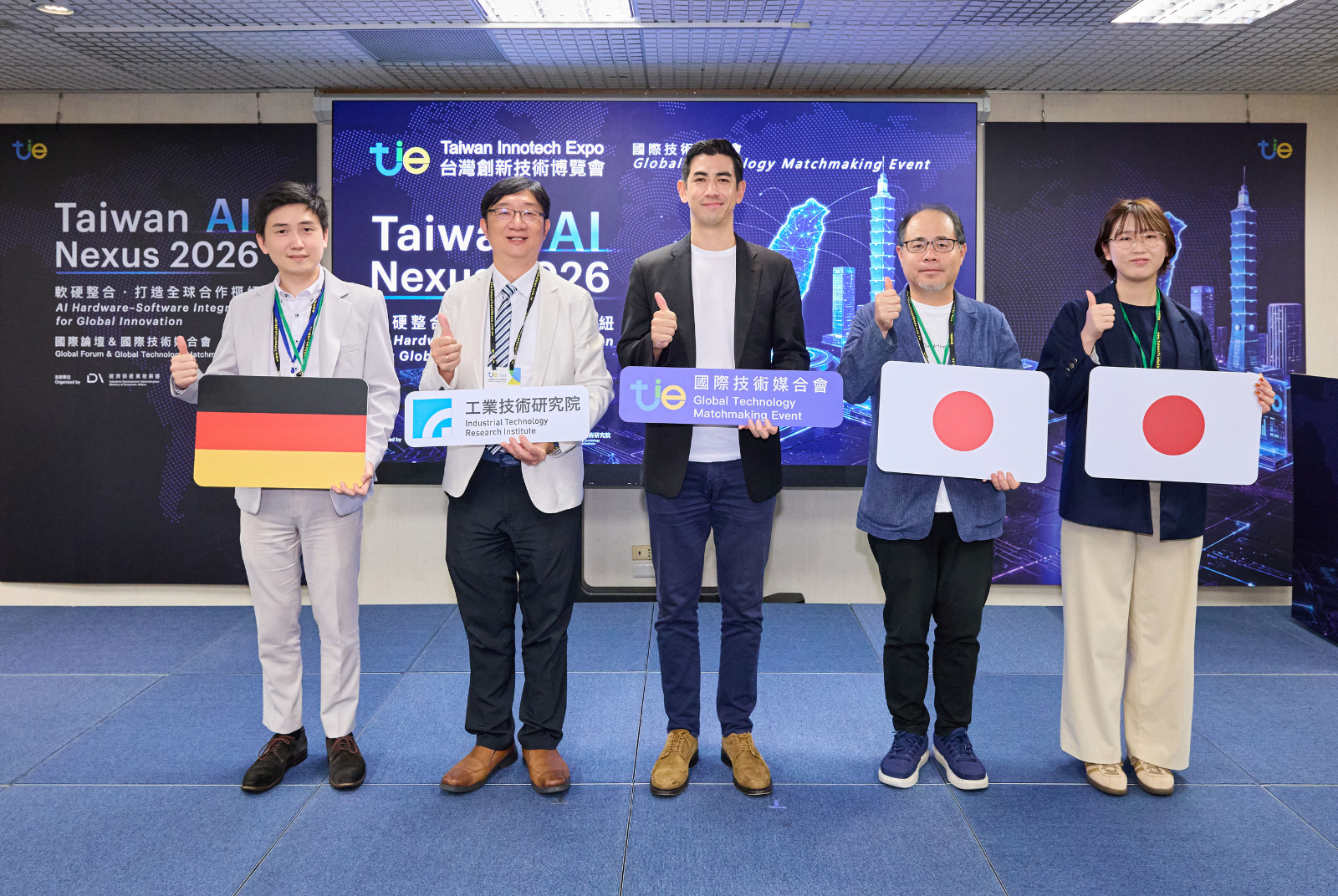
The international B2B matchmaking event brought together industry representatives from Japan, Germany, and other countries, creating opportunities for Taiwanese AI companies to exchange ideas and build international business connections.
Views

Subscribe to CWE Newsletter (every Thursday)
Stay abreast of what's happening in Taiwan with our weekly digest.
Keywords: