Why Indonesia Can No Longer Treat Taiwan as a Peripheral Issue

Source:Shutterstock
Indonesia has long treated Taiwan as a matter of diplomatic sensitivity rather than strategic necessity—a posture increasingly misaligned with reality. As Taiwan Strait tensions escalate and semiconductor dependencies deepen, the consequences for Indonesian economic stability and hundreds of thousands of Indonesian citizens on the island grow harder to ignore. Can Jakarta afford to keep treating a crisis it cannot absorb as someone else's problem?
Views
Why Indonesia Can No Longer Treat Taiwan as a Peripheral Issue
By Broto Wardoyoweb only
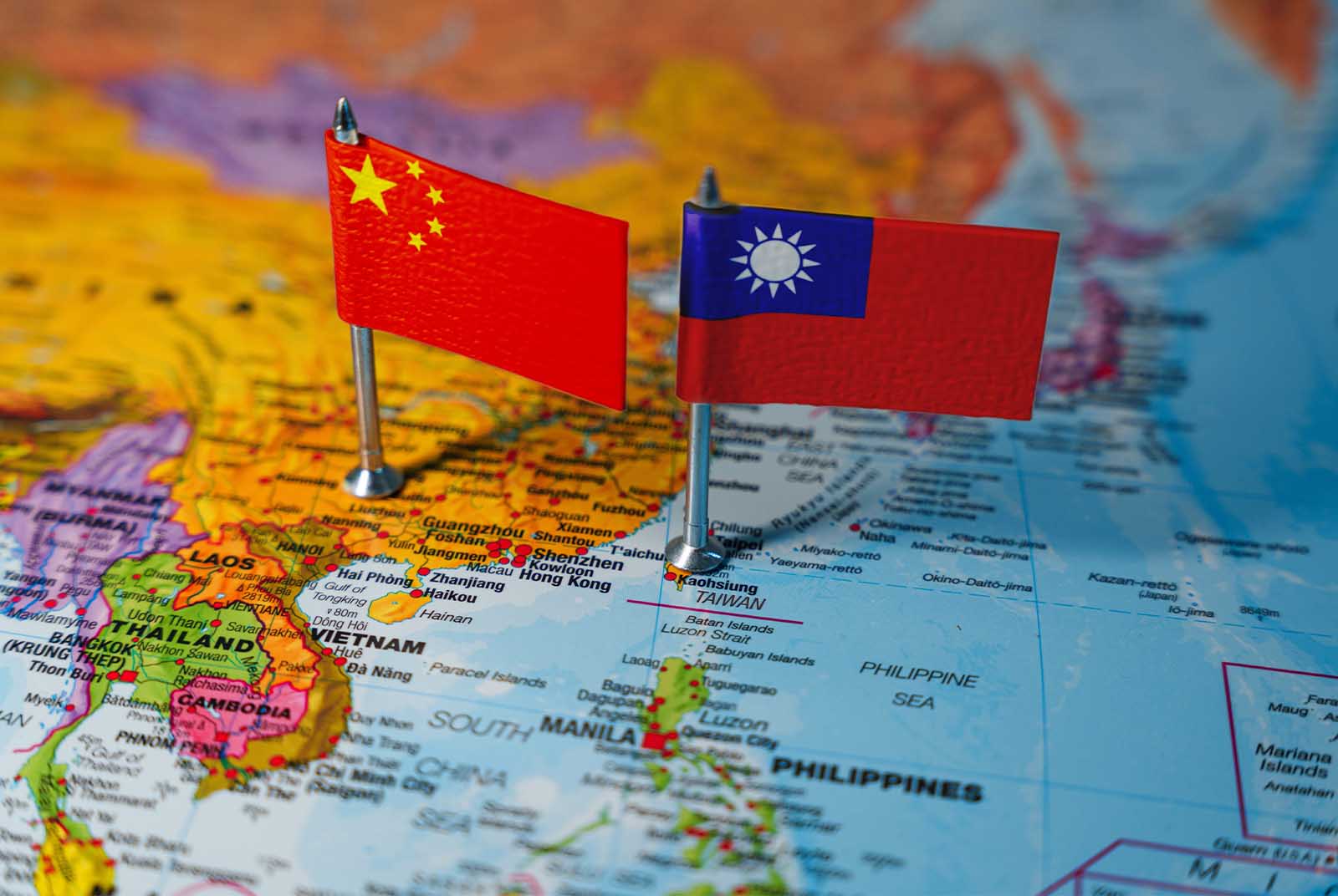
The Taiwan Strait is entering a period of heightened volatility. This volatility is not defined by imminent war but by expanding and overlapping scenarios of escalation. Studies by institutions such as the IISS (2023, 2026) and SPF (2024) show that a crisis is more likely to unfold through calibrated, multi-domain pressure rather than a sudden invasion. These scenarios range from gray-zone tactics such as cyber operations, disinformation, and economic coercion to more tangible pressure, including maritime quarantine or blockade that restricts trade without triggering open war.
At the upper end lies the possibility of limited military confrontation or high-intensity conflict as deterrence becomes less stable. This pattern of gradual escalation suggests that instability in the Taiwan Strait is not a future contingency but an ongoing strategic condition. This evolving dynamic has direct implications not only for major powers, but also for regional states such as Indonesia. For Taiwan, understanding how regional states interpret and respond to this evolving situation is equally critical.
For decades, Indonesia’s foreign policy has approached Taiwan with restraint, adhering to the One China Policy while carefully navigating deeper engagement. This posture is increasingly misaligned with current realities. The Taiwan Strait is no longer a distant issue confined to great power rivalry. It has become a central arena where economic stability, technological competition, and regional security intersect.
For Indonesia, and for Southeast Asia more broadly, this shift carries direct consequences. Taiwan should no longer be treated as a peripheral concern but as a central issue in foreign policy. This shift becomes more urgent when viewed through Taiwan’s structural role in the global economy.
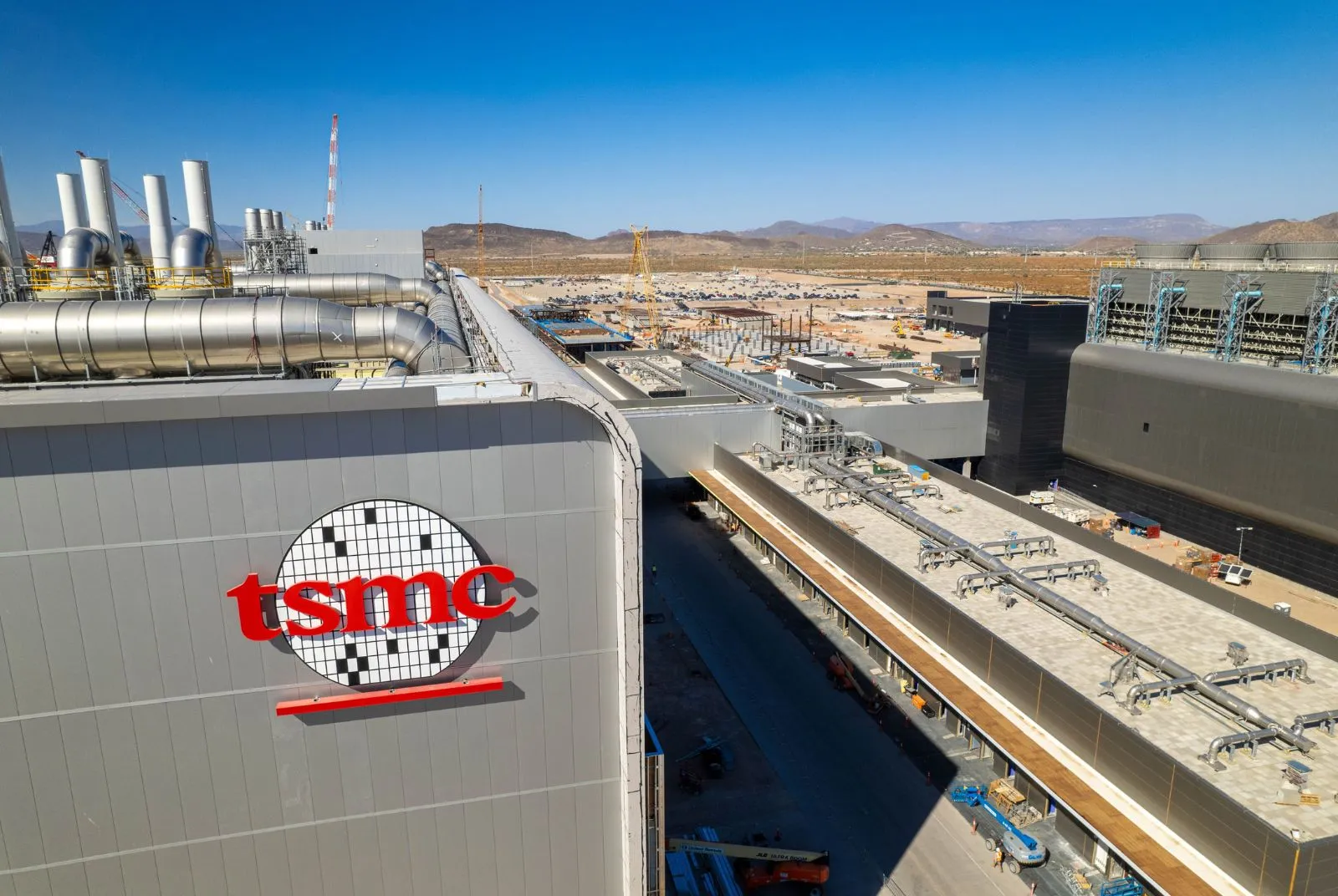
The urgency of this shift is grounded in Taiwan’s position in the global semiconductor industry. As Chris Miller argues in Chip War (2022), semiconductors constitute the foundation of modern power and enable everything from artificial intelligence to advanced military systems. Taiwan occupies a critical structural role. The Taiwan Semiconductor Manufacturing Company (TSMC) accounts for roughly half of global semiconductor manufacturing capacity, while the island dominates the production of advanced logic chips used in high-performance computing. No country, including the United States or China, can replicate this capacity in the short term.
This concentration creates systemic vulnerability. Even limited disruptions, as seen during the 2020 to 2022 chip shortages, halted production across multiple industries. A crisis in the Taiwan Strait would therefore trigger cascading shocks across the global economy and Southeast Asian economies, exposing countries like Indonesia whose industrialization depends on global manufacturing and digital supply chains. This importance is further intensified by its position in the United States and China technological rivalry.
Taiwan’s importance is reinforced by its role in the technological rivalry between the United States and China. Semiconductors have become central to strategic competition, shaped by export controls and supply chain restructuring. Most advanced chips used in China are still designed by American firms and remain subject to United States export regulations. Taiwan sits at the center of this system as both a manufacturing hub and a geopolitical chokepoint. Its domestic economy reflects this centrality. The semiconductor sector contributes around fifteen percent of Taiwan’s gross domestic product, with TSMC accounting for about four percent. These figures underscore how deeply global economic stability and regional industrial ecosystems depend on Taiwan.
Indonesia’s vulnerability in this system is structural rather than incidental. The country is neither a producer nor a designer of semiconductors, but a downstream consumer dependent on imports, which reached nearly five billion U.S. dollars in 2025. Its role is limited to lower value segments such as assembly, testing, and certain materials, leaving it behind regional peers such as Malaysia and Vietnam. The most strategic stages of production, namely design and fabrication, remain concentrated in Taiwan, South Korea, and the United States. Indonesia therefore lacks both control and leverage. Any disruption in Taiwan would quickly affect Indonesia’s industrial sectors, including automotive manufacturing and digital infrastructure, without sufficient domestic capacity to absorb the shock. Beyond economic vulnerabilities, the Taiwan Strait crisis also carries non-traditional risks that extend into the information domain.
Indonesia must also consider non-traditional threats embedded in geopolitical competition. A report by Doublethink Lab (2021) shows that information manipulation operates through coordinated and layered strategies that shape perceptions over time rather than simply spread falsehoods. These efforts amplify existing divisions, circulate emotionally charged narratives, and mimic organic online behavior to mask coordination. They aim to erode trust, create confusion, and weaken social cohesion. Reports by the Cyfluence Research Center (2024) further highlight how artificial intelligence and automation scale these operations by enabling the rapid production of tailored content and more sophisticated inauthentic behavior. Such campaigns rely not on singular viral moments but on persistent, low intensity exposure that gradually reinforces cognitive biases.
For Indonesia, and for many Southeast Asian societies with similar digital characteristics, this creates a structural vulnerability. As large and digitally connected societies with existing social and political cleavages, they are susceptible not only to disinformation but also to the normalization of distrust and polarization. The challenge is therefore not only informational but cognitive, as external tensions can be refracted into domestic instability through sustained influence operations. Beyond these structural and cognitive risks, the implications are also immediate and human.
The implications are immediate. According to the National Immigration Agency (2026), between three hundred thousand and four hundred thousand Indonesian citizens reside in Taiwan, and many are concentrated in industrial regions tied to key sectors. In a crisis, they would face economic disruption as well as significant security risks, particularly if mobility is restricted. Managing such a situation would require coordination, communication, and sustained diplomatic engagement. These are capacities that Indonesia has yet to fully develop. These risks expose a deeper gap in Indonesia’s foreign policy approach. Taiwan has long been treated as a matter of diplomatic sensitivity rather than strategic necessity. As a result, policy responses remain reactive rather than anticipatory. Preparedness for a Taiwan contingency is limited. Crisis communication is fragmented, evacuation planning remains underdeveloped, and coordination with partners is insufficient. Without change, Indonesia risks being unprepared for a rapidly evolving crisis.
What is needed is not a departure from existing principles but a recalibration.
Adherence to the One China Policy does not preclude preparedness. Indonesia must integrate the Taiwan Strait into its strategic planning and treat it as a key factor in economic and security assessments. Three areas require immediate attention. Indonesia must strengthen resilience by anticipating supply disruptions, including mapping critical dependencies on semiconductors, diversifying sources of supply, and building contingency mechanisms for key industrial sectors that rely on imported components. It must improve protection for its citizens in Taiwan through better communication and preparedness.
This includes establishing reliable emergency communication systems, strengthening coordination with representative offices, and developing clear protocols for crisis response, mobility restrictions, and selective evacuation. It must also enhance coordination with regional partners to ensure an effective response. This includes information sharing, diplomatic coordination, and joint contingency planning to manage potential disruptions and humanitarian risks in a crisis scenario.
Indonesia stands at a critical juncture. Treating Taiwan as a peripheral issue may offer short term comfort but creates long term risk. Recognizing it as a central concern would align policy with current realities. The Taiwan Strait may lie beyond Indonesia’s borders, but its consequences will not, and Southeast Asia will not remain insulated from its impact.
(This piece reflects the author's opinion, and does not represent the opinion of CommonWealth Magazine.)
CommonWealth Magazine welcomes op-ed submissions. Please send your article proposals to [email protected]
About the author:
Broto Wardoyo is Associate Professor at the Department of International Relations, Universitas Indonesia and Chair of the Department with research interests on great power competition, small wars and terrorism and intelligence studies in the Middle East and Asia Pacific.
Have you read?
- Trump Arrives in Beijing With No Cards up His Sleeve
- Pottinger: KMT Risks Missing the Lessons of the Wars in Ukraine & Iran
- Why America’s Left and Right Should Love Taiwan
Uploaded by Ian Huang
Views

Subscribe to CWE Newsletter (every Thursday)
Stay abreast of what's happening in Taiwan with our weekly digest.
Keywords: