Promise or Proof? The KMT Chair’s Washington Visit and the Question of Political Trust

Source:CNA
KMT Chairwoman Cheng Li-chi's visit to Washington was intended to demonstrate that engagement with Beijing remains a viable path to preserving peace across the Taiwan Strait. As the foundations of cross-strait stability continue to shift, what path can Taiwan realistically pursue?
Views
Promise or Proof? The KMT Chair’s Washington Visit and the Question of Political Trust
By Meng Kit Tangweb only
"A Historic Journey for Peace"
By the time a planned National Security Council meeting was moved from the White House to the American Institute in Taiwan and then quietly disappeared from the schedule, the outcome was already clear. The diaspora banquets, university appearances, and think-tank sessions that followed did little to alter Washington's view.
Washington had largely reached its conclusions before Cheng's plane landed. What merits closer examination is not the choreography of the visit, but the assumptions behind that judgment.
Taiwan should not have to choose
Most critics judged Cheng by presidential standards. As KMT chairwoman, her goals were narrower: energise diaspora supporters ahead of the 2026 local elections and 2028 presidential race, reinforce the KMT's credibility as an alternative government, and build on the visibility generated by her April meeting with Xi Jinping in Beijing.
On fundraising, she succeeded. But overseas Taiwanese communities will not bear the direct consequences of any cross-strait miscalculation, and their enthusiasm should be viewed accordingly. In Washington, Cheng received what opposition figures with presidential ambitions often do: engagement without endorsement.
She also invited greater scrutiny. By publishing in Foreign Affairs and appearing at venues such as the Asia Society, she presented herself as a stateswoman rather than a party organiser.
Many observers described her messaging as contradictory. More likely, she was speaking to three audiences at once: Beijing, Washington, and Taipei. Her message was simple: Taiwan should not have to choose.
The problem is that Beijing and Washington are not asking for the same things. Ambiguity can delay difficult choices, but not indefinitely. If Beijing decides delay no longer serves its interests, Taiwan may face decisions that ambiguity can no longer postpone.
Mismatched Models of Trust
Washington and Cheng draw on different theories of political trust. American policymakers favour what can be documented and monitored: written agreements, formal mechanisms, arrangements designed to outlast individual leaders. Cheng works within a tradition where flexibility and shared understandings carry value precisely because they leave room for competing interpretations.
The 1992 Consensus was never formally signed. Its usefulness rested on ambiguity, allowing each side to preserve domestic narratives while continuing engagement. The understanding Cheng brought back from Beijing, that dialogue remains possible as long as formal independence stays off the table, belongs to the same tradition. Its credibility depends on continued mutual restraint, not legal codification.
Washington's preference for legible commitments has its own record to answer for. The Budapest Memorandum offered Ukraine written assurances from nuclear powers and failed when tested. The Minsk Agreements were institutionalised and collapsed regardless.
The real question is not which model of trust is superior, but whether either can sustain stability under today's conditions in the strait.
Eroding Foundations
Cheng is attempting to revive an equilibrium whose underlying conditions have changed.
Xi's 2019 speech explicitly linked the 1992 Consensus to "one country, two systems," a formulation the KMT rejected. The text Cheng invokes is no longer the one Beijing presents. Unwritten understandings function only when participants attach similar meanings to strategic silence. That shared interpretation has steadily eroded.
The Ma-era relationship depended on reciprocal incentives. Taiwan possessed greater economic leverage over the mainland, Beijing had stronger reasons to reassure Taiwanese society, and China's military advantage was less pronounced.
Today, those conditions no longer exist. Xi faces limited domestic pressure to slow his timetable, while the CCP's 2022 party constitution reaffirmed its commitment to resolving the Taiwan question before 2049.
Cheng's reading of the past explains why engagement once worked. The more difficult question is whether the same formula can operate under profoundly altered circumstances.
The Three-Audience Problem
Diaspora supporters embraced Cheng's message because it promised peace without surrender. Think-tank specialists reacted more cautiously, mindful of Beijing's record of narrowing commitments it had previously endorsed, from Hong Kong's autonomy to understandings reached during the Ma years.
At the Asia Society, Danny Russel asked the sharper question: if Taiwan's existence does not threaten Beijing, why does Beijing threaten Taiwan's existence? Cheng responded that formal independence constituted the provocation. For many in the audience, the exchange appeared less as a rebuttal than as an acceptance of Beijing's premise.
Beijing and the DPP completed the picture from opposite directions. Beijing offered a carefully managed reception that generated favourable optics while avoiding substantive commitments. The DPP attacked because a KMT leader who could plausibly claim to reduce tensions challenged one of the ruling party's strongest electoral arguments.
Seen in this light, criticism from both sides may be an occupational hazard of attempting cross-strait brokerage rather than proof that the effort lacks legitimacy.
The DPP Benchmark
Washington has subjected Cheng's proposals to rigorous scrutiny while asking fewer questions about the DPP's own assumptions.
After nearly a decade of DPP rule, Taiwan has deepened ties with the United States while cross-strait communication remains frozen and military pressure continues to intensify. The DPP has articulated a strategy of deterrence but has devoted far less attention to the scenario in which deterrence fails.
What channels remain available? Under what conditions could communication resume? What outcome short of outright victory would Taiwan seek?
These questions do not invalidate deterrence. They apply the same standard used to assess Cheng's engagement agenda: how is the strategy supposed to work when circumstances deteriorate? Deterrence may help preserve peace, but it does not by itself explain how stability would be restored if peace breaks down.
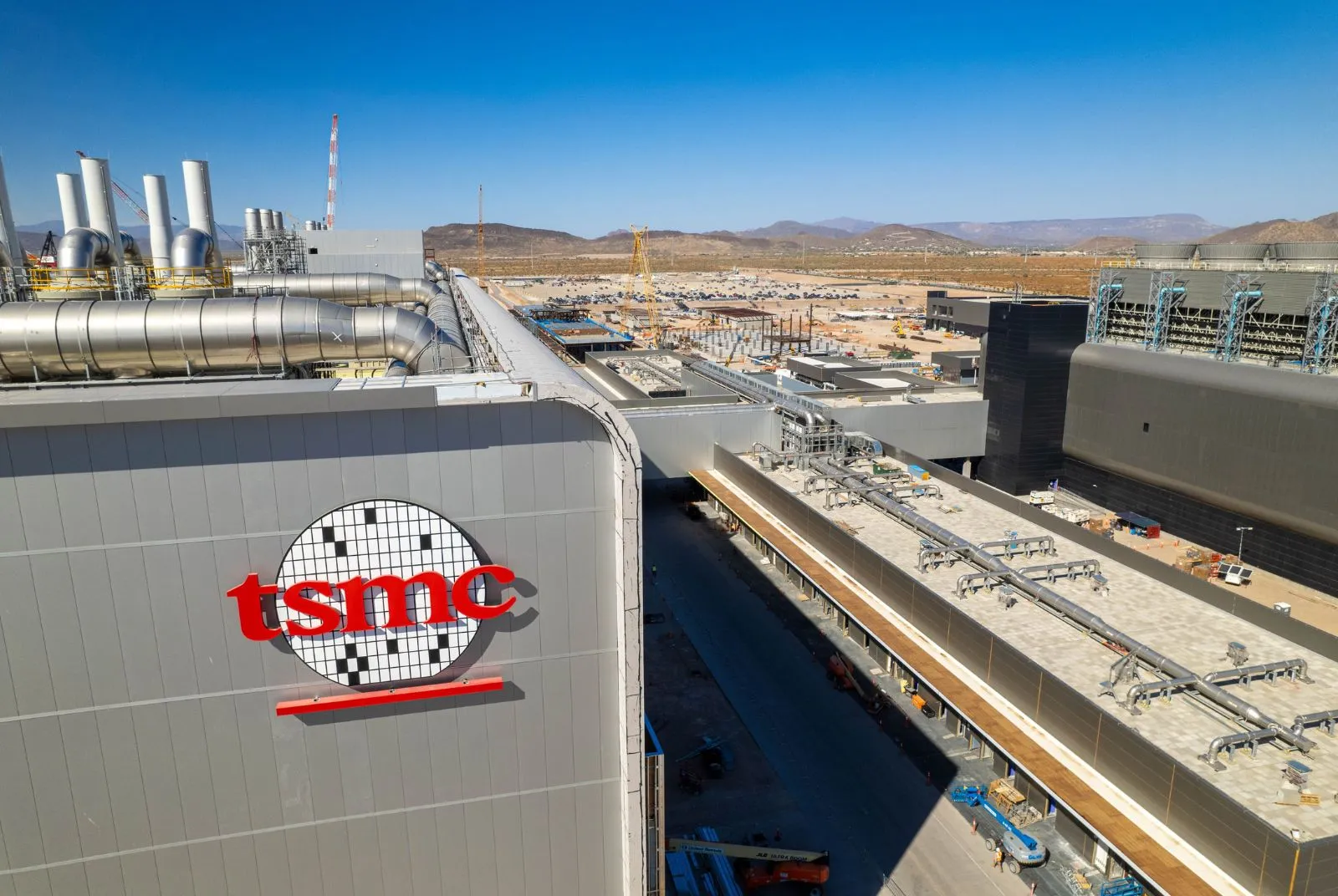
Arms deliveries have faced years of delays, and TSMC has been encouraged to shift advanced chip production to the United States, raising concerns that Taiwan is ceding part of its most strategic asset even as security commitments remain uneven in delivery.
Same Great Chinese Nation
Two vulnerabilities in Cheng's position received comparatively little attention during her visit.
First, public opinion is moving against her. Polling shows younger Taiwanese increasingly identifying as Taiwanese rather than Chinese. To many voters under forty, Cheng's invocation of a "same great Chinese nation" already sounds distant.
The challenge extends beyond electoral arithmetic. Can a political formula rooted partly in civilisational affinity survive when fewer citizens experience that affinity as central to their identity?
Second, Cheng cannot guarantee the consistency Beijing seeks. The defence budget cuts passed only with TPP support, whose cross-strait preferences do not always align with those of the KMT. Beijing wants a partner capable of delivering on commitments. A coalition dependent upon shifting legislative arrangements struggles to provide that assurance.
Unanswered Questions
Xi's timetable, Taiwan's evolving identity, and legislative fragmentation increasingly constrain Cheng's room for manoeuvre. Each development narrows the political space available to any leader seeking accommodation across the Strait.
Washington's reluctance to interrogate a decade of DPP governance with equal intensity reflects strategic preference as much as analytical neutrality.
In the end, the cancelled White House meeting, banquet photographs, and think-tank sessions were backdrop. What the visit revealed was more unsettling: neither the DPP nor the KMT can state plainly what they want Taiwan to become, because clarity would force choices that ambiguity postpones. That shared evasion may be the closest thing to a cross-strait consensus.
Cheng's Washington trip exposed a deeper problem: none of the major actors in the Taiwan Strait can clearly explain how their preferred strategy actually works. The KMT cannot show how engagement constrains a stronger Beijing. The DPP has yet to explain what follows if deterrence fails. Washington preserves ambiguity around the limits of its commitments. Beijing promises reunification without explaining how it would secure legitimacy in Taiwan.
Whether space remains for that conversation will depend not only on the 2028 election, but also on Xi's timetable, Taiwan's changing sense of identity, and the durability of coalitions never designed to endure.
This piece reflects the author's opinion, and does not represent the opinion of CommonWealth Magazine.)
CommonWealth Magazine welcomes op-ed submissions. Please send your article proposals to [email protected]
About the author:

Tang Meng Kit is a Singaporean and works as an aerospace engineer. He graduated from the S. Rajaratnam School of International Studies (RSIS), Nanyang Technological University (NTU), Singapore. His research interests include cross-Straits relations, Taiwan politics, policy issues and aerospace technology.
Have you read?
- I Fear the Compatriots Even When Bearing Gifts
- Harmony or Autonomy? The KMT’s China Visit and the Search for Openings Across the Strait
- Taiwan's Freedom Is Not a Fixation
Uploaded by Ian Huang
Views

Subscribe to CWE Newsletter (every Thursday)
Stay abreast of what's happening in Taiwan with our weekly digest.
Keywords: