Grab CEO Anthony Tan's Unlikely Path: Rejecting a Car Empire to Build Southeast Asia's Super-App
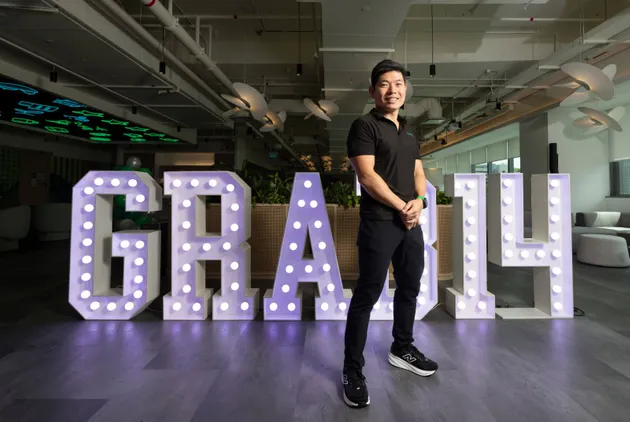
Source:Chien-Tong Wang
Born into one of Malaysia's wealthiest automotive families, Anthony Tan could have inherited a business empire. Instead, he chose to launch Grab from a cramped storage room in a car showroom. Why has the Grab co-founder and chief executive flown to Taiwan seven times in just three months — bringing his entire family to "learn to love Taiwan"?
Views
Grab CEO Anthony Tan's Unlikely Path: Rejecting a Car Empire to Build Southeast Asia's Super-App
By Yi-chih Wangweb only
Since announcing its acquisition of Foodpanda in March, Grab co-founder and chief executive Anthony Tan (陳炳耀) has made seven trips to Taiwan.
Asked why so frequently, he answers without hesitation: "To learn to love Taiwan — to experience it, feel it, love its food and culture." The visits have been conspicuously personal.
Albert Chang (章錦華), Senior Partner and Managing Partner at McKinsey Southeast Asia, who has observed Tan closely, notes: "He browses the night markets with his whole family, takes his kids to the park, even asked my wife which school she’d recommend. Most CEOs don't bring their wives and children to a new market."
Tan, 44, is known to all 12,000-plus Grab employees simply as "AT." His grandfather co-founded Tan Chong Motor Holdings after securing the Nissan distribution rights in Malaysia; his father, Tan Heng Chew (陳興洲), inherited the business and was awarded the title of Datuk. Anthony Tan grew up with every advantage that hereditary wealth confers — and then walked away from it.
The spark was a Harvard Business School case competition. Tan and his classmate Tan Hooi Ling (陳慧玲) wanted to address taxi safety in Malaysia. That summer, they returned to Kuala Lumpur to test their concept, leasing 40 taxis, burning through their savings and failing completely. Yet their business plan, submitted to Harvard's startup competition under the name MyTeksi, won second place and an unexpected US$25,000 prize that would become their seed capital. The judges' reason for not awarding first place proved to be their most useful guidance: Malaysia alone was too small a market. Think Southeast Asia.
In June 2012, Anthony Tan and Tan Hooi Ling founded MyTeksi — the company that would become Grab — in a cramped, poorly ventilated storage room inside a Kuala Lumpur car showroom, working off mobile hotspots for lack of Wi-Fi. To recruit drivers, Tan stood outside petrol stations at three and four in the morning, handing out free coffee and arranging smartphones for drivers who didn't own one.
The early years were a sequence of near-disasters. At the lowest point, the company had just six or seven weeks of runway. Unable to find outside investors, Tan turned to his father, who told him: "Your head is in the clouds." He went to his mother instead. Khor Swee Wah (許瑞華) told her son: "I don't understand it, but I love you — so whatever you put in, I'll match." She also served as the company's first CFO, unpaid, keeping the books with meticulous care.
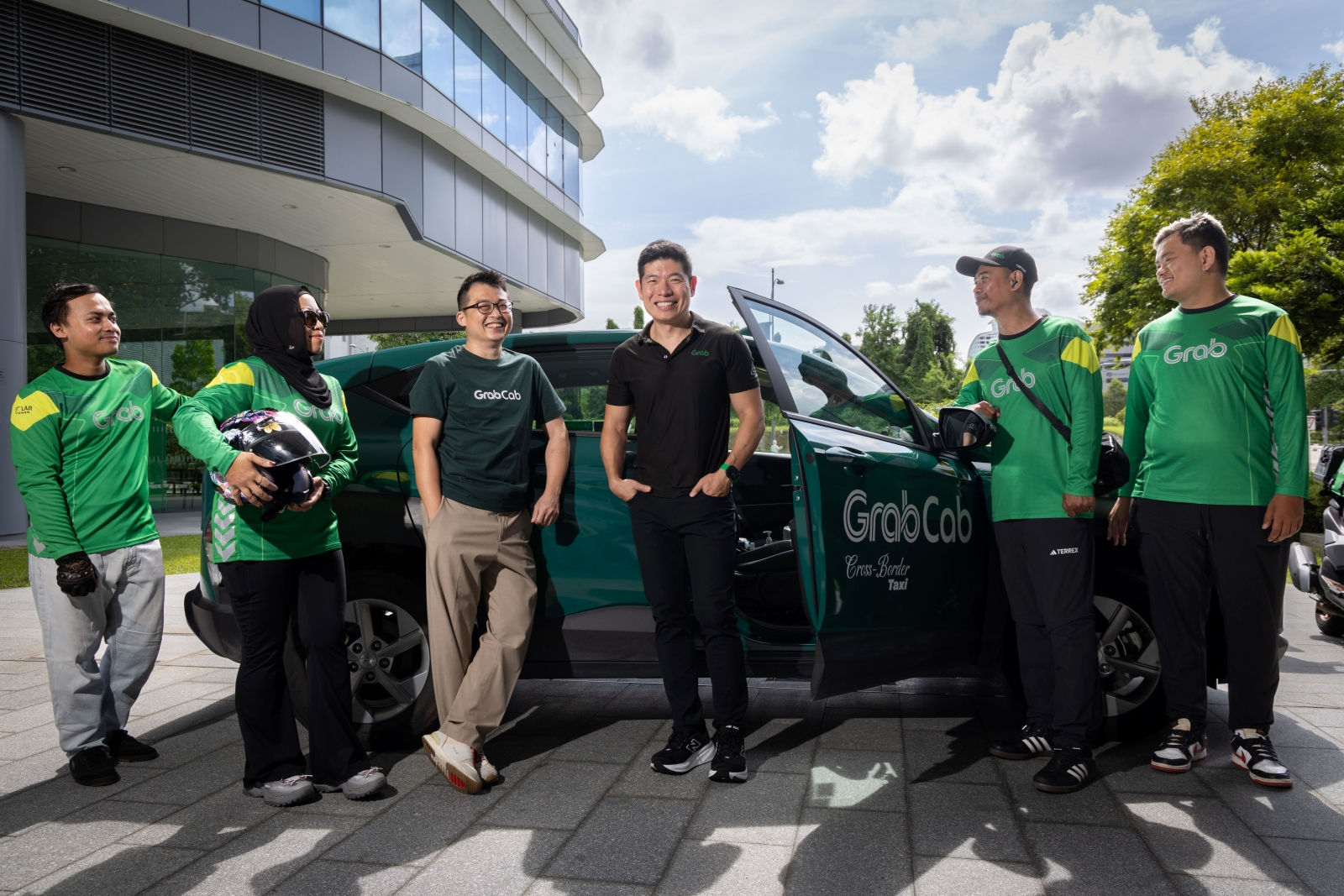
Having eventually beaten back competitors including Uber, Grab was then gutted by the pandemic as its ride-hailing business collapsed to near zero, forcing layoffs. "That period was genuinely brutal," Tan said. "But it turned out to be a blessing in disguise. It freed us to build out food delivery, which became the engine of our next phase of growth." Chang observes that even under sustained pressure to turn a profit, Tan refused to squeeze his driver and delivery partners. "Someone like him — you'd find maybe three in a thousand."
The personal cost was also real. When Tan chose entrepreneurship over the family succession, his father stopped speaking to him, communicating through his mother: "Do whatever you want. That inheritance of yours is gone."
"Growing up in a Confucian household, my father's rejection was a deep wound," Tan notes, his voice steady but his expression briefly unreadable. This past Lunar New Year, his father picked up Tan's youngest son, remarked that the boy was heavy, and said little else. "My relationship with my father right now is built on mutual respect," Tan says.
The first Taiwanese song his father ever taught him was "Ai Piànn Chiah Ē Iàⁿ" — a Hokkien anthem whose title translates roughly as "Those Who Fight Will Win." Tan recalls his father's guiding metaphor: "To forge a good sword, you have to put the iron in fire, then hammer it, then plunge it into ice water — again and again — before it holds an edge. That was his way of giving me tough love. I'm grateful for it."
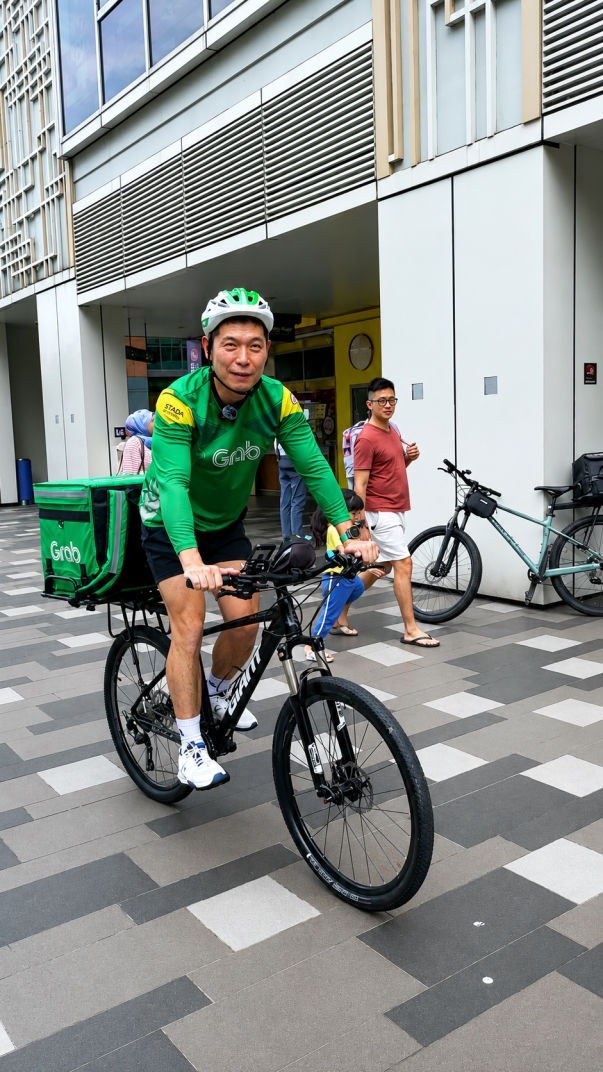 Anthony Tan personally drives passengers or delivers food by bicycle every three to four months to understand users' real needs. (Photo: Grab)
For Tan, Grab's purpose has never been to serve customers in the conventional sense; it is to serve people — the hundreds of millions across Southeast Asia who, not long ago, had no bank account at all. GrabPay gave many of them their first digital financial tool. For a large share of the company's drivers and delivery riders, the app is not a convenience but a livelihood. Every three or four months, Tan blocks out half a day in his schedule to drive passengers or deliver food himself, experiencing first-hand what the platform actually feels like to use.
When Grab listed on Nasdaq in 2021, Tan did not bring investment bankers to ring the opening bell; but delivery riders and drivers. The company's market capitalization now approaches US$16 billion.
Outside his office door, a sign still reads "Day One." Whatever ground has been won, the logic holds: today is always the beginning.
Have you read?
- Exclusive: Changpeng Zhao on Binance, His Prison Sentence, and Crypto's Next Chapter
- Joy Is Her Calling: How Lee A-Young Made Cheerleading a Career in Taiwan
- How DJ Swallow Set the Tempo for Taiwan’s Women DJs
Edited by Jack Chou
Uploaded by Ian Huang
Views

Subscribe to CWE Newsletter (every Thursday)
Stay abreast of what's happening in Taiwan with our weekly digest.
Keywords: