Joy Is Her Calling: How Lee A-Young Made Cheerleading a Career in Taiwan
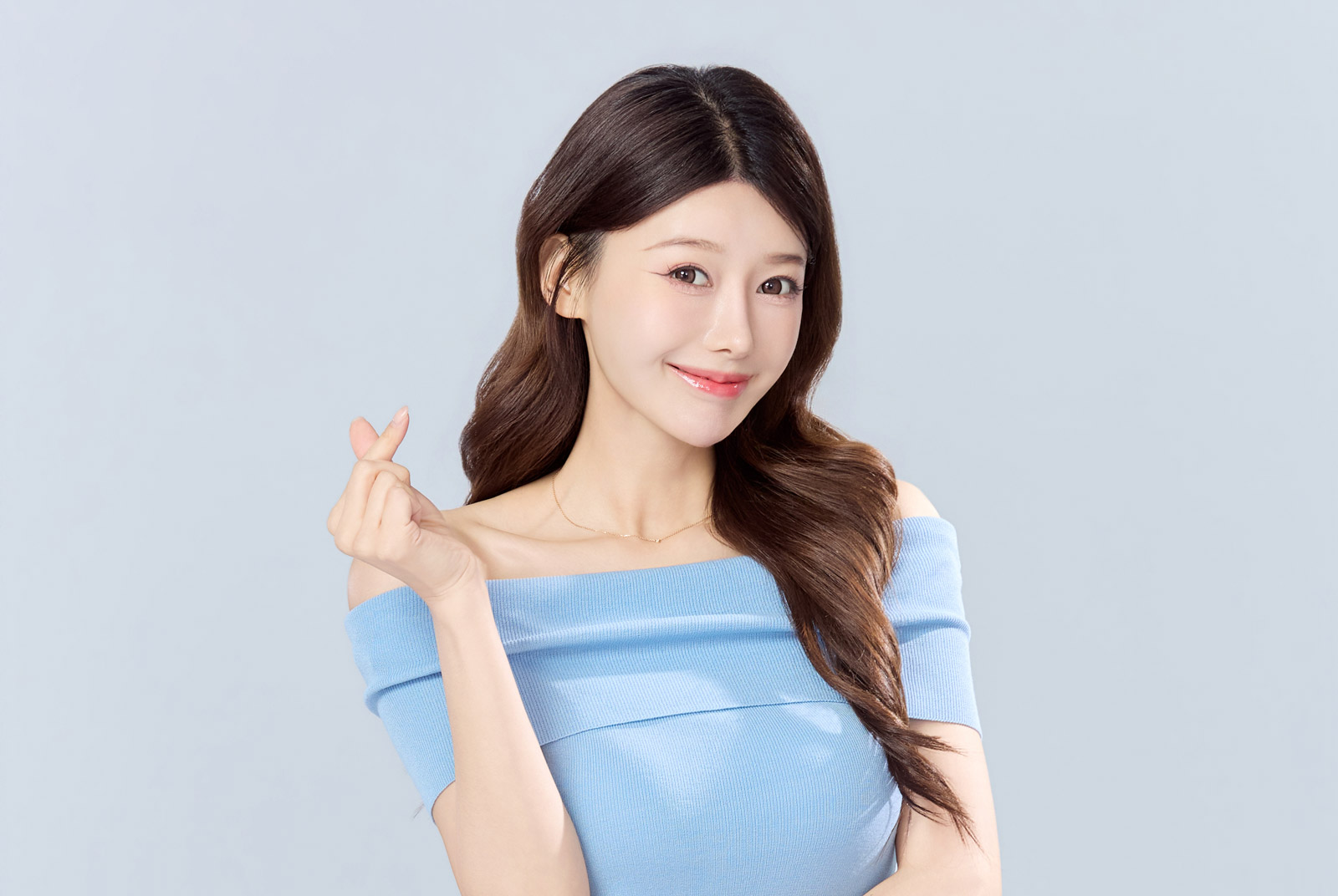
Source:First Choice Taiwan CO., LTD.
South Korean cheerleader Lee A-young has become one of Taiwan's most recognisable entertainers, building a career that extends far beyond the baseball stadium. But behind the constant smile and growing fame, what does it really take to make joy a profession?
Views
Joy Is Her Calling: How Lee A-Young Made Cheerleading a Career in Taiwan
By Julien Oeuilletweb only
When I ask Lee A-young how she manages to smile all the time, she hits me back with “you also smile all the time!”
Well, of course I do. It is her job to make people smile.
And she is surely very good at it. The 34-year-old woman in front of me has turned smiles into a career. A-young is a cheerleader, and cheerleaders are, by definition, supposed to cheer you up: this is their job, and judging by the faces around us, A-young is a master of her craft.
Cheerleader culture in Taiwan and East Asia is difficult to understand for overseas observers. But that day at the Kaohsiung Beer Festival, with one of the most successful representatives of this subculture sitting in front of me, I am starting to get the concept.
“I really enjoy being a cheerleader,” she tells me, “and I really love the fact that it is a job that requires a projection of positivity. That's what kept me continuing in this line of work.”
Lee A-young is a highly recognizable face in Taiwan. Part of a wave of cheerleaders from Korea, she is established as one of the leaders of this burgeoning scene: her immense smile, sparkling eyes, and athletic silhouette are now on advertisements, brand endorsements, and even music videos, bringing her sunny self outside of sports.
Videos of A-young and her colleagues abound on Taiwanese social media. They perform dancing routines, wearing different costumes, at the bottom of the stands. They mostly work with baseball teams, since this is the most popular sport in Taiwan. And they are surprisingly close to the audience while being celebrities in their own right.
And the way they straddle these two worlds is the key.
“I first came here through this cheerleader exchange program between different teams,” she explains when I ask how she came from Korea to Taiwan, “and I had a really positive experience. And later I had the opportunity to come here to work and I held on to it and went from there.”
Cheerleaders occupy a liminal place between anonymous women and female superstars. The whole idea is built around the careful balance between looking supernatural and yet being accessible.
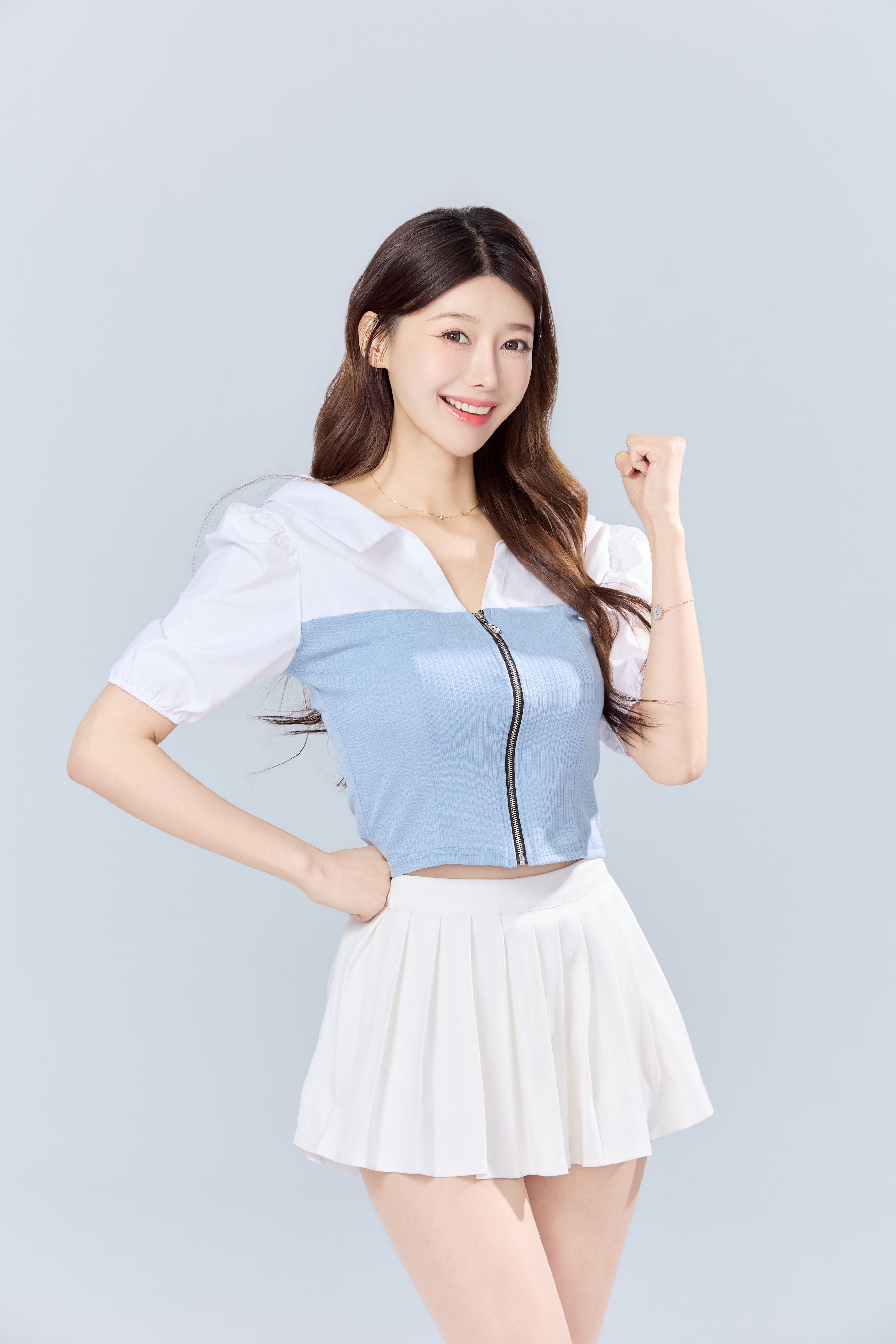 (Photo: First Choice Taiwan CO., LTD.)
Lee A-young is a perfect example of this conundrum. On one hand, her looks are otherworldly, almost unreal, and made even more so by her costumes, her make-up, and the idol ambience built around her. On the other hand, this is a woman who works in the same stands where spectators at a baseball game would sit, where they can approach her and interact with her; and when she comes to the Kaohsiung Beer Festival, she meets her fans.
Similarly, she performs dancing routines that are demanding, athletic, and probably exhausting for normal people. And yet, they are less about the extreme complexity of what a musical band would do, and more about expressing a kind of joy and energy that the audience can replicate somewhat — probably nowhere near as well as she does, but enough to feel like they are part of her world.
In a way, cheerleading has perfected the art of being the “girl next door”: glamorous and dreamy but also relatable and part of daily life.
“What is really important for me is to be accessible with the fans,” she tells me, “but also to project myself as a very capable performer on the stage. It's that duality as a performer.”
And indeed, there is a lot of professionalism behind the smiles.
Oliver Kim, the manager of A-young and a music producer from Korea, concurs: “I can't say she is always happy,” he tells me. “Of course, she is always happy in front of the public. She would stay professional in front of everybody. And maybe she would reveal different layers in private. But even if she is a little bit sick, she doesn't care. She would still stay a pro.”
After our interview, A-young invited me to witness her fan meeting event. The walk from backstage to the centre of the festival, where the fan meeting will take place, is like following a torpedo. As she walks at a steady pace, crowds literally part around her. People — including a significant number of young women — brandish their phones to film her as she walks past them. She waves, smiles, and never slows down her pace, until she reaches the centre of a cleared-out space where fans will come to get a signed shirt and a picture with her.
A-young greets every fan with the same mixture of kindness and glamour, and her radiant smile is constantly there despite standing for an hour in the heat. Everyone, from children to older fans, from shy men to excited women, is treated with the same benevolence: for a few seconds, they are part of her fun universe, and contribute to the cheerleading as the crowd takes pictures and applauds.
“The first time I met her was at the airport,” Oliver tells me while she keeps meeting fans. “She came out of the entrance, and I said to her, I am the manager in Taipei. She had to shoot a commercial the day after. And I found she is very professional: despite being tired, she remained accessible.”
Such an activity, which is body-forward, based on looking your best and staying available, is prime terrain for misunderstandings. Cheerleaders are frequently objectified by fans and critics alike. This has led to incidents of harassment and inappropriate comments that can endanger their safety.
Lee A-young herself has been a target of it, and took a firm stance against disrespect. “Fans and audience should be exactly that,” she tells me, “stay in their own lane, so that we get to interact with each other safely. That's the way it should be”
“She is aware of other people's perception of her,” Oliver says, “and she is very determined.”
Indeed, during our interview, A-young shows her strength behind the smile.
Her sense of joy comes out as genuine: she does not need to perform during our conversation, but she naturally laughs and shines. However, I can also sense the determined pro underneath: she answers without hesitation, in a clear tone, and primarily talks about the demanding aspects of her career.
“Be the ultimate pro on stage and off the stage,” she answers when I ask what would be her advice to an aspiring cheerleader, “a constant hard worker. It's all about hard work, and keep grinding, keep going at it.”
The joy is real, and so is the grind. Her natural cheerfulness is the raw material, and she shaped it into a career. This is what made her a reliable performer for baseball teams that cannot afford to have the atmosphere drop in the stands. “As a cheerleader, you have to be positive at all times,” she tells me, “however, it is always easier when the team is winning than losing! Us cheerleaders are in it together with the fans.”
She also proved her energy and determination when she took part in humanitarian relief in Taiwan. “Last year, during the Hualien disaster relief,” Oliver says, “six people from our agency, including A-young, went there to help. And it was a lot of work! That's when I was really impressed at her determination.” And yes, she was shovelling mud with other volunteers.
This is also an example of how Lee A-young became part of Taiwan's social fabric.
“I was more or less unknown when I first came here,” she tells me, “but as people got to know more about me, that helped me to decide to come here, to Taiwan. And when I realised the amount of people who showed up to greet me at the airport, I felt it was the right decision. Technically this is my second year really being based in Taiwan. I got a lot of help for just being a foreigner in general. But my staff and fans really make the experience very smooth and comfortable.”
“The best thing about Taiwan is how it welcomes foreigners,” Oliver adds, “and it's open minded. If in the Korean music scene, a producer came from another country, I think there would be some barriers, including mind barriers. In Taiwan, I have never experienced that.”
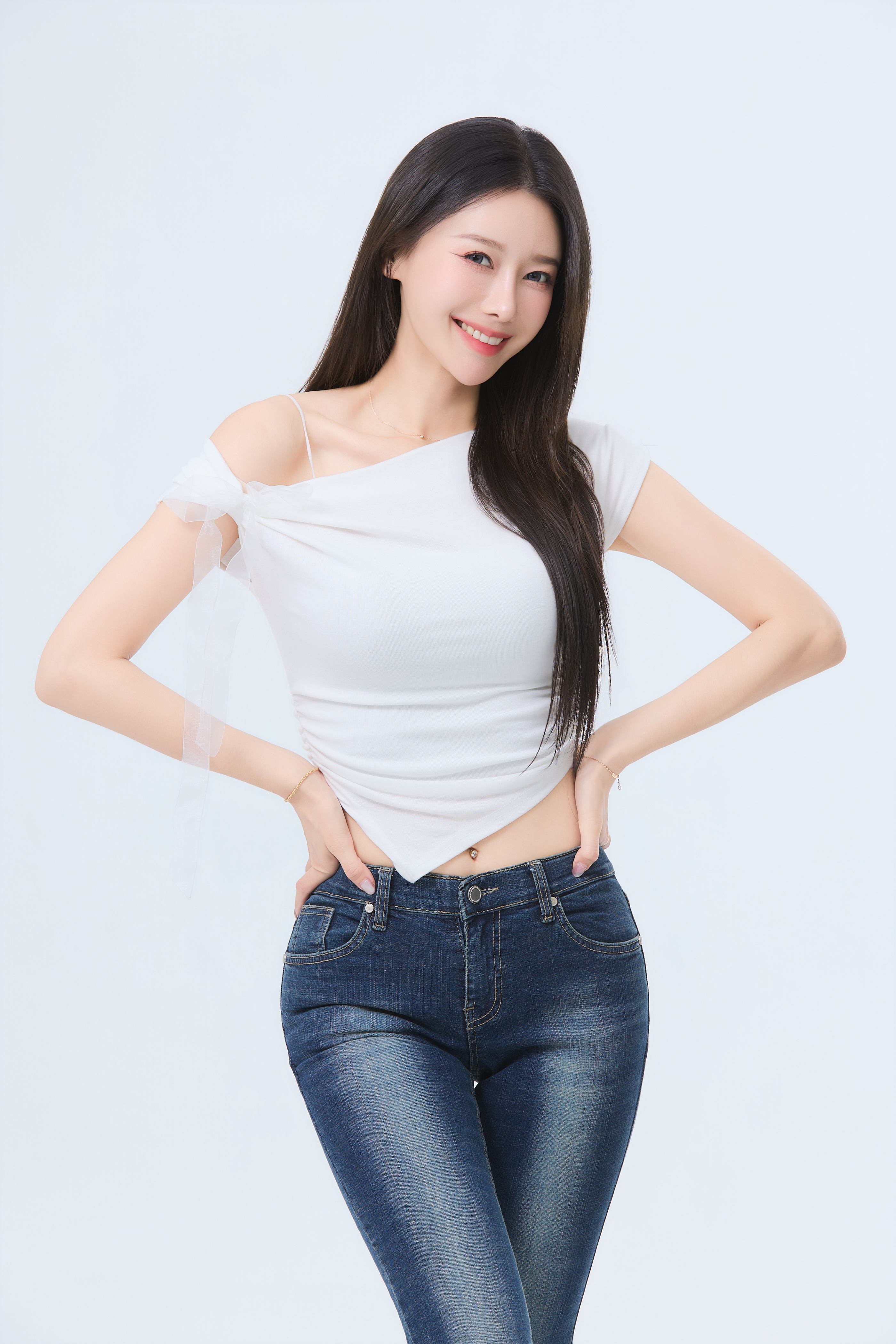 (Photo: First Choice Taiwan CO., LTD.)
“The difference between Taiwan and Korea is mainly that in Korea a lot of focus goes to the players,” A-young says. “And here, cheerleaders have a little more leeway for interactions and expanding their careers (...) in the stands, you get to see fans waving my own merchandising. And there are more opportunities, such as what I am doing today, it is a much bigger opportunity than regular cheerleading in Korea, at least in a different scale. There is just not as much room to work yourself up in Korea. The availability of diverse opportunities here is really important.”
Both A-young and Oliver talk about Taiwan as a land of opportunities.
“As a Korean music producer in Taiwan for 12 years,” Oliver says, “at first I was writing ballads or slow songs. But I'm Korean, so a lot of Taiwanese companies wanted me to write dancing songs. In any case, my career is also picking up here.”
And A-young now ventures into music as well.
“As far as opportunities go, it may not look too different between Korea and Taiwan at first. However, fans are way more supportive of cheerleaders than the average Korean fan. And over there in Korea, all the scenes and dancing are kind of limited to artists. But here in Taiwan, we can cross-over, we can do artistic things, and fans are into it. The attention is on us cheerleaders. So there are more diverse opportunities here (...) for my first song, I wanted to make a really good impression.”
“She is not originally a singer,” Oliver says, “but once she started, I taught her how to sing and how to express herself, and her vocals quickly improved.”
In an era of AI, in which everything feels virtual and intangible, the closeness and warmth of Lee A-young makes her feel incredibly genuine and real, which may seem paradoxical considering her carefully curated looks and her media presence.
In comparison, Tzuyu, the legendary Taiwanese member of the world-famous K-pop band Twice, was also performing at the Beer Rock Festival, but she remained a distant figure on stage. A-young, on the contrary, pretty much bathed in the crowd. This is not to mean that one woman is better than the other: the social function of their jobs is simply different, and both participate in offering entertainment and escapism to Taiwanese audiences in their own way.
When A-young leaves the crowd, night falls over the festival. A few more Taiwanese people have shared a real-life moment with her. After this, seeing her smiling and dancing on videos hits differently: when you smile seeing her at the memory of how she made you smile in real life, the cheerleader can sleep peacefully knowing she succeeded at her job.
Have you read?
- Cartoon Cats and Robots, Made in Kaohsiung, With an Indonesian Heart
- From North to South: Joan Yang's Taiwanese comic book odyssey
- From 50 Cent to a Fistful of Taiwanese Dollars: The Story of Star Photographer Danny Chu
Uploaded by Ian Huang
Views

Subscribe to CWE Newsletter (every Thursday)
Stay abreast of what's happening in Taiwan with our weekly digest.
Keywords: