From Chip War to Chip Value: Taiwan and the New Geopolitics of Technology Trust
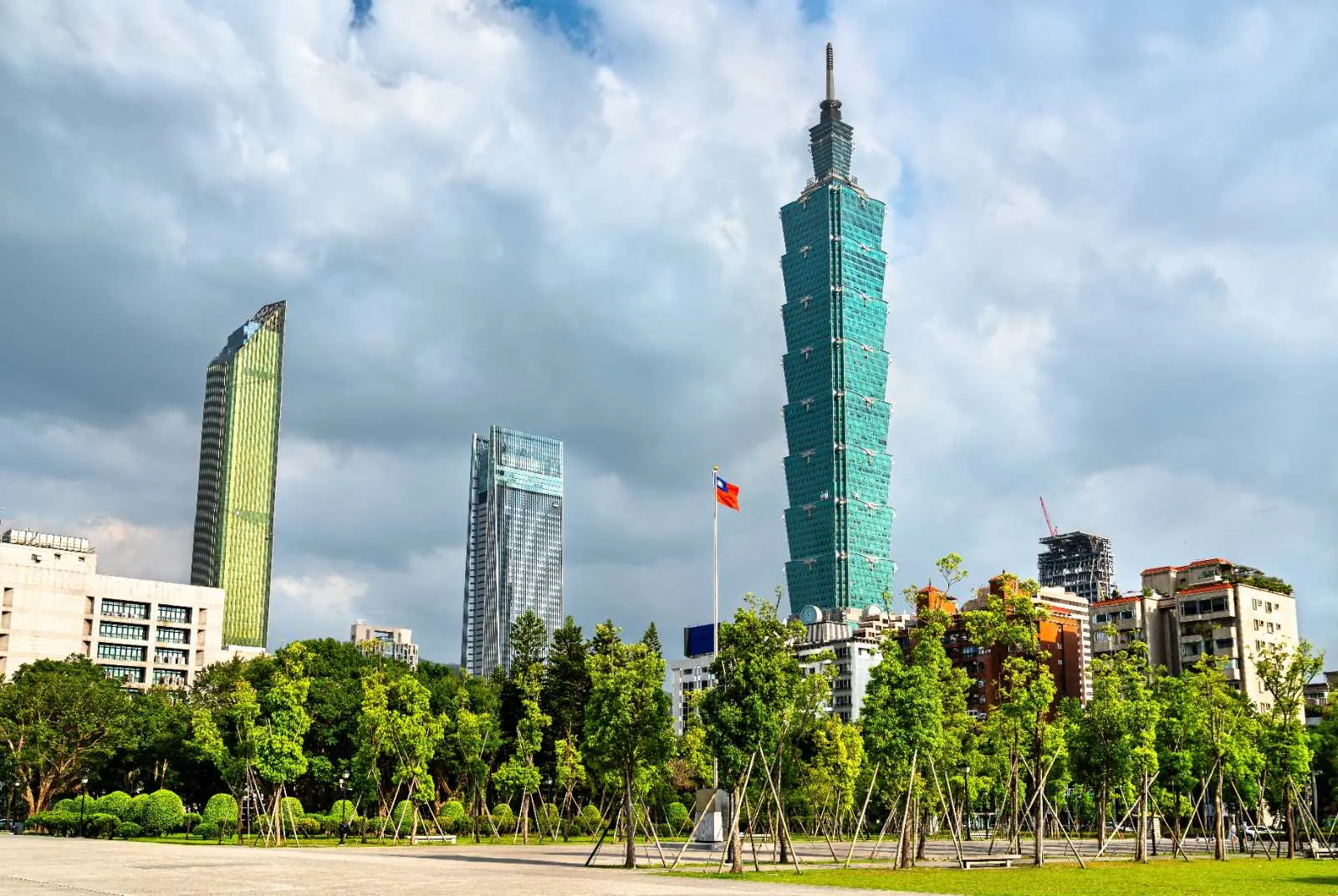
Source:Shutterstock
As semiconductor competition shifts from manufacturing dominance to technological trust, Taiwan faces a new strategic challenge. Beyond producing advanced chips, can it help shape the standards, security, and institutions that will define the next generation of global technology?
Views
From Chip War to Chip Value: Taiwan and the New Geopolitics of Technology Trust
By Minn-Tsong Linweb only
The U.S.-led Pax Silica Summit in Washington in late June 2026 signaled that semiconductor politics has entered a new phase. The issue is no longer only who controls a process node, where a fab is located, or which government can subsidize production fastest. The harder test is whether the systems behind artificial intelligence, cloud computing, defense, energy infrastructure, and advanced manufacturing can be trusted when they come under geopolitical stress.
Taiwan cannot treat this as a distant debate among major powers. Its semiconductor strength gives it a place in the new geopolitics of technology trust, but not a guarantee of future influence. The question is whether Taiwan can join to shape the rules, standards, and trust mechanisms that will define the next stage of technology globalization.
The chip war is real. But it cannot be the strategy.
The language of a “chip war” captures real risks: supply-chain concentration, technological dependence, export controls, industrial subsidies, and the weaponization of interdependence. It has helped governments identify vulnerabilities and brought national security back into economic policy. Yet it remains a defensive language. It tells countries what to restrict, what to protect, and where danger lies. It says less about what kind of technological order should be built next.
That is the deeper challenge. The old model of globalization assumed that open markets, comparative advantage, and global supply chains would produce prosperity and interdependence. In many ways, it succeeded. It lowered costs, expanded production networks, and enabled deep specialization across regions.
But in critical technologies, interdependence has changed in nature. When key capabilities are concentrated in particular firms, locations, equipment suppliers, design platforms, or knowledge systems, dependence is no longer neutral. It can become leverage. A bottleneck in production, design, materials, or equipment can quickly become a national security problem.
This does not mean globalization is ending. It means another logic is emerging alongside cost-driven trade.
In consumer electronics and legacy technologies, price and efficiency will still matter. But in AI, semiconductors, cloud infrastructure, advanced packaging, and other foundational technologies, governments and firms are asking a different question: Can this system be secured, traced, tested, audited, and kept running under stress?
Markets are no longer shaped by price alone. They are increasingly shaped by whether chips, AI systems, and supply chains can be trusted when political, technical, or environmental pressures intensify.
That is why the next stage of semiconductor strategy requires moving from chip war to chip value.
“Chip value” is not a slogan about national pride. It is the attempt to make trust measurable. It asks whether chips and the systems built around them can be traced, tested, secured, audited, and resilient under pressure.
A chip is not simply a product. It belongs to a chain that includes design tools, materials, equipment, manufacturing, packaging, testing, and final systems integration with software and applications. Trust has to be built into each layer, not patched on at the end.
Artificial intelligence makes this shift especially clear.
The next stage of AI competition will not be determined by computing power alone. It will also run into physical and institutional constraints: energy consumption, power management, thermal dissipation, cybersecurity, data governance, and system reliability. An AI platform or high-performance computing system that consumes unsustainable amounts of energy, lacks hardware-level trust anchors, or cannot be audited across borders will face limits in deployment.
In this sense, energy efficiency and system trust are no longer secondary engineering concerns. They are strategic capabilities.
This is the context in which Taiwan’s semiconductor role needs a wider definition.
Taiwan’s strength is usually described through advanced manufacturing, especially the fabrication capacity of TSMC. That description is accurate, but incomplete.
Taiwan’s wider significance lies in how advanced manufacturing can be connected to an international infrastructure of trust: verification, secure procurement, cybersecurity standards, testing systems, and cross-border coordination.
TSMC’s investments in Kumamoto and Dresden should therefore be understood as more than geographic diversification. They point to a shift from simple offshoring or reshoring toward trusted co-production.
In Japan and Europe, semiconductor policy is no longer only about where chips are made. It is also about whether production networks can support security, resilience, system reliability, and long-term technological upgrading.
Taiwan does not automatically sit at the center of the technology order. But it has become an important test case. A country indispensable to advanced manufacturing must now ask whether it can also contribute to the rules and institutions that make technology trustworthy across borders.
Taiwan’s leverage is not the power to control the entire technology stack, but lies in the fact that advanced manufacturing is where many abstract requirements of trust become operational. Security standards, equipment interfaces, process controls, packaging choices, testing protocols, and customer requirements all have to be translated into manufacturable systems.
This is why fabrication should not be treated merely as a downstream execution stage. In the politics of technology trust, it is one of the central sites where chip value—the connection between hardware capability, security, verification, and governance—is made real.
The broader strategic opportunity lies therefore in connecting the strengths of advanced industrial partners into an integrated learning system. The United States leads in chip design, AI platforms, cloud infrastructure, EDA tools, and strategic coordination. Europe, especially the Netherlands, brings critical semiconductor equipment, industrial standards, and regulatory capacity. Japan contributes advanced materials, specialized equipment, manufacturing discipline, and supply-chain reliability. South Korea adds strength in memory chips and large-scale manufacturing. Taiwan provides advanced fabrication, packaging expertise, and trusted production capacity.
None of these strengths can stand alone. Their structural leverage lies not in unilateral control, but in the ability to shape related standards, procurement rules, testbeds, and production networks together. If such coordination works, regulation and security will not remain external burdens on competitiveness. They will become part of how competitiveness is defined.
This will not be easy. These partners are not an economic bloc with identical interests. They compete for talent, capital, investment, and manufacturing leadership. Building trusted systems across borders will also create a “trust premium”: higher costs for compliance, verification, cybersecurity, and redundancy. The political question is whether governments and firms are willing to absorb that premium, because the alternative—cheap but fragile technological dependence—is becoming too risky.
Taiwan has one concrete example that deserves more attention: SEMI E187.
The cybersecurity standard for fab equipment shows how trust can be written into procurement without requiring companies to reveal proprietary designs or process recipes. Its lesson is not that every technology problem can be solved by a standard. Governance can sometimes focus on the interfaces of trust—security requirements, testing procedures, and procurement conditions—while leaving commercial secrets intact.
That lesson matters beyond semiconductors. As AI infrastructure expands, open societies will need common benchmarks for trusted chips and compute systems, shared testbeds for high-risk AI modules, secure-by-design principles for critical infrastructure, and supply-chain systems that protect commercial confidentiality. The purpose should not be to create a closed technological bloc. It should be to define the baseline conditions under which societies can trust the technologies they depend on.
Pax Silica may become one venue for this kind of work, but only if it produces more than declarations. Its test will be whether it can generate practical standards, shared testbeds, procurement rules, and secure research platforms—without becoming another arena for subsidy competition.
For Taiwan, the national-level question is therefore not whether it can add another industrial program or build another layer of manufacturing capacity. The more important question is whether Taiwan can use its technological position to participate in shaping an international architecture of trust.
This requires a shift in how Taiwan explains its role to the world. Advanced manufacturing will remain Taiwan’s core strength. But the next stage of influence will depend on whether Taiwan can connect that strength to verification, standards, cybersecurity, resilience, and trusted co-production. That is how a manufacturing hub becomes a strategic technology partner.
This is not a call for technological isolation. Nor is it a rejection of open trade. It is a call to update globalization for an age in which technology, national security, and trust can no longer be separated.
The old globalization asked how to produce more efficiently. The next globalization will be judged by whether it can build systems that governments, firms, and societies can verify, trust, and rely on under geopolitical pressure.
The chip war should therefore be understood as a warning, not a destiny. It has exposed how interdependence can become vulnerability, how supply chains can become channels of pressure, and how technological power can undermine stability when it lacks verification and accountability. But restriction alone cannot be the answer.
Taiwan’s contribution should not be defined only by chip output or process leadership, but by whether it can help turn trust into a technical and institutional feature of global technology order. In that future, strength will not lie in walls of silicon alone. It will lie in networks of trust that are technical, institutional, and verifiable.
(This piece reflects the author's opinion, and does not represent the opinion of CommonWealth Magazine.)
CommonWealth Magazine welcomes op-ed submissions. Please send your article proposals to [email protected]
About the author:
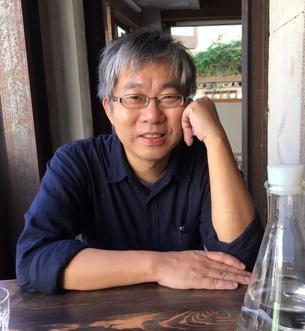
Minn-Tsong Lin (林敏聰) is a distinguished professor of physics at National Taiwan University and previously served as deputy minister of Taiwan’s National Science and Technology Council. His work spans nanomagnetism, spintronics, orbitronics, and the geopolitics and policy of emerging technologies, with a focus on semiconductors and trusted technology ecosystems.
Contact: [email protected], or connect on LinkedIn
Views

Subscribe to CWE Newsletter (every Thursday)
Stay abreast of what's happening in Taiwan with our weekly digest.
Keywords: