How Taiwan's Education Reforms Paid Off in PISA
Source:Kuan Hsieh
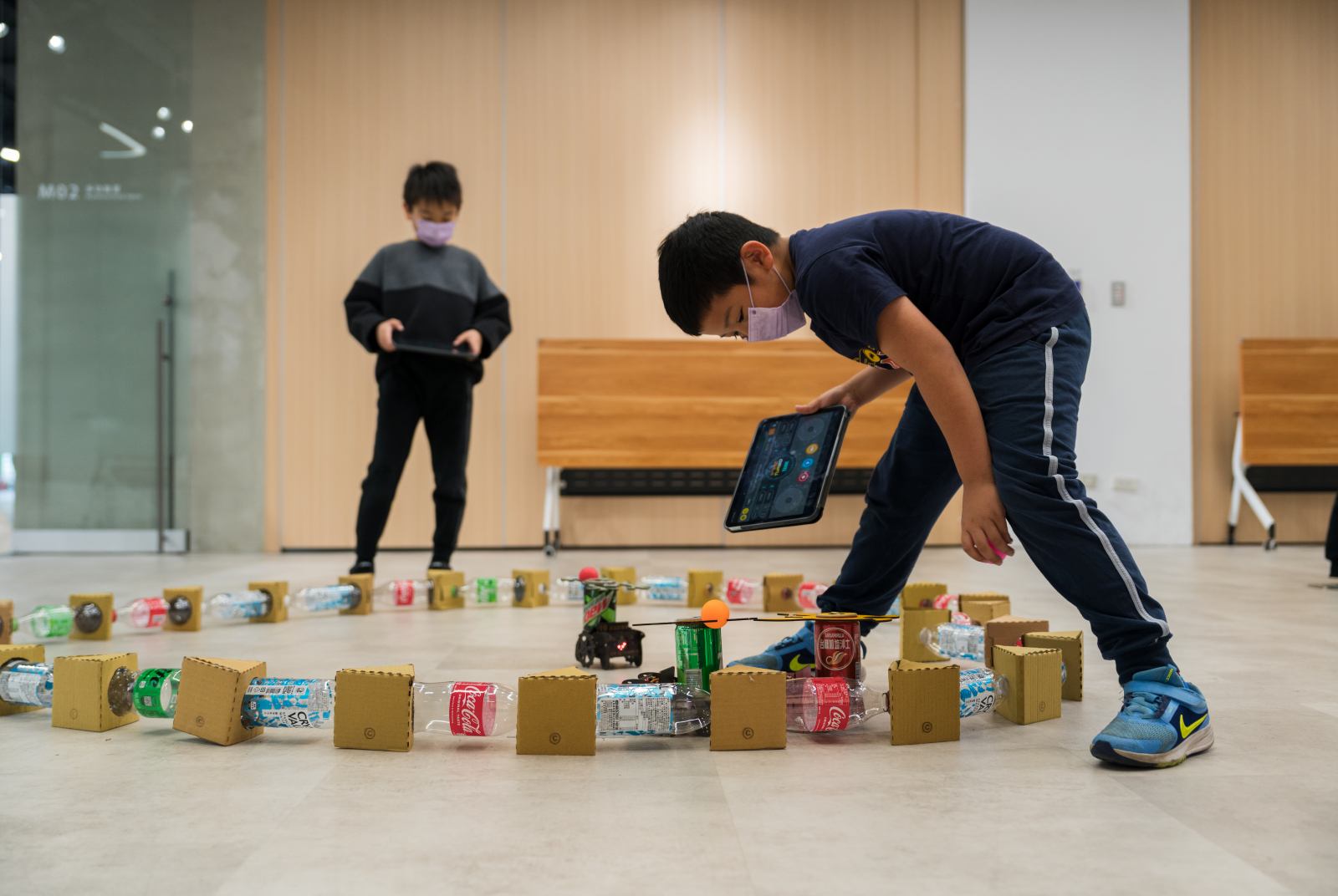
Taiwan’s experimental education enrollment has surged since reforms took effect in 2018. Yet its latest PISA results remain strong, suggesting greater flexibility in the classroom has not come at the cost of academic performance.
Views
How Taiwan's Education Reforms Paid Off in PISA
By Tristan Reynoldsweb only
In the past couple weeks, the global education sector has once again engaged in a furious combination of jingoism, speculation, and internecine academic knife-fighting over the results of the latest round of the Programme for International Student Assessment, or PISA. PISA is a series of tests for 14-year-old students in mathematics, reading, and science, and the results are generally taken as referenda on different countries’ educational systems.
When we look at large-scale testing, it’s often difficult to tease out specific causal trends. For that reason, our first look at this data should be holistic and historically-informed. So, let’s start with some historical context. To see how we do this, let’s take one controversial example: the rise of ‘Experimental Education’ in Taiwan.
In 2014, the Legislative Yuan passed the three Experimental Education Acts, which kicked off a decade of significant educational reform in Taiwan. These acts were substantively amended in 2018 to broaden the ability of experimental education providers, including but not limited to public schools, to change the curricula they delivered and the manner in which they delivered it.
In 2018, only about 4,800 students were enrolled in experimental education programs in Taiwan; in 2025, there were about 27,000 students enrolled in experimental education programs. In other words, since the Experimental Education legal framework was updated, experimental education in Taiwan has grown by 462% in just 7 years. Over the same period, Taiwan’s schools saw an overall decline in the number of students enrolled (dropping by 6.7% from 2020-2025, the latest 5-year period for which the data are recorded).
Taking this context into account, let’s look at what has happened with Taiwan’s PISA scores over that same period. We’ll start with 2015, which was both a PISA testing year and the first year in which ‘Experimental Education’ was available to Taiwanese students. We’ll compare those results to 2025, which was the latest round of PISA, and a little over a decade into experimental education reform efforts.
| PISA Domain | 2015 PISA Results | 2025 PISA Results |
| Math | 542 | 546 |
| Science | 532 | 540 |
| Reading | 497 | 508 |
On the PISA scale, a year’s worth of learning is approximately 20 points. What that means is that, over a decade of educational reforms, Taiwanese students have gained perhaps a month of average learning in Mathematics, about a semester in Science, and about half a year in Reading.
Now, we should be very cautious about interpreting those results–we’re only looking at two snapshots. So, let’s add in each round of PISA testing in the 2015-2025 period, and see what happens.
| PISA Domain | 2015 PISA Results | 2018 PISA Results | 2022 PISA Results | 2025 PISA Results |
| Math | 542 | 531 | 547 | 546 |
| Science | 532 | 516 | 537 | 540 |
| Reading | 497 | 503 | 515 | 508 |
What we can see now is that, in the 2015-2018 period, there was a real drop in PISA results; those results then bounced back up during the 2018-2022 period (which we might colloquially call the ‘COVID period’).
Remember our historical context–2018 is when the Experimental Education Acts were seriously reformed, and the period in which enrollments in Experimental Education really started to grow. Let’s take a look at those two trends over the 2018-2025 period:
| 2018 | 2025 | |
| Experimental Education Enrollments | 4841 | 27000 |
| PISA Math | 531 | 546 |
| PISA Science | 516 | 540 |
| PISA Reading | 503 | 508 |
What we can see here is that, specifically in the period of growing enrollment in experimental education structures, Taiwan’s students improved when tested against external assessments.
Now, it’s important not to overstate the case here; there are plenty of other confounding factors that we haven’t looked at. For example, during the same period, spending per pupil rose in Taiwan, which might account for improved or consistent results. It’s also possible that, with a falling population, students get more intense individual attention from their teachers, which can also improve results. In 2018, the Ministry of Education also introduced the 108 curriculum, which was another major overhaul of Taiwanese education policy. There was also an entire global pandemic, rise in social media, and development of AI that has happened in the meantime. We’ve only looked at one very small part of the story here!
However, at a baseline level, we can fairly confidently say that the explosion in experimental education has not, in fact, doomed Taiwanese students to mediocre academics or doomed the Taiwanese education system to a future of incoherency. When we look at the most recent PISA results in that context, we can say that Taiwan’s Experimental Education reforms have been, in fact, a major success for students.
(This piece reflects the author's opinion, and does not represent the opinion of CommonWealth Magazine.)
CommonWealth Magazine welcomes op-ed submissions. Please send your article proposals to [email protected]
About the author:

Tristan Reynolds is an educator and writer who focuses on international best practices in education and the impacts of globalization on education. As an experienced international educator, he understands the importance of creating schools which support celebrating different cultures, and which cultivate a cosmopolitan attitude in students. Tristan's work helps build a clearer picture of how to help students and teachers move beyond local limits to education; most of his strongest educational experiences have been through interacting with people from radically different cultures, and he wants to provide opportunities like that to students from all walks of life. Tristan holds an M.S.Ed. from Johns Hopkins University, and is a 2021 Teach For America alum.
Have you read?
- Taiwan’s Educational System Gets Great Results–So Why Does Everyone Hate it?
- Trump’s Harvard Crackdown Has Taiwanese Students Scrambling
- Can Taiwan Attract Top Talent as the US Pushes It Away?
Uploaded by Ian Huang
Views

Subscribe to CWE Newsletter (every Thursday)
Stay abreast of what's happening in Taiwan with our weekly digest.
Keywords: