China Steel: Can Key Innovation Reinvigorate Taiwan's Struggling Steelmaker
Source:CommonWealth Magazine
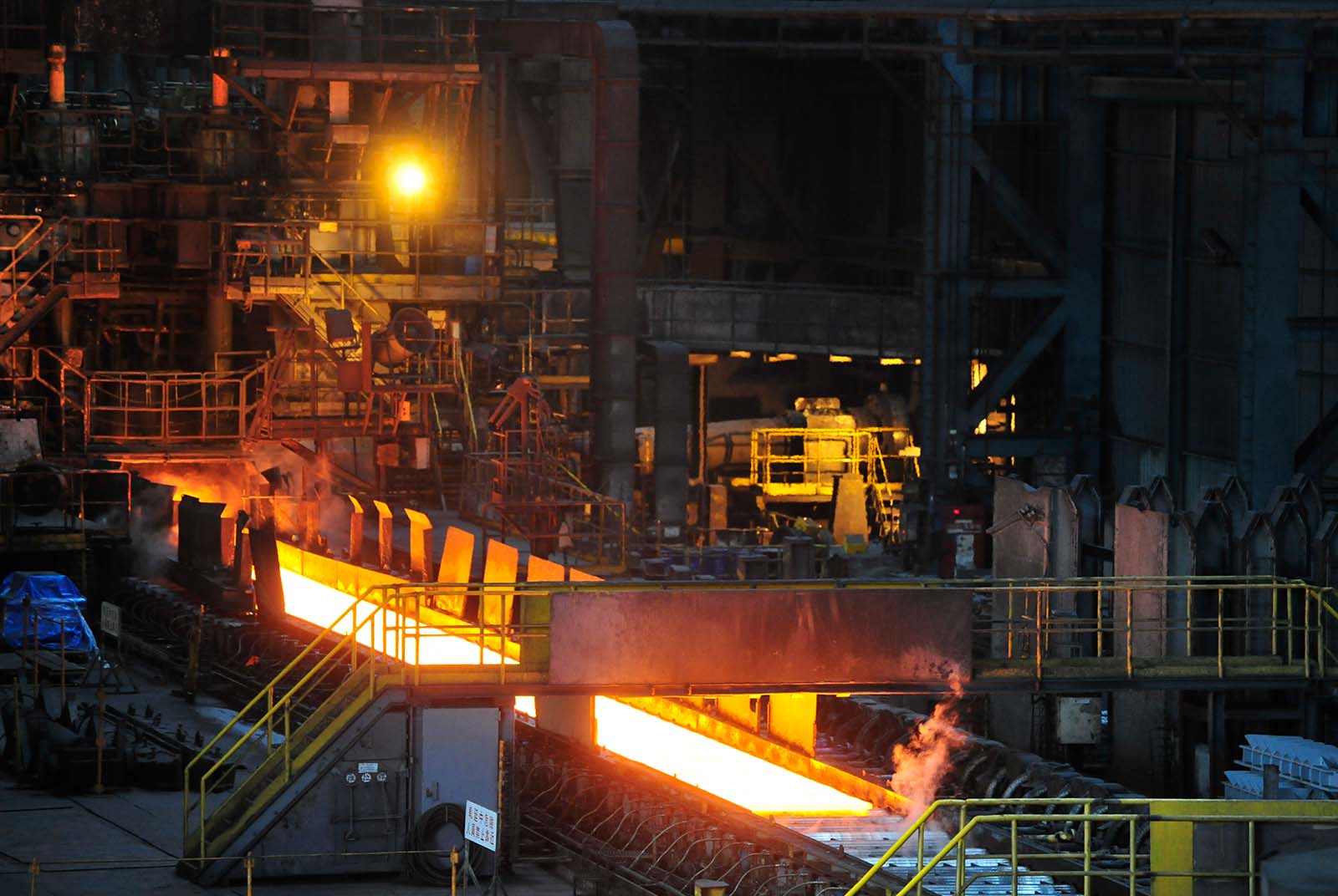
Hit hard by Chinese competition, Taiwan-based China Steel Corporation is facing its greatest structural challenge since its inception in 1971. Can the development of a steel sheet as thin as paper and a new approach to sales turn its fortunes around?
Views
China Steel: Can Key Innovation Reinvigorate Taiwan's Struggling Steelmaker
By Jenna Yuanweb only
In 2008, an R&D manager at Tesla met with China Steel Corporation (CSC) and asked it to develop electrical steel for electric vehicles. The company agreed and became the earliest steel vendor to work with the American EV maker. Following Tesla's meteoric rise, however, competitors quickly caught up, and CSC no longer had an exclusive hold on its client.
Competition has since taken a toll on Taiwan's largest integrated steelmaker, but in May 2026 it unveiled an ultra-thin gauge electrical steel measuring 0.1 millimeters, about the thickness of a sheet of paper.
The new steel can be used in drones and motors used in robot joints, and aside from China's leading steelmakers and Japanese vendors, CSC is the only company that can produce it.
"This success has woken us up. We truly are the best, and we can do it," said Hsiao I-ching (蕭一清), deputy head of CSC's Iron & Steel Research & Development Department.
The innovation represents a major step in CSC's efforts to create products possessing greater value, especially given the global market in which it operates. Facing lackluster domestic demand for steel, China exported well over 100 million tons of steel to the global market in 2024 and 2025. At the same time, Southeast Asia and India have continued to expand capacity while the United States and Europe have erected more trade barriers, leaving CSC in a difficult position.
Over the past 10 years, CSC has seen its production capacity fall by nearly a quarter, and group profit has taken a dive, from more than NT$9 billion to its first-ever loss in 2025.
The company decided to decommission one of its blast furnaces while intensifying its focus on R&D to increase sales of specialty steel products to 20 percent of its overall mix by 2030-2032, up from 10 percent at present.
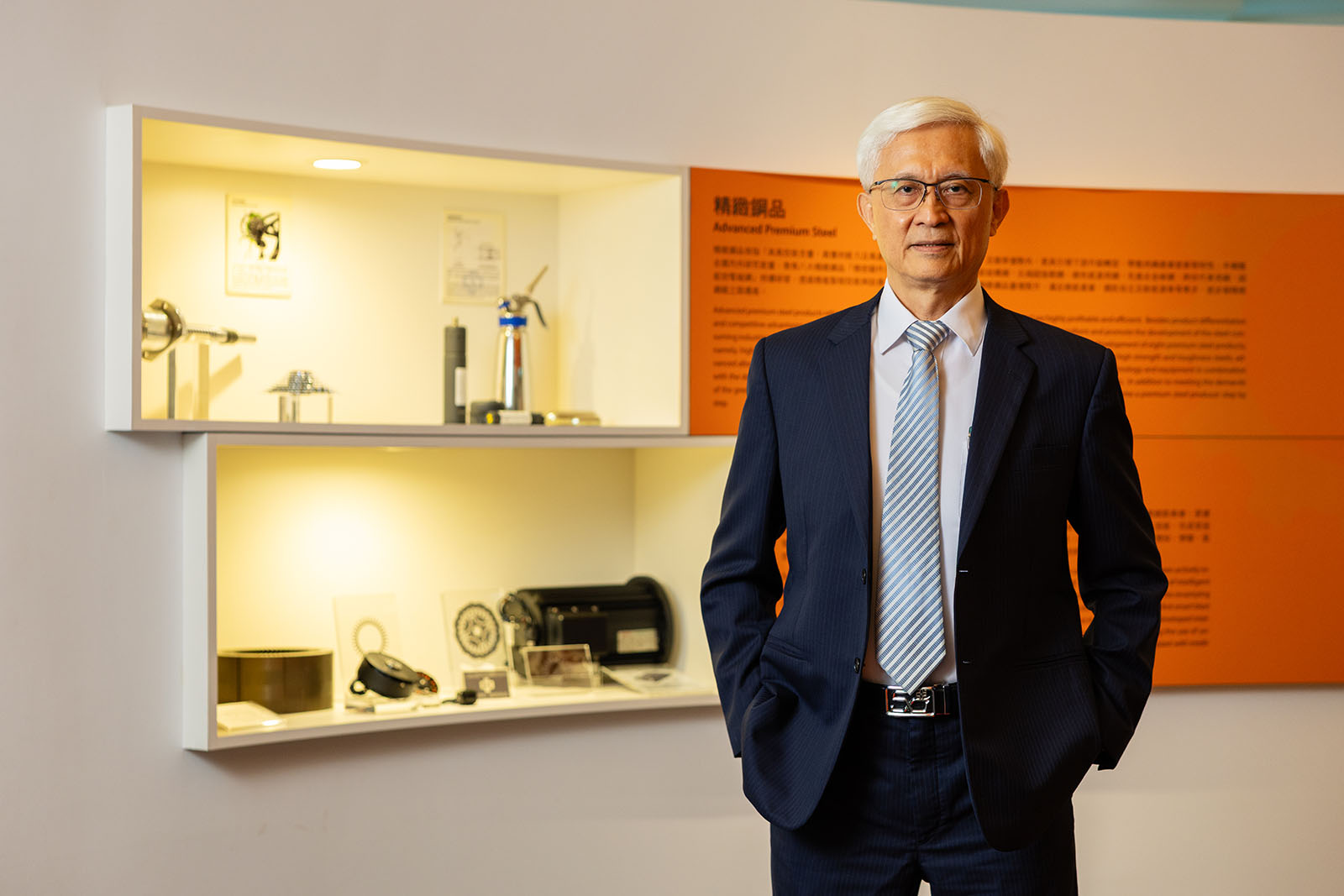 China Steel Chairman Hwang Chien-chih said the steel industry is undergoing structural change, requiring a shift in mindset from “What can I produce?” to “What does the market need me to produce?” (Photo: Kuan Hsieh)
CSC Chairman Hwang Chien-chih (黃建智) believes the steel industry is undergoing structural change, and that its thinking must shift from "What can I produce?" to "What does the market need me to produce?"
Yet even if CSC boosts its share of specialty steel products to 20 percent, a large majority of what it ships remains common steels that are treated as commodities and compete on price.
"We have to provide more value to the customer if we want to ask customers to pay slightly higher prices for the other 80 percent," Hwang said.
As a result, Hwang directed his sales team to re-engage with more than 200 small and medium-sized customers starting in June 2026 to create new opportunities.
One successful initiative helped makers of screws and nuts. The steel wire they normally use has to be heat-treated three times, but CSC adjusted its smelting process to limit the number of heat treatment steps to two and then split the cost savings of thousands of Taiwan dollars per metric ton with customers.
CSC's sales force must also proactively identify the pain points of CSC clients' customers, which is now reflected in the key performance indicators (KPIs) used to evaluate the performance of sales staff.
Though total steel output remains a major KPI for the sales team, "specialty steel production" and "carbon emission reduction" have been added as indicators to the list.
Steven Hong (洪榮德), president of Yoke Industrial Corp., which makes industrial lifting safety and personal protection metal hooks and has worked with CSC for 20 years, saw the new CSC approach as a positive.
"If upstream suppliers can join with downstream customers in jointly developing high-performance materials, downstream customers have a chance of getting away from competing on price and moving toward competing on specs and technology," he said.
An executive with a privately owned steel company (CSC is 20 percent state-owned and remains influenced by the government) was somewhat skeptical, however, arguing that there remained a sizable gap between CSC and the top steel mills in their ability to manufacture unique materials tailored to customer needs.
In one case, for instance, a European steel producer that works with precision lens maker Largan Precision Co., Ltd. has developed materials that are hard to replicate and sell for three to four times more than standard materials. But clients like Largan are still willing to pay the high price.
Nippon Steel is another example, having developed an "early intervention" model to participate in the development of new products for automobile clients and customized "grain-oriented electrical steel" (which has consistent directional magnetic properties) for large transformers and AI material applications.
The executive suggested that CSC seek outside partnerships, leverage academia for basic research, and search for top-tier clients interested in co-developing new materials.
Hwang acknowledged that making a rapid recovery will be difficult, given that the industry has entered an "L-" shaped or "U-" shaped development stage.
"It's pretty bad right now," Hwang said, "but it could also be a very good time."
For CSC, the focus is on pragmatism and making every metric ton of steel that it ships more valuable than before to regain a stronger foothold in the global market. Its revival may depend on it.
Have you read?
- A Year After Giant's U.S. Import Ban, Taiwan's Bike Industry Moves to Fix Forced-Labor Risks
- Why Google Is Building Its Own Nvidia
- The Red-Free Challenge: Why the US-Taiwan Autonomous Defense Push Faces an Industrial Reality Check
Translated by Luke Sabatier
Uploaded by Ian Huang
Views

Subscribe to CWE Newsletter (every Thursday)
Stay abreast of what's happening in Taiwan with our weekly digest.
Keywords: