The Red-Free Challenge: Why the US-Taiwan Autonomous Defense Push Faces an Industrial Reality Check

Source:DSET
Silicon Valley promises autonomous swarms, but surviving modern warfare comes down to cheap hardware, secure chemistry, and the brutal math of attrition.
Views
The Red-Free Challenge: Why the US-Taiwan Autonomous Defense Push Faces an Industrial Reality Check
By Judy Linweb only
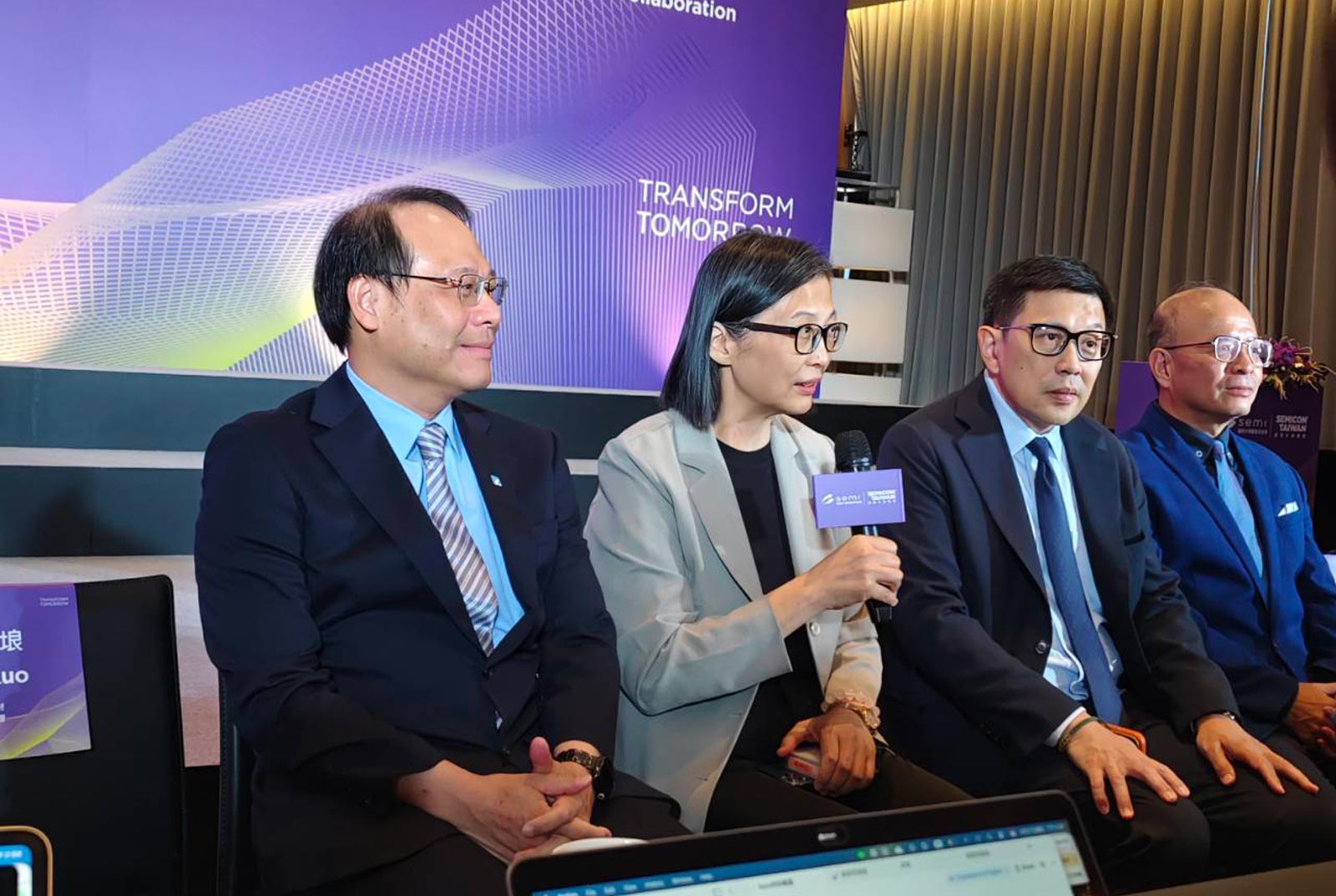
At SEMICON Taiwan 2026, where advanced packaging, silicon photonics, and quantum technologies are the hot topics, a forum on "Physical AI" quickly discarded high-level tech buzzwords for a colder subject: the unforgiving industrial mechanics of attrition warfare.
Taiwan’s drone exports increased by 200% year-on-year as of July, 2026. And the government’s drone procurement has grown 35 times, according to DSET, a think tank under the National Science and Technology Council.
However, behind Washington’s push to build a "China-free/Non-red" autonomous defense supply chain are Taiwan's role as a key manufacturing hub, unresolved electronic warfare vulnerabilities, and a commercial dilemma for local precision manufacturers asked to retool their factory floors.
The Sourcing Surge
Allied defense primes are rapidly integrating Taiwanese suppliers into their production baselines. Max Chen, head of Asia government relations at Shield AI, disclosed that Taiwanese vendors accounted for less than 1% of the firm's aircraft bill of materials in 2024. In the near future, Chen projected that figure will surge to 25% due to local cost and speed advantages. Shield AI integrated its GPS-denied autonomous pilot software, Hivemind, onto Thunder Tiger’s uncrewed surface vessels in six weeks, and onto NCSIST’s Midge Hornet 3 drone in three months.
Similarly, AeroVironment (AV), maker of the Switchblade loitering munition, has sourced more than US$20 million in panels, sensors, and battery assemblies from Taiwan over the past three years. Managing Director Celine Fahn stated AV is actively exploring joint development and production in Taiwan.
The Non-Red Mirage
Yet, eliminating Chinese inputs is colliding with basic chemistry and extractive geology. Trent Emeneker, CEO of Killzone and former director of the Pentagon’s Blue UAS cleared list at the Defense Innovation Unit (DIU), warned that the U.S. "Drone Dominance" program—aimed at procuring over US$1 billion in small first-person-view (FPV) strike drones—is mandating supply chain purity far beyond current federal law.
The primary bottlenecks are not flight computers or microcontrollers, but upstream mining and refinement. Purging Chinese materials from battery chemistries, rare-earth permanent magnets, and precision camera lenses requires capital-intensive processing lines that take years to build outside China.
Not all the manufacturers who claim to be able to make drones are naturally qualified. Getting certified takes years, and the standards are tough, admits Emeneker.
Benson Wu, Chairman of the Taiwan Defense Industry Association, emphasized that non-red compliance is now a mandatory prerequisite for allied business, not an optional feature. Fahn added that Taiwan's most acute supply vulnerability is human capital, warning that an aging demographic threatens defense engineering talent pipelines.
Swarm Hype vs. Battlefield Math
The panel exposed sharp divisions over autonomous swarming. While AV pointed to decentralized edge-AI computing (its "Mayhem" system) to run real-time target coordination on individual platforms, Emeneker offered a techno-skeptic reality check. In dense electronic warfare environments, radio-frequency jamming severs inter-platform telemetry, instantly fracturing coordinated swarms into isolated units. Fully self-directed swarms operating without human-in-the-loop control remain 10 to 15 years away.
Furthermore, modern defense economics fail the test of attrition. Expending multimillion-dollar surface-to-air missiles against US$50,000 loitering munitions is unsustainable math. With Ukraine burning through 10,000 FPV drones daily, allied militaries require mass manufacturability, not bespoke, over-engineered platforms.
The Scaling Dilemma
For Taiwanese suppliers, entering defense carries major financial friction. Holly Sheng of transmission giant HOTA stressed that commercial manufacturers cannot retool production lines for robotic actuators and reduction gearboxes without predictable, multi-year government procurement quotas. Fahn warned that Taiwan’s traditional strength—bespoke, client-specified engineering—risks producing fragmented, non-standardized systems. The mandate over the next three years must be standardized interfaces and allied interoperability.
Ultimately, physical AI on the battlefield will not be won in clean simulation runs or venture pitch decks. For Taiwan and its allies, the test isn't whether an engineer can code another autonomous flight demo. It is whether they can secure the battery chemistry, protect factory margins, and churn out thousands of cheap, unglamorous, expendable machines every single day to survive the brutal math of attrition.
Have you read?
- SEMICON Taiwan 2026: Micron Counters Rivals, Declares AI Still 'Massively Undersupplied'
- Taiwan's "Big Six" Vie for Dominance in Upcoming Quantum Computing Showdown
- King Slide’s 87% Gross Margin Tops Nvidia’s. What Makes Its Server Rails So Hard to Replace?
Uploaded by Ian Huang
Views

Subscribe to CWE Newsletter (every Thursday)
Stay abreast of what's happening in Taiwan with our weekly digest.
Keywords: