Why Google Is Building Its Own Nvidia

Source:TechTaiwan
Google is rapidly expanding its in-house AI chip business, partnering with MediaTek and reshaping its supply chain to reduce reliance on Nvidia while creating new opportunities for Taiwan's semiconductor industry.
Views
Why Google Is Building Its Own Nvidia
By Liang-rong Chenweb only
The biggest event in Taiwan’s semiconductor industry this week was Semicon Taiwan 2026, Asia’s largest semiconductor equipment show, held in Nangang. This year’s event was bigger than ever.
Over the course of just five days, a number of important figures who had rarely, if ever, appeared publicly took the stage, while significant developments that had never previously been disclosed came to light.
With so much happening at once, I decided to break with my usual routine and publish three newsletters in succession after Semicon.
Each will examine Google, MediaTek, and TSMC, respectively, drawing on what senior executives from the three companies revealed across technical forums and keynote speeches—both the major trends they highlighted and the little-known industry dynamics behind them.
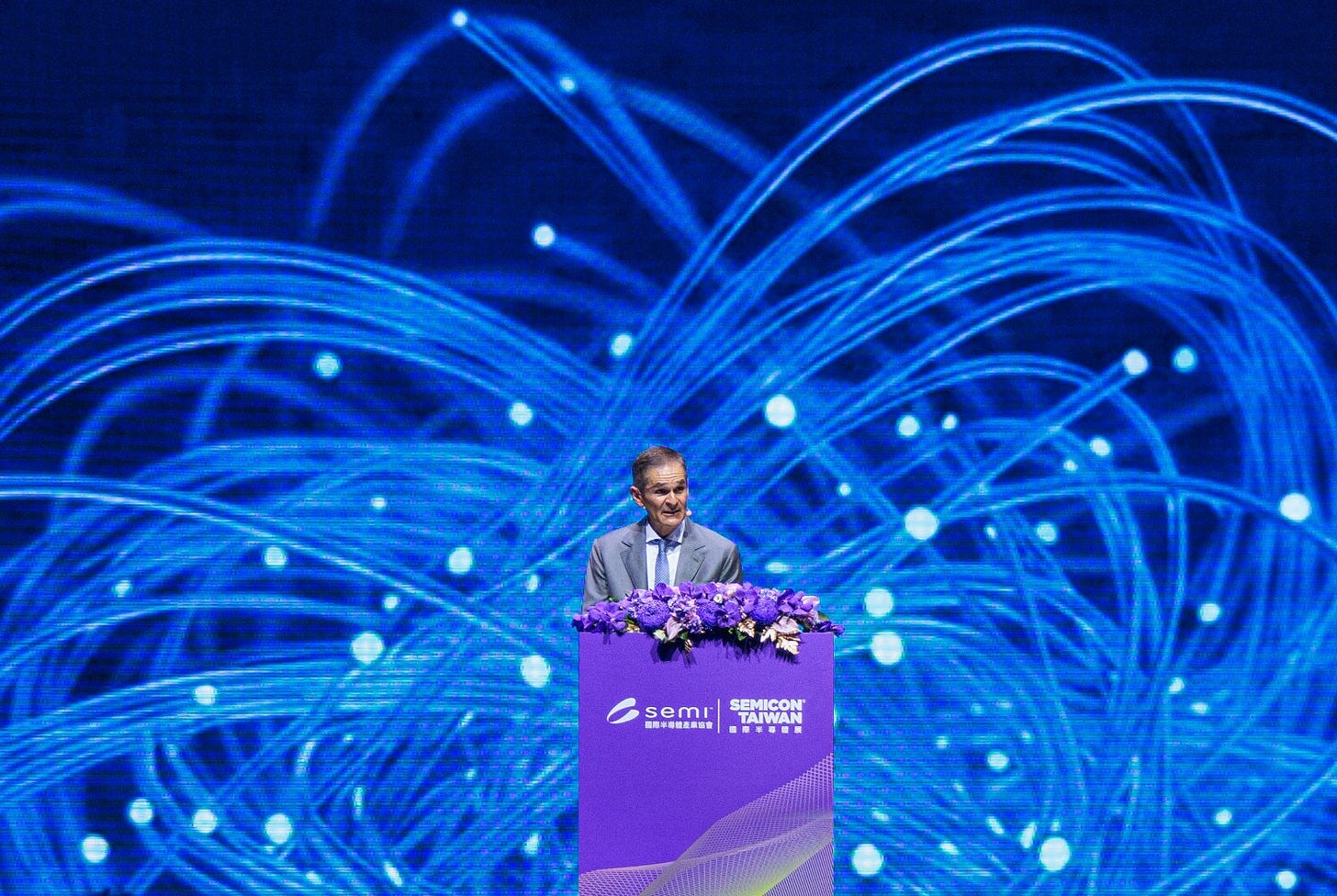
The first installment, naturally, focuses on the biggest highlight of the show: the keynote by Amin Vahdat, Google’s SVP and Chief Technologist for AI & Infrastructure, as well as the press conference that followed.
This was Vahdat’s first visit to Taiwan since being promoted to Chief Technologist late last year, putting him in charge of the world’s largest AI infrastructure business.
Dressed in a somewhat ill-fitting suit and speaking with a slightly shy demeanor, Vahdat was a professor of computer science at the University of California, San Diego before joining Google.
That fits with an observation often heard across Taiwan’s supply chain: “Google people talk like university professors.”
But there is nothing academic about the pace of Google’s AI infrastructure buildout. The company’s $91.4 billion in capital spending last year was already staggering—TSMC is spending around $60 billion this year—yet Google’s capex is expected to nearly double this year to almost $200 billion, far above its peers.
Yet Taiwan is largely missing out on these enormous orders for servers, racks, and network switches. Most of the manufacturing is handled by U.S.-based EMS giant Celestica.
Vahdat’s comments at the press conference indirectly confirmed this.
When thanking Taiwan’s supply chain for its support, he mentioned chips—manufactured by TSMC—and cooling systems, but never servers, an area in which Taiwanese manufacturers are particularly strong.
Inside those servers, however, the “Taiwan content” is beginning to surge.
Broadcom had long been the sole partner helping Google design its in-house AI chips, the TPUs. MediaTek, however, has begun taking a share of that business, from the seventh-generation TPU now in mass production to the eighth generation, which splits model training and inference into two separate chips. MediaTek has even secured the “training” version.
Brokerages are optimistic that MediaTek could capture as much as 40% of the TPU market by 2028—successfully transforming itself into one of the world’s leading AI chip design service companies.
That is the main reason MediaTek’s share price has doubled this year—and it has Google to thank.
At the same time, fueled by its rapidly expanding capital spending, Google could even become one of TSMC’s top two customers, putting it on par with Nvidia and surpassing Apple.
In other words, the world’s largest cloud service provider is building an AI chip business from within that could rival Nvidia in scale—and compete fiercely with it—with Vahdat at the helm.
Google is even willing to risk antagonizing TSMC. It has handed the MediaTek version of its eighth-generation TPU to Intel for packaging, in an effort to cultivate an AI chip packaging technology that can break TSMC’s CoWoS monopoly.
Industry sources told me that Google’s AI rack volumes are growing so quickly that Celestica alone can no longer handle the demand.
As a result, a second supplier will join its server and rack assembly operation. But it will not be Foxconn, as previously rumored. Instead, it will be another U.S.-based EMS company, Flex.
The logic is similar to Google’s effort to cultivate Intel’s EMIB-T as an alternative to CoWoS.
Why Does Google Keep Favoring “U.S.-Based” Suppliers?
Taiwanese suppliers such as TSMC, Foxconn, and Quanta have forged deep bonds with Jensen Huang through Nvidia’s rise.
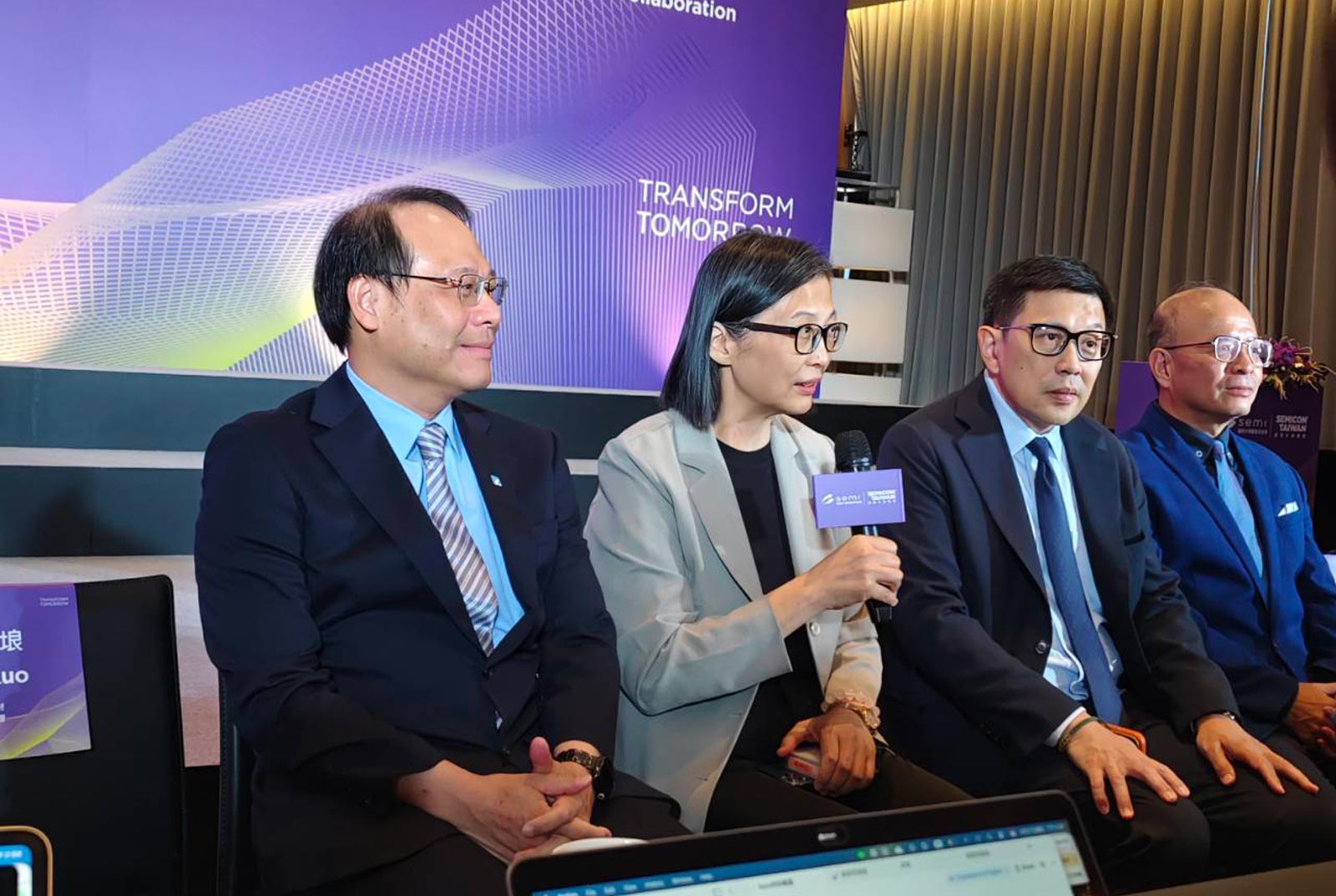
To borrow the half-joking description used by MediaTek CEO Rick Tsai(蔡力行) during a discussion on Wednesday, they are all “goodfellas”—an American Mafia term used in the movie to describe members of the same crew.
Industry sources told me that Google has realized most Taiwanese suppliers will inevitably prioritize Nvidia. That would put Google at a disadvantage in the critical battle for supply-chain resources over the next two years, which is why it has been working to cultivate a “U.S.-based” supply chain.
So at the press conference, where questions could only be submitted in writing, I asked: “The AI supply chain is extremely tight right now. Google’s demand is expected to grow very rapidly over the next two years, but most Taiwanese suppliers prioritize Nvidia. How do you plan to overcome this constraint?”
Following the usual practice at multinational companies of avoiding comments about competitors, however, the moderator stripped out the reference to Nvidia and simply asked Vahdat to discuss “supply-chain constraints.”
……
(To read this exclusive story in full, visit the Tech Taiwan Substack)
Have you read?
- The Red-Free Challenge: Why the US-Taiwan Autonomous Defense Push Faces an Industrial Reality Check
- SEMICON Taiwan 2026: Micron Counters Rivals, Declares AI Still 'Massively Undersupplied'
- Taiwan's "Big Six" Vie for Dominance in Upcoming Quantum Computing Showdown
Uploaded by Ian Huang
Views

Subscribe to CWE Newsletter (every Thursday)
Stay abreast of what's happening in Taiwan with our weekly digest.
Keywords: