Taiwan’s Auto Parts Makers Need Reliability Data to Win in AI Cooling

Source:Richard deVries
Six Taiwanese automotive suppliers are moving into AI server cooling, and they are telling the same story about why they belong there. When everyone tells the same story, buyers choose on proof. The strongest proof, reliability data, is the one none of them has published yet; the first to publish it becomes the easiest supplier to pick.
Views
Taiwan’s Auto Parts Makers Need Reliability Data to Win in AI Cooling
By Richard deVriesweb only
Six Taiwanese automotive suppliers are moving into AI server cooling, and they are telling the same story about why they belong there. When everyone tells the same story, buyers choose on proof. The strongest proof, reliability data, is the one none of them has published yet; the first to publish it becomes the easiest supplier to pick.
On October 15, 2026, CENS reported that eight Taiwanese automotive and precision machining suppliers are moving into AI server and data center supply chains, six of them through liquid cooling; Economic Daily News had reported the same move as early as November 2025. The six include GlobalTek, TURVO International and Cryomax Cooling, and the parts they make sit inside the systems that keep AI servers from overheating.
A lot of these precision manufacturers, in the automotive industry and others, have had tough times recently with competition and tariffs. Looking into other industries or segments is obviously the smart thing to do. Kudos to them for doing this; that’s great. It is funny that they are all getting into this around the same time with very similar positioning.
The Shared Explanation
Read the coverage and one explanation serves all six: precision machining and mass-production experience, pointed at a new market. It is a fair explanation, and it fits every one of them. Cryomax put it plainly to Economic Daily News in November 2025: the technical principles, manufacturing processes and even mold development behind AI server cooling units and car radiators are almost the same, so existing car molds can be reused with small design changes. If you have spent years making car radiators, server cooling is familiar ground.
The market matches, and so does the explanation. If the whole sector gets into one new category at the same time with the same capability set, then it’s not really a positioning anymore. This is what happens whenever a group of Taiwanese suppliers moves into a hot market together: the story that gets everyone in stops telling anyone apart. So what will buyers choose on?
Where Leaks Start
One part on their list shows the problem: the quick-disconnect, the small coupling that joins a server’s cooling loop to the rack. These couplings are built to an open standard overseen by the Open Compute Project, an industry group, and the standard’s name promises they are universal: one maker’s part fits another’s. On September 22, 2026, a new version of the standard took effect, and it requires each supplier to test its parts against other makers’ parts and to publish the list of makers it passed with. The standard itself now treats proof as part of the product. Even the ‘universal’ part has to be proven.
MoneyWeekly describes these couplings as the part of a liquid cooling loop most prone to leaks, and its estimate puts 300 to 600 or more of them in a single rack. Read those two facts together: the component built to be interchangeable is the one most likely to leak, and every rack carries hundreds. Anyone who has redone the plumbing under a kitchen sink knows where leaks start: always the joint.
The six also compete with Taiwanese incumbents such as Delta, AVC and Auras, which were qualified in this market before this wave began. They need to be distinguishable in it somehow. That’s the next step: getting in there, then becoming distinguishable. That is going to be their challenge going forward.
How Buyers Will Sort the Entrants
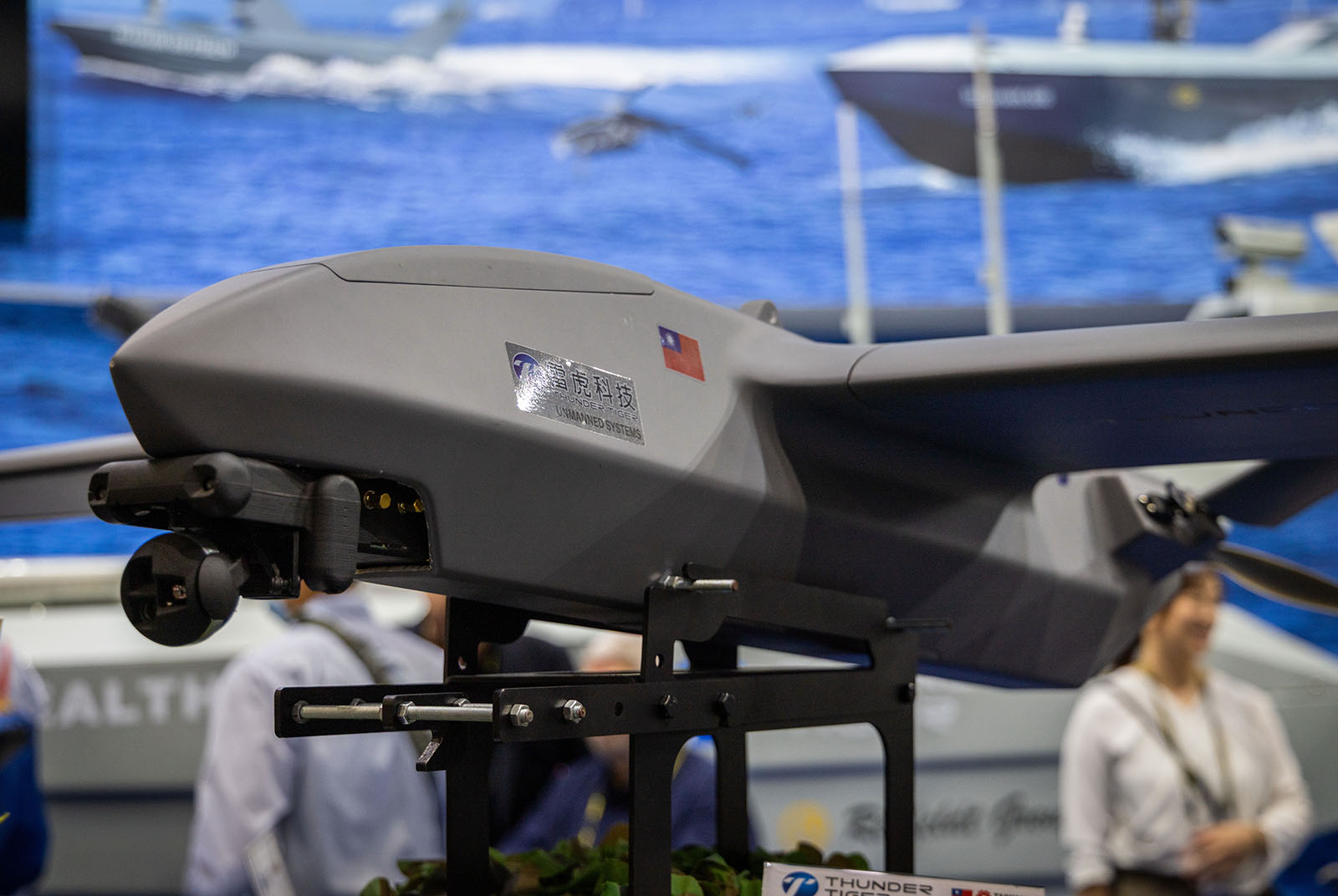
 A machined part waiting in a data center aisle. Illustration: Geber, generated with AI.
Three kinds of proof are already in play. The first is qualification by a name the buyer trusts: Iron Force Industrial received a temporary vendor code from a Taiwanese system maker, the only Taiwan vendor on that project, Commercial Times reported in November 2025. The second is production outside China: GLOBAL PMX supplies major AI chipmakers and US rack makers, with its plant in Vietnam as a key production base. The third is a known end use: GlobalTek’s parts are headed for cloud providers’ servers built on Google’s AI chips, the Taipei Times reported on July 21, 2026. Each of the three can win a place on a shortlist, and the incumbents were qualified long before this wave. The fourth kind of proof, reliability, nobody has claimed.
The Open Lane
The established coupling makers already publish this kind of proof. CPC in the United States and Danfoss in Denmark, for example, list on their product sheets how much fluid one of these couplings may lose when it is disconnected, along with its pressure ratings. When we looked through the six entrants’ websites, investor materials and 2026 coverage, we found nothing comparable from any of them. For parts this leak-prone, in racks carrying hundreds of them, that silence is an opening.
Buyers want that proof on paper. In 2022 customer interviews for a component supplier we worked with, a product manager at a large Taiwanese electronics maker described how her company buys. For most products, the sourcing team orders from suppliers already on its qualified list. Getting on that list takes up to 25 documents and at least three months, so a new need usually goes first to a supplier already listed. She added that more verification reports from a supplier would make her company more convincing when its own customers ask. A rack maker or cloud buyer answers to its own customers for uptime, so it will want the same thing.
Look at one thermal materials company in Taiwan that we work with: it continuously looks for new industries to get into and really focuses on what its positioning is, instead of just saying, “Oh, we’re in AI.” It picked a clear segment of the market. It leads with one specific claim: a containment design that keeps its thermal material from leaking off the chip.
A design claim is a start; published proof is what a buyer can pass on. The first of the six to publish its test results, and the list of other makers it has passed with, before buyers ask, takes the position.
Of course, much of a supplier’s qualification data sits under customer agreements and can’t be published. Results measured against an open standard, and the list of makers a supplier has passed with, expose no customer.
Most of these suppliers will get in. The capability is real, and so is the demand. By 2027 the buyers will have done their sorting, and the easiest choice will be the supplier whose evidence is already on the table. By the time the next industry roundup appears, the suppliers worth watching will be able to finish the sentence “we are the ones who” without needing the word AI, and they will have the data to back it.
(This piece reflects the author's opinion, and does not represent the opinion of CommonWealth Magazine.)
CommonWealth Magazine welcomes op-ed submissions. Please send your article proposals to [email protected]
About the author:

Richard deVries is the founder and CEO of Geber, a brand strategy and marketing consultancy with offices in Taipei, Tampa and Toronto. For more than 25 years, he has helped B2B companies, many of them Taiwanese manufacturers, clarify what makes them valuable and turn it into brands that compete internationally. Geber's work has been recognized with a Red Dot Award in 2025 and an iF Design Award in 2026.
Connect on LinkedIn
Have you read?
- Taiwan Builds World-Class Products. It Forgets to Tell Anyone
- How Taiwan Can Build Global Brands Without Losing Itself
- Line Logic: Why Trust in Taiwan is Earned Not Announced
Uploaded by Ian Huang
Views

Subscribe to CWE Newsletter (every Thursday)
Stay abreast of what's happening in Taiwan with our weekly digest.
Keywords: