How a Cambridge Professor Became LITEON’s Secret Weapon in the Server Power Supply Battle
Source:LITEON
As AI servers shift toward 800VDC power architectures, LITEON faces a race to reinvent its core power business. Its answer: acquire Cambridge professor Teng Long’s startup, Energenics, to rapidly build DC-DC capabilities and stay competitive with rivals such as Delta Electronics.
Views
How a Cambridge Professor Became LITEON’s Secret Weapon in the Server Power Supply Battle
By Menghsuan Yangweb only
The OCP Global Summit, the world’s most important data center conference, took place in mid October, in San Jose, California. Teng Long (龍騰), just 40 years old, a professor of power electronics at the University of Cambridge who hails from Henan, China, took the stage at the conference to introduce LITEON Technology’s DC-DC step-down conversion technology.
The reason is that, in June, LITEON agreed to purchase Epic Powers, a startup whose research and development operations are based in Cambridge, for up to NT$3.7 billion. Long is the company’s founder.
The impetus for this acquisition can be attributed to a sense of existential urgency.
During a 2024 business trip to the United States, Bob Weng (翁揚波), general manager of LITEON’s AIDC Platform and Solution SBG, heard the buzz about 800VDC. The following year, Nvidia formally unveiled the architecture. In its ultimate configuration, solid-state transformers convert utility power directly into 800-volt direct current, and the voltage is then stepped down progressively to the chip level, improving energy efficiency by up to four percent.
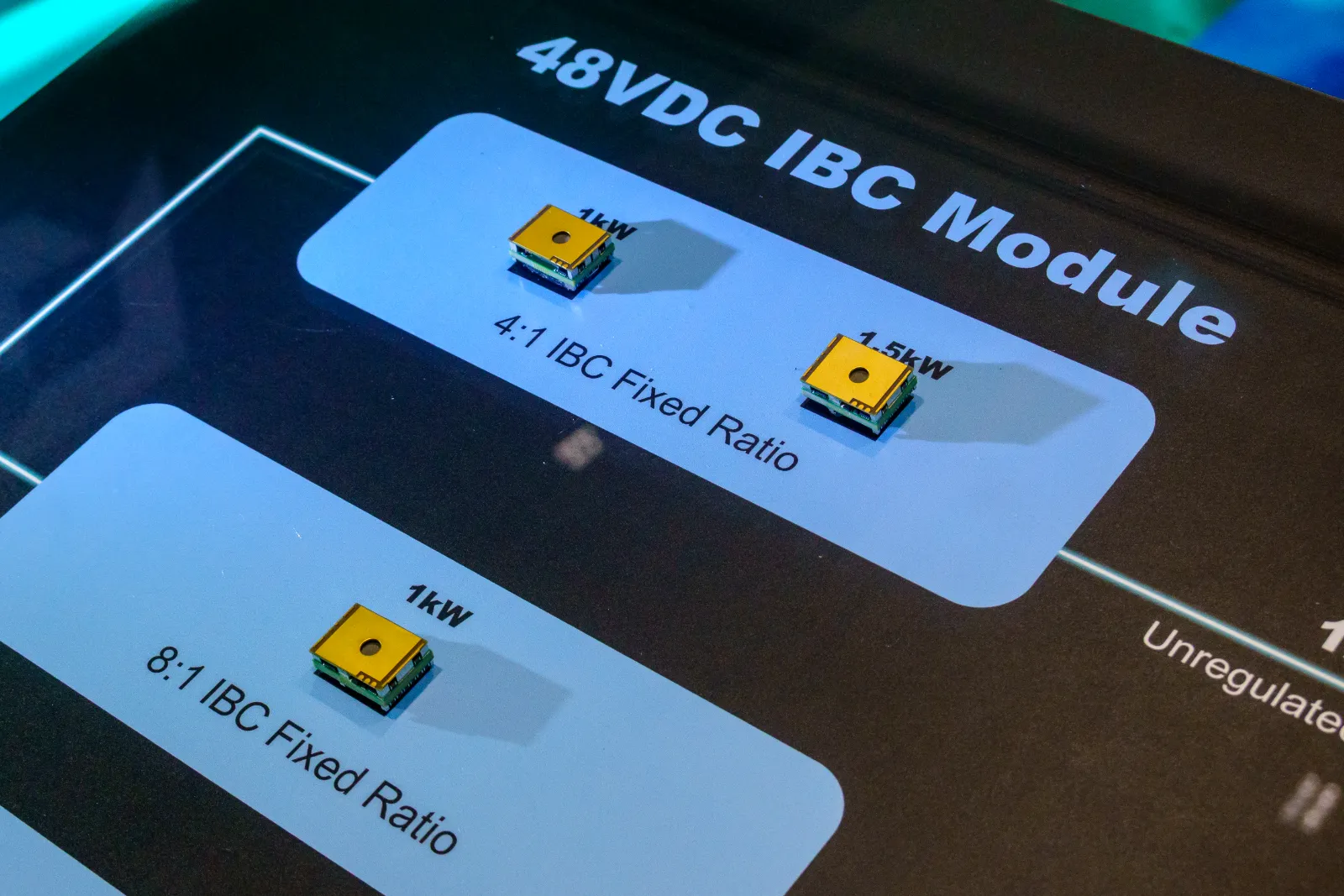 LITEON’s DC-DC products on display at the OCP Global Summit. (Photo: Menghsuan Yang)
The problem for LITEON was that its core technology, from power supplies used in ChatGPT servers to power racks for Nvidia’s Vera Rubin platform, had been built around AC-DC conversion. The new architecture would bypass AC-DC power racks and shift the competitive battleground to DC-DC conversion. Delta Electronics was already the leader in this field, in which LITEON barely had a presence. “If we didn’t do DC-DC, we would miss out on the new business,” explains Weng. Developing the technology in-house would take at least four to five years, so LITEON decided to look outside the company.
Founded only recently, in 2021, Epic Powers was already supplying products to cloud customers.
Long became a fully tenured professor at Cambridge at the age of 36. Epic Powers had many suitors, including power supply manufacturers from Asia and the United States, as well as private equity funds.
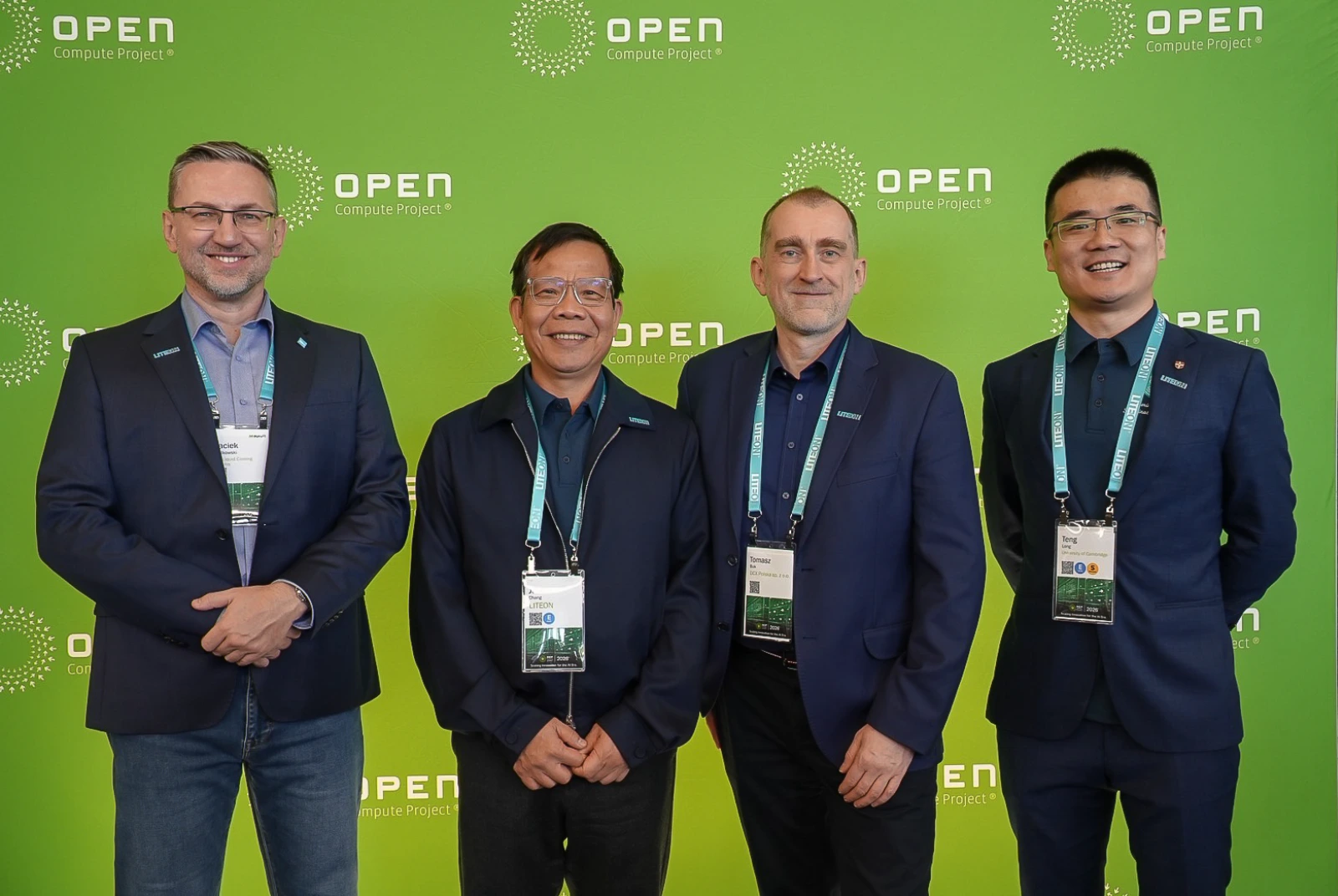
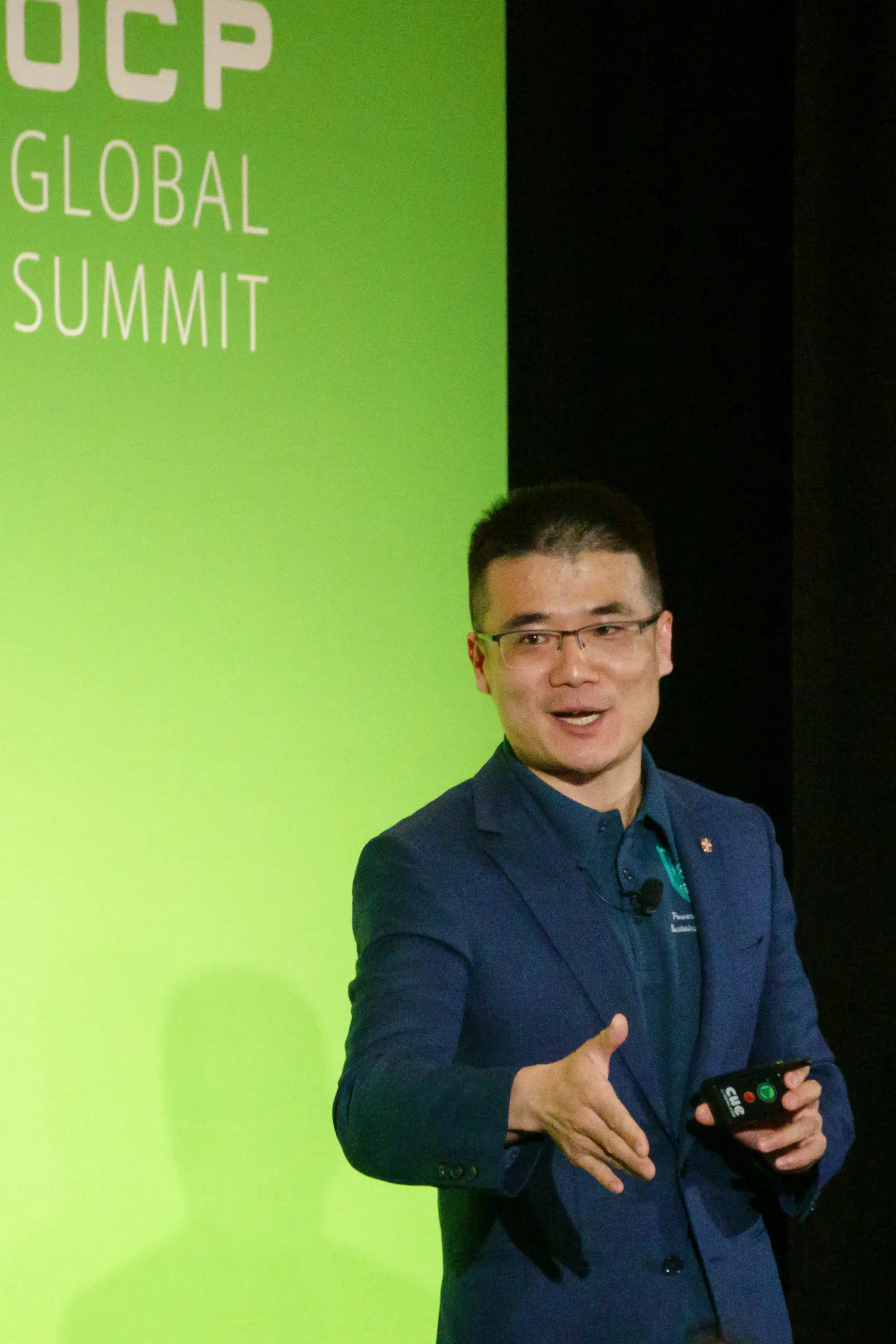 At the OCP Global Summit in the United States, Teng Long (right) took the stage on behalf of LITEON. A highly sought-after power electronics scholar, Long helped LITEON break into a North American cloud service provider it had long sought to win.
In the end, what clinched the deal was the immediate rapport between Long and LITEON chairman Tom Soong (宋明峰) during Long’s visit to Taiwan.
“Tom’s first words to me were that we are going to be partners,” relates Long. The new partners plan to set up a joint R&D center in Cambridge going forward.
John Chang (張坤松), general manager of LITEON’s Cloud Infrastructure Platform and Solution SBG, shared that a North American cloud services provider that puts a premium on technology sees Long as a mentor-like figure. That relationship is how LITEON won the company as a customer. The two sides have already engaged in three projects this year, with validation and shipments expected next year.
LITEON also took a 25-percent stake this year in DCX, a liquid cooling company based in Poland, to round out its liquid cooling product portfolio. LITEON was not the highest bidder, but it prevailed over three US-based publicly traded companies because DCX values LITEON’s relationships with North America’s four major cloud service providers.
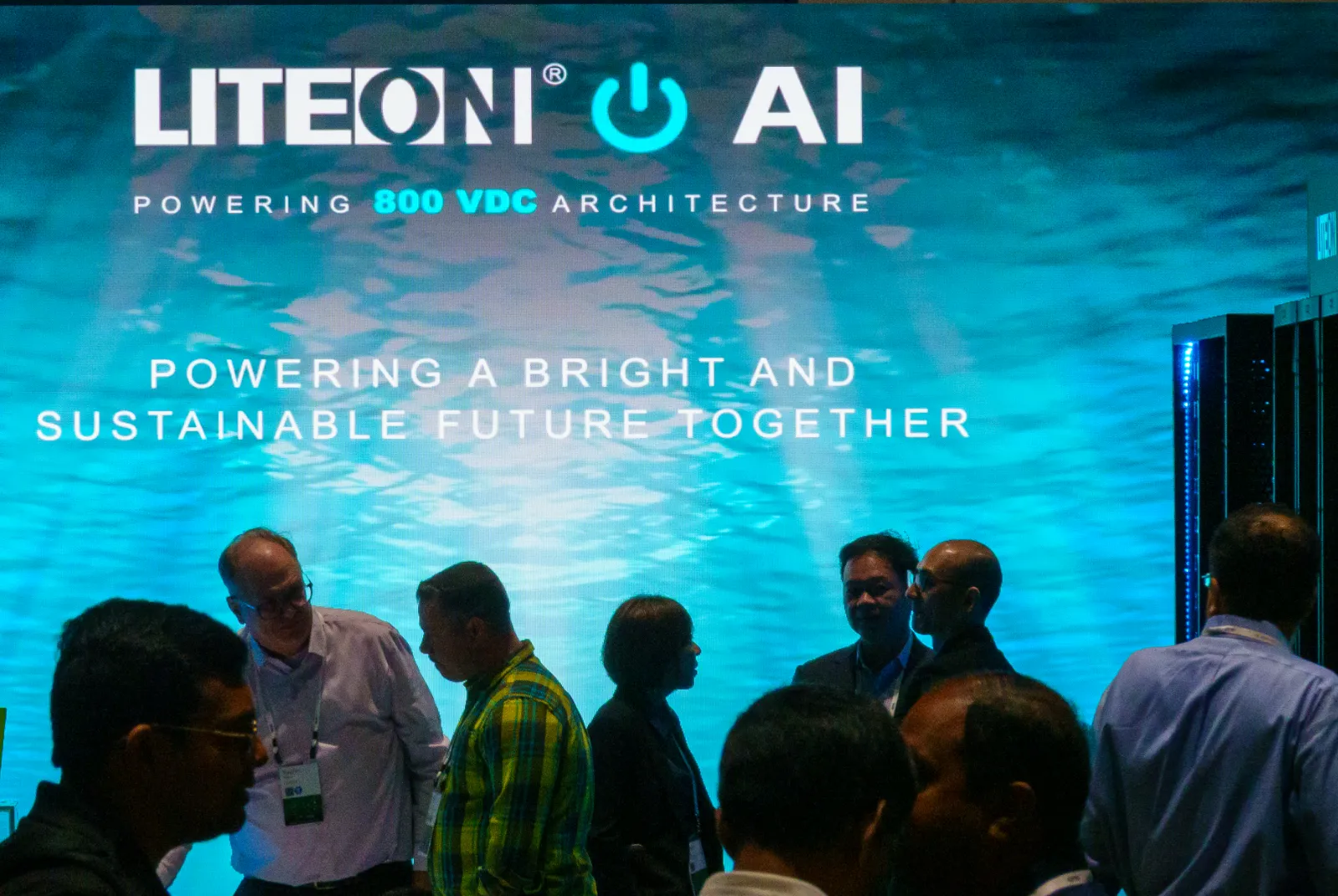 At the OCP Global Summit in the United States, CommonWealth got a firsthand look at LITEON’s secret weapon in AI power solutions.
The key to these acquisitions is speed. Nvidia’s list of participants in its 800VDC ecosystem also includes Flex, Lead Wealth and Shenzhen-based Megmeet.
One unnamed Megmeet representative at the trade show stated frankly: “Our goal is to first catch up to LITEON.” LITEON, meanwhile, emphasized that it remains one of the first two suppliers to secure a place on Nvidia’s approved vendor list (AVL) for the latest VR200 platform.
That underlying confidence comes from painful experience.
When Chang first joined LITEON in 2016, the company had just fallen behind during the 500W generation of power supplies, resulting in the departure of 30-percent of its R&D staff. Chang petitioned for salary increases for R&D personnel four years in a row. “You can cut anything, but don’t cut R&D salaries,” he stressed. Over the course of the past decade, the business group’s revenue has increased tenfold.
LITEON’s story shows us that, even if Taiwanese manufacturers were the early beneficiaries of the AI boom, they cannot count on maintaining their leading position indefinitely. Most of all, staying ahead requires constant evolution and transformation.
Have you read?
- How Taiwan's New AI Chip Export Controls Could Affect China
- Why is Nvidia Likely Bankrolling Unimicron’s Expansion in Taiwan?
- Why Nvidia, Delta, and TSMC All Need Chroma
Translated by David Toman
Uploaded by Ian Huang
Views

Subscribe to CWE Newsletter (every Thursday)
Stay abreast of what's happening in Taiwan with our weekly digest.
Keywords: