How an 84-year-old ‘Lumber King’ became pivotal to the TSMC supply chain
Source:Ming-Tang Huang
Shiny Chemical is one of the few Taiwanese suppliers to become part of TSMC’s advanced manufacturing process. The octogenarian chairman is the nephew of a lumber industry tycoon. He has weathered the decline of an industry and multiple failed attempts to transform his business. In this special interview, he shares stories from the annals of history.
Views
How an 84-year-old ‘Lumber King’ became pivotal to the TSMC supply chain
By Liang-rong ChenFrom CommonWealth Magazine (vol. 769 )
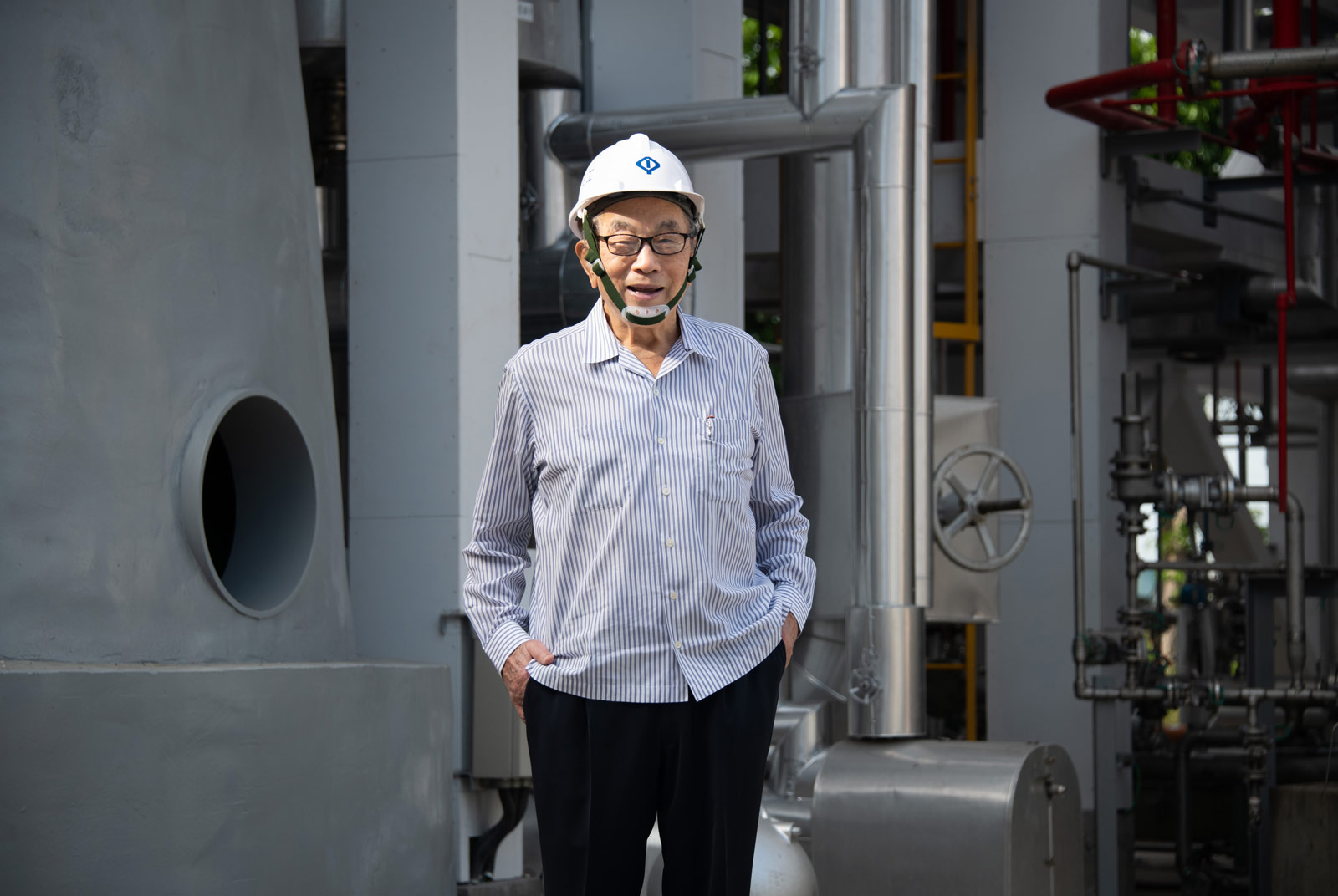
Sun Jan Yen (孫靜源) is the 84-year-old chairman of Shiny Chemical. His alma mater is Japan’s prestigious Waseda University. Shiny is one of the few local suppliers to win a seat on TSMC’s advanced manufacturing process supply chain. It is renowned for its bevy of PhD’s oin its research and development team.
Sun’s uncle, known as “Chiang Kai-shek’s friend among the people”, was Sun Hai (孫海), Taiwan’s mysterious lumber king of the 1970s.
From a day laborer on Alishan to lumber king
At 55 kilometers long, Dan-Da Forest Road is the gateway to Qicai Lake, also known as “Taiwan’s most beautiful mountain lake”. It is the only forest path on Taiwan’s Central Mountain Range that was trailblazed by a private enterprise. Its other name is “Sun Hai Forest Road”.
Upstream of the Zhuoshui River, over a stretch of mountainous terrain that’s 1,000 to 3,000 meters above sea level, are tens of thousands of hectares of woods. The Sun family had a special permit to develop it for over a decade. The massive cypress trees that were felled there were transported over the Jiji Line to Checheng in Nantou, where they were processed and transformed into lumber. In its heyday, there were thousands of workers. In fact, the entire township was in the employment of the Sun family’s private company, Zenchang (振昌木業).
The world-famous wooden torii gate in Tokyo’s Meiji Shrine is made out of Taiwan cypress that was provided by the Sun family.
Sun Hai hailed from Kouhu Township in Yunlin. He grew up in poverty and found work as a lumberjack on Alishan before he was twenty. Step by step, he built his lumber empire.
In the seventies, when then-president Chiang Kai-shek visited Sun Moon Lake to build the Ci En Pagoda in remembrance of his late mother, Sun used his lumber equipment to help cut a swath through the forest. The two became fast friends.
First transformation: plywood industry leader
Once the trees were gone, Sun Hai sent his nephew Sun Jan Yen, who was then in his thirties, to take charge of their plywood factory in Kaohsiung. This was the first step in transforming the family business. They imported wood from Southeast Asia to be processed, and then sold it to Europe and the United States.
Within eight years, Sun Jan Yen turned Guofeng (國豐木業) into Taiwan’s biggest plywood company. In 1979, it even ranked as Taiwan’s eighteenth largest exporter.
But the victory was short-lived. Southeast Asian nations began prohibiting the export of timber. Taiwan’s plywood industry, in which visionaries like Wang Yung-ching and Lee Chang Yung also participated, quickly shuffled off into the annals of history.
Second transformation: investing in electronics
The younger Sun decided to exit the plywood industry. He spent over NT$4 million to hire experts from Japan’s Nomura Research Institute to conduct an analysis. Their verdict: Guofeng could try investing in electronics.
Sun threw himself into computer manufacturing. To his surprise, the validation process for electronic products was longer and more arduous than he’d anticipated. In a single year, he managed to burn through his capital, and the company had to be restructured.
With the benefit of hindsight, Sun feels that the Nomura experts’ advice to go into electronics was mostly correct, “but the choice of products was wrong”.
He says they should have gone into electronic components. Many foreign companies in Kaohsiung’s Export Processing Zone built and sold passive components. The advantage of this type of commodity business was that anything you could make could be sold.
Eventually, management of Guofeng was ceded to competitors who were after its prime real estate. The factories were demolished and turned into suburbs.
Third transformation: world-class petrochemical plant
The fact of the matter is, many traditional companies that got caught up in the electronics manufacturing trend of the 1980s wound up hurting themselves. For example, Chia Hsin Cement also tried its hand at electronics, but it ran up NT$2 billion in debt in 1983. The entire conglomerate suffered from the misadventure and had to scale down.
Back then, Shiny Chemical was a minor supplier of the glue used to make plywood. After Sun lost control of Guofeng, he took over management at Shiny. After more than two decades, it has become a world-class supplier of the petrochemical components used in electronics.
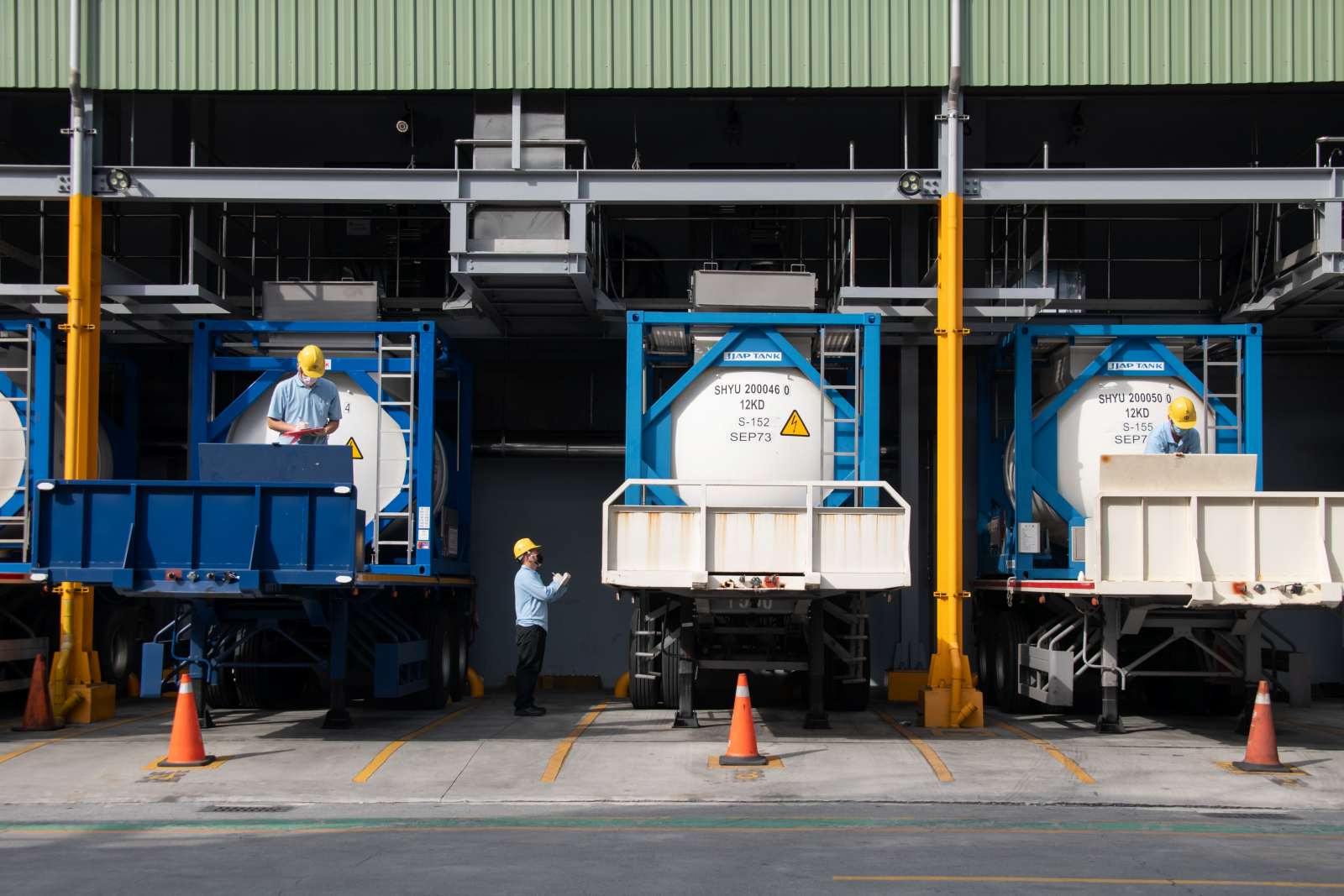 Shiny Chemical (Source: Ming-Tang Huang)
In more than eighty years of life, Sun has gone through three transformations: from forestry to manufacturing, from traditional industries to electronics, and then finally, back to traditional industries that are part of the electronics supply chain.
Sun often says that in all of Taiwan, only he and Chang Chun Group founder Suhon Lin (林書鴻) have what it takes to talk about the history of plywood in Taiwan. The Chang Chun Group supplied glue for multiple plywood companies.
The funny thing is, after all these years, Sun is sizing up Chang Chun once again, as both companies supply organic solvents for TSMC.
Have you read?
- After 25 years, MIT batteries target land, air and sea
- From iPhones to Mercedes: How Taiwan’s Kent became top grinder maker
- Taiwan, Apple making India a new iPhone hub
Translated by Jack Chou
Edited by TC Lin
Uploaded by Ian Huang
Views

Subscribe to CWE Newsletter (every Thursday)
Stay abreast of what's happening in Taiwan with our weekly digest.
Keywords: