How TSMC Made Taiwan the World's Technology Heartland
Source:Chien-Tong Wang
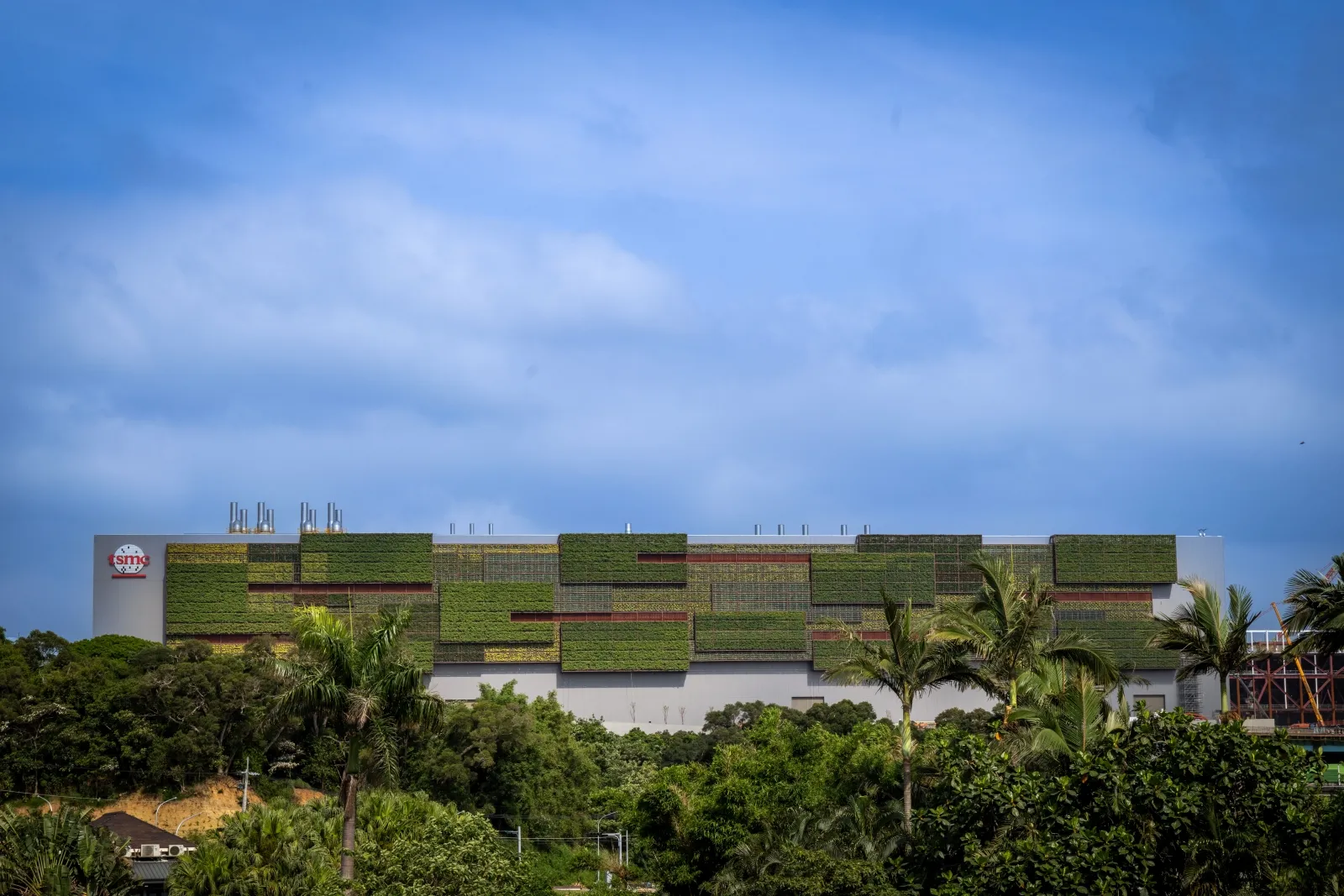
From Hsinchu to Kaohsiung, a semiconductor corridor stretching the length of the island of Taiwan has become the nerve center of the global chip industry — and almost all roads lead to TSMC.
Views
How TSMC Made Taiwan the World's Technology Heartland
By Elaine I-yun Huangweb only
The world's most powerful chip executives have been traveling to Taiwan with increasing frequency in recent years, transforming the computer trade show Computex into a global semiconductor pilgrimage.
"TSMC is our best partner," AMD chair and CEO Lisa Su said during her visit to Taipei this year, when she announced that AMD would be the first company to mass-produce high-speed chips on TSMC's 2-nanometer process.
Nvidia CEO Jensen Huang’s endorsement was more personal, and based on what he said was an “intangible called trust.”
“I trust them to put my company on top of them. That’s a very big deal,” he said.
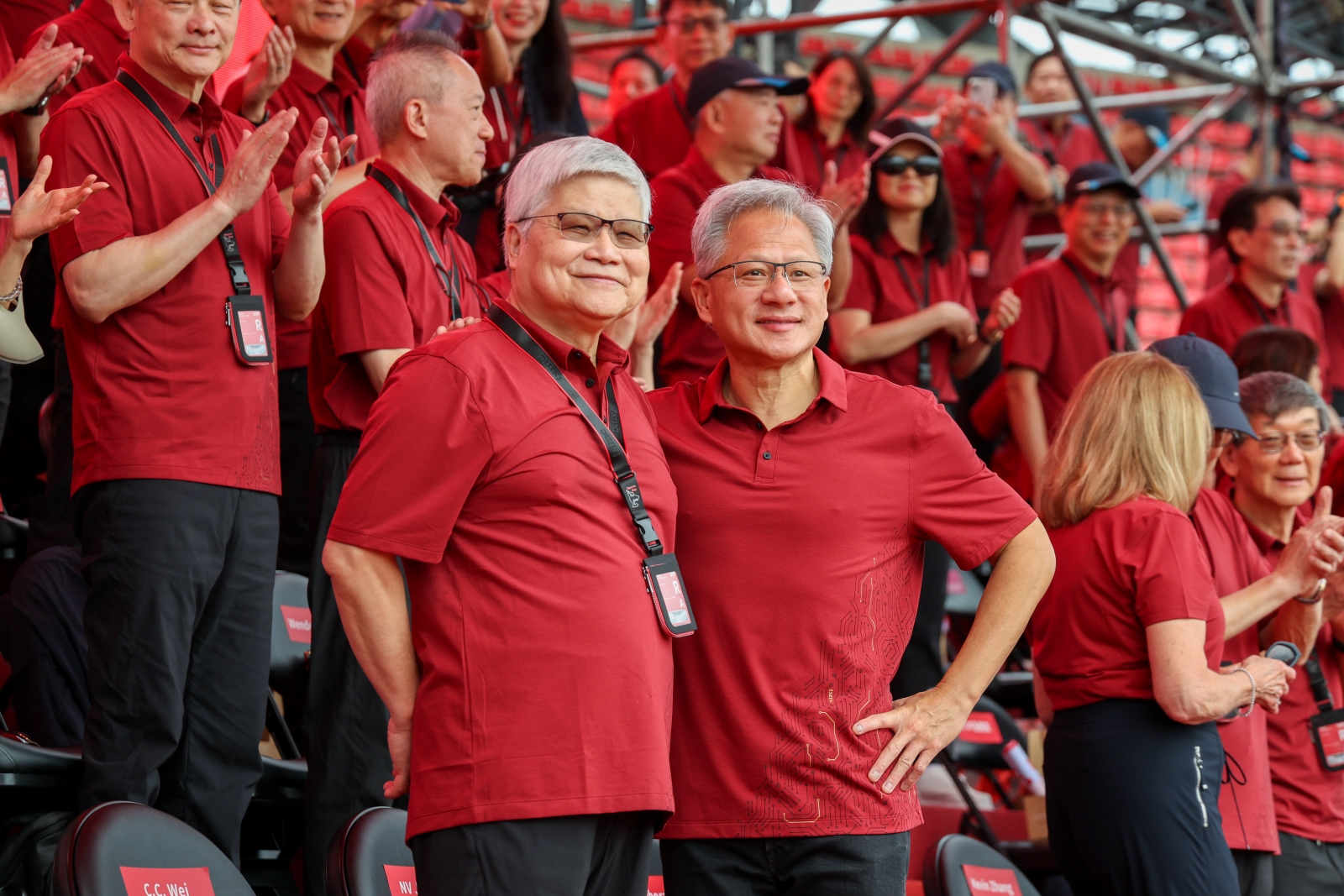 At TSMC’s 2025 Sports Day, NVIDIA CEO Jensen Huang (right), one of the company’s key customers, appeared on stage alongside TSMC Chairman C.C. Wei (left). (Photo: Kai-Cheng Chuang)
That trust has translated into extraordinary growth. TSMC's revenue climbed from NT$2.1 trillion in 2023 to NT$3.8 trillion in 2025, with net profit more than doubling over the same period.
But where does that trust come from? TSMC’s attitude toward customers may be the best starting point.
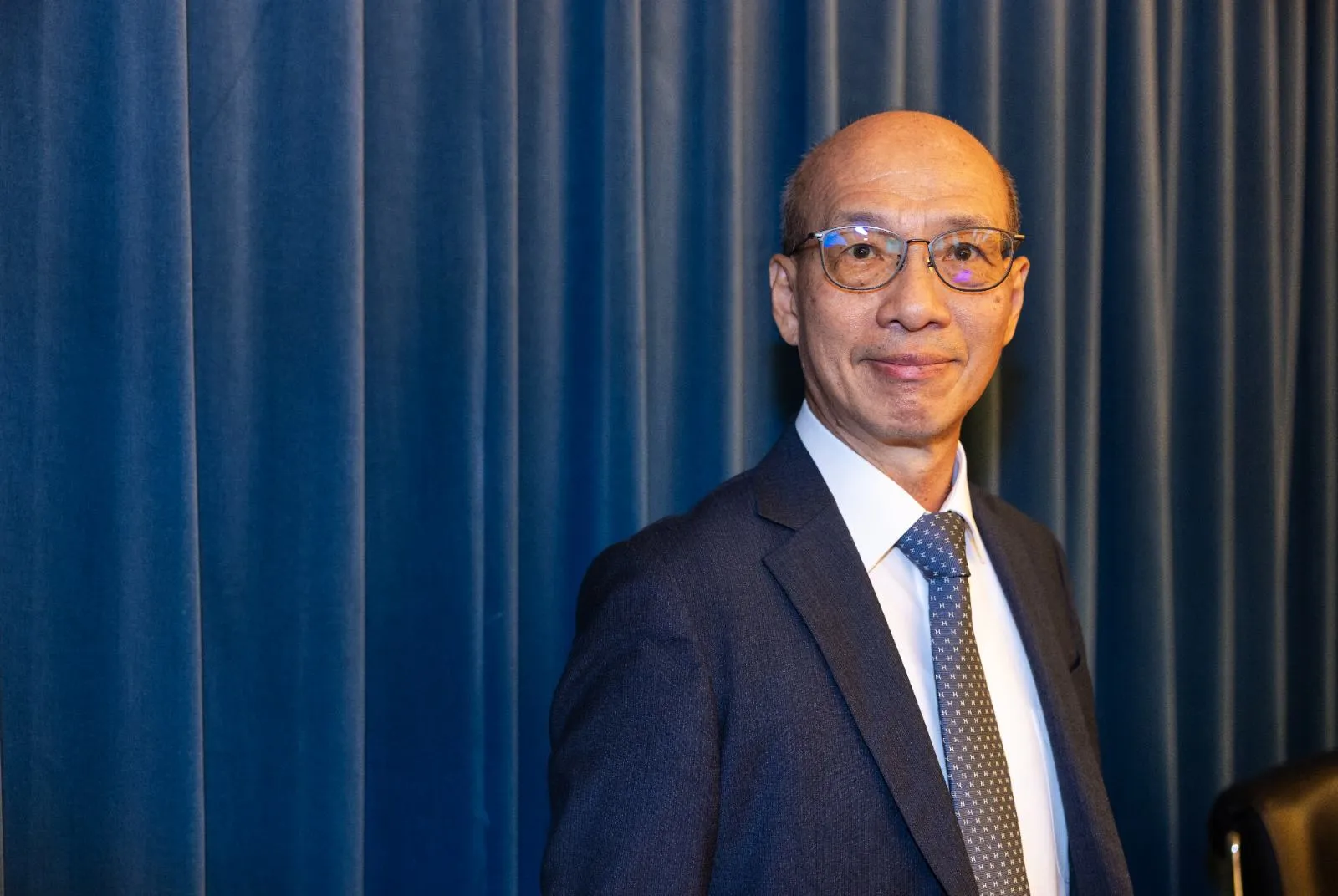
“What we care about are wafers. That ultimately is our business. The key is win-win — only when the customer begins to grow do we grow,” said Dr. Cliff Hou (侯永清), TSMC senior vice president and deputy co-COO, in an interview with CommonWealth Magazine.
The First Link: Bringing Designers Inside TSMC’s Ecosystem
More than 30 years ago, TSMC founder Morris Chang established the pure-play foundry model, focused on manufacturing chips and never competing with customers. That model freed chip companies to concentrate on design and innovation rather than building and operating fabs.
What is less widely known is that before retiring, Chang quietly engineered another strategic layer — the Open Innovation Platform, or OIP — designed to tie the global chip design ecosystem directly to TSMC's infrastructure.
The rise of FinFET transistor architecture in 2008 dramatically increased the complexity of chip design, and.TSMC eventually recognized that offering manufacturing capacity alone was no longer sufficient. It needed to help customers hurdle design thresholds.
"In the past, customers didn't need to build a fab — they just had to focus on design. Now we have gone a step further and cleared away the barriers in the design environment too," Hou said.
Today, TSMC employs roughly 2,500 software engineers across Taiwan and the United States, working alongside EDA software vendors, IP providers, and customers to embed the most advanced process parameters directly into design tools. That means that on the day a new process is ready, customers can begin designing immediately.
Silicon Valley AI chip startup Cerebras Systems illustrates how the model works. In 2019, Cerebras proposed an audacious idea: building an entire wafer as a single, monolithic chip. Years of close collaboration with TSMC and the resolution of multiple technical challenges eventually made mass production possible.
The ecosystem extends beyond headline clients. Through alliances spanning IP providers, EDA vendors, design service firms, cloud platforms, and advanced packaging partners, TSMC has built infrastructure that also serves smaller and mid-sized design companies.
"Whenever we see a customer's need, we add it in," Hou said.
The Second Link: Upgrading Taiwan's Supply Chain to Semiconductor Standards
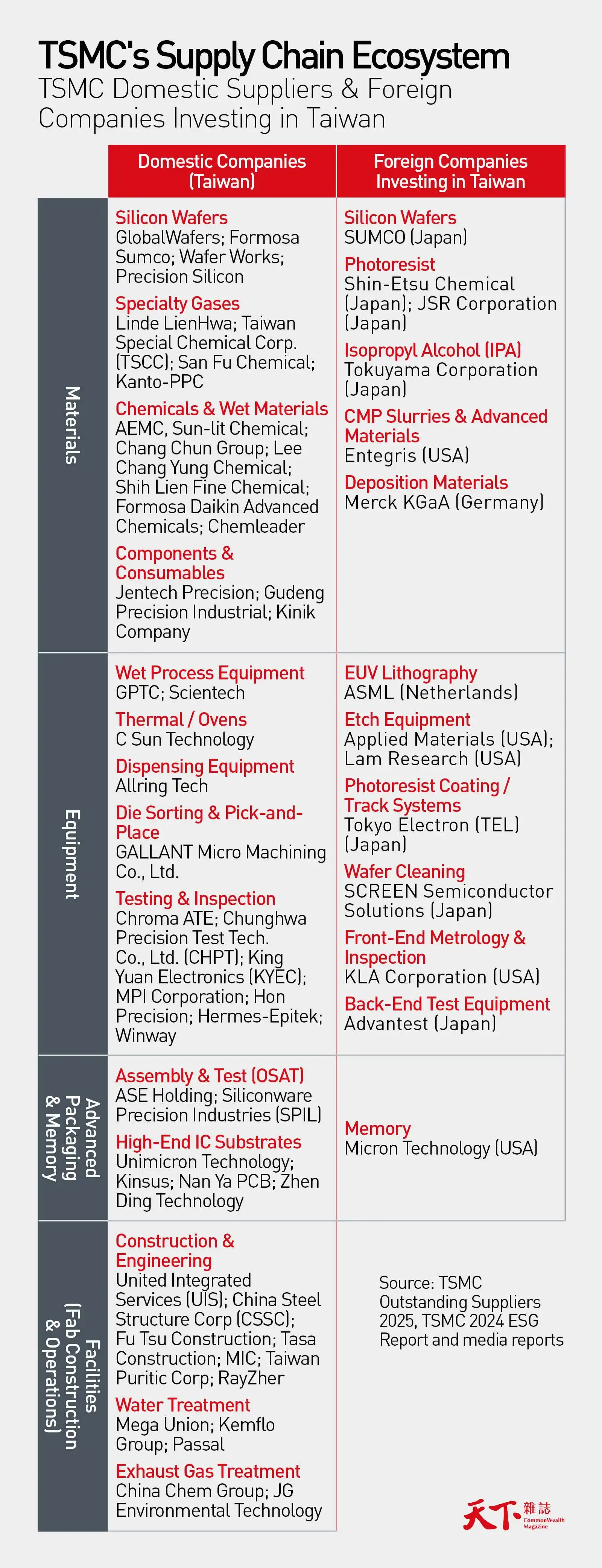
TSMC's gravitational pull has not only drawn in global designers — it has systematically elevated Taiwan's domestic supply chain.
Examples abound. In Kaohsiung, IC testing interface supplier WinWay Technology Co. has developed MEMS-based test interfaces that have made it an important partner in AI chip packaging. Equipment supplier Gallant Precision Machining has grown alongside TSMC since the early days of CoWoS advanced packaging.
Petrochemical manufacturers, including Chang Chun and LCY Chemical, have moved into high-purity semiconductor materials.
Professor Jeng Jeng-ywan (鄭正元) of the Department of Mechanical Engineering at National Taiwan University of Science and Technology has observed that TSMC's relentless focus on yield has forced its suppliers to apply “semiconductor-grade standards” to their technologies, governance and management.
That focus has also lured international players deeper into Taiwan. Merck, Lam Research, and Applied Materials have all established research and application centers in southern Taiwan.
John Lee, managing director of Merck Taiwan, said his company chose to invest in Taiwan primarily because of “speed,” noting that being close to customers means you can participate in process development in real time and address problems as they arise.
Because of that phenomenon, Taiwan has evolved from a node in the global supply chain into something closer to its center.
From Sugarcane Fields to AI Powerhouse
Thirty years ago, farmers in Shanhua District in Tainan were still harvesting sugarcane. On the same land today, engineers on 3-nanometer production lines contend daily with the limits of physics.
As TSMC has extended its footprint southward, the Central Taiwan Science Park, Southern Taiwan Science Park, and Kaohsiung Science Park have merged into a continuous industrial corridor.
Revenue generated within the Southern Taiwan Science Park grew from roughly NT$800 billion in 2020 to nearly NT$3 trillion in 2025, surpassing the Hsinchu Science Park — long the symbolic heart of Taiwan's semiconductor industry — for the first time in 2023.
Today, virtually every leading AI chip in the world has a connection to Taiwan.
Over more than three decades, TSMC has woven two chains. One links together the world's chip designers, the other binds suppliers and manufacturing partners. They bring together design firms, materials suppliers, equipment makers, and packaging partners into a tightly linked network.
Both rest on the original promise that Morris Chang made at the company's founding: TSMC will never compete with its customers.
That commitment created the trust that made everything else possible. It is why TSMC has built what may be the world's most open — and most tightly integrated — semiconductor ecosystem. And it is why Taiwan has become not merely a participant in the global technology industry, but the hub around which much of it now turns.
Have you read?
- Former US Ambassador: Why Vietnam, Taiwan and the US are the Indispensable Triangle in High-Tech Ecosystem
- Why France Chose Foxconn to Build Europe’s Most Advanced Packaging Plant
- How Machine Manufacturer Ta Liang Became a Hidden AI Champion
Uploaded by Ian Huang
Views

Subscribe to CWE Newsletter (every Thursday)
Stay abreast of what's happening in Taiwan with our weekly digest.
Keywords: