Next-gen Bicycle Leaders Launch New ‘Team Taiwan’ to Face China
Source:Chien-Ying Chiu
Facing major challenges from China and global uncertainties, second-generation leaders from Taiwan’s bicycle industry have decided to work together on new technologies, smart manufacturing, and ESG practices. What will it look like and how will it help the sector?
Views
Next-gen Bicycle Leaders Launch New ‘Team Taiwan’ to Face China
By Chiung-chih Kangweb only
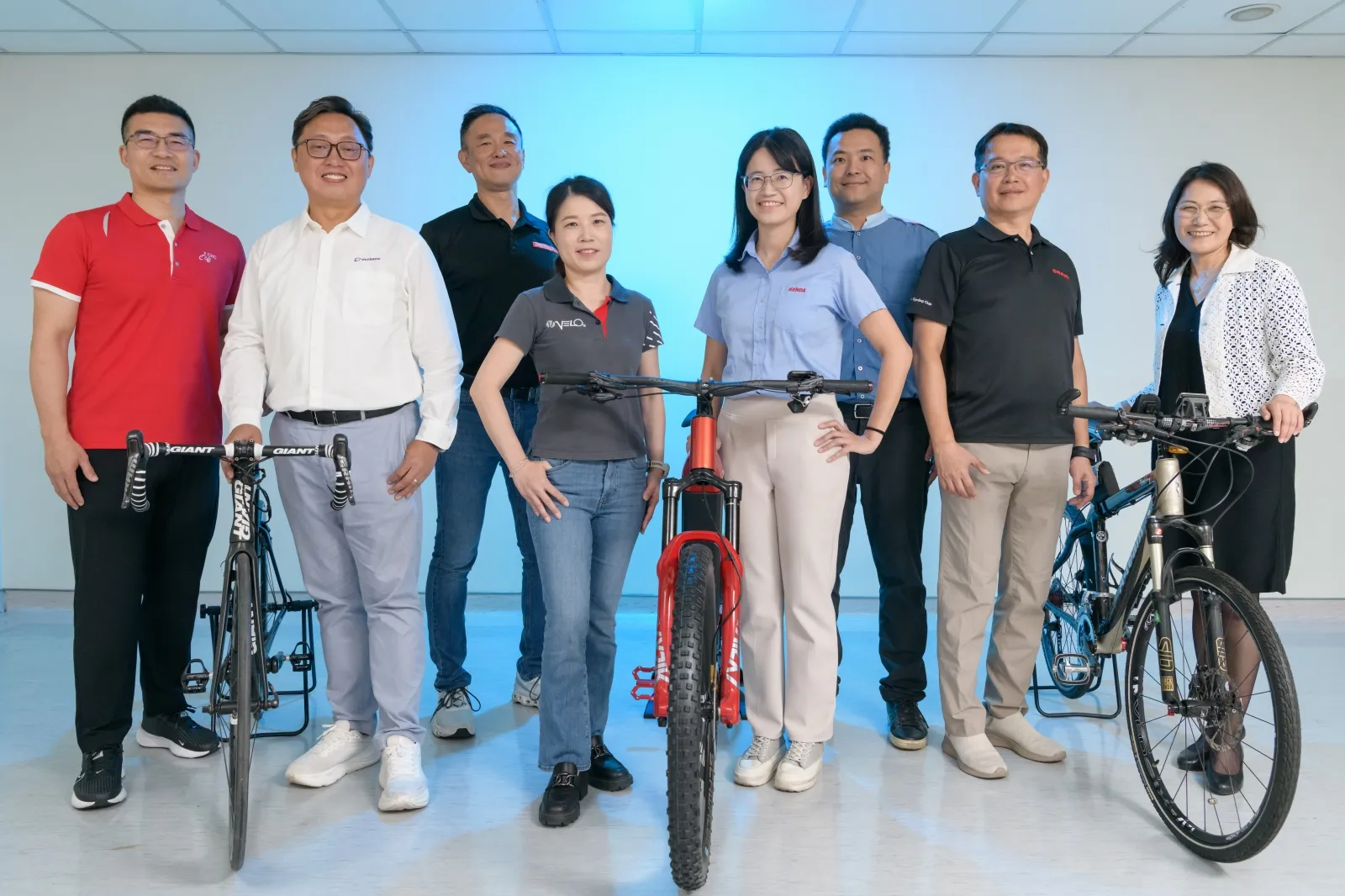
In the wake of the China Cycle 2026 show in Shanghai in early May, seven second-generation executives from Taiwan’s bicycle sector — average age 45 — were huddled on the third floor of the Cycling & Health Tech Industry R&D center in Taichung in a video call with colleagues at a factory in Shenzhen.
The discussion focused on mounting market pressures, with intensified competition from China’s supply chain, tariff uncertainty, and global inventory adjustments seen as signs of another structural shift in the bicycle industry.
These executives represented key companies in the sector, including KMC International Inc. (chains), Giant Manufacturing Co. (complete bikes), Velo Enterprise (saddles), Kenda Rubber Industrial Company (tires), Joy Industrial Co. (hubs), and other component makers. Together, they are part of a renewed effort to create a collaboration model within Taiwan’s bicycle ecosystem.
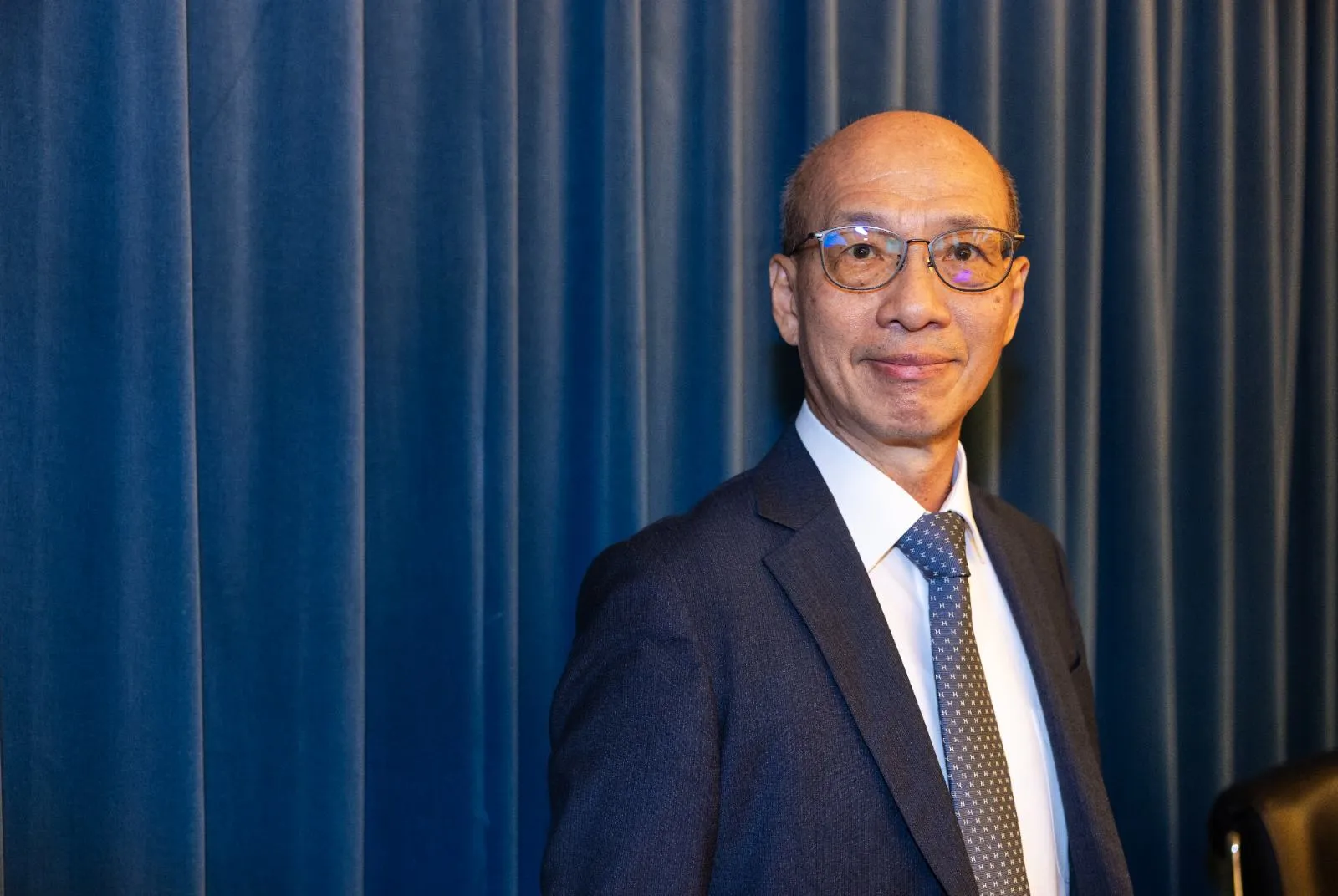
“The training period for generational successors may end, but industrial cohesion will not,” said KMC Chairman Robert Wu (吳盈進).
This year, Wu helped initiate a platform called “Future Leaders,” aimed at extending the collaborative advantage that once defined Taiwan’s bicycle sector.
This is not the first attempt at industry-wide coordination.
In 2003, Giant founder King Liu (劉金標) and then-executive Tony Lo (羅祥安) launched the A-Team initiative in response to the rise of low-cost competition from China. The goal was to improve manufacturing efficiency and product quality through structured cooperation among companies. After operating for many years, the initiative petered out about a decade ago.
New points of emphasis
The current effort differs in that it is driven by component suppliers rather than a major bike manufacturer, and its priorities have shifted from manufacturing efficiency to technological upgrading, ESG practices, and smart manufacturing.
The “Future Leaders” platform brings together manufacturers of chains, complete bicycles, tires, saddles, and hubs, as well as the R&D center in Taichung and international component supplier SRAM. The core objective is to rebuild mechanisms for technical collaboration and problem-solving without limiting any company’s ability to operate independently.
Tangible examples of cooperation have already emerged in materials innovation. SRAM provides carbon-fiber waste and recycling expertise, while Velo integrates the recycled material into injection-molded saddle shell components, forging circular economy applications within the supply chain.
This type of collaboration reduces waste disposal costs and addresses ESG pressures to act more sustainably, with some participants estimating cost reductions in handling waste of around 15 percent.
At Joy Industrial in Daya, Taichung, a different competitive model is taking shape. As a major global hub supplier, the company emphasizes that “without innovation, there is no future,” and requires its R&D teams to launch new products and technologies every year. It has also built a cross-material database covering steel, aluminum, magnesium, and carbon fiber, and uses the data to reduce trial-and-error costs and shorten development cycles.
The company has also strengthened user feedback loops. The company sponsors more than 20 cycling teams, and senior management regularly participates in Ironman triathlons and long-distance rides to test products firsthand. These efforts help bring R&D closer to real-world use cases. Its hub systems now weigh less than 300 grams per set, roughly 30 percent lighter than the industry average.
Underlying this cooperation are well-established dense networks of suppliers and high levels of trust within Taiwan’s bicycle sector.
Easing bottlenecks through cooperation
Of the country’s roughly 1,000 bicycle-related vendors, more than half are concentrated in central Taiwan. This geographic clustering significantly reduces coordination costs and facilitates integrated innovation across materials, components, and processes.
As leadership transitions accelerate, however, coordination based on informal verbal understandings and personal networks is no longer enough. The “Future Leaders” initiative aims to formalize this collaborative culture, shifting from personality-driven cooperation to cooperation based on complementary technologies that help ease each other’s technological bottlenecks.
Facing intensifying geopolitical uncertainty, supply chain restructuring, and persistent price competition from China, Taiwan’s bicycle industry is once again turning to collective action. This time, the goal is not simply to replicate the A-Team model, but to build a more decentralized yet more technology-driven collaborative network.
As Kenda’s third-generation executive Yang Ya-ting (楊雅婷), the director of the chairman’s office who also experienced the A-Team era, put it: “Consensus-building is the key force.”
Yang, the second daughter of Group Chairman Yang Ying-ming (楊銀明), said that when companies operate in isolation, innovation is difficult to sustain. By being organized and observing how their peers are involved in carbon reduction and ESG transitions, they may gain inspiration and keep up with the pace of change.
In an era defined by geopolitical tensions, tariff disadvantages, and inventory volatility, Taiwan’s bicycle industry is recalibrating through tighter integration across its supply chain. Only by doing so can it maintain or even extend its position on the global stage.
Have you read?
- How Machine Manufacturer Ta Liang Became a Hidden AI Champion
- Why Giant Is Betting on Retail Transformation as Revenue Hits a Seven-Year Low
- How Taiwan’s Bicycle Industry Can Break Out Amid Rising Chinese Competition
Edited by Luke Sabatier
Uploaded by Ian Huang
Views

Subscribe to CWE Newsletter (every Thursday)
Stay abreast of what's happening in Taiwan with our weekly digest.
Keywords: