One Foxconn, 900,000 People, 24 Locations
The “Milk Tea Spirit” Girding the World's Largest Electronics Maker’s Worldwide Management
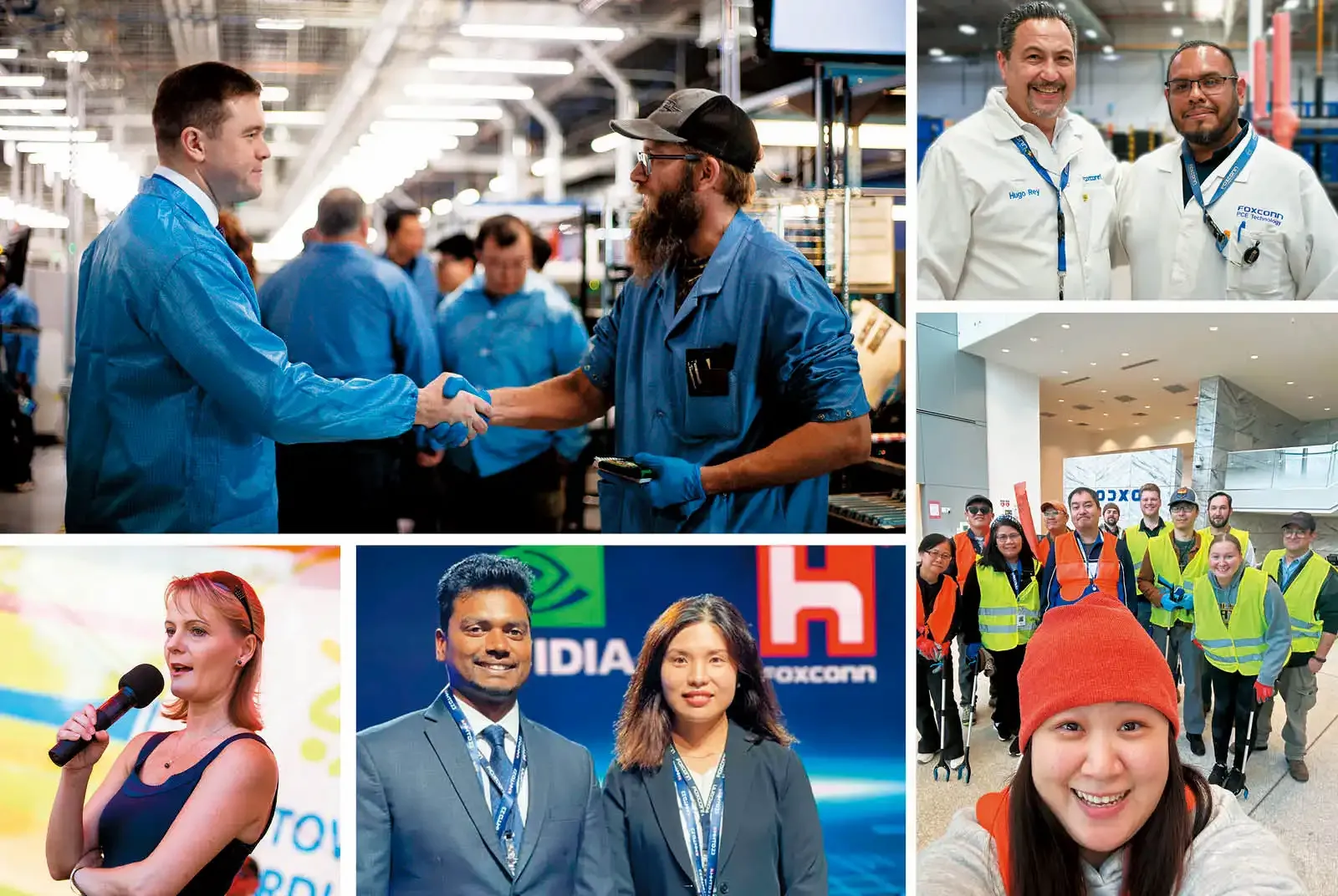
Source:Foxconn
With revenue surpassing NT$8 trillion, manufacturing operations spanning three continents, and a workforce of 900,000, Foxconn has established regional headquarters across Europe, the Americas, and India. How does the company keep the world's largest electronics manufacturing network running?
Views
The “Milk Tea Spirit” Girding the World's Largest Electronics Maker’s Worldwide Management
By Menghsuan Yangweb only
Operations in 24 countries, over 900,000 employees, revenues above NT$8 trillion - at the world's largest electronics manufacturer, every management challenge is amplified to an extraordinary scale.
"The pressure during the pandemic was immense," recalls Yu Wei-hsin, a senior manager at Foxconn's health and wellness division in Wisconsin.
 Yu Wei-hsin, a senior manager at Foxconn's health and wellness division in Wisconsin. (Front) (Source: Foxconn)
Yu was dispatched to the United States in 2017, shortly after Foxconn (Hon Hai Precision Industry Co., Ltd.) announced its landmark investment in the state, to build an employee healthcare system from the ground up. When COVID-19 hit, her team was suddenly coordinating across 18 American states, each with its own regulations and customer demands. Daily video calls therefore became the connective tissue holding it all together.
One Foxconn, three regional headquarters
The organizational foundation for the company’s management of worldwide operations is the regional headquarters model.
Under founder Terry Gou, Foxconn's various business groups operated largely as independent fiefdoms. When chairman Young Liu took over, he inherited a company facing structural shifts - supply chains migrating toward India, manufacturing returning to the United States - and responded by proposing a new framework: "One Foxconn," built on a Build, Operate, and Localize (BOL) model.
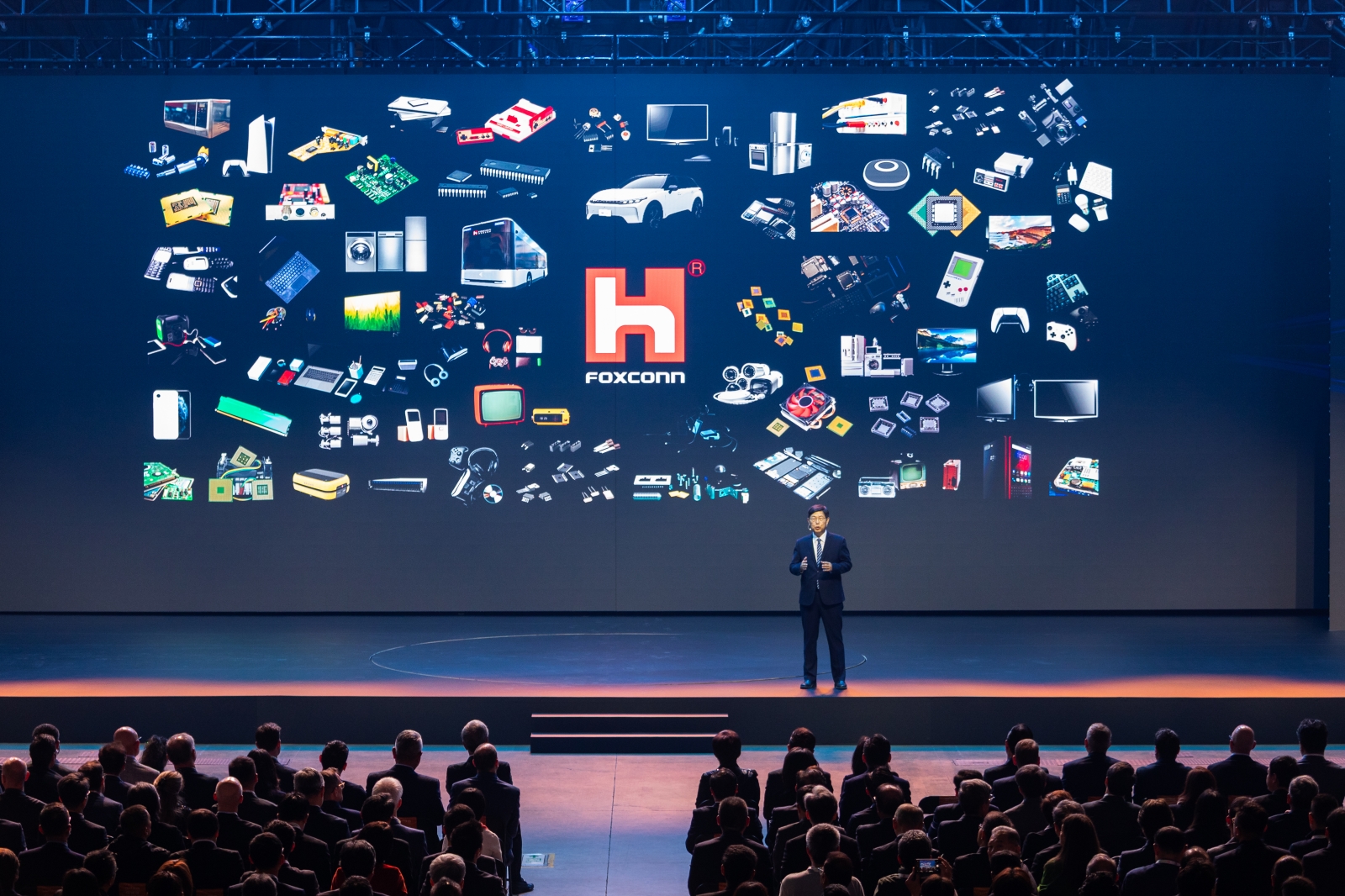 Under the leadership of Young Liu, Foxconn has embraced a more internationalized and highly specialized management model. (Photo: Kuan Hsieh)
In 2022 and 2023, Foxconn established regional headquarters in India and the United States respectively. Company headquarters sets direction and allocates resources, while the regional headquarters own execution speed and on-the-ground decision-making.
One executive at an American supplier, who has worked closely with Foxconn, noted that the company moved with striking efficiency during its US expansion - even where regional managers lacked final authority, decisions came faster than at most industry companies.
As the United States is no longer just a market, but takes its place as a major production base, building relationships with government, labor, and local communities has become a strategic priority.
That is largely the role played by Robert Schlaeger, 36, who heads public and government relations for Foxconn's American operations. A former political operative and state government staffer, he joined Foxconn to manage regulatory engagement and community outreach, overseeing charitable fundraising and volunteer programs to help shape corporate images.
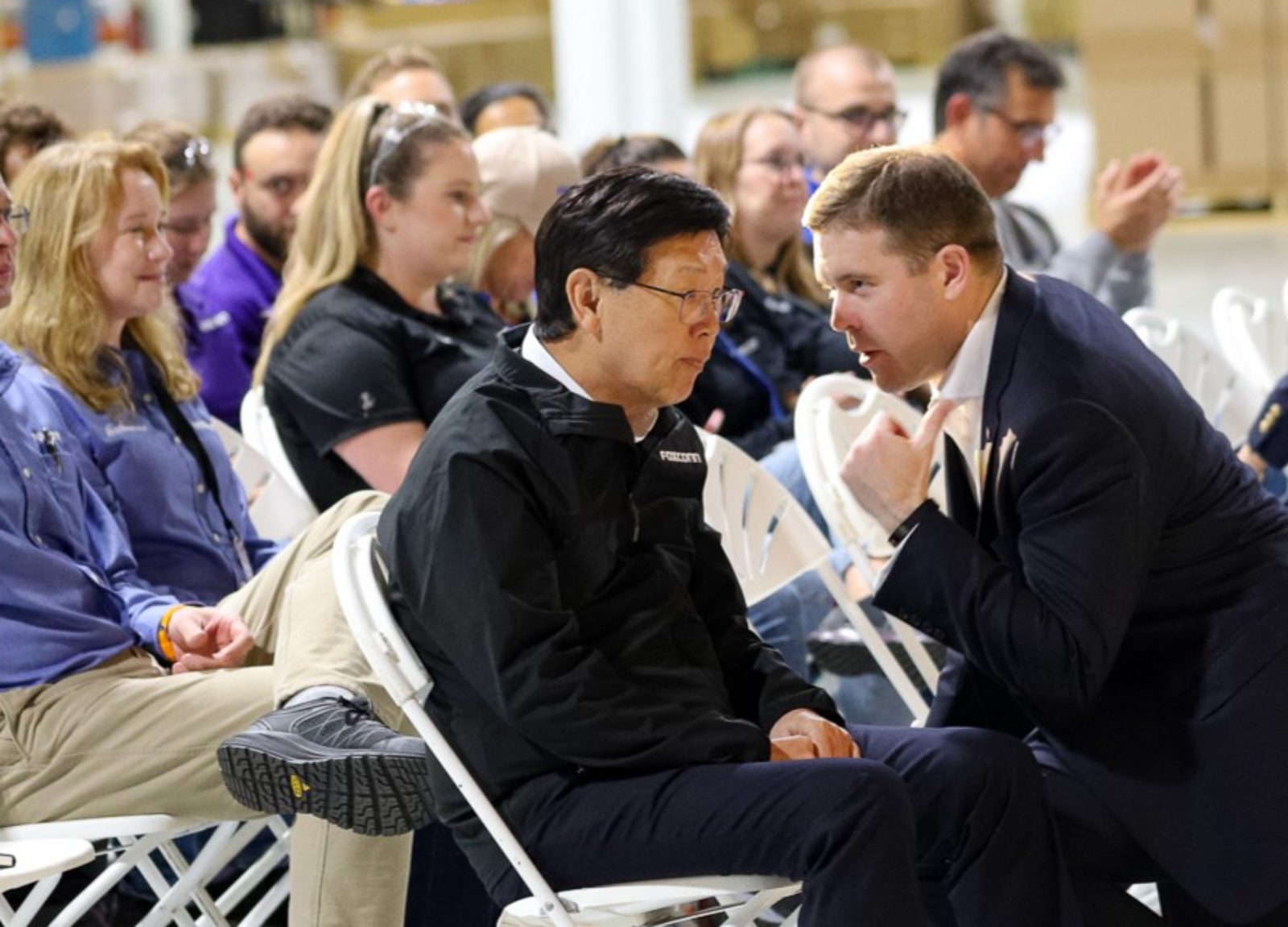 Robert Schlaeger, head of public and government relations for Foxconn's American operations. (Source: Foxconn)
"One of my favorite parts of the job," he says, "is watching people's faces when I tell them that more than 40 percent of the world's servers are made by Foxconn."
25 nationalities, nine languages on site at Czech plant
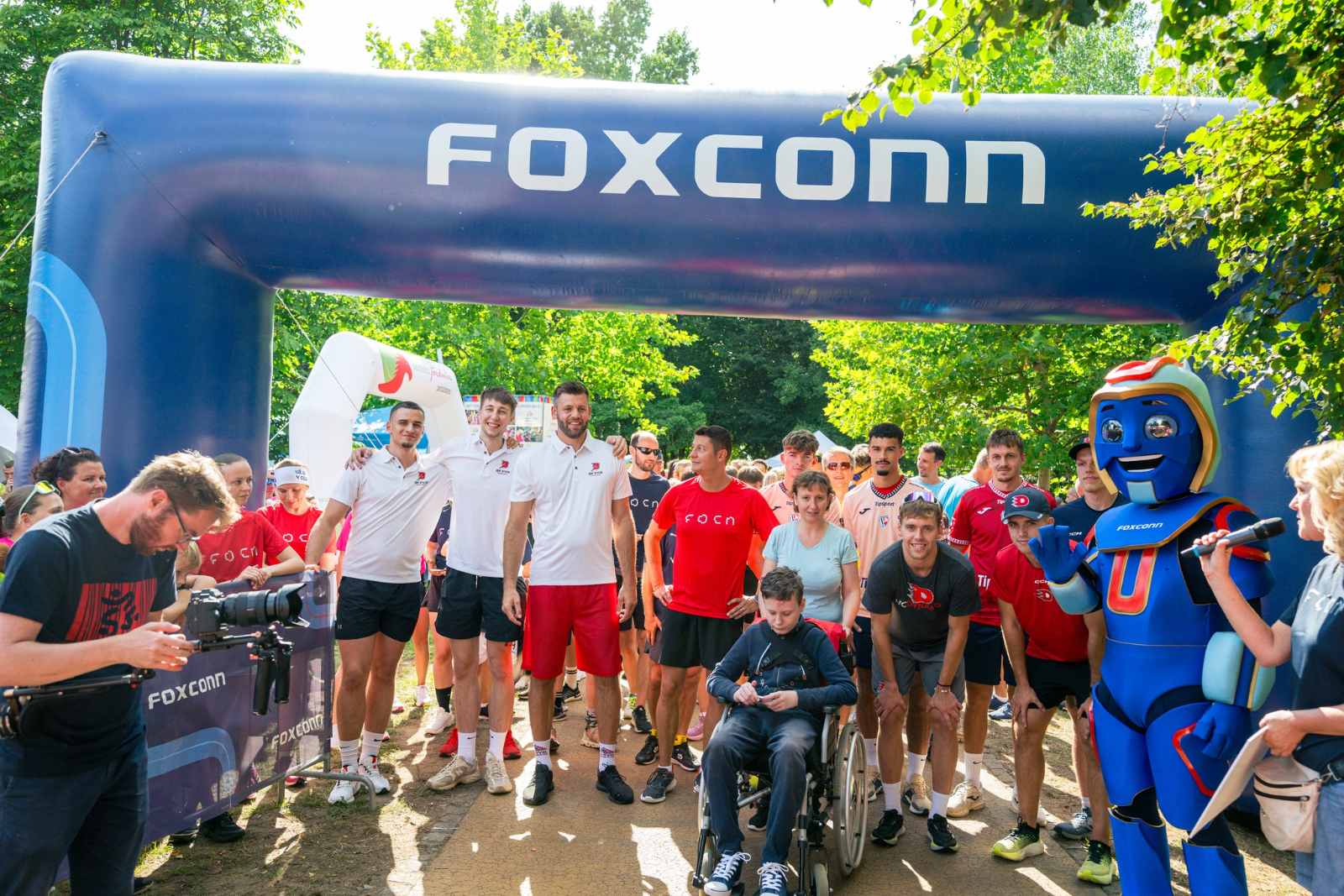 Foxconn's Czech Plant. (Source: Foxconn)
In Europe, Foxconn’s localization takes a different form.
At Foxconn's factory in the Czech Republic, the workforce spans 25 nationalities - with Mongolian and Ukrainian employees making up the largest contingents.
Radka Svobodova, a veteran of over 20 years with the company who oversees legal compliance, spent years helping foreign employees navigate visas, housing, schooling for their children, translation, and legal questions.
The sheer diversity of the workforce makes communication a daily operational challenge. Beyond English and Czech, the production floor operates in nine different languages spanning Mongolian, Ukrainian, Russian, Vietnamese, Polish, Bulgarian, and Romanian.
Critical documents must be fully translated, designated employees on each production line serve as interpreters, and announcements are issued in multiple languages as standard practice.
"For blue-collar workers, you have to communicate important information in a language they understand," Svobodova says.
Masala chai and the art of the tea break
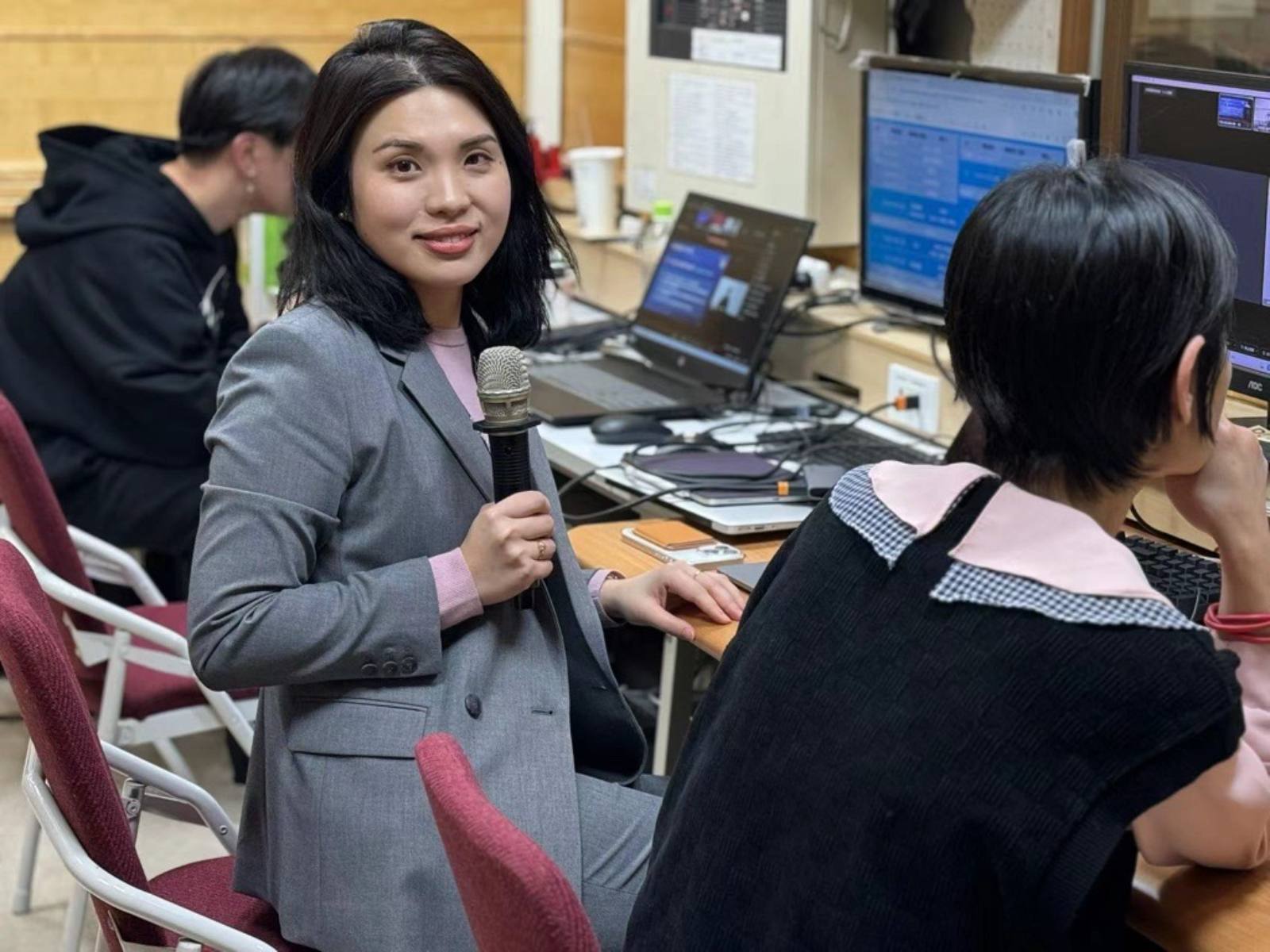 Wang Chung-yun, deputy manager in Foxconn's India operations. (Source: Foxconn)
In India, the management calculus shifts again.
Wang Chung-yun, a deputy manager in Foxconn's India operations who has been based there for seven years, quickly learned that tea is not a beverage - it is an institution. Shaped by British colonial influence, the workplace tea break is deeply embedded in Indian professional culture. Foxconn's India operations schedule two dedicated chai breaks each day, giving employees time to relax over a cup of masala tea and chat together.
Now working abroad in India for seven years, she has learned about the strictness of the country’s labor laws, and employees' deep attachment to family and cultural festivals.
"Overtime is not acceptable [to Indian employees],” she shares. Accordingly, work must be planned well in advance to ensure that extra shifts are not necessary during major festivals..
Mexico plant’s afternoon nap culture, explained
In Mexico, Foxconn has gone further still, placing local talent at the center of operations.
The Mexican factory is a major manufacturing base for North America. Of its roughly 9,000 employees, only 30 are expatriate technicians, and virtually all senior management positions are held by Mexicans.
Hugo Rey, a human resources manager who has been with Foxconn for 22 years, has been instrumental in making this work. When Foxconn introduced AI server production lines in Mexico, waves of technical staff arrived from Taiwan, China, and Singapore to train local teams.
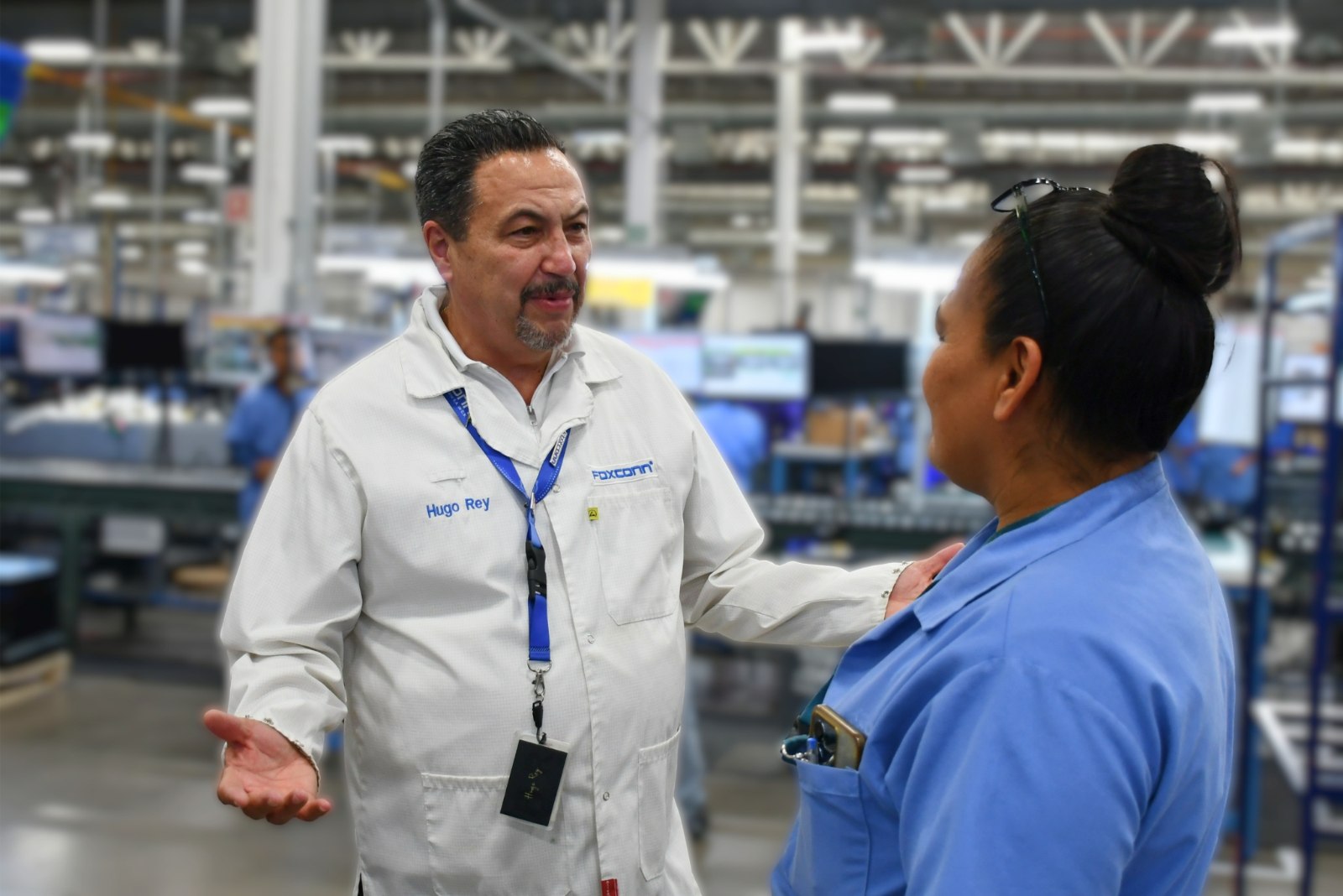 Hugo Rey, human resources manager at Foxconn's Mexico operations. (Source: Foxconn)
Rey positioned himself as the bridge - helping expatriates understand local norms and helping Mexican colleagues make sense of their new counterparts' habits.
One recurring source of confusion: the afternoon nap. Mexican workers, unaccustomed to seeing Taiwanese or Chinese managers dozing at their desks after lunch, were often baffled. Rey would step in and explain. "It's part of the culture," he would say. "It's how they recharge."
His summary of Foxconn's global model is disarmingly simple: "Bring in the talent, work alongside local people, and leave the technology behind. That's how Foxconn has succeeded everywhere around the world."
From the United States to Europe, India and Mexico, Foxconn integrates Taiwanese-style efficiency with local culture to establish different management models across various regions.
This underscores that globalization is not just about replicating the Taiwanese experience, but truly integrating people and culture into a component of business operations.
Have you read?
- How TSMC Made Taiwan the World's Technology Heartland
- Former US Ambassador: Why Vietnam, Taiwan and the US are the Indispensable Triangle in High-Tech Ecosystem
- Why France Chose Foxconn to Build Europe’s Most Advanced Packaging Plant
- How Machine Manufacturer Ta Liang Became a Hidden AI Champion
Uploaded by Ian Huang
Views

Subscribe to CWE Newsletter (every Thursday)
Stay abreast of what's happening in Taiwan with our weekly digest.
Keywords: