How Evergreen Marine Builds a Resilient Fleet Amid Global Volatility
Source:Kuan Hsieh
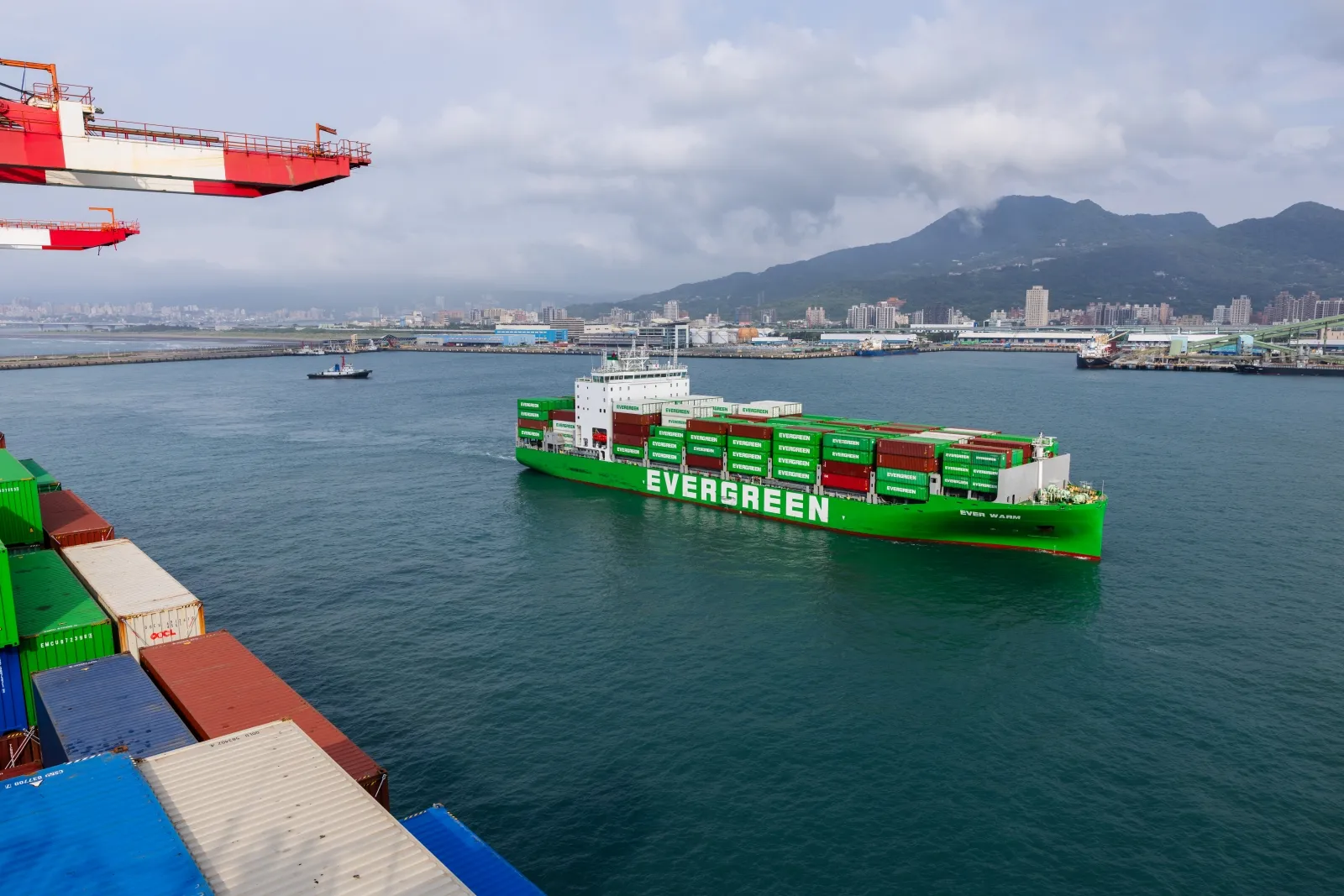
Evergreen Marine may not be the largest, but it's the most profitable shipping company in the world. Facing increasingly frequent black swan events, the company has chosen a heavy-asset path of building its own ships and investing in port terminals. Amid carbon taxes, supply chain restructuring, and the new dynamics of the Global South, how is Evergreen building a resilient fleet?
Views
How Evergreen Marine Builds a Resilient Fleet Amid Global Volatility
By Johann Tsai, Yishan Chenweb only
Shipping has always been a business defined by uncertainty. For Evergreen Marine, which operates 238 vessels daily across worldwide seas and waterways, change is not an exception but a constant.
More than four decades ago, founder Chang Yung-fa launched a worldwide round-trip shipping network connecting Asia, Europe, and the Americas. Today, the operating environment has grown significantly more complex: conflicts in the Middle East have disrupted the Suez Canal route, supply chain restructuring is reshaping the Asian manufacturing landscape, and emerging markets across the Global South are accelerating. Shipping lanes and markets are being continuously redrawn.
Despite ranking only seventh globally in throughput capacity, Evergreen has recorded the highest average profitability among major global carriers over the past five years.
The key lies in consistently deploying before competitors.
Investing early in ships and terminals
After the global financial crisis, the shipping industry endured a decade-long downturn. In contrast, Evergreen chose in 2018 to proceed with capital expansion for shipbuilding. In 2021, it deployed its first 24,000 TEU mega-vessel, one of the largest container ships in the world, significantly lowering unit costs. This positioned the company to benefit from the pandemic-era surge in freight demand.
In the post-pandemic period, port congestion grew in severity. Evergreen expanded its investments in facilities in Egypt, the Netherlands, Singapore, and Kaohsiung’s No. 7 Container Terminal. Combined with existing stakes in ports such as Panama, Los Angeles, Ningbo, and Taipei, the company has strengthened its access to priority handling capacity at major ports around the world.
“Distinctive,” said Ulco Bottema, senior commercial representative at Hutchison Ports Euromax, who has worked with Evergreen for three decades, describing its strategy.
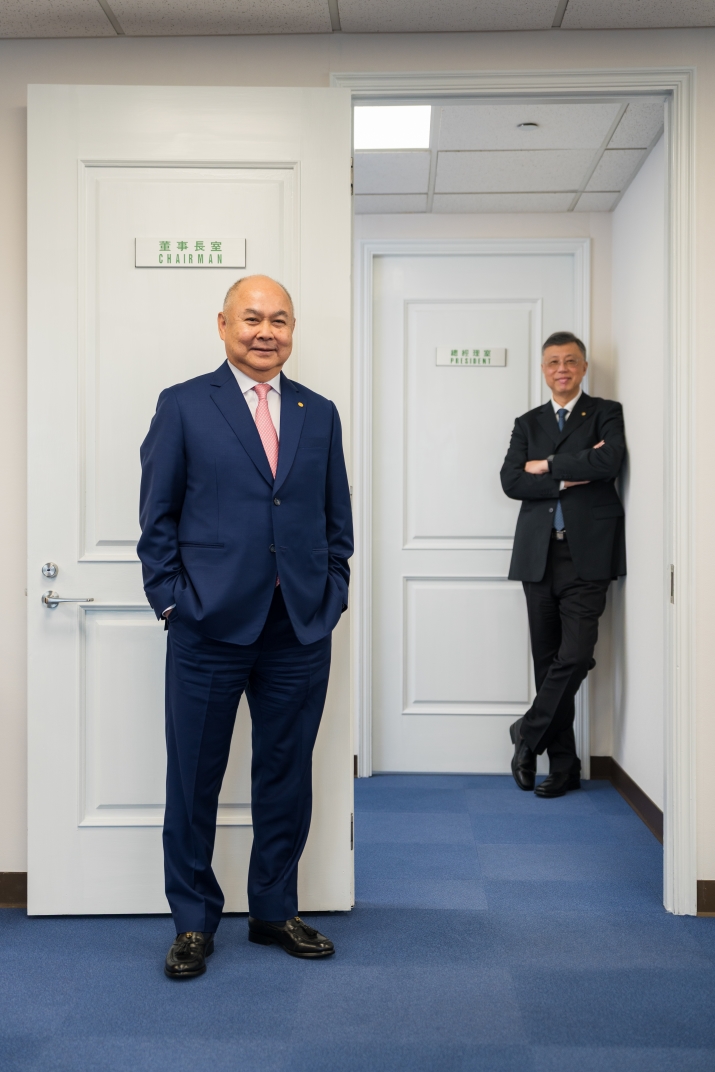 Evergreen Marine has moved toward professional manager-led leadership, with Chairman Chang Yen-yi on the left and President Wu Kuang-hui on the right. (Photo: Kuan Hsieh)
Evergreen Marine Corp president, Wu Kuang-hui, noted that business travel has increasingly taken him to more remote locations. Egypt’s Abu Qir Port, for example, is difficult to access, but if the Suez Canal resumes full normal operation, it could become a strategic gateway to the Mediterranean and East Africa.
Company culture shaped from crew to CEO
Inside Evergreen’s container ships, cleanliness and operational discipline are visibly strict. Unlike many international shipping firms that rely heavily on foreign crews, Evergreen continues to develop much of its own talent pipeline internally.
The company operates a long-standing rotation system between sea and shore roles: captains may move into administrative positions on land, while sales staff spend hands-on time aboard vessels. This cross-functional system is designed to build broader managerial capability. Chairman Chang Yen-yi himself rose through the ranks as a seafarer, and later managed overseas terminal operations.
A distinctive feature of the system is early international exposure. Many employees are eligible for overseas assignments after just three years. According to HR executive Yang Pi-shao, more than 10 HR personnel are currently stationed abroad, reflecting the company’s intent to encourage employees to think from a global rather than Taiwan-centric perspective.
Long-term planning for potential black swan events
“Companies must have flexibility and resilience, but that requires long-term planning as a foundation,” said company president Wu Kuang-hui.
In addition to five- and ten-year planning cycles, Evergreen has recently extended its strategic horizon to 25 years. In a capital-intensive industry, waiting for the market to change before placing orders for new vessels is already too late.
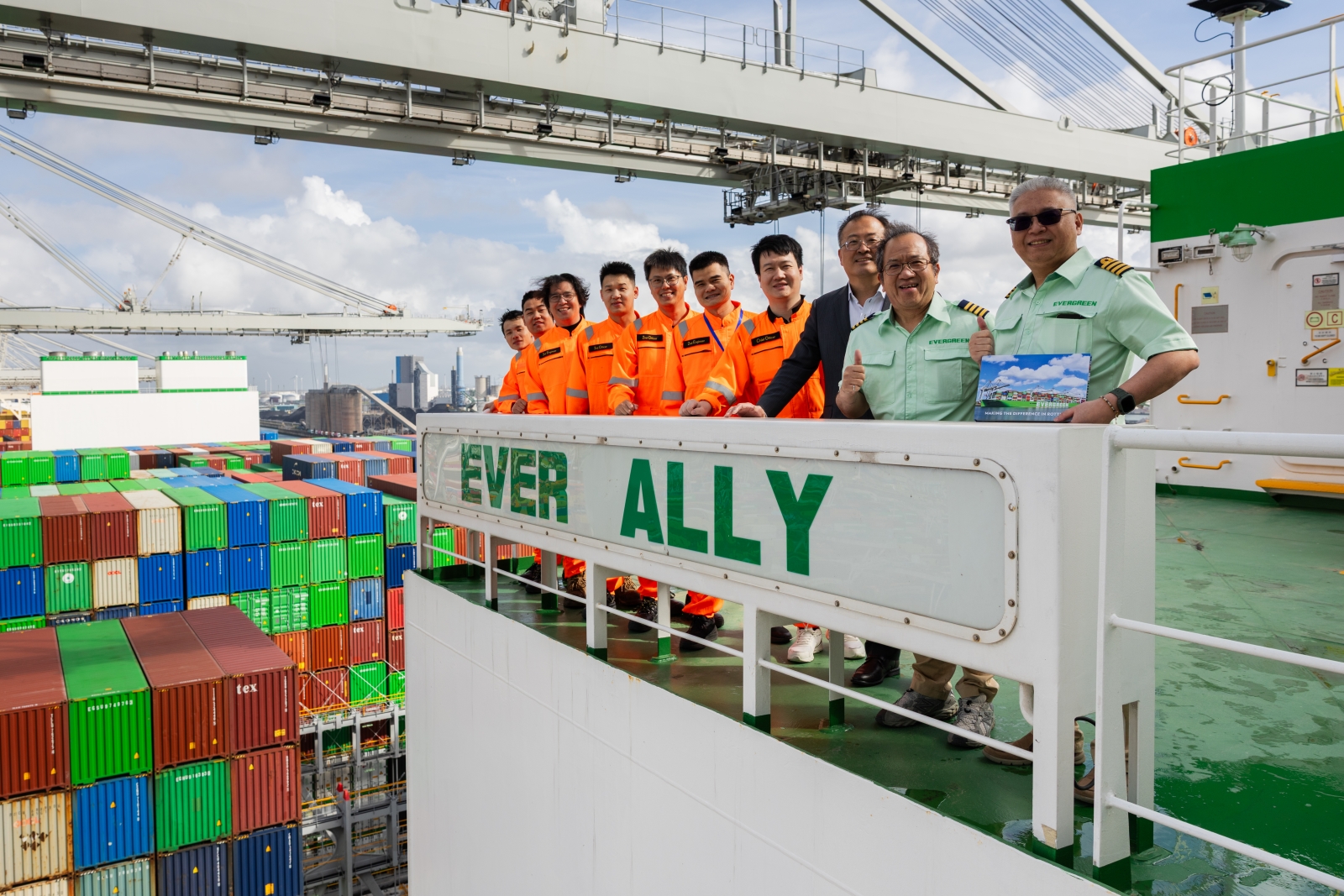 Evergreen has invested in the Euromax terminal in Rotterdam, operated by CK Hutchison, securing priority loading and unloading rights for its largest A-class vessels. (Photo: Kuan Hsieh)
The company’s approach was reinforced in 2016, when Korea’s Hanjin Shipping collapsed. At the time, Evergreen also faced financial pressure. Management concluded that without timely expansion of its large-vessel fleet, the company risked losing competitiveness. With shareholder support, Evergreen launched a capital increase and shipbuilding program that underpinned its subsequent growth.
Its planning framework incorporates economic growth, shipping route demand, port conditions, CO2 emissions regulations, and emerging energy technologies.
To comply with EU carbon pricing mechanisms, Evergreen has ordered 55 dual-fuel vessels capable of running on methanol or liquefied natural gas. At the same time, the company is evaluating hydrogen and ammonia power to avoid overdependence on a single fuel pathway.
Business cards reflect company reform
Another significant shift in recent years is organizational restructuring.
“Have you noticed our business cards?” Wu Kuang-hui asked, provocatively.
Whereas older business cards listed complex internal hierarchies and titles, current versions display only functional roles and responsibilities. The change reflects a broader push toward flatter organizational structures and clearer accountability.
Decision-making processes have also been revised. Departments are now required to prepare comprehensive materials in advance, and all relevant units must actively contribute in meetings rather than passively receiving instructions.
During this year’s US-Iran conflict, three Evergreen vessels were located in the Persian Gulf. The regional managers immediately reported the situation to headquarters, triggering an emergency meeting. Cross-departmental teams convened, finalizing an action plan within four hours, significantly shortening the decision cycle.
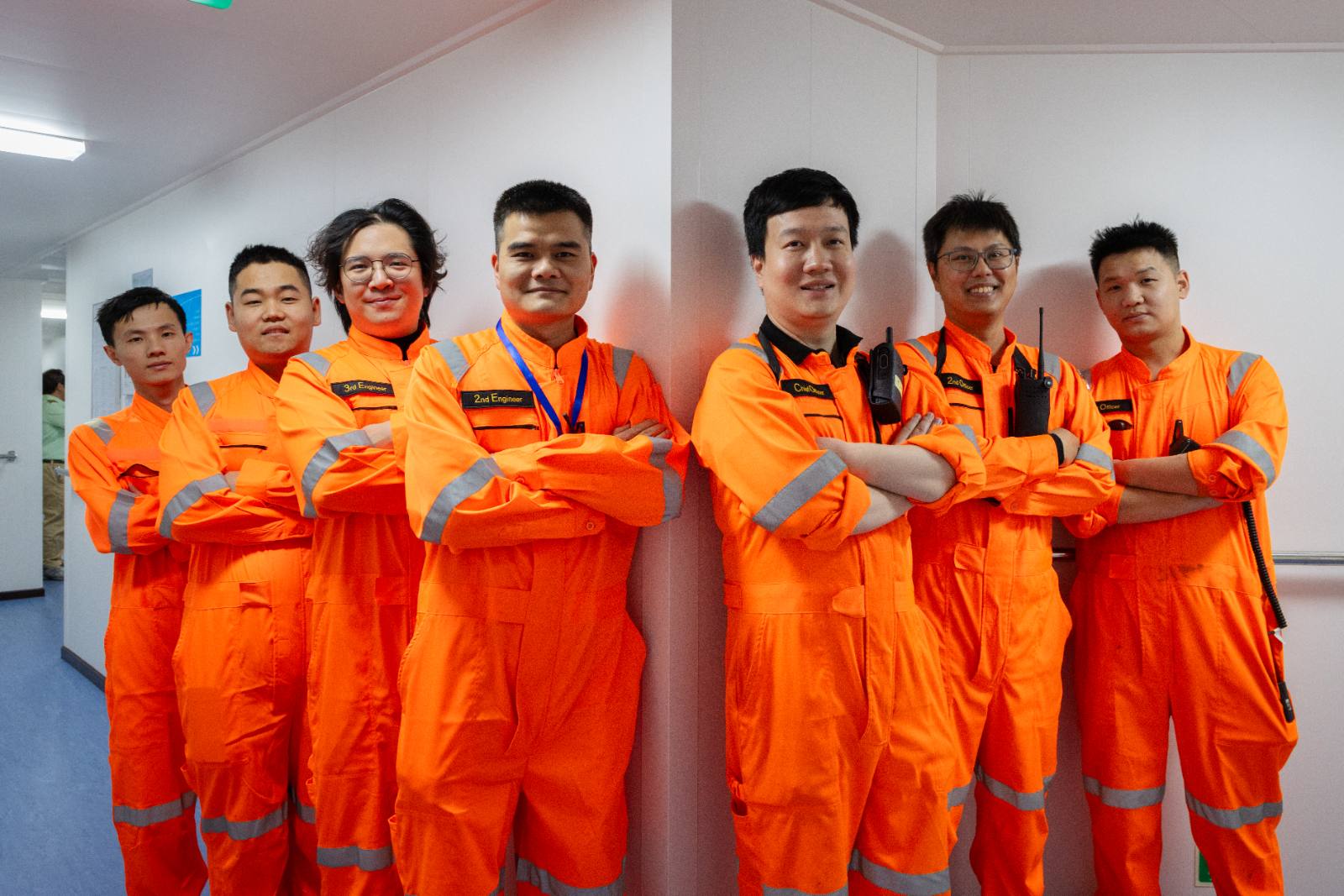 Evergreen Marine's Rotterdam team (Photo: Kuan Hsieh)
The company’s planning division also organizes operations by regional markets, reviewing profitability on a weekly basis instead of monthly - intensifying operational discipline.
Competing for (competitive) strength, not size
Amid global supply chain restructuring, Evergreen has observed that while China’s share of exports to the US has declined, total Chinese exports have not contracted. Instead, the flow has expanded toward South America, the Middle East, Africa, and India.
“Taiwan often talks about ‘China plus one,’ which reflects an American perspective. From China’s perspective, it is ‘US + N,’” said Wu Kuang-hui.
In his view, global trade has not shrunk; rather, it has been reconfigured across routes and nodes. This structural shift underpins Evergreen’s continued investment in vessels and port infrastructure.
This year, Evergreen’s capacity is set to exceed two million TEU, with a target of nearly three million TEU within five years.
“We do not aim to be the world’s largest. But we must grow every year,” asserts Wu.
Faced with the possibility of black swan events, Evergreen is relying on long-term strategic planning, granular operational management, and internationally-oriented talent development to build a resilient fleet capable of navigating both economic cycles and geopolitical turbulence.
Have you read?
- Vietnamese Women in Taiwan Build Billion-Dollar Nail Studio Niche
- Will Amazon’s Bazaar Win Taiwan’s Budget Battle?
- Can Student Interns Keep Taiwan’s Hotels Running?
Translated by David Toman
Uploaded by Ian Huang
Views

Subscribe to CWE Newsletter (every Thursday)
Stay abreast of what's happening in Taiwan with our weekly digest.
Keywords: