Taiwan Blockchain Startup Xrex Got a License in Singapore, What’s Next?
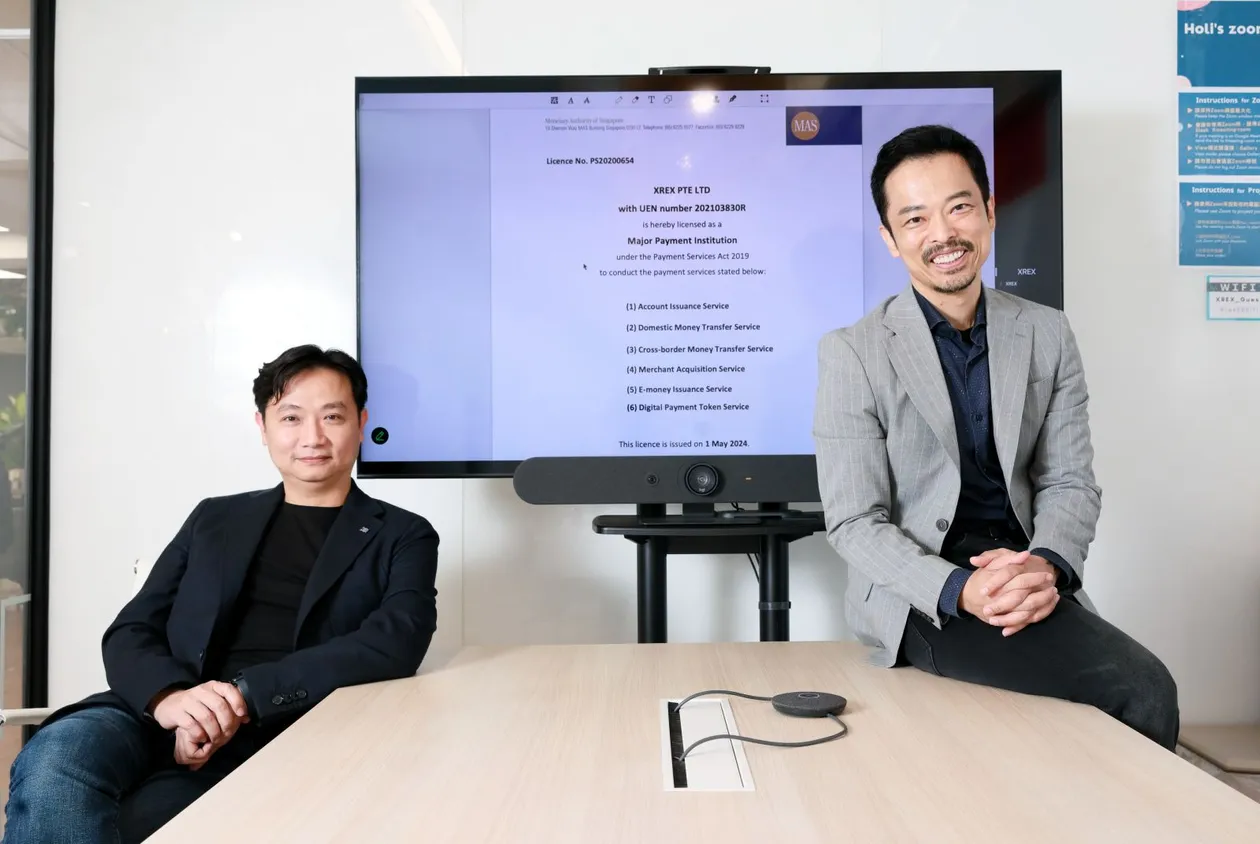
Source:Chien-Ying Chiu
Taiwanese startup Xrex has secured a major payment institution license in Singapore. There are only four of such licenses globally. With expertise in cybersecurity and connections in India, they aim to combat black market transactions through innovative services.
Views
Taiwan Blockchain Startup Xrex Got a License in Singapore, What’s Next?
By Lisa LinFrom CommonWealth Magazine (vol. 799 )
Six years ago, Wayne Huang (黃耀文) made a bet that led him from being a cybersecurity expert to entering the blockchain industry.
He saw the potential for explosive growth of stablecoins pegged to the US dollar in emerging markets. So, he left his position as vice president of engineering at a listed American company, returned to Taiwan, and founded the blockchain startup Xrex.
At the time, most cybersecurity professionals entering the blockchain sector focused on software for cash flow tracking and analysis tools. Huang was different. Through his work, he frequently traveled to India and noticed that traders knew little about cryptocurrencies and blockchain, but were aware that the USDT, a stablecoin pegged to the US dollar, was as good as the US dollar and widely accepted.
Together with his co-founder, Winston Hsiao (蕭滙宗), who grew up and studied in India and specialized in cross-border trade, Huang decided to focus on the Indian market.
They aimed to leverage the borderless nature of cryptocurrencies like Bitcoin, Ethereum, and USDT and make cross-border payments based on stablecoins pegged to the US dollar possible.
Despite identifying a problem to be solved, the truth was that different countries had different rules about cross-border transactions. This was not something that could be fixed solely with new technology, and so their company could not expand quickly or win big customers.
This changed in May this year when Xrex’s branch in Singapore obtained a major payment institution (MPI) license from the Monetary Authority of Singapore (MAS). This license permits six types of activities, including account opening, domestic and international remittances, acquiring transactions, issuing electronic money, and making payments with digital currency.
Globally, the MAS has only licensed four companies to engage in these six activities. In effect, Huang now owns a small bank. As the global blockchain industry enters a prolonged squeeze, how was a Taiwanese startup able to achieve all this in three years?
Solving Today's Financial Service Challenges
Xrex securing the license signified the regulators' desire for blockchain entrepreneurs to use technology to address the issue of “rigid demands” in the market.
In the past, converting Indian rupees to US dollars through banks was slow, expensive, and a pain in the neck. When receiving remittances from abroad, banks would go as far as to ask customers to write their own anti-money laundering statements to prove that the money was clean.
In markets like India, stablecoins pegged to the US dollar have long been highly valued, reflecting significant demand for US dollars. Hsiao understood the traders' pain point with regard to managing exchange losses. Blockchain-based cross-border payment services offered transparency, immediacy, better exchange rates, and helped small and medium-sized enterprises (SMEs) maintain transparent ledgers. “We wanted to do everything according to the rules, we wanted to ensure customer satisfaction, and we wanted it to become an official part of accounting systems,” he says.
And yet, even with the technology and the ideas, Huang and Hsiao quickly discovered there were many more issues to solve when it came to cross-border payments. They needed to obtain licenses and work with local banks to develop such an automated service. With this in mind, Huang began researching the laws and regulations.
In 2019, the MAS was put in charge of overseeing cryptocurrency operators. Huang points out that Singapore is a source of financing for not only India but the entirety of Southeast Asia. The MAS wanted not just the local banks, but also players in the major leagues to apply for licenses.
With the license issued by the MAS, Xrex could operate like and work with conventional banking services. It could open accounts, issue bank cards, exchange money, and transfer money. Its users could get their cash whenever they wanted it.
Collaboration with Banks Necessitates Clean Money
The second significant aspect of Xrex obtaining the license is their collaboration with, rather than replacement of, traditional banks. But for startups to cooperate with banks, they must comply with anti-money laundering regulations, as any dirty money flow can result in the freezing of bank accounts linked to the users.
Before approaching the MAS, Huang recruited many talents from conventional financial firms, including former Standard Chartered Executive Director Christoper Chye (蔡日宏), who oversaw measures against financial crime, to serve as Xrex’s Managing Director in Singapore; and Senior Risk Specialist at the Federal Reserve System, Michael Shing (邢智超), to develop Xrex's risk management model.
"The licensing process is a test that cannot be retaken," Huang says. Any record of failed applications makes it difficult to reapply. Even the background of company investors and whether they have ever failed in applying for relevant payment licenses globally is considered by the MAS.
Xrex was given a six-month deadline to complete the overwhelming technical tasks, including establishing a local data center and system in Singapore, setting up personnel access control, proving compliance with anti-money laundering laws, establishing trust bank connectivity, and more. Over a series of interviews and meetings, the MAS even advised Xrex on business directions, such as creating the digital check BitCheck for online payment guarantees.
Following the rules was only the first step. Communicating with the officials not only required finding a common ground with them, but also a common interest. Especially for an outsider looking to enter the market, Xrex needed to prove to the gatekeepers what benefits they could bring. Fortunately, Xrex’s successes in Taiwan showed that they had what it took.
Proving Credibility to Singapore Regulators
In September last year, Xrex officially launched deposit services for Taiwanese dollars, allowing users to link their Taiwanese bank accounts to buy and sell cryptocurrencies with Taiwanese money. Subsequently, a bevy of scam groups began to swarm.
"By October and November, 80% of new registrations were from scam groups, causing long delays for genuine users," recalls Yoyo Yu (尤芷薇) Senior Director at the CEO office at Xrex. . If scammers had infiltrated successfully, they would have injected dirty money into Xrex’s cash flow, posing an existential threat to the company.
After a lot of study, Huang realized that scam groups were a societal issue. He dedicated 90% of his time to anti-fraud efforts, developing systemic tools to remove the stigma of cryptocurrencies being used as criminal tools Not only did this enable financial institutions to operate normally, but it also addressed social problems.
Huang is not the only cybersecurity expert on the team. Xrex’s Chief Security Officer, Sun Huang, is a former employee from Huang’s first company. They are part of a group of white-hat hackers who previously launched attacks targeting Russian and North Korean hackers, dissecting the rogue players’ tools and methods and publishing the information in a cybersecurity report, which gained them significant recognition in the cybersecurity field.
They applied similar detection methods against scam groups, making deep analyses and accumulating evidence and preparing counterattacks. Internally, Xrex has started using several self-developed systems for automatic detection, manual judgment, and a self-built blacklist database, achieving a 99.8% accuracy rate in identifying suspicious accounts within 72 hours.
They also partnered with European anti-money laundering firm Crystal Intelligence to develop a Line Chatbot system for free use by law enforcement. Simply by inputting a wallet address, it can automatically identify the exchange the transaction originated from and the risk level, allowing direct contact with exchanges to seize criminal accounts. Through identification on the Taiwan Stock Exchange and labelling the methodology of financial crimes in Asia, this helps to significantly enhance the efficiency of law enforcement investigations.
The problems and loopholes of new technologies must be solved by new technology. These anti-fraud tools could even become a new product line for Xrex, serving as essential equipment for blockchain-based financial institutions. Countries like Cambodia, Malaysia, and the Philippines are exploring international cooperation possibilities.
Can Cybersecurity Become Taiwan's Advantage in Blockchain?
With a banking-like license, Xrex can move beyond the cryptocurrency realm. For example, before creating the digital check BitCheck, users on both ends had to possess cryptocurrencies, but now it is no longer necessary. "The user experience is ten times better as a result, and accounting is no longer an issue," Hsiao says.
Having lived in India for many years, Hsiao’s real ambition is to connect India’s financial system to the rest of the world. "Our true competitor is the black market. India is excluded from the mainstream financial system, and yet it is the largest emerging economy. It’s time to leverage new technology to return the country to the right path."
Jaclyn Tsai (蔡玉玲), Chairwoman of Taiwan FinTech Association, believes that Taiwan could lead in the cybersecurity aspect of blockchain-related financial services and potentially drive the development of the entire industry.
If other companies connected their services to Xrex and a fit-all solution was discovered, they could export the whole solution to other countries. In the future, Taiwan could become an integrated financial technology solution provider.
Future products and services will still need more market validation and testing. But Xrex is already standing tall at the starting line, poised for growth.
Have you read?
- Why Taiwan ETFs Are Breaking Records
- Why NVIDIA developer conference fails to boost stock price
- Taiwan ETF growth tops the world, highlighting three major risks
Edited by Jack Chou
Uploaded by Ian Huang
Views

Subscribe to CWE Newsletter (every Thursday)
Stay abreast of what's happening in Taiwan with our weekly digest.
Keywords: