From a 1989 Exchange Trip to Canada's Taiwan Envoy: Marie-Louise Hannan's Case for Canada in Taiwan
Source:Taiwanology
Marie-Louise Hannan first came to Taiwan in the summer of 1989 as a Mandarin student in Hangzhou, rerouted to the island after Tiananmen upended her semester. Three decades later, she is back as top Canadian envoy in Taipei. With Prime Minister Carney calling on middle powers to unite, can Canada and Taiwan together prove that smaller players have more agency in a fracturing world order?
Views
From a 1989 Exchange Trip to Canada's Taiwan Envoy: Marie-Louise Hannan's Case for Canada in Taiwan
By Taiwanologyweb only
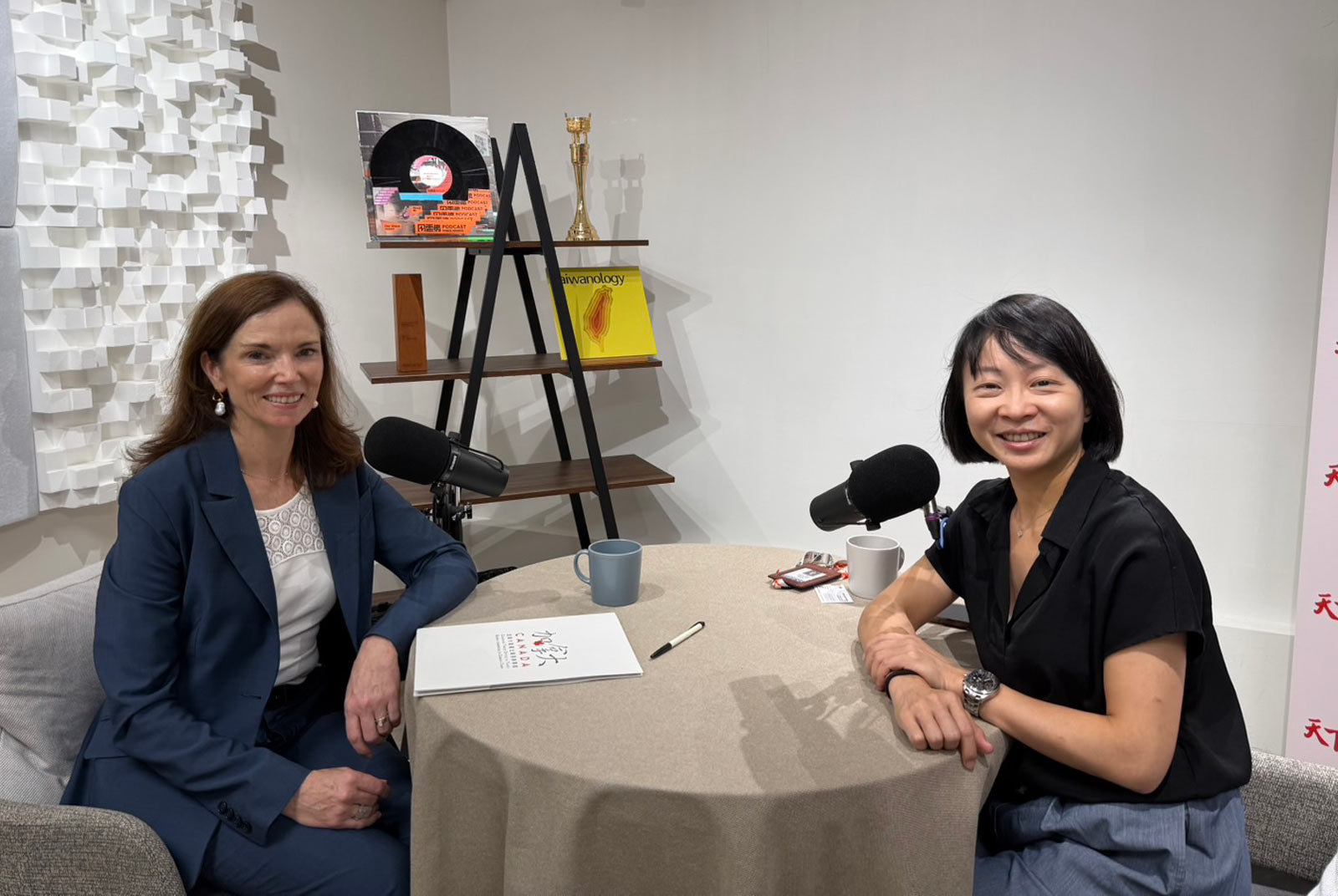
The following is an edited transcript of the latest episode of the Taiwanology podcast. It was produced by CommonWealth Magazine, hosted by Kwangyin Liu, and first aired on June 23, 2026. The guest was Marie-Louise Hannan, Executive Director of the Canadian Trade Office in Taipei.
Listen to the episode: Canada's Envoy on Taiwan: When the World Fractures, Middle Powers Lean In【Taiwanology Ep. 61】
First Contact: Tiananmen, Hangzhou, and Taiwan
"It's really hard to answer this question without sounding terribly old," Hannan says of her first trip to Taiwan, in the summer of 1989.
That first encounter was, in every sense, accidental. Hannan had come to Asia with a group of McGill University students studying Mandarin at Zhejiang University in Hangzhou when Tiananmen happened. "It was, of course, a time that was very destabilizing," she recalls. "We didn't know what was going to happen, and we thought it could lead to more civil unrest. So the university decided it wasn't a good idea for us to continue."
The group flew to Hong Kong, regrouped, and a number of them crossed to Taiwan to finish the term's language credits. They lived at the Jiantan Youth Activity Center, near the Grand Hotel, before Taipei had its MRT, before smartphones, before any of the infrastructure that makes the city legible to outsiders today.
"We had real-life experiences, meeting real people and doing real things and trying new foods," Hannan says. "But if you scratched below the surface, we noticed that the students were organizing and protesting. It got a little bit louder as the weeks went on."
The contrast between a month in Hangzhou and a month in Taipei, both observed through the eyes of students navigating a shared language, left an impression that stayed with her.
On a hike up Yangmingshan, a fellow hiker asked the group: "Have you been to the other China?" "I thought that was a very interesting way to put things," she says.
From Computational Linguistics to the Foreign Service
Hannan first studied computational linguistics, not international relations; the path into diplomacy was not a straight line. She had been working at a government-funded research center in Canada when budget cuts forced a decision: pursue a PhD and an academic career, or take a leap. "I thought, well, I think this is the time to apply for the Canadian Foreign Service, see how it goes," she says. "I thought I would try it for a year or two, and it is now several years later and I'm still doing this."
The funding cut that ended a research career opened the door to a diplomatic one that has now spanned continents and portfolios, and, as of nine months ago, returned her to the island where she first began studying Mandarin.
Forty Years of Canada-Taiwan Relations, and Further Back
"I would really start by characterizing the relationship as a very important one in people-to-people relations," Hannan says of the 40 years since formal ties began. "That's the heart of what's important between Canada and Taiwan."
But the relationship goes back much further than 1986, to Dr. George Leslie Mackay, a missionary from Oxford County, Ontario, who arrived in Taiwan in 1871, married a local Indigenous Taiwanese woman, founded what is now Aletheia University (then called Oxford College, after his hometown), and brought medicine and education, particularly for girls, to Indigenous communities in northern Taiwan. MacKay Memorial Hospital in Taipei still bears his name.
"An aspect we don't hear about very much is how much education he brought to girls," Hannan says. "And that's an interesting reflection of Canadian values, and I wouldn't have imagined that would have been a value back in 1871, but it looks like it was."
The more recent institutional story of the Canadian Trade Office begins less grandly: a Scotiabank branch manager in Taipei, surrounded by a small community of Canadian expatriates, realized that without a formal government presence, Canadians in trouble had nowhere to turn. He and his colleagues petitioned Ottawa. The office that resulted started with three people, one Canadian, two locally engaged. Today it employs 53.
Trade, Investment, and LNG
Taiwan still draws roughly 97% of its energy from outside its borders. "Taiwan really needs to diversify its source of supply, and Canada is looking to diversify where we sell energy," Hannan says.
Canada is the world's fourth-largest oil producer and fifth-largest natural gas producer, but until recently was constrained to selling almost exclusively to the United States. The first LNG cargo from Canada's West Coast shipped to South Korea in June 2025, marking a structural shift in Canadian energy exports.
The Heilong offshore wind project off Changhua County is already one of Canada's largest investments anywhere in Asia. On LNG, Hannan laid out a pipeline of projects: LNG Canada Phase 1 is already exporting; Woodfibre LNG comes online in 2027; Cedar LNG in 2028; LNG Canada Phase 2 and the Indigenous-led Silisim project in 2031. All of these West Coast terminals, she notes, sit geographically closer to Taiwan than any route through the Panama Canal.
"Over the past three months, since the conflict involving Iran and the blockage of the Strait of Hormuz, we have to be more orderly and organize priorities in terms of who we can talk to," Hannan says. "These are not simple projects. This is not a product on a shelf ready to sell."
On the broader trade picture: Taiwan is currently Canada's 15th-largest overall trading partner and sixth-largest in the Indo-Pacific. Two-way merchandise trade runs to around $10 billion annually; services trade adds another $2 billion. Taiwan has invested over $7 billion in Canada, making it Canada's seventh-largest source of foreign direct investment, with anchor investors including Bora Pharmaceuticals, TSMC (which operates a design center in Ottawa), and WT Microelectronics, which recently acquired the Canadian distributor Future Electronics.
The Indo-Pacific Strategy and Taiwan as Key Partner
Canada released its Indo-Pacific strategy in 2022. "It was the first ever comprehensive, whole-of-government Indo-Pacific strategy Canada has put out," Hannan says, "and it's meant to last ten years, which you don't very often get."
The strategy rests on five pillars: peace, resilience, and security; trade, investment, and supply chain resilience; investing in and connecting people; a sustainable and green future; and positioning Canada as an active partner in the region. Taiwan is identified in the document as a key partner, not just economically, but as a like-minded democracy committed to rule of law and innovation-driven growth.
Since 2022, Canada has prioritized the first two pillars most heavily. The most tangible development on the security side: Canada became a full member of the Global Cooperation and Training Framework (GCTF), the multilateral platform that Taiwan and the United States co-founded to share governance expertise with partner countries. "Even just the fact that we are now a full member of GCTF, and we're joining forces with other partners and with Taiwan to share experience on issues that affect Taiwan's security, that's one of the concrete things we've been doing since launching the strategy," Hannan says.
On the commercial side, the Canadian Trade Office has expanded its team to 19 people working across multiple sectors, and has formalized new arrangements with Taiwan on science, technology, and innovation cooperation, foreign investment protection and promotion, and supply chain resilience. A Taiwan delegation is heading to a Canadian security and defense gathering in Ottawa, for the third time.
Middle Powers and the Carney Doctrine
Prime Minister Mark Carney's remarks at Davos earlier this year on middle powers standing together have had outsized reach. "The speech has been viewed millions of times online," Hannan says. "He was talking about the era we're living in right now: great power rivalry, the international system in a state of rupture."
Carney's core argument, that middle powers have agency, that nostalgia is not a strategy, and that resilience comes from working together rather than waiting for large powers to set the terms, resonated in Taiwan in ways Hannan says she could feel on the ground. "He's often said that we can't be nostalgic for the way things used to be, because nostalgia is not a strategy," she says. "And that middle powers have their power, they're not powerless. By working together, we can overcome some of the challenges we're seeing in the world today."
Canada's response, she says, has been structural: accelerating infrastructure projects, launching the Canada Strong Fund as a sovereign-style co-investment vehicle for nation-building projects, scaling up defense spending and rebuilding its defense industrial base, and redoubling engagement with NATO and the EU.
Life in Taiwan: Vegetarians, Safety, and a Husband Who Built the HSR
The conversation ended on lighter ground. Hannan called Taiwan one of the most vegetarian-friendly places she has lived, on a par with India, pointing to a culture of part-time vegetarianism tied to the lunar calendar's first and fifteenth days that keeps meat-free options everywhere.
Her husband, whom she met during a previous posting to Taiwan in the early 2000s, had come from the UK to work on the Taiwan High Speed Rail project, part of a large international engineering community the project drew to the island at the time. The two married in Taiwan during that first posting; when the current assignment came up, she says, she had a very enthusiastic travel companion.
Asked what surprised her most about returning after more than two decades: "Just how safe Taiwan is still. You can still feel so safe here, very, very low rates of any kind of petty crime. Taiwan has a social contract among citizens that they're going to preserve a very harmonious way of life. You can leave your iPhone on the table and go out for half an hour, and when you come back to the coffee shop, the phone will still be there. That really doesn't exist in many other places in the world."
About the guest:
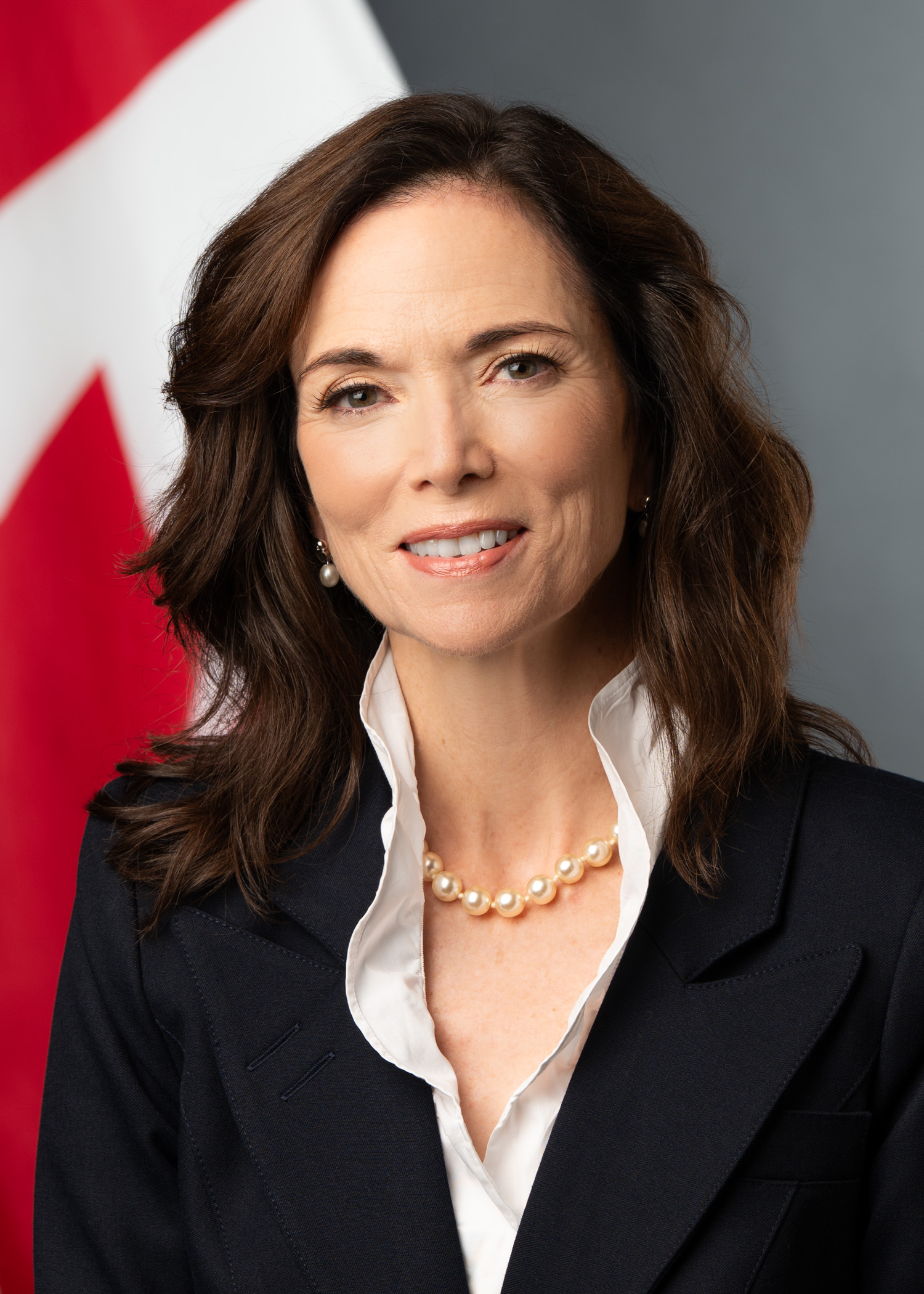
Marie-Louise Hannan is the Executive Director of the Canadian Trade Office in Taipei.
Have you read?
- Can Civic AI Save Democracy Before Algorithms Destroy It?
- Will Europe Choose Taiwan as Trust in China Fades?
- Taiwan’s Growing Climate Voice at Brazil’s COP30
Uploaded by Ian Huang
Views

Subscribe to CWE Newsletter (every Thursday)
Stay abreast of what's happening in Taiwan with our weekly digest.
Keywords: