Taiwan’s Next Democratic Chapter
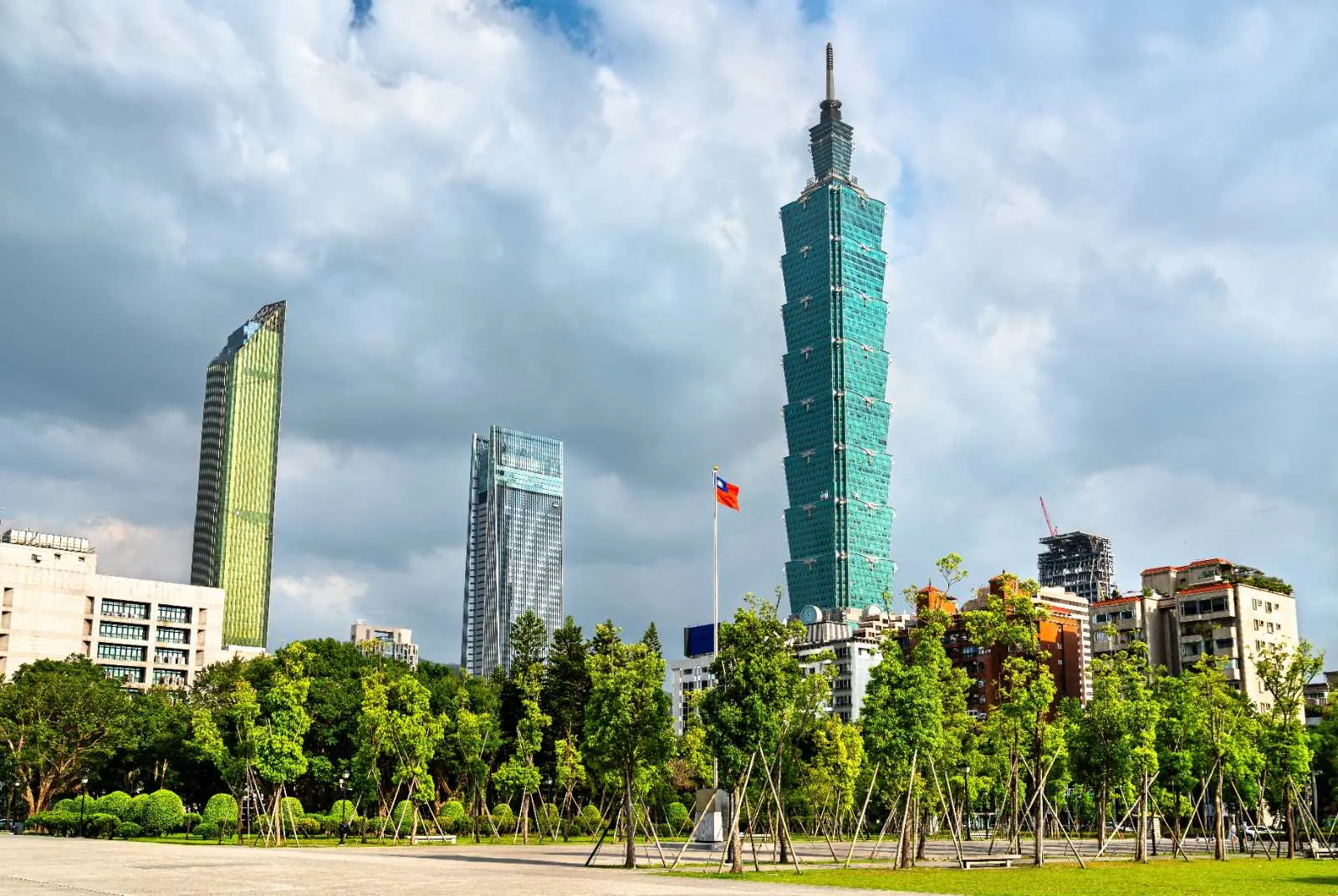
Source:Shutterstock
Six months ago, US President Trump took a sweeping axe to the international aid budget, sparking global concern. What has happened since this upheaval? And why does Damon Wilson, president of the National Endowment for Democracy, see it not as a political disaster, but as a sign of democracy's health?
Views
Taiwan’s Next Democratic Chapter
By Damon M. Wilsonweb only
This is my fifth visit to Taiwan since becoming President of the National Endowment for Democracy (NED). No place outside the United States has occupied more of my time. I return because Taiwan reminds the world that freedom can endure—even under extraordinary pressure.
This year offers a fitting moment to reflect on that achievement. Just days ago, Americans celebrated the 250th anniversary of our nation’s founding and reaffirmed the enduring ideals expressed in our Declaration of Independence: that liberty belongs to people and that free citizens have both the right and the responsibility to shape their own future.
This year also marks the 30th anniversary of Taiwan’s first direct presidential election—a milestone that affirmed those same democratic ideals in Taiwan’s own unique way.
Although separated by history, geography, and culture, our democracies are connected by a common belief: that ordinary people should determine their own destiny.
That belief lies at the heart of the National Endowment for Democracy.
For more than four decades, as a grantmaking institution, NED has partnered with grassroots organizations, independent media, civic associations, entrepreneurs, labor unions, scholars, local leaders, and countless ordinary citizens working peacefully to strengthen freedom in their own societies. Last year we supported more than 1,550 projects pursuing democratic objectives across more than 90 countries.
We do not seek to export an American model. Rather, we support people as they pursue the universal aspirations for dignity, self-government, opportunity, and accountability in ways that reflect their own histories, cultures, and choices.
Today, freedom faces profound challenges. The number of free countries has declined, civic space is shrinking even in some nominally free societies, and many democratic actors have lost confidence. Most worrying, authoritarian powers are working together more closely than ever to reinforce repression at home and export it abroad. For many who seek to advance democracy, this coordinated authoritarian challenge is both new and deeply unsettling.
That is why Taiwan’s experience matters for the world.
In an era of declining freedom, Taiwan stands as a sign of contradiction having built one of the world’s most vibrant democratic societies while facing sustained military pressure, political coercion, economic intimidation, cyberattacks, propaganda, and efforts at external interference. Yet Taiwan has not only endured—it has flourished.
During my visits both to Taiwan and around the world as NED president, I have become convinced that Taiwan’s greatest strategic asset is this democratic story—and that its next chapter can be written by helping strengthen democracy beyond Taiwan’s shores.
First, Taiwan is already emerging as a global hub for democratic resilience.
During the past week, I have seen researchers, journalists, civic innovators, technologists, and policymakers gather in Taipei at the largest China in the World Summit ever convened. The China in the World initiative is a long-term effort to support those studying how the Chinese Communist Party (CCP) affects democracy, the rule of law, and national sovereignty in their own countries. By bringing these partners together in Taiwan, we are helping build a global community of practice that accelerates learning, shares practical responses, and demonstrates solidarity among those confronting common challenges.
These types of global gatherings are becoming increasingly precious. In May, the CCP effectively coerced the cancellation of the world’s largest digital rights conference, RightsCon, in Zambia. And the CCP has sought to cancel or disrupt similar human rights gatherings in Africa, Latin America, Southeast Asia, and even Europe. As global civic space shrinks, Taiwan can become an invaluable hub for the world’s most dedicated changemakers—journalists, civic innovators, technologists, policymakers, scholars, and civil society—to meet and collaborate without interference.
Second, Taiwan is increasingly demonstrating its democratic leadership by becoming not only a democracy worthy of the world’s support, but also an actor that strengthens democracy around the world.
As Taiwan has expanded its international engagement, NED and our four Core Institutes (the International Republican Institute, the National Democratic Institute, the Center for International Private Enterprise, and the Solidarity Center) have sought to deepen partnerships with Taiwanese institutions, including the Taiwan Foundation for Democracy, Taiwan ICDF (International Cooperation and Development Fund), and innovative civil society organizations. Our goal is not to shape Taiwan’s role, but to support Taiwanese-led efforts that strengthen democratic resilience around the world.
Together, we are co-investing in democratic resilience well beyond Taiwan. Our partnership has already supported courageous citizens confronting extraordinary challenges in Ukraine, women in Afghanistan, and other democratic actors across the Indo-Pacific and the Middle East. Looking ahead, we seek to expand our cooperation in Latin America and the Pacific Islands, while strengthening collaboration on secure critical supply chains and exchanges connecting Ukrainian civic leaders with Taiwanese civil society. We are also deepening cooperation to better understand and respond to the CCP’s intensified efforts to repress dissent beyond its borders (a burgeoning phenomenon known as transnational repression).
Together, we are helping build stronger global democratic networks. For example, Taiwan Foundation for Democracy’s Global Initiative for Local Democracy (GILD) recognizes that democratic innovation often begins closest to the people it serves. By connecting mayors, local officials, civic leaders, and communities across borders, it strengthens democracy where people experience it most directly—in cities, towns, and neighborhoods solving practical problems together.
So far, through GILD, a bipartisan group of six Taiwanese city mayors has been working to establish a Taiwan association of local governments, creating new opportunities for subnational engagement while demonstrating Taiwan’s ability to transform political competition into institutional cooperation.
In parallel, GILD is developing an AI-driven database of governance best practices to transform successful local policy innovations into a replicable “global public good.” Once completed, the platform will help cities, particularly those in the Global South, address governance challenges more effectively, more affordably, and with greater democratic legitimacy.
These initiatives share a common purpose.
They strengthen those working to defend freedom elsewhere.
They also strengthen Taiwan.
Every partnership Taiwan builds, every democracy it helps strengthen, every civic leader it welcomes, and every practical lesson it shares deepens Taiwan’s place within the global democratic community. In doing so, Taiwan is building not only goodwill, but also lasting relationships with influential democratic leaders and institutions around the world dedicated to shared democratic values. Taiwan now has an opportunity to deepen and expand these partnerships.
That is not charity. It is strategy.
Taiwan has shown the world that resilience in the face of autocratic pressure is possible. Now it has a timely opportunity to help others do the same.
Taiwan's future should never be determined by coercion from outside powers. The Taiwanese people have earned the right to shape their own democratic future through decades of hard work and democratic choice. Friends of Taiwan, including NED, are not here to decide Taiwan’s future, but to stand alongside those who believe it should remain in the hands of Taiwan’s people.
Taiwan’s democratic story has never been about simply resisting pressure. It has been about people exercising the freedom to determine their own future. As Taiwan continues to deepen its engagement with democratic partners around the world, it is not simply following someone else’s script. It is writing its own. NED is proud to stand alongside Taiwan as a partner in that journey.
This piece reflects the author's opinion, and does not represent the opinion of CommonWealth Magazine.)
CommonWealth Magazine welcomes op-ed submissions. Please send your article proposals to [email protected]
About the author:
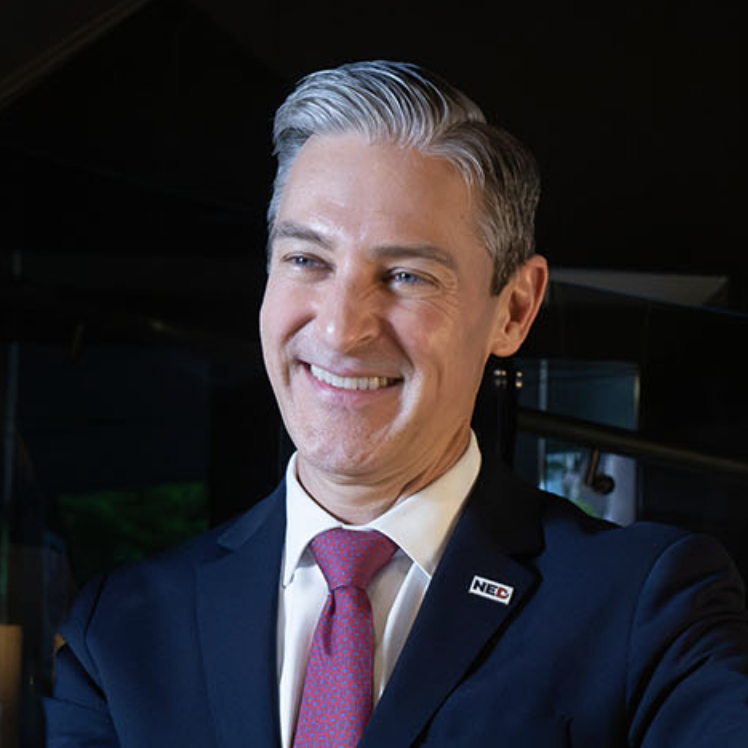
Damon M. Wilson, President and CEO, National Endowment for Democracy
Have you read?
- Taiwan Builds World-Class Products. It Forgets to Tell Anyone
- How Taiwan Can Build Global Brands Without Losing Itself
- Line Logic: Why Trust in Taiwan is Earned Not Announced
Uploaded by Ian Huang
Views

Subscribe to CWE Newsletter (every Thursday)
Stay abreast of what's happening in Taiwan with our weekly digest.
Keywords: