How ASPEED Turned an Overlooked Chip into Taiwan's Highest-Priced Stock
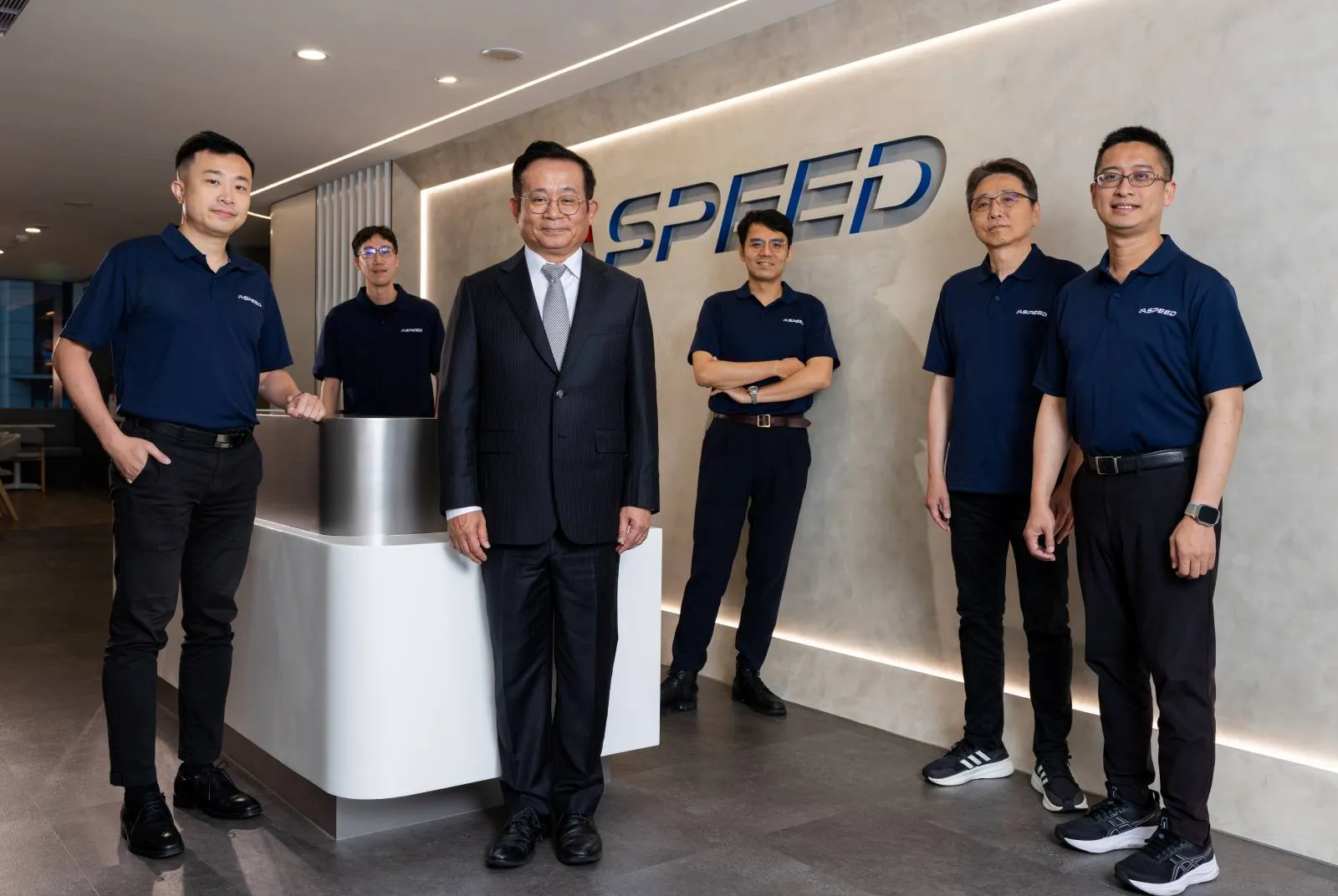
Source:Kuan Hsieh
ASPEED Technology turned an overlooked server chip into Taiwan's highest-priced stock by dominating the global market for baseboard management controllers (BMCs). How did founder Chris Lin build a niche business into a semiconductor powerhouse?
Views
How ASPEED Turned an Overlooked Chip into Taiwan's Highest-Priced Stock
By Elaine I-yun Huangweb only
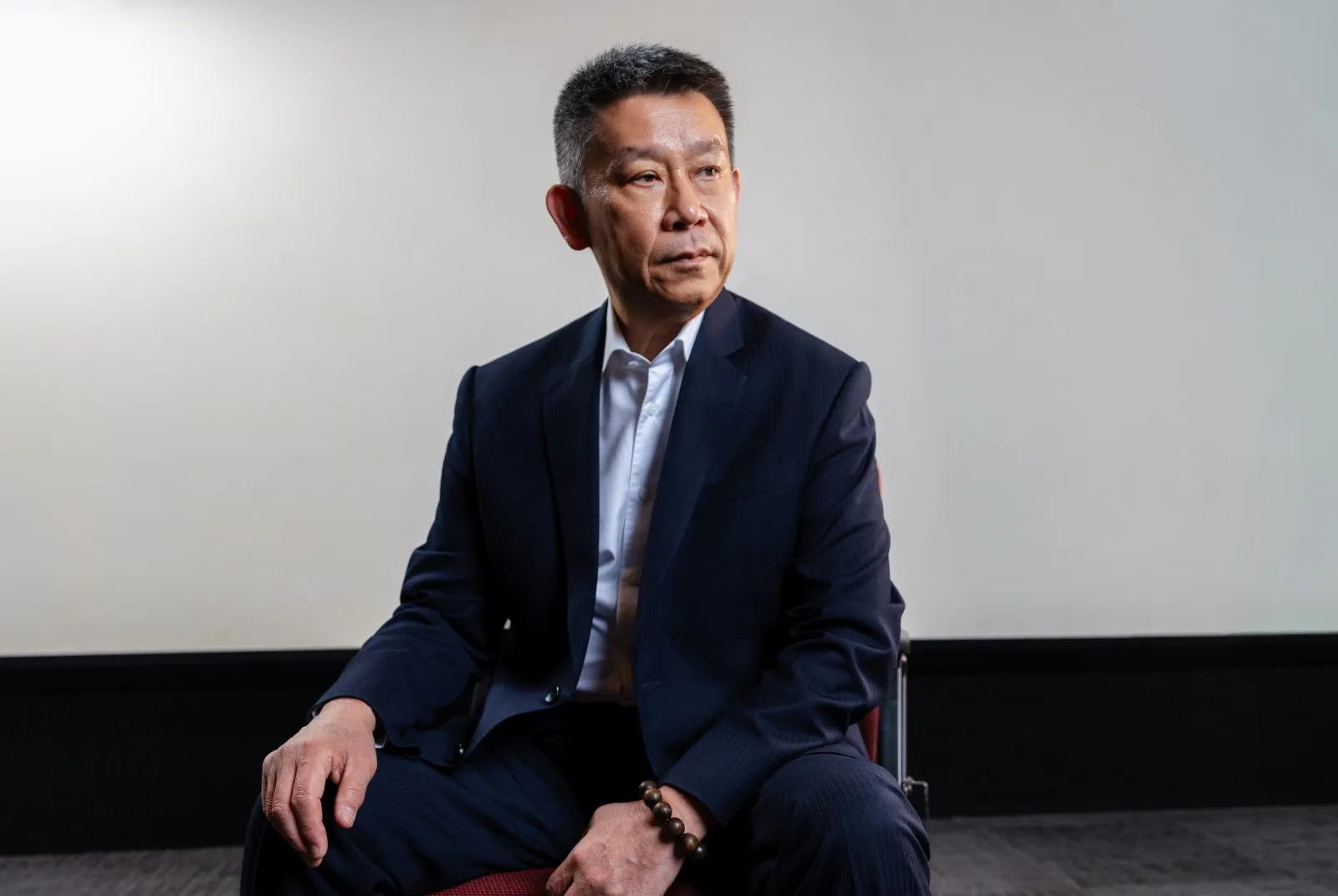
Chris Lin (林鴻明), then the 39 year-old associate vice president of R&D at Silicon Integrated Systems (SiS), enrolled in the EMBA program at National Chiao Tung University. While in the program, he developed a fascination with finance and organizational behavior.
"Put a dollar sign in front of a number and you get my immediate attention," he jokes. Four years later, he left the security of a large corporation to start his own company, combining engineering intuition with financial acumen.
Today, the company he leads, ASPEED Technology, is the global leader in baseboard management controllers (BMCs) for remote server management, with a market share approaching 80 percent. In 2025, revenue exceeded NT$9 billion, up 40 percent year on year, while gross margins have held steady at around 60 percent for many years.
Lin ranked tenth in CommonWealth Magazine's Most Admired CEOs survey for 2026, and third behind only the top executives at TSMC and MediaTek in the semiconductor industry. "We're more like Hermès than Walmart," he quips.
After a decade at SiS, Lin became general manager of XGI Technology, only to find himself unemployed in mid-career. Encouraged by friends, he founded ASPEED from scratch and chose to focus on BMCs, a market that attracted little attention in 2004. He believed that as data centers expanded, remote server management would evolve from an optional feature into standard equipment.
Using system-on-a-chip design, ASPEED reduced the cost of a BMC module from US$700–800 to under US$30. "At the time, everyone in the company was focused on one thing: BMCs." In the early years, many questioned whether the company would survive. The turning point came when Lin flew to the United States to persuade Sun Microsystems to adopt ASPEED's solution, and within two years the company reached the break-even point.
The defining moment in ASPEED's competitive position came when it secured a place in Intel's reference architecture. Lin first convinced Intel Capital to take a strategic stake in the company, then leveraged Intel's own weaknesses during negotiations. "If we're acquired by a competitor, your platform shipments disappear," he argued. With additional unsolicited pressure from Taiwanese ODM customers, ASPEED ultimately became the industry standard.
When ASPEED's market share approached 50 percent, Avago - Broadcom's predecessor - proposed selling Emulex's BMC product line to ASPEED in a share swap. Because the two companies served complementary customer bases, the deal increased ASPEED's market share from 45 to 60 percent. Today, it is close to 80 percent.
Independent director Chien Chen-fu says Lin deliberately chose what he calls a "blue lake" market - a niche large enough to support growth, but not so crowded that it would become a fiercely competitive "red ocean."
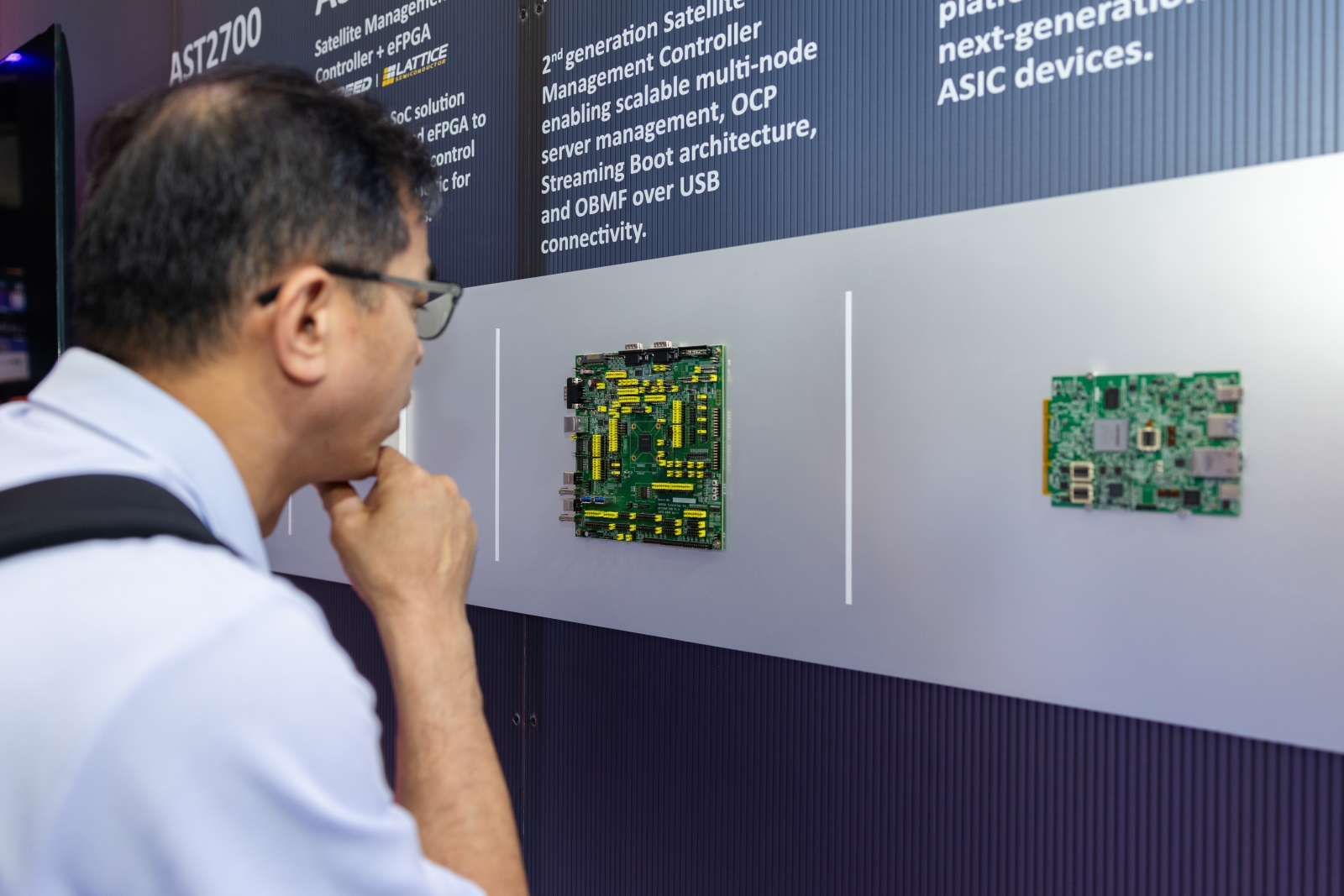 ASPEED's booth at COMPUTEX Taipei showcases its flagship BMC products, which command a dominant share of the global market. (Photo: Kuan Hsieh)
After establishing ASPEED's leadership in BMCs, Lin turned his attention to 360-degree panoramic imaging, a business closely aligned with his earlier experience in multimedia graphics chips. In 2022, the division persuaded Foxconn to test a prototype system that enables managers to monitor factories around the world remotely in real time, rather than reviewing surveillance footage only after an incident occurs.
Within two years, the customer base has expanded to several hundred organizations, including factories, parking facilities, fisheries, and military sites. At the end of last year, the division was spun off as Cupola 360 and is expected to pursue a public listing within two to three years.
Lin applies the same pragmatic approach to management. Inspired by Dunbar's number, he believes organizations should generally remain below 100 employees to preserve flexibility. "People come first, systems second," he says. "If you trust systems before you trust people, you've already gone wrong."
To retain top talent, ASPEED allocates a fixed eight percent of annual profits to employee bonuses, with no upper limit. "They're not employees - they're partners." In 2025, the median annual compensation for non-management employees reached NT$4.537 million, the highest among Taiwan's listed companies.
When the generative AI boom arrived in 2023, industry sentiment questioned whether demand for conventional servers would decline. In the face of such skepticism, Lin maintained that traditional servers would not be made obsolete. And events have proved him right, as the most difficult AI compute workloads are handled by GPUs, while standard interfaces still run on conventional servers.
Lin still makes a habit of going on one-man roadshows to Europe and the United States to give investor presentations. "When you're responsible for the share price, you have to do it yourself," he says with a laugh.
Have you read?
- Delta Chairman Cheng Ping's 700-Day Succession
- How TSMC Will Surpass 2nm and Other Insights from New IMEC CEO
- Exclusive: Why TSMC's First-Generation CoPoS May Be Glass-Free
Translated by David Toman
Uploaded by Ian Huang
Views

Subscribe to CWE Newsletter (every Thursday)
Stay abreast of what's happening in Taiwan with our weekly digest.
Keywords: