From Ceiling Fans to Drones: CRG Snatches Up Orders Leaving China
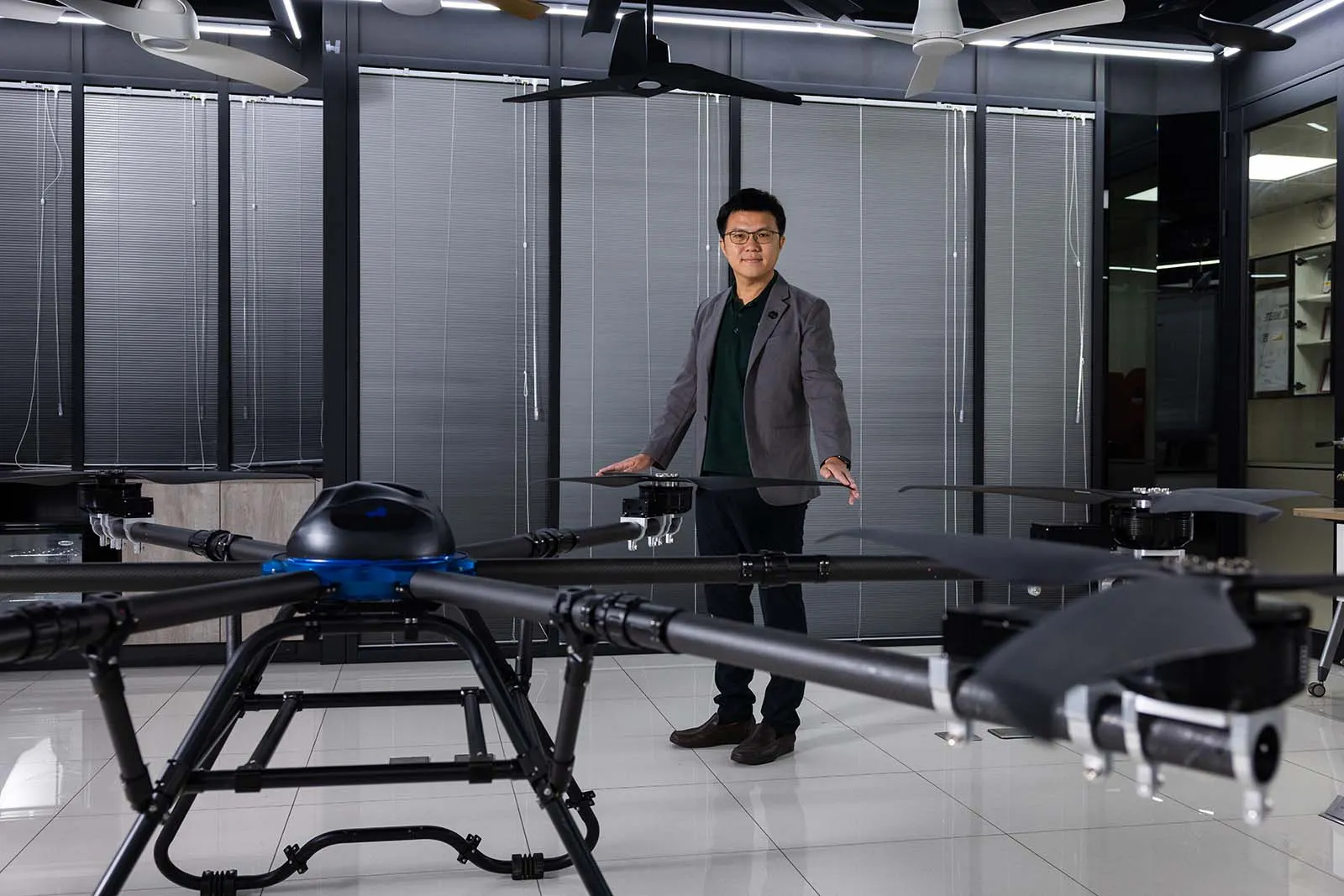
Source:Kuan Hsieh
Front-loading a drone maker, Taichung's Champ Ray (CRG), rooted in ceiling-fan manufacturing, is climbing the heavy-lift drone supply chain by applying its large-motor and mechatronics-integration expertise, positioning itself to meet fresh demand from US and Japanese buyers seeking non-Chinese ("non-red") suppliers.
Views
From Ceiling Fans to Drones: CRG Snatches Up Orders Leaving China
By Jenna Yuanweb only
Taichung’s Champ-Ray (CRG) is moving from manufacturing ceiling fans to heavy-lift drones. Earlier this year, its self-developed drone power module and propeller successfully lifted more than 100 kilograms—up from its previous ceiling of 93 kilograms. CRG president Yang Wei-Cheng (楊偉成) calls it a great success.
Heavy-lift drones are designed to carry loads of 20 kilograms or more—sometimes several hundred kilograms—for disaster relief, agricultural spraying, and logistics in remote areas hard to reach by other means. As in the commercial drone market, China's DJI currently dominates heavy-lift drones, with a handful of European competitors.
Breaking Into the U.S. Market with DC Ceiling Fans
In 2011, Yang, then not yet 30, left Rhine Electronic to start his own company. He decided to take a different path and avoided conventional AC fans in favor of DC fans, which had a higher barrier to entry.
Yang bypassed China and targeted the U.S., successfully breaking into the supply chain of a major American plumbing and HVAC distributor with roughly $40 billion in annual revenue, becoming a stable supplier of fans to U.S. government facilities and households.
Rising geopolitical tension led U.S. clients to seek non-Chinese suppliers, with some customers willing to pay 40–50% more to diversify supply risk.
With limited means, CRG opted to let its research and development stay in Taiwan, while mid-stage processing and assembly are sourced locally in the U.S. or handled by a small team stationed in the U.S. to handle final assembly, inspection, and customer interface.
CRG’s subsidiary in charge of automation equipment manufacturing plays a key role by developing machinery in Taiwan and shipping it to the U.S. for automated assembly.
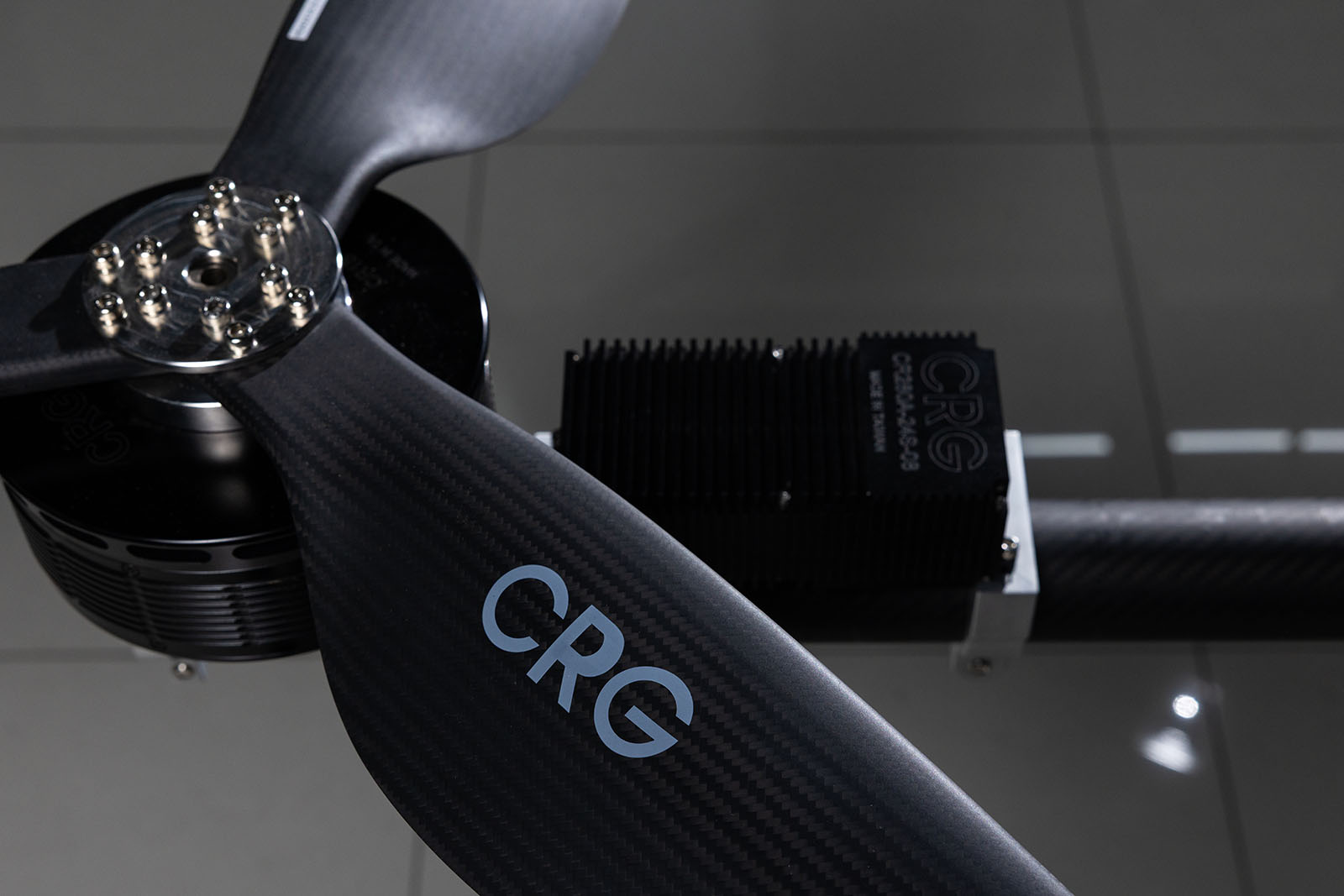 Drawing on its ceiling-fan manufacturing experience, Chang Ray developed higher-thrust propeller blades for its drone power modules. (Photo: Kuan Hsieh)
Moving into Heavy-lift Drone Technology
CRG holds just a 2% share of the U.S. commercial DC fan market, but overcapacity and aggressive low-price dumping from Chinese fan-makers pushed Yang to look for new territory early on.
Three years ago, Taiwan's Industrial Technology Research Institute (ITRI) invited CRG to join a planned venture building complete drones. Yang discovered that ITRI's motors for large drones happened to fall squarely within the large-motor range CRG specialized in for its high-end fans. To move into this space, CRG formally licensed the technology from ITRI in 2023. It then applied its expertise in fan blades to develop a lightweight carbon-fiber propeller, overcoming electronic control challenges around high-altitude wind resistance and dynamic balance to enter the heavy-lift drone field.
The threshold for large drone assembly is high, which is why it is often handled abroad by traditional automakers, such as Japan's SkyDrive, which partners with Suzuki. Taiwan's own agricultural drone company Earthgen Technology has already begun placing orders with CRG. CEO Nox Chen (陳恆燈) says that outside of TECO, CRG is almost the only company in Taiwan that can make mid-to-large heavy-load motors.
Earthgen’s drones are used for pesticide spraying, flying into mountainous areas for soil restoration on erosion-damaged land, and cleaning solar panels—a service that has grown tenfold in recent years. Comparing CRG to TECO, Chen notes that although CRG lacks the resources of a large conglomerate, its advantage lies in its agility—quickly customizing solutions when customers have problems.
Meeting Global Demand to Ditch China
Managing the various forces acting on a drone in flight—high-altitude winds, the force of firefighting water cannons, sudden weight shifts during airdrops—requires precise motor balance, making electromechanical integration critical. Not content with certification from ITRI and third-party inspector SGS, CRG sent its complete power module for certification by SkyDrive directly.
China, which dominates the drone market, has been tightening export controls on related components since 2023. By the end of June this year, it had formally placed 40 Japanese companies on an export blacklist, banning the export of components, motors, and rare earths to them.
At this year's Japan drone exhibition, Japanese customers searched for a source for motor power products outside China. A longtime American customer of CRG’s has also begun asking the company to develop heavy-lift drone power modules, targeting the firefighting and police markets; the customer hopes CRG will manufacture in the U.S.
 By upgrading its motors, electronic speed controllers, and propeller blades, Champ Ray is pushing into the heavy-lift drone segment. (Photo: Kuan Hsieh)
On a recent trip to Texas, Yang was struck by how the local government supports a wide range of startups experimenting with new drone designs near air force bases. In Taiwan, by contrast, testing and specifications for heavy-lift drones remain tightly constrained by military and civil aviation regulations.
He hopes Taiwan's government can ease restrictions, so more homegrown startups could join the low-altitude economy and give Taiwan's drone supply chain a real chance to flourish.
Have you read?
- Next-gen Bicycle Leaders Launch New ‘Team Taiwan’ to Face China
- How Machine Manufacturer Ta Liang Became a Hidden AI Champion
- Why Giant Is Betting on Retail Transformation as Revenue Hits a Seven-Year Low
Edited by Jack Chou
Uploaded by Ian Huang
Views

Subscribe to CWE Newsletter (every Thursday)
Stay abreast of what's happening in Taiwan with our weekly digest.
Keywords: