Exclusive: Why TSMC's First-Generation CoPoS May Be Glass-Free
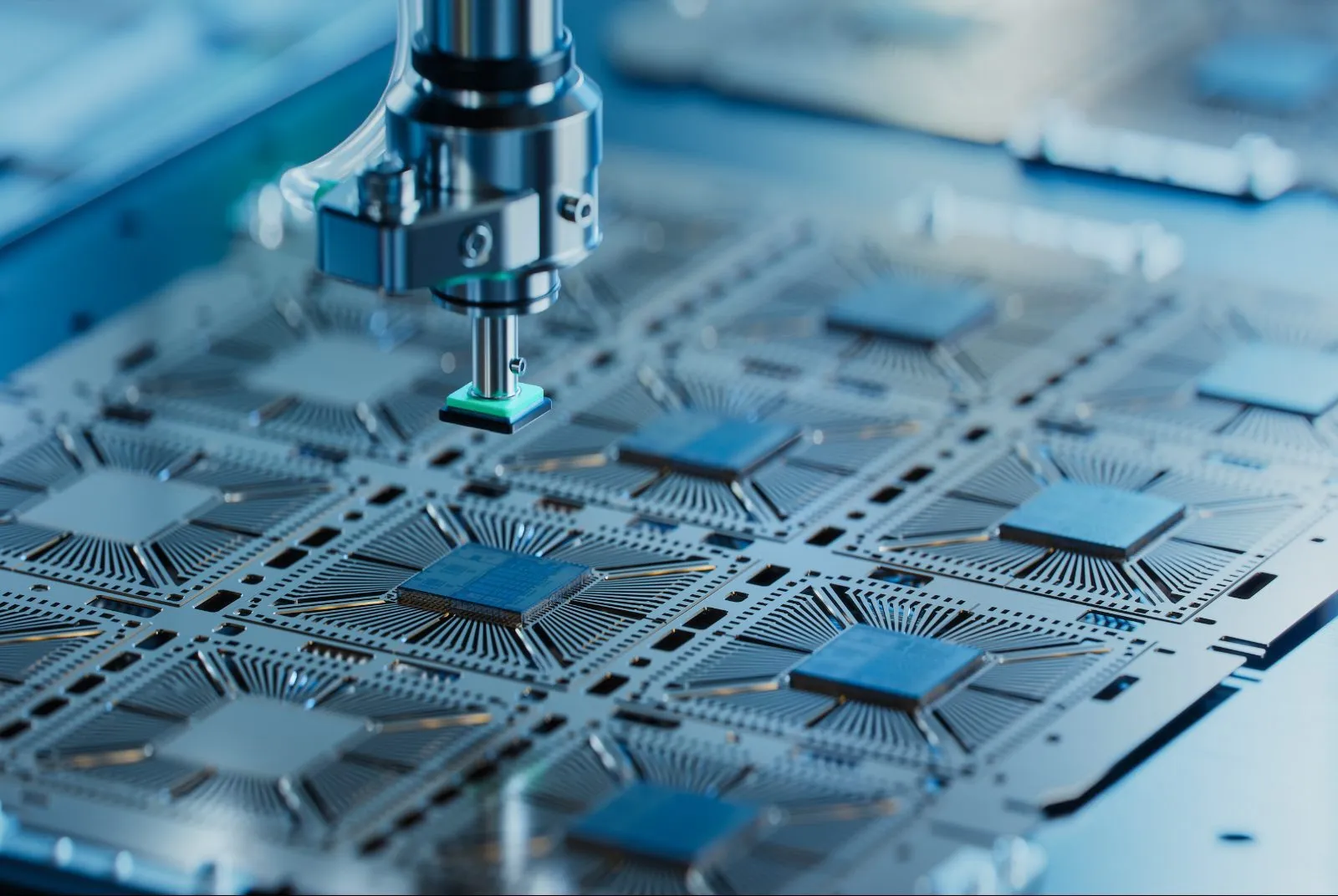
Source:Shutterstock
The market has priced in a "glass revolution" on the back of TSMC's upcoming CoPoS packaging technology, but if the first generation turns out to be glass-free, a lot of bullish supply-chain bets may be resting on little more than wishful thinking.
Views
Exclusive: Why TSMC's First-Generation CoPoS May Be Glass-Free
By Liang-rong Chenweb only
“Stop believing claims that have no factual basis.” — From the classic “Lion” commercial for Rogaine in Taiwan. (The catchphrase comes from a popular Taiwanese Rogaine commercial from around 2003 that mocked the myth that pulling out a lion's mane could make lost hair grow back.)
TSMC’s highly anticipated panel-level packaging technology, CoPoS, is expected to enter volume production in the first half of 2029, according to a veteran packaging expert who spoke enthusiastically with me.
Beyond the shift from the circular format of 12-inch wafers to square panels, he said the technology will also usher in a “glass revolution” in packaging materials.
How difficult is glass to work with?
I often compare CoWoS packaging to a Hawaiian pizza.
The veteran explained that the conventional organic interposer (the cheese layer) is expected to be replaced with glass, while the Low-CTE fiberglass cloth embedded inside the substrate (the bottom crust) will also be replaced by a single sheet of ultra-thin glass. This structure is known as a glass-core substrate. (It is often mistakenly referred to as a “glass substrate,” although the glass actually remains sandwiched between thin upper and lower layers of ABF resin.)
That aligns with one of the market’s most popular narratives today: CoPoS is approaching mass production, glass will become the key material, and the entire supply chain stands to benefit. Innolux(群創), for example, which is widely rumored to be involved in TGV processing—a critical manufacturing step for glass-core substrates—has seen its share price soar 2.7 times over the past six months.
A senior R&D executive familiar with TSMC’s advanced packaging technologies, however, told me that may not be the case.
At least for the first generation of CoPoS, TSMC is likely to adopt a “zero-glass” solution.
According to him, the only glass component that will appear in the manufacturing process is a glass carrier—a temporary, reusable support used during production to hold the substrate and interposer in place.
Why?
Because glass is simply too difficult to work with.
(To read this exclusive story in full, visit the Tech Taiwan Substack)
Have you read?
- Why Nvidia's Push for 800VDC Could Revive an Industry TSMC Walked Away From
- Taiwan's MSScorps Opens First U.S. Lab to Serve AI Chipmakers
- The TSMC-Intel Defection Drama Exposes Taiwan’s Dangerous Non-Compete Trap
Uploaded by Ian Huang
Views

Subscribe to CWE Newsletter (every Thursday)
Stay abreast of what's happening in Taiwan with our weekly digest.
Keywords: