From Shrimp Ponds to an $150 billion Empire:
Delta Chairman Cheng Ping's 700-Day Succession
Source:Kuan Hsieh
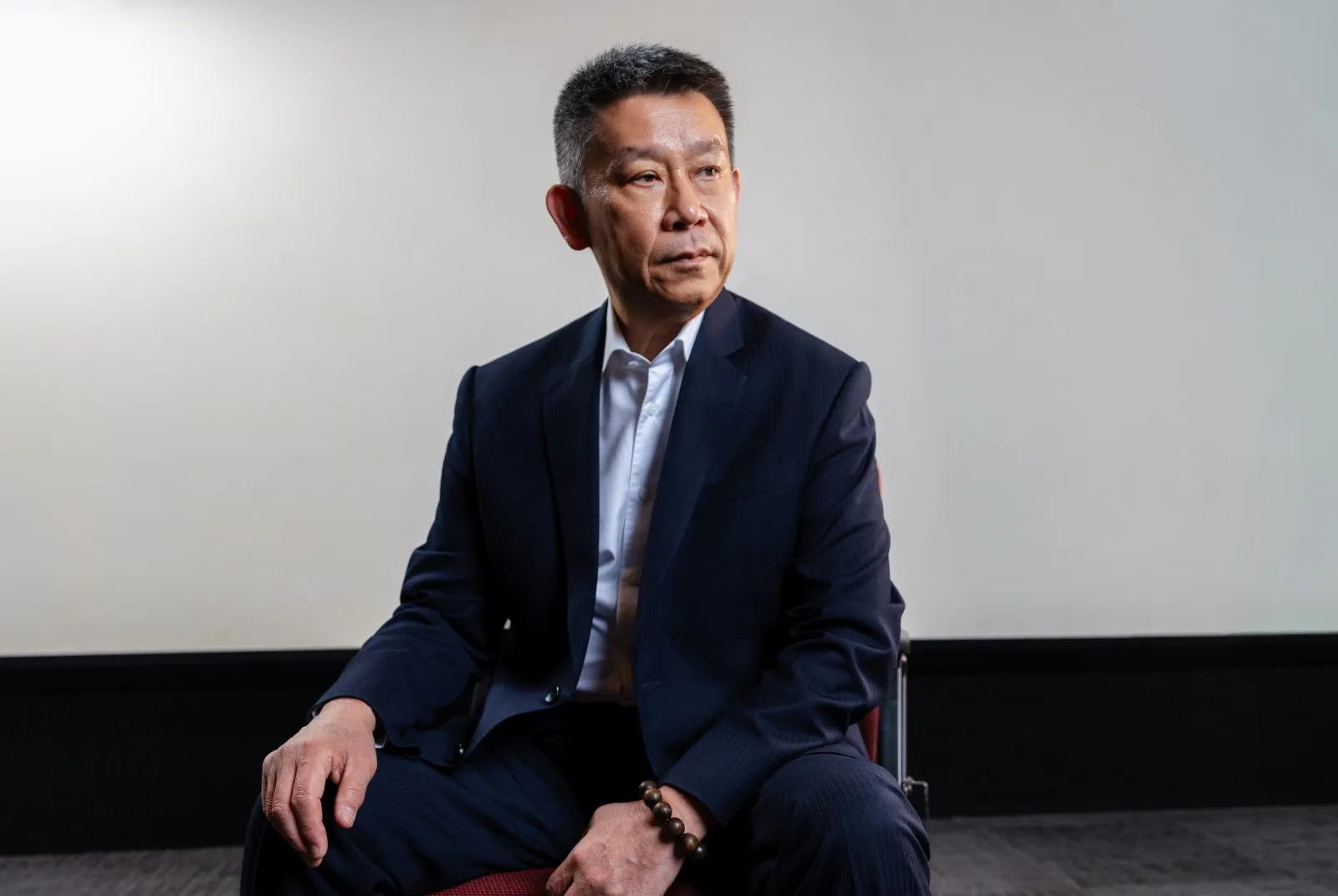
In his twenties, Cheng Ping was wading into 42-degree shrimp ponds in Thailand, until a disease wiped out his stock and ended his startup dream. 38 years later, the agriculture-school graduate leads Delta Electronics, his father's company, now Taiwan's third-largest listed firm after a five-fold market cap surge. How did a technically untrained heir get there?
Views
Delta Chairman Cheng Ping's 700-Day Succession
By Meng-hsuan Yangweb only
In his early twenties Delta Electronics Chairman and CEO Cheng Ping (鄭平) spent his days managing shrimp ponds in Thailand. Six times a day he had to plunge into the 42-degree warm water, even having to adjust his sleep schedule accordingly. A shrimp disease that wiped out the stock abruptly ended Cheng's startup dream. Yet, he says there was a silver lining: "If I hadn't failed, I would probably not have joined the company."
38 years later, Delta Electronics, founded by his father Bruce C.H. Cheng (鄭崇華) in 1971, belongs to the most successful Taiwanese companies of the AI era: It boasts a 50 percent market share for data center power supplies and liquid-to-air cooling systems with side car heat dissipation. And it is expanding into hydrogen batteries. Its market capitalization has jumped five-fold over the past two years, catapulting Delta Electronics to rank three among Taiwan's listed companies, only behind TSMC and MediaTek.
Cheng succeeded his father as CEO in 2012 and took over as chairman in 2024. But his climb to the top did not come easy, he had to work his way up over decades. After graduating from prestigious Taipei Municipal Chien Kuo High School, Cheng chose to study at the Department of Aquaculture at the precursor of National Pingtung University of Science and Technology.
He joined Delta Electronics in 1988, only after his shrimp venture didn't work out. His first position was as a group leader at the Delta Electronics factory in Liudu, Keelung City. He went to the United States to earn a bachelor of business administration before returning to the family business. He learned the ropes at both Delta Electronics Thailand and Yuasa-Delta Technology Inc., a joint venture between Japanese battery manufacturer GS Yuasa Corporation and Delta Electronics. Dealing with employees from different countries made Cheng realize that systematic management was crucial.
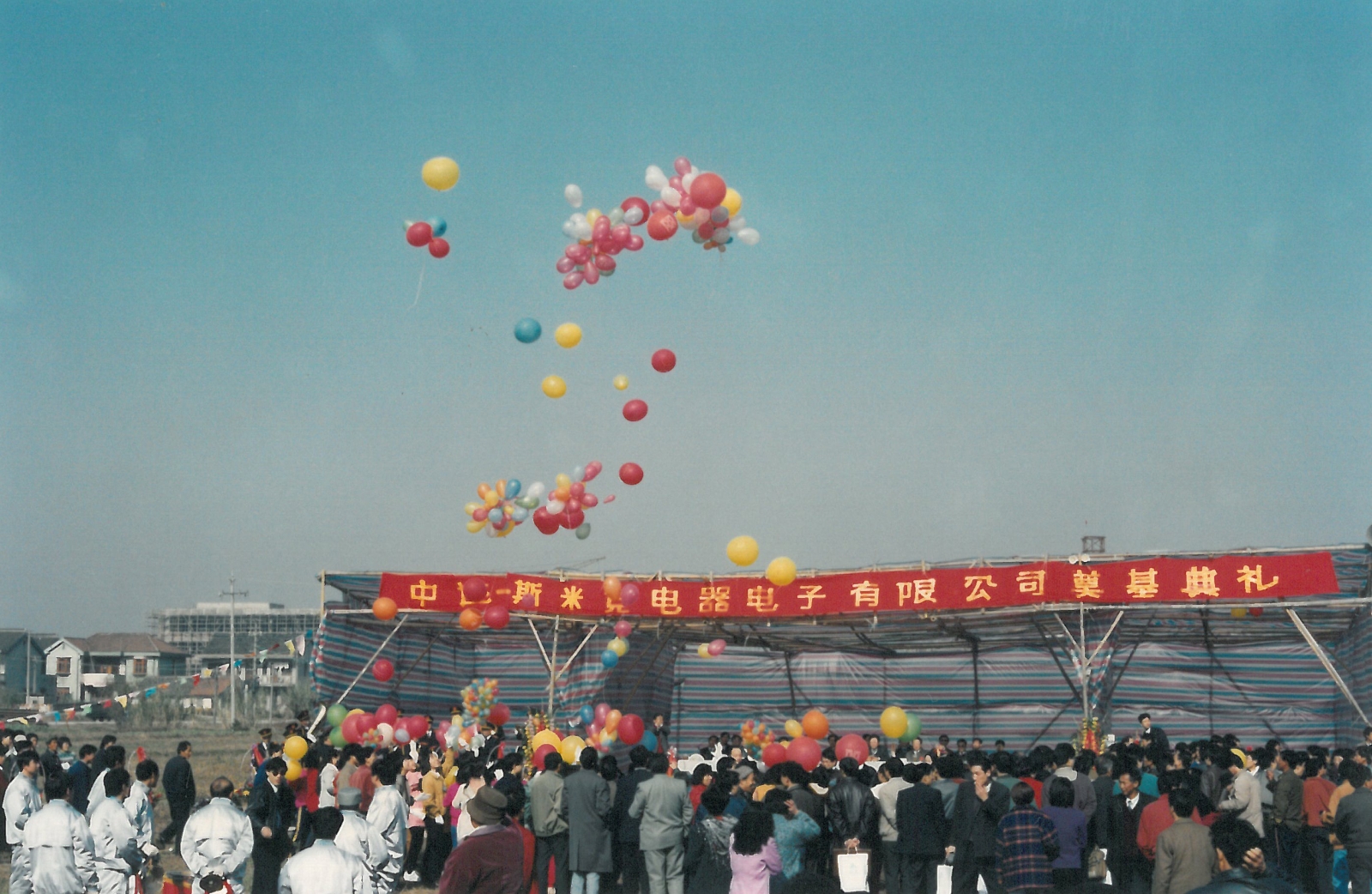 In the 1990s, Delta expanded into the Chinese market, building factories and setting up operations. Cheng Ping was transferred to China in 1998. (Photo: Delta Electronics)
In 1998 Cheng was dispatched to China, where he headed Delta Electronics operations with some 70,000 employees, shifting away from a guerilla strategy to an organizational strategy. He built an administrative structure around IT, finance, and human resources. He introduced The 7 Habits of Highly Effective People by Stephen R. Covey as a compulsory course for supervisors. Before any promotion to a higher position, employees must take this course. Cheng himself still personally teaches the course every year, taking refresher sessions each time when work does not go smoothly.
After returning to Taiwan in 2010, Cheng became Delta's first Chief Brand Officer. But he also noticed that the company's market share had already reached a ceiling and that expanding into new fields of business was imperative for future growth.
He went to Beijing to pay a visit to Thomas Li (李實恭), then director of the IBM China Research Laboratory and Chief Technology Officer of the IBM Greater China Group. Subsequently, Cheng built a personal relationship with Li, inviting him during trips to Taipei to grab coffee or a meal, even acting as Li's chauffeur. It still took Cheng two years to convince Li to join Delta as Chief Technology Officer after he retired from IBM in 2013.
But then the duo set out to push for the organizational transformation of the company: They set up a department for developing new business units, established the Delta Research Center, a mergers & acquisitions office, a solution office, and other units. Expenditure for the development of new businesses and marketing was capped at 1 percent of revenue, with corporate headquarters first providing the capital and new ventures only participating after having matured.
Thanks to this approach, Delta's new businesses, which span activities from building automation to electric vehicles, and soon to be mass-produced hydrogen energy, now contribute one third of the group's revenue.
In 2017, Cheng launched the largest restructuring in Delta's history, consolidating previously separate business fields under four business units and eight business groups with a focus on developing solutions.
Riding the AI wave, Delta has consequently followed this logic, pursuing an integrated design that combines power supply and liquid cooling technology. It is no longer about "parts" worth several dozen U.S. dollars but entire "cabinets" that cost tens if not hundreds of thousand U.S. dollars. Delta's market capitalization has skyrocketed accordingly.
In a bid to strengthen Delta's solution development capability, Cheng has been trying to attract talent from foreign competitors, personally presenting the company vision before potential candidates. "It's always me taking the stage to give presentations," he says.
Cheng admits that he and his father, who is an engineer by training, have very different ideas. Bruce Cheng senior, for instance, does not like performance reviews. But father and son are both equally passionate about technology. At the Delta Research Center Cheng often goes deep into technical details, even challenging the researchers with his relentless questions.
During the succession process father and son clashed many times. They often relied on former Chairman Yancey Hai (海英俊) to deescalate conflicts. After turning 50, Cheng adopted Buddhist practices to relieve stress.
Cheng lives a simple, unassuming life: the only decoration in his office is a collection of four rare stones. At home, he keeps guppy and colored carps and plenty of plants on the balcony. When others praise him, he still humbly calls himself "undeserving."
From failed shrimp farmer to boss of a business empire worth $150 billion – Cheng charted his own road to taking over the family business, demonstrating pragmatism and resilience.
Have you read?
- How TSMC Will Surpass 2nm and Other Insights from New IMEC CEO
- Exclusive: Why TSMC's First-Generation CoPoS May Be Glass-Free
- Why Nvidia's Push for 800VDC Could Revive an Industry TSMC Walked Away From
Translated by Susanne Ganz
Uploaded by Ian Huang
Views

Subscribe to CWE Newsletter (every Thursday)
Stay abreast of what's happening in Taiwan with our weekly digest.
Keywords: