Record 18 Nations Flock to Taiwan for SEMICON. What Are They Really After?
Source:Judy Lin
AI's trillion-dollar investment boom is drawing the world closer to Taiwan. With a record 18 national pavilions set to join SEMICON Taiwan 2026, countries are showcasing technologies critical to the next generation of chips—but what are they really hoping to gain?
Views
Record 18 Nations Flock to Taiwan for SEMICON. What Are They Really After?
By Judy Linweb only
SEMI Taiwan has officially kicked off its pre-event promotions for SEMICON Taiwan 2026, announcing a record-breaking 18 national pavilions. The strong international presence underscores Taiwan’s pivotal role as the world seeks to meet the exploding demand for artificial intelligence (AI) hardware and next-generation chip technology.
This year’s national delegations are placing a heavy emphasis on core capabilities vital to AI servers, including photonics, IC design, and composite materials for power management. Several nations are also showcasing breakthroughs in frontier technologies—such as quantum computing and advanced substrate materials—laying the groundwork for future applications.
The AI Investment Wave Drives Global Collaboration
What is driving this unprecedented enthusiasm among international partners to court Taiwan’s industry leaders?
Addressing attendees during his keynote speech, Terry Tsao, SEMI’s Global Chief Marketing Officer and President of Taiwan, highlighted the massive scale of the current tech boom. Citing McKinsey data, Tsao noted that AI has become the largest private-sector investment wave in history.
“Nearly US$2 trillion was invested in AI between 2013 and 2025, surpassing the combined investments of the Manhattan Project and the Apollo Program,” Tsao stated.
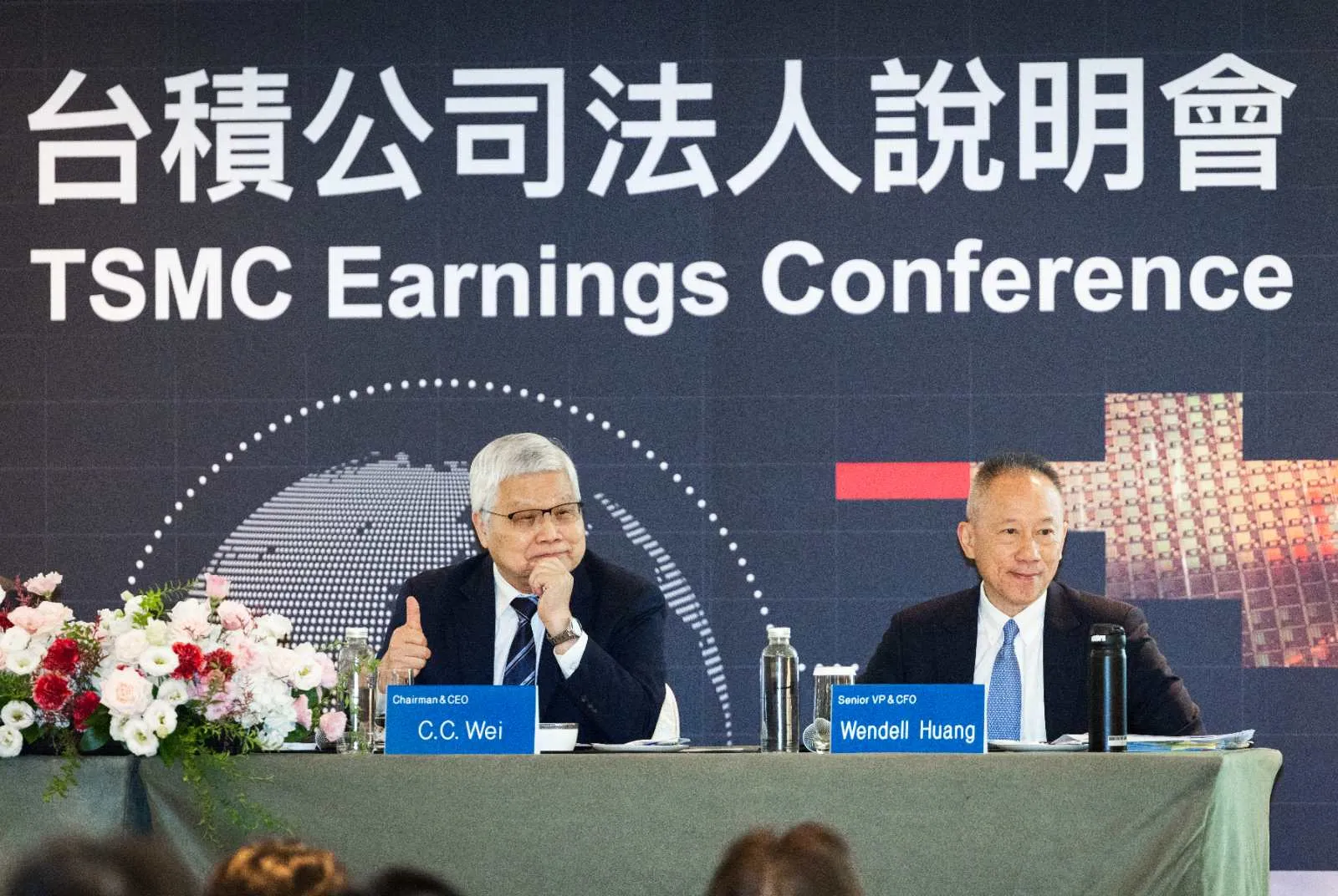
Despite persistent market chatter regarding potential AI bubbles, data center construction continues at a breakneck pace. Bolstering confidence, TSMC—the world’s foremost AI chip supplier—recently announced an additional US$100 billion investment in Arizona to expand its 2nm manufacturing and advanced packaging capabilities.
Key Pavilion Highlights
This surging demand sends a clear signal to global supply chain leaders, many of whom are bringing sizable delegations to Taipei:
- Japan: The dominant player in semiconductor materials—holding over 50% of global market share—leads the charge with 51 booths across regional pavilions.
- United States: Co-organized by the American Institute in Taiwan (AIT) and American State Offices Association (ASOA), the U.S. Pavilion features 11 states and major companies. AIT Director Raymond Greene announced the pavilion will host the “Freedom 250 Workforce Summit” to explore how talent development can sustain long-term chip investments.
- United Kingdom: Bringing 23 companies, nearly 40% of the UK delegation focuses on photonics and optical technologies alongside IC design, quantum computing, and advanced packaging. Ruth Bradley-Jones, Representative of the British Office in Taipei, emphasized that beyond household names like Arm, the UK is home to more than 150 high-growth IP design firms.
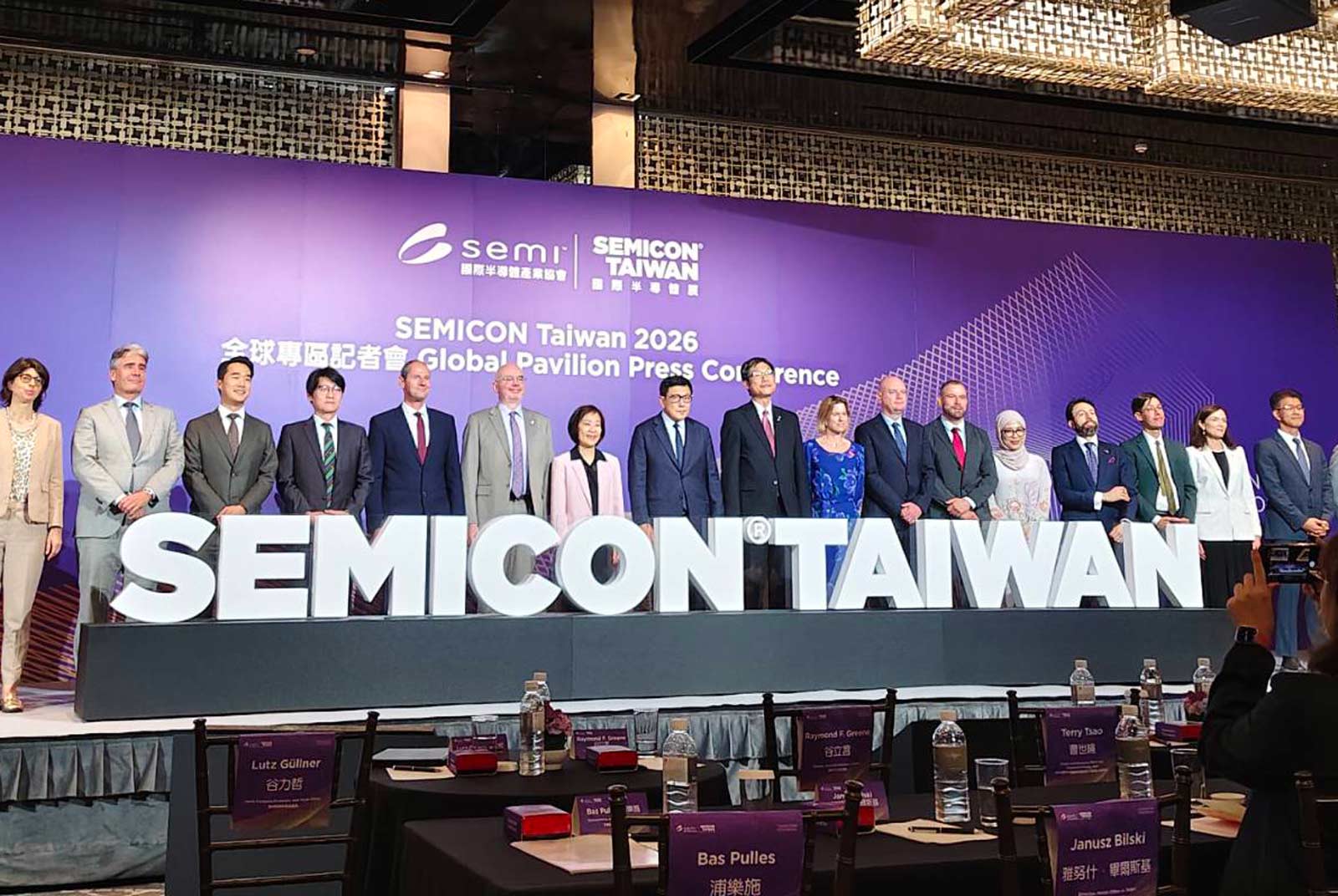
During a post-event press conference featuring Tsao and eight country representatives, key trade goals were highlighted:
- Canada: Focuses on IC design, energy management, and photonics. Quantum firm Xanadu and co-packaged optics pioneer Ranovus will present at SEMICON forums.
- Mexico: Highlights strengths in assembly and processing as it seeks deeper integration into global supply chains.
- Sweden & Italy: Sweden is promoting manufacturing equipment and energy-efficient systems, while Italy targets joint research, photonics, and emerging tech.
- European Union & Member States: The EU stresses research, talent, and AI integration. The Netherlands highlights lithography/equipment, photonics, and AI infrastructure; the Czech Republic focuses on chip design and supporting TSMC suppliers for the ESMC fab; and Germany prioritizes chip design, advanced packaging, and expanding the Dresden semiconductor ecosystem.
Building Ecosystems in the Era of "Transform Tomorrow"
When asked whether Europe will press for further TSMC expansion as regional AI data center demand grows, Lutz Gullner, Head of the European Economic and Trade Office in Taipei, pointed to ecosystem building under the EU Chips Act 2.
“The EU Chips Act 2 is focused heavily on building the demand ecosystem. We hope this stimulation creates a knock-on effect, making expansion a natural decision for companies like TSMC,” Gullner remarked on the sidelines to CommonWealth English. “It’s never just one fab—it’s an entire ecosystem, and everyone at the table understands that.”
Reflecting this spirit of shared progress, SEMICON Taiwan 2026 centers on the theme "Transform Tomorrow."
Tsao closed by reminding the audience that despite geopolitical pressures encouraging regional supply chain resilience, the scale of the AI revolution demands international cooperation.
“No single country can meet the massive demands of the AI industrial revolution alone,” Tsao said. “Global collaboration remains essential. Through technological breakthroughs and cross-border collaboration, Taiwan’s semiconductor sector aims to help shape the future and make a transformative contribution to humanity.”
- TSMC’s $100B Arizona Expansion Triggers Massive Supply Chain Shift to the US
- How TSMC Helped SK Hynix Overtake Samsung in the AI Memory Race
- How ASPEED Turned an Overlooked Chip into Taiwan's Highest-Priced Stock
Uploaded by Ian Huang
Views

Subscribe to CWE Newsletter (every Thursday)
Stay abreast of what's happening in Taiwan with our weekly digest.
Keywords: