How a Taiwanese-Dutch Musician Bridges Cultures through Jazz
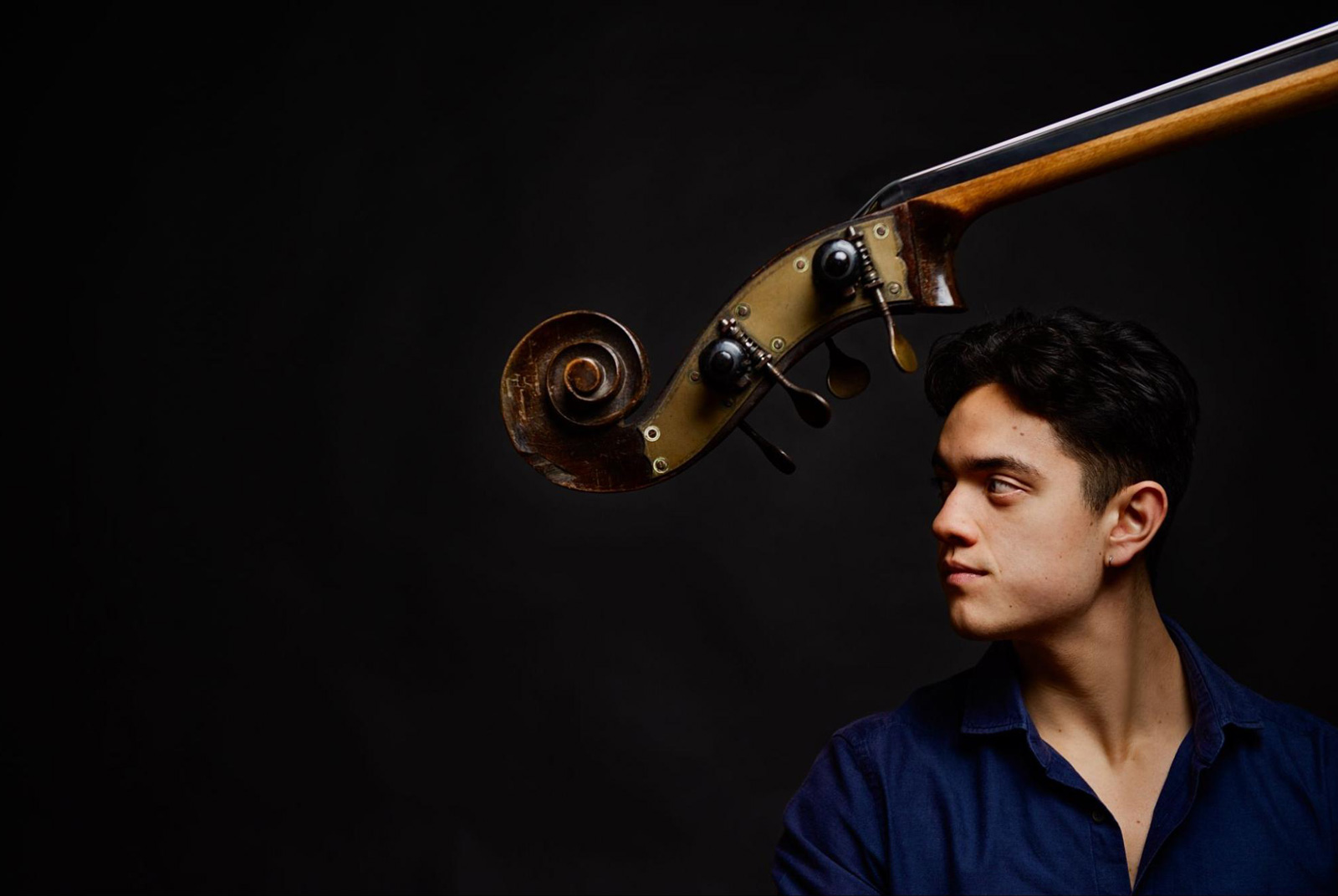
Source:Claudia Hanse
Taiwanese-Dutch bassist and composer Julian Wittich has built a musical identity shaped by life across Taiwan, the Netherlands and the United States. Through his debut album "Tidelines", he blends diverse musical traditions into a sound that reflects his multicultural background. How has moving between cultures shaped both his music and Taiwan's evolving jazz scene?
Views
How a Taiwanese-Dutch Musician Bridges Cultures through Jazz
By Priya Tonweb only
“It’s a Taiwanese melody with Afro-Cuban roots, with jazz,” Julian says.
Named after Mazu, the Chinese goddess of the sea, the song blends several music genres together into a dynamic harmony. For bassist and composer Julian Wittich, it represents music shaped by movement between cultures.
Rather than separating these genres, Julian’s debut album, Tidelines, allows them to flow into one another.
Born to a Taiwanese mother and Dutch father, Julian grew up in Taiwan before studying music in Amsterdam and New York. Now back in Taiwan, the 27-year-old musician is bringing those experiences together on Tidelines.
The result reflects Julian’s own multicultural background: a musical identity shaped not by a single country or genre, but by the traces each place has left behind.
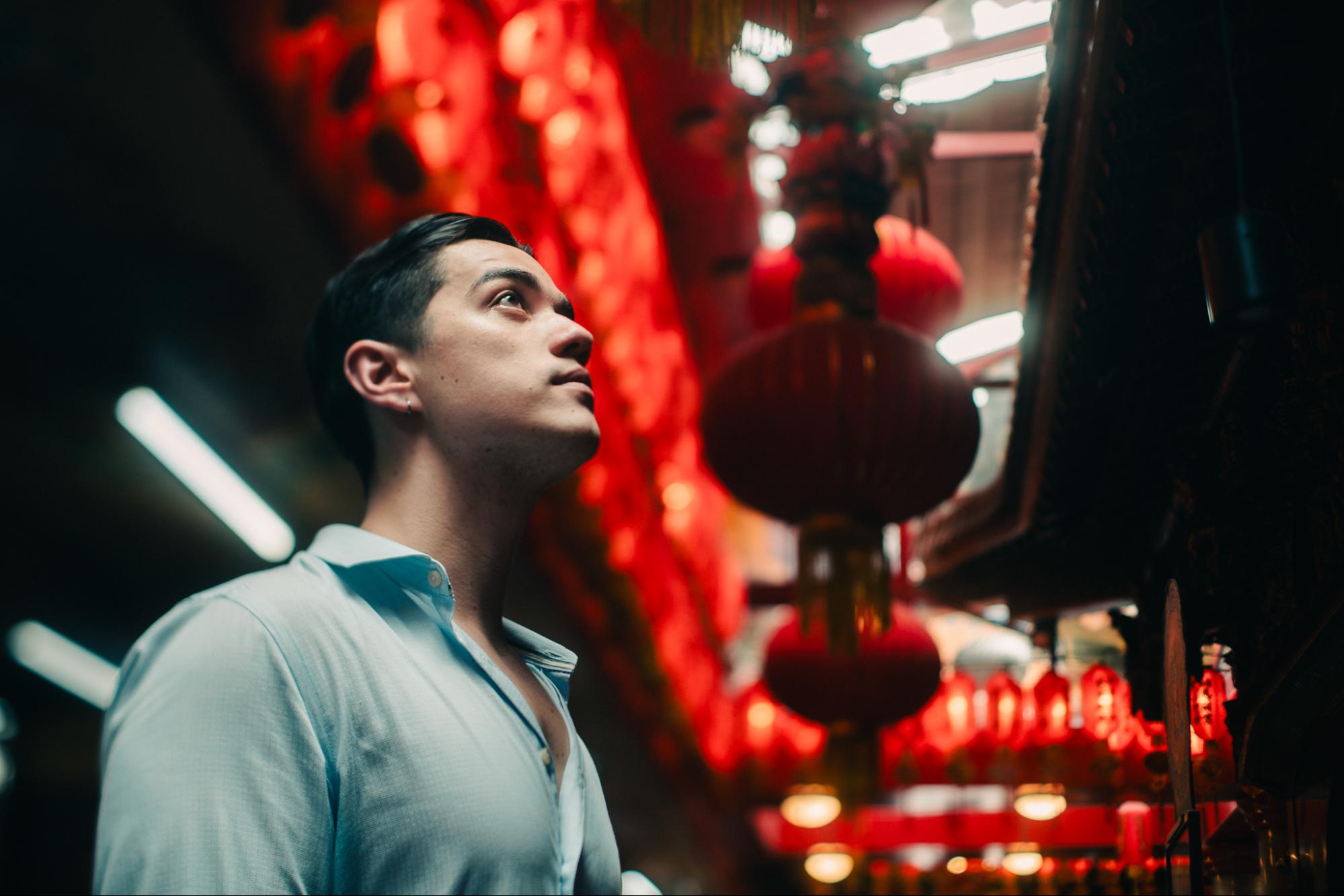 (Source: Derrick Lin)
Julian began playing classical violin at age seven, following in his older sister’s footsteps. In middle school, he and his friends decided to form a rock band. With two guitarists already in the group but no bassist, Julian volunteered to learn the electric bass, a practical decision that eventually shaped his music career.
Musical traditions have long crossed cultural boundaries within Julian’s family. His Dutch grandfather played the cimbalom, an instrument associated with Romanian folk music, and introduced him to Jazz Manouche, also known as Gypsy jazz.
The turning point came in middle school when his father played a concert DVD featuring Canadian jazz pianist Oscar Peterson. Captivated by the music’s complex harmonies, technical skill and improvisation, Julian began exploring jazz more seriously.
“It made me really want to dig deeper and learn more about jazz and not only listen, but play,” he said.
Taiwan’s jazz community was relatively small when Julian was in high school. Although that limited his access to formal instruction, the scene’s size also created opportunities for him to perform from a young age. He did not receive formal jazz training until attending Conservatorium van Amsterdam. By then, he had already started establishing himself as a musician in Taiwan.
When the COVID-19 pandemic interrupted his conservatory education in 2020, Julian returned to Taiwan.
Interestingly, the move marked the beginning of his professional career. He performed with TPO (Taipei Professional Orchestra), a Taipei-based band formed during COVID, while also exploring beyond jazz and into Taiwan’s Mandopop scene, working with artists such as JJ Lin and 9m88.
The variety of opportunities allowed him to develop across genres rather than confining himself to a single music genre.
“I started to kind of have my feet in different worlds,” Julian said.
New York and Taiwan have shaped Julian’s music in contrasting ways. As the center of jazz, New York exposed him to world class talent and a wide range of musical traditions. At the Manhattan School of Music, he studied under renowned bassists such as Buster Williams and Jay Anderson while performing alongside musicians from around the world. However, the city's competitive scene also pressured musicians to specialize.
“New York has both broadened, but also narrowed, my musical perspective,” Julian said.
Although the city introduced him to new sounds, succeeding there often meant choosing and mastering a particular style.
Taiwan’s smaller music scene offers different kinds of opportunities. With fewer musicians and more fluidity between genres, Julian has greater freedom to move between jazz, classical music and Mandopop.
“Because there are not as many musicians here, I have more freedom to do things in different musical worlds,” he said.
For Julian, New York provided training and competition, while Taiwan has given him space to experiment. Together, the two places have allowed him to develop not only as a jazz bassist, but as a musician comfortable moving between cultures and genres.
Since returning to Taiwan, Julian has found a close knit community of musicians and a busy performance schedule. He recently performed a four-city tour with visiting Korean musicians and only days later, was preparing for another performance at Sappho, a jazz club in Taipei.
“I’m always out, I’m always playing,” he said.
Although jazz remains a niche genre in Taiwan, Julian believes the scene has grown over the past 10 to 15 years. More musicians are performing, more venues are hosting live jazz and younger listeners are increasingly appearing in club and concert venues.
“You go to a lot of concerts or jazz clubs here, and you’ll find that a lot of the audience members are young people, which is great,” he said.
International exchange has also contributed to the scene’s growth. Like Julian, a growing number of Taiwanese musicians are studying jazz overseas before returning home. They bring back new techniques, perspectives and connections.
Taiwan’s jazz community gives artists room to experiment, and as the community continues to grow, they will shape what Taiwanese jazz will become.
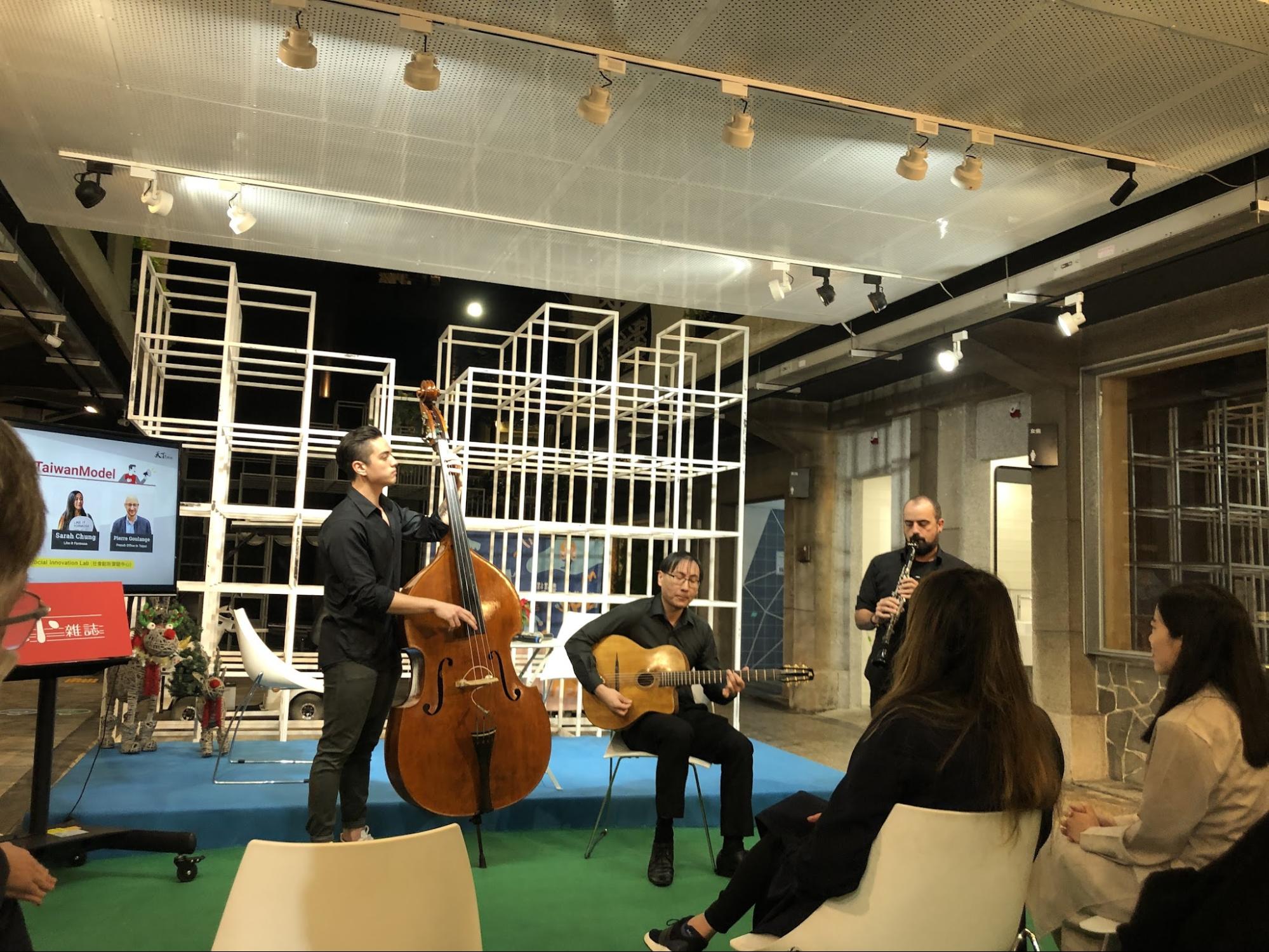 (Photo: Kwangyin Liu)
Views

Subscribe to CWE Newsletter (every Thursday)
Stay abreast of what's happening in Taiwan with our weekly digest.
Keywords: