Why W. John Kao Went to Hawaii for a Job Interview
Source:CommonWealth Magazine
Why would the president of one of Taiwan's top universities consider leaving for the University of Hawaii? The controversy surrounding W. John Kao highlights deeper problems in Taiwan's higher education system, including low pay, limited reform powers, and a hiring process that discourages top international talent.
Views
Why W. John Kao Went to Hawaii for a Job Interview
By Chang-tai Hsiehweb only
Taiwan educated Chang-Lin Tien (田長霖), who became chancellor of UC Berkeley. It educated Henry T. Yang (楊祖佑), who led UC Santa Barbara for 31 years. It educated Wei Shyy (史維) and Way Kuo (郭位), who went on to lead HKUST and City University of Hong Kong. None of them led a Taiwanese university.
W. John Kao (高為元) is different. He came back. He took the presidency of National Tsing Hua University and accepted all the exposure risks that Taiwan's public search process demands.
When an American university came recruiting — the first time, to anyone's knowledge, that a sitting Taiwanese university president has ever been sought out to lead an institution abroad — Taiwan called him shameless.
Before joining that chorus, it is worth asking: why was Kao looking at the University of Hawaii? Hawaii is a step down from NTHU. People do not leave flagship research universities for a lesser institution out of ambition. They leave because something about where they are has become untenable.
We do not know Kao's reasons. But the question is worth asking regardless — because whether or not it explains Kao's specific situation, the structural answer is the same.
Start with compensation.
Taiwan's public university salaries are set by civil service pay scales that bear no relationship to what internationally competitive academics earn. A world-class scholar taking a leadership role in Taiwan accepts a substantial pay cut relative to peer institutions in the United States, Hong Kong, Singapore, or China. Taiwan cannot simultaneously aspire to world-class universities and pay its leaders like civil servants.
Then there is governance.
Taiwan's public universities operate under a collective governance structure in which meaningful reform is effectively impossible. Underperforming departments cannot be restructured. Resources cannot be redirected toward areas of strength. A president with a serious agenda hits a wall of collective resistance that the governance structure does nothing to overcome. This is not academic democracy. It is stagnation with a democratic veneer.
These two failures mean Taiwan is not merely failing to attract the best international talent. It is also failing to give the leaders it does attract the tools to succeed. What exactly is a president supposed to do when he cannot pay competitive salaries or restructure underperforming units?
Kao's mistake was real. He knew how public searches work — he had been through one to become president of NTHU. The University of Hawaii search was unusual by American standards — most research universities, public or private, conduct confidential searches. A handful of public universities are required by sunshine laws to disclose candidates publicly, and Hawaii is one of them. Kao knew this. Agreeing to be a finalist knowing that if he did not get the job his authority at NTHU would be undermined showed poor judgment.
But the public debate has focused entirely on loyalty and betrayal while ignoring what the episode actually reveals. A president of one of Taiwan's flagship universities was willing to consider the University of Hawaii as an alternative. Not Stanford. Not Michigan. Not the National University of Singapore. Hawaii. That tells you something about the situation he found himself in.
Taiwan's response — moral outrage, calls for student movements, legislators reaching for the language of romantic betrayal — has made things worse. Any internationally-minded scholar currently weighing a leadership role at a Taiwanese university has watched this episode. They are drawing their conclusions.
The search process compounds the problem further. Taiwan requires full public disclosure of all presidential candidates, a rule designed to ensure transparency but excludes the best candidates — people who cannot afford public exposure while still serving in their current roles.
I served on the search committee for the University of Chicago's most recent president. We took extreme measures to protect confidentiality, including meeting candidates only in hotel rooms at O'Hare airport — so that no one on campus would see them. This is standard practice at serious research universities precisely because the alternative — public disclosure of every candidate — guarantees that the most sought-after candidates will not apply. The runners-up in our search were all exceptional leaders — that is why they were on our short list in the first place. Because the process was confidential, none of them suffered any consequence at their own institutions. They have continued to lead and contribute, their candidacy unknown to anyone outside the committee. Taiwan's system would have destroyed their positions the moment their names appeared on a list.
The scholars Taiwan most needs to lead its universities are precisely the ones its system is most likely to turn away — through low compensation, collective governance that prevents reform, and a public search process that deters serious candidates. And when a rare exception does come, Taiwan greets the first sign of his international visibility with calls for a student movement.
Taiwan says it wants world-class universities. The Kao episode is an opportunity to ask honestly whether it is willing to build the conditions that make them possible — or whether it would rather have leaders that no serious institution outside Taiwan would think to recruit.
About the author
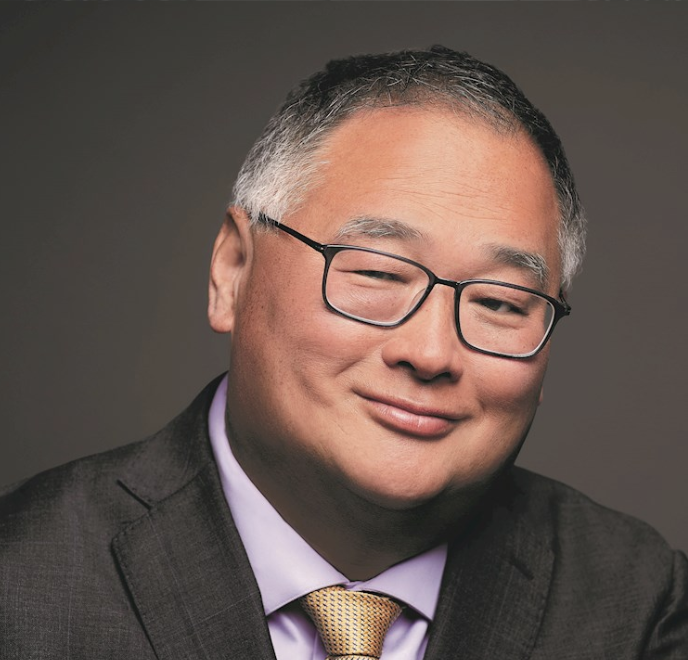
Chang-Tai Hsieh is the Phyllis and Irwin Winkelried Professor of Economics and PCL Faculty Scholar, University of Chicago Booth School of Business.
Have you read?
- The AI Boom’s Hidden Victim: Taiwan’s Fragile Insurance Sector
- America’s Threat to Taiwan
- Taiwan’s Never Ending Trade Surplus
Uploaded by Ian Huang
Views

Subscribe to CWE Newsletter (every Thursday)
Stay abreast of what's happening in Taiwan with our weekly digest.
Keywords: