A Hungarian Engineer's Path to a Taiwan Gold Card — and Why Europeans are Embracing Taiwan's Mandarin Language Centers
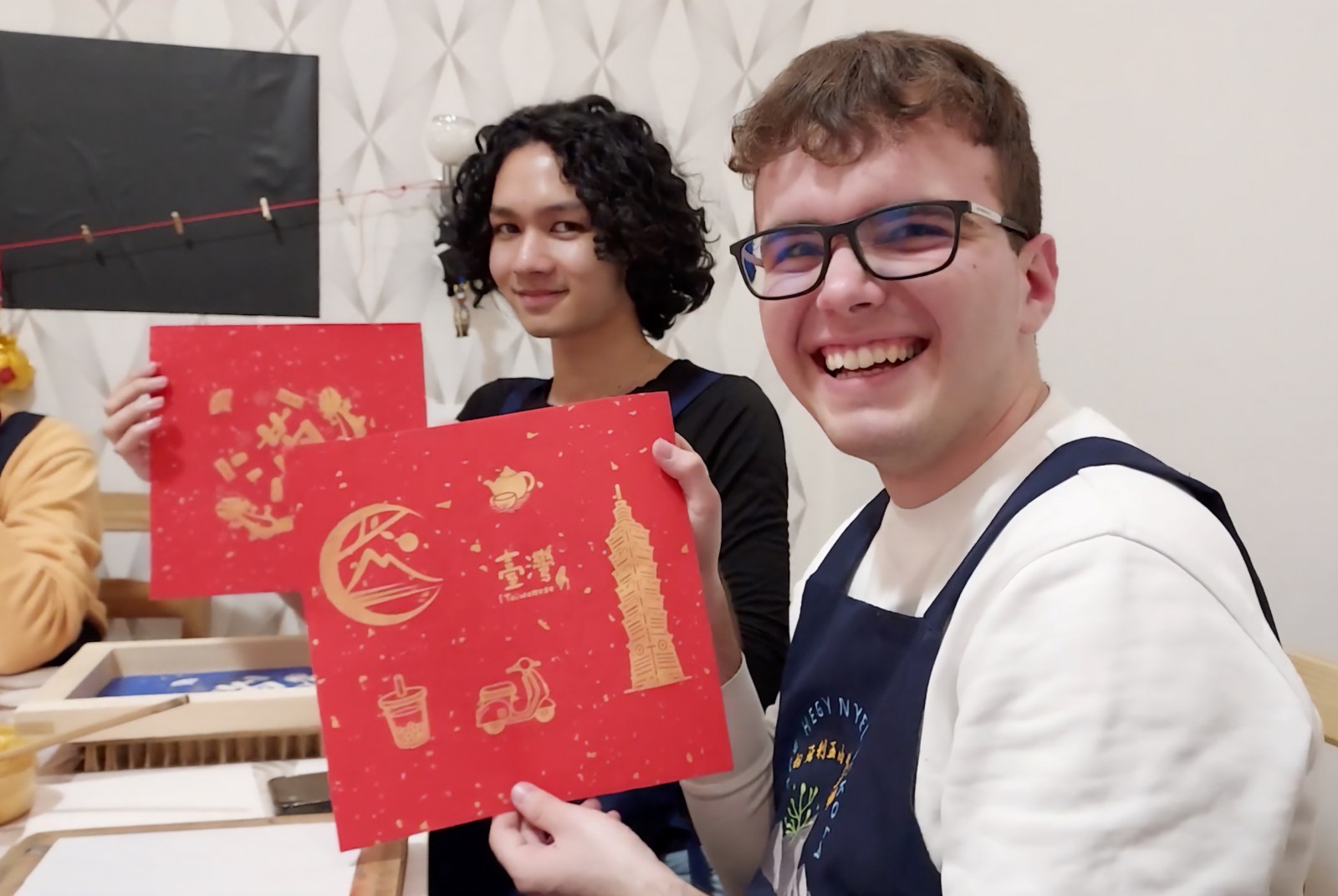
Source:Jade Mountain Mandarin School
Taiwan has nearly tripled its budget for overseas Mandarin education over the past five years. As China's Confucius Institutes continue to close across Europe and North America, Taiwan is expanding its own network of community-based language centers to teach traditional Chinese characters. Can this quieter, grassroots approach compete with Beijing's long-established Confucius Institutes?
Views
A Hungarian Engineer's Path to a Taiwan Gold Card — and Why Europeans are Embracing Taiwan's Mandarin Language Centers
By David Shenweb only
In 2023, Hungarian data engineer Fidel Csikós flew to Kaohsiung on a Mandarin language scholarship from Taiwan's Ministry of Education. He fell for the port city's sunshine and sea breeze — and has since obtained Taiwan's Employment Gold Card. "This is the best decision I've made in recent years," he beams.
His journey began at the Jade Mountain Mandarin School in Budapest, a Taiwan Center for Mandarin Learning (TCML) supported by Taiwan's Overseas Community Affairs Council (OCAC) and converted from an overseas school for Taiwanese students. It's a small-scale illustration of how Taiwan uses Mandarin education to expand civil diplomacy and project soft power.
Converting Overseas Mandarin Schools for a Global Audience
The TCML initiative, launched by OCAC in 2021, helps overseas Mandarin schools and community groups around the world set up centers that teach traditional Chinese characters and Taiwan-style Mandarin to local adults.
Two trends drove the policy. First, Confucius Institutes — funded by the Chinese government and criticized in the US and Europe over concerns about academic freedom and political risk — have seen at least 120 closures worldwide since 2019, about 80% of them in the United States. Second, traditional overseas Mandarin schools have been declining as younger generations of overseas Chinese redefine their identity, a slow-cooking crisis compounded by shortages of teachers and funding.
"If Taiwan's Mandarin language education is going to open up the market, it has to recognize that it can't stay confined to Chinese communities — it needs to extend to the wider world," OCAC Minister Chia-ching Hsu (徐佳青) told CommonWealth.
Over five-plus years, the initiative has grown to 93 centers worldwide — 67 in North America, and 19 across 12 European countries.
 At Hungary's Jade Mountain Mandarin School, 80% of students are non-native speakers of foreign nationality. (Source: Jade Mountain Mandarin School)
Making the Case for Traditional Chinese Characters
With simplified Chinese dominant in global Mandarin instruction, how do these centers persuade learners to study traditional characters instead?
Jade Mountain Mandarin School director Li Yi-ying (李怡瑩) starts with etymology and the evolution of characters. She says most students ultimately choose to continue with traditional characters. Csikós points to the character for "love" (愛): the traditional form contains "heart" (心), which he feels conveys the emotion behind the word more directly than the simplified version does.
Association Linguistique Culturelle Chinoise director Agnès Tran (楊馥吟) uses an architectural analogy: "Traditional characters are like laying a foundation. Once the foundation is solid, simplifying later is easy. If the foundation is unstable, building further up becomes difficult."
On curriculum, OCAC's textbook series "Let's Learn Mandarin" has shifted to a dialogue-based format, now available in 11 languages — a more practical approach than the essay-style materials used previously.
Promoting Democracy Without the Lecture
The new textbooks are also woven more deeply into Taiwanese society, letting students absorb a sense of the island gradually rather than through direct instruction.
Li has observed that overtly emphasizing Taiwan's democracy tends to backfire. "They see it as propaganda, and Westerners don't like that," she says. In everyday classroom discussion, she adds, students come to understand what kind of place Taiwan is on their own.
Csikós says democratic values were central to his choice of Taiwan over China as a long-term home. He recalled the 2018 case of former Canadian diplomat Michael Kovrig, who was detained in China: "I remember thinking — if this could happen to him, it could happen to me too." He says Taiwan's status as a free society gives him peace of mind.
Small-scale, Targeted Soft Power
The learning centers' budget has nearly tripled over the past five years, reaching NT$240 million this year. That's still far short of the scale and funding behind Europe's 189 Confucius Institutes. But community-based centers can reach a broader cross-section of society and offer more customized instruction.
Hsu says the centers' purpose is to use language learning as a medium for building mutual understanding between Taiwan and other societies, turning students into some of Taiwan's best advocates abroad. "As China poses various threats and challenges to many countries," she says, "Taiwan is charting a different path."
Have you read?
- Why France Chose Foxconn to Build Europe’s Most Advanced Packaging Plant
- Why Hungary’s China Bet on Batteries Faces Voter Backlash
- Taiwan Eyes a Role in Europe’s Drone Supply Chain
Edited by Jack Chou
Uploaded by Ian Huang
Views

Subscribe to CWE Newsletter (every Thursday)
Stay abreast of what's happening in Taiwan with our weekly digest.
Keywords: