Why AUO, Innolux Shares Soaring as Panel Industry Struggles
Source:Chien-Tong Wang
The flat panel manufacturing sector remains in the doldrums, but the stock of major Taiwan panel makers AUO and Innolux has surged this year because of potential advanced chip packaging applications. Can they really harness the AI craze?
Views
Why AUO, Innolux Shares Soaring as Panel Industry Struggles
By Kai-yuan Tengweb only
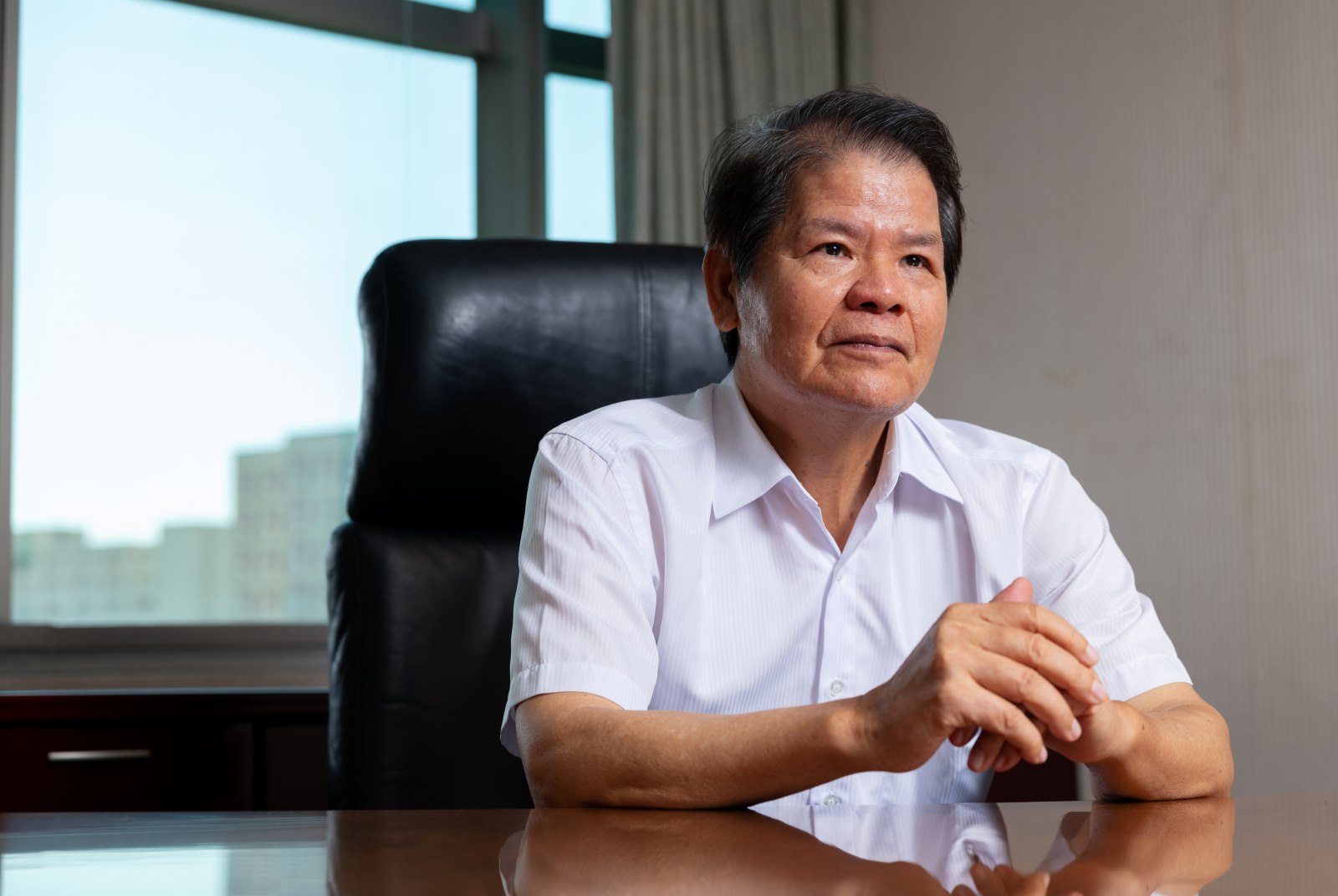
Frank Ko (柯富仁), who had steered AUO Corporation (友達) as the company’s president for seven years, abruptly resigned in late July. He was replaced by David B.Y. Chang (張博儀), an executive with a financial background.
The timing of the move underscored the pressure faced by Taiwan's largest display maker: first-half revenue fell 1 percent year-on-year, but net profit dropped 80%.
Ko's signature initiative is AUO's "three-axis transformation." Beyond its core display business, the company has set out to develop two new growth engines — "smart mobility" and "vertical solutions" — which will push it into the automotive, healthcare, industrial, and retail markets.
The strategy is also aimed at diversifying AUO’s business away from simply selling panels in favor of offering integrated solutions, which should lift the company’s margins.
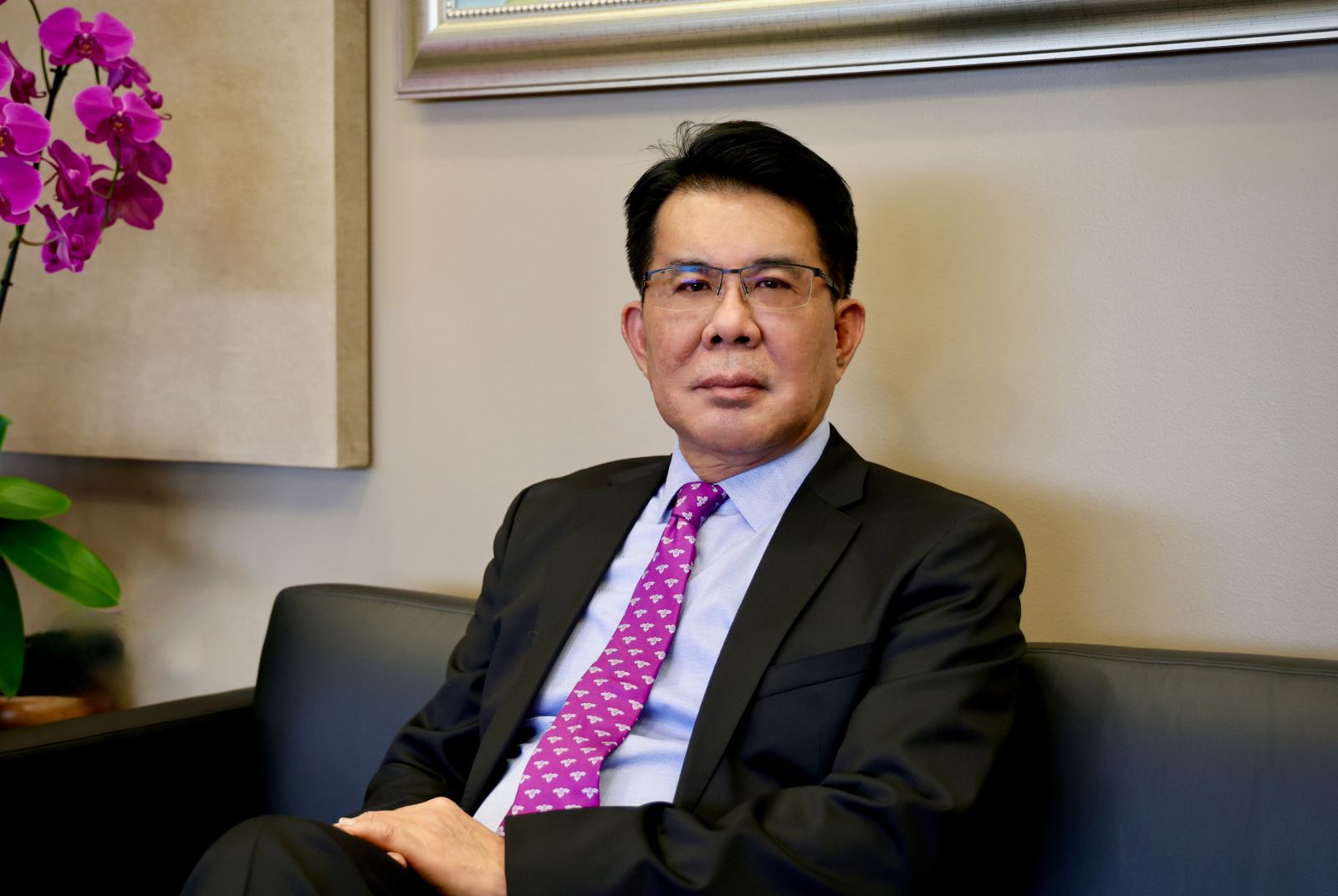
Chairman Paul S.L. Peng (彭双浪) has set a target of increasing the contribution of these two new businesses from 48 percent of revenue today to 70 percent by 2030..
Notebook, Automotive Panels Squeezed by China
The need for diversification is being driven by the challenges of Chinese competition faced by Taiwan’s major screen manufacturers.
The difficulties of the TV panel sector are well known, said Boyce Fan (范博毓), research vice president at market research firm TrendForce (集邦科技) LCD, but the bigger threat more recently is that China's new capacity has begun to erode Taiwan’s previously strong position in the notebook-panel market.
"[China] is trying to replicate the path it took in TV panels," Fan said.
Component costs have risen at the same time, with suppliers unable to pass the increases on to customers.
"Clients aren't just refusing price hikes," Fan said. "They're demanding cuts."
The automotive segment, once seen as a bright spot, has proven equally difficult. Two years ago, AUO paid roughly NT$20.4 billion (600 million euros at the time) to acquire BHTC, a German maker of automotive climate-control systems.
A subsidiary of Innolux (群創), AUO's rival, paid 163.6 billion yen (about NT$33.7 billion) for 87-year-old Japanese audio specialist Pioneer Corporation in a similar bid to break into the auto supply chain.
Fan noted, however, that Chinese and Korean makers are pursuing the automotive display market just as aggressively, andas electric vehicles gain share, the industry is shifting toward the price-driven, market share-focused dynamics of the consumer electronics model.
"Margins haven't turned out to be as attractive as hoped," Fan said. Traditional automakers once focused on stable, long-term cooperation, but the market has gradually put the emphasis on price competition, he said.
Advanced Packaging, Glass Substrates Driving the Stock Rally
With their core business under pressure, both AUO and Innolux are betting on advanced semiconductor packaging and glass materials as a way out — and that bet is what has drawn investors back this year. Even as their underlying panel businesses remain weak, Innolux shares have risen 151 percent and AUO shares have risen 100.4 percent year-to-date as of Aug. 24.
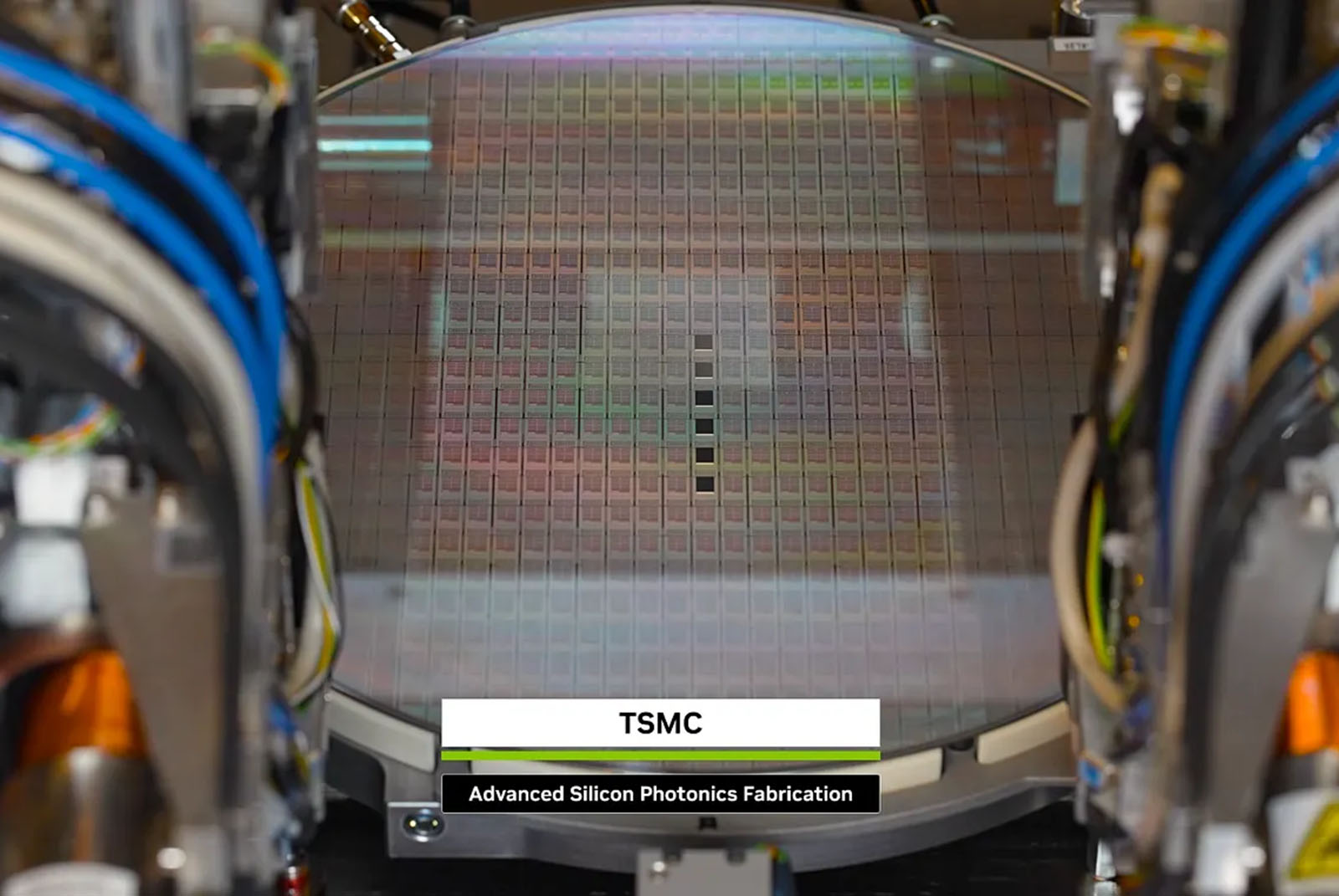
Two shifts in semiconductor technology are behind the pivot. First, "panel-level packaging" is emerging as a possible alternative to TSMC's CoWoS (chip-on-wafer-on-substrate) packaging platform. Second, glass — a material panel makers know well — could be used in chip substrates to address the warping and expansion problems that current materials face.
Innolux took action first, announcing in 2023 that it would convert its smallest fab, a 3.5-generation line, into what it called the world's largest panel-level packaging production line. It began making deliveries to customers in the second quarter of 2025, but semiconductor packaging still accounts for less than 1 percent of its revenue.
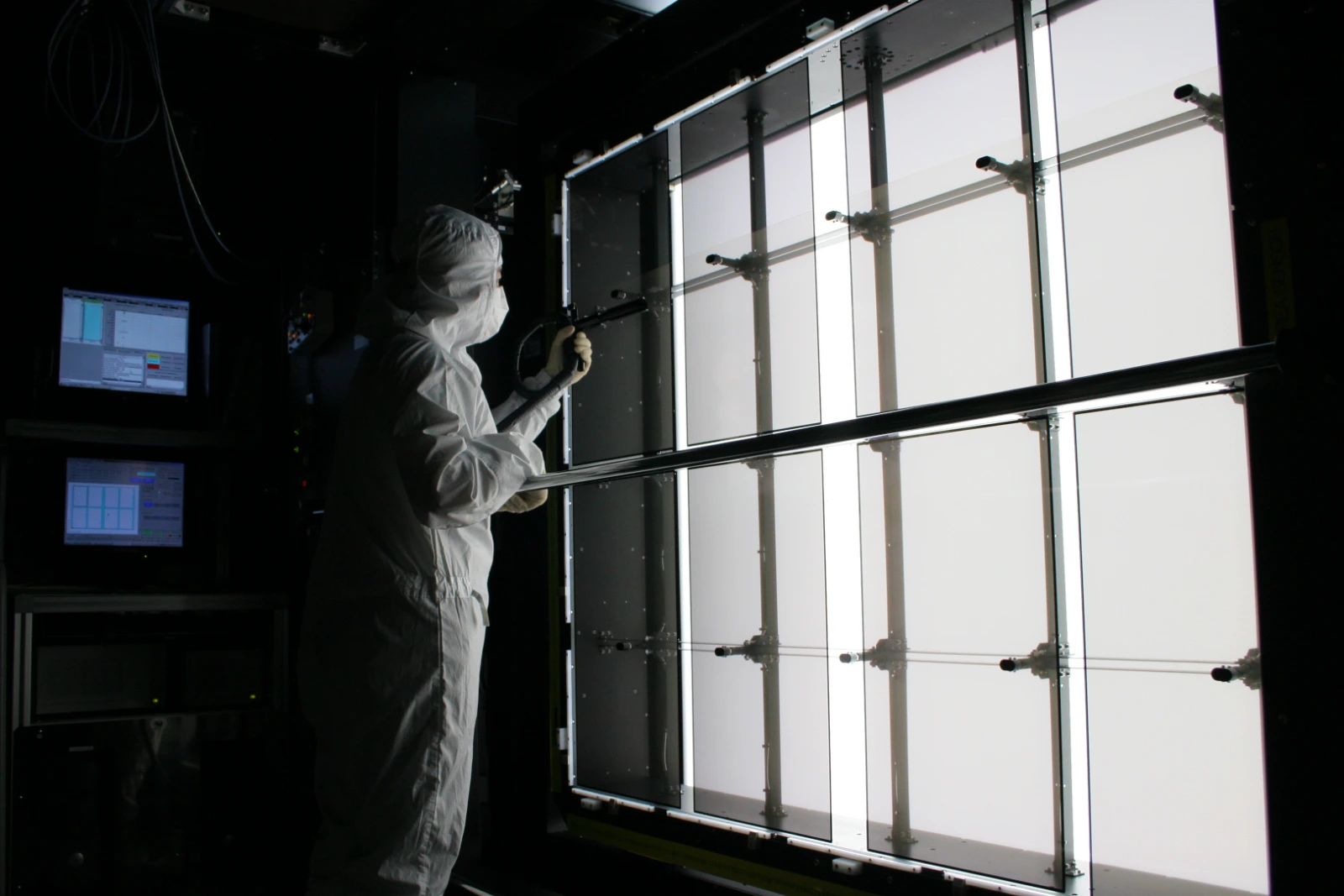 At its earnings call, AUO said it plans to increase investment in its advanced packaging pilot production line. (Photo: CommonWealth)
Industry insiders feel that AUO has moved too slowly. AUO’s Peng addressed the criticism for the first time at a recent earnings call, pledging to increase investment in an advanced-packaging pilot line and announcing a new "Innovation Research Institute."
AUO confirmed to CommonWealth Magazine that it will build on its optoelectronic integration expertise to deepen its investment in AI applications and AI infrastructure. That includes developing a system-level Micro LED CPO (co-packaged optics) module intended to boost bandwidth and energy efficiency for short-distance data transmission inside data centers.
Part of its new capital expenditure will also go toward pilot production lines for glass substrates usingTGV (through glass vias), RDL (redistribution layer) and glasscore (next-generation, ultra-thin packaging substrate) technologies..
Lori Chang (張恆嘉), a senior analyst at Taipei-based semiconductor research firm Isaiah Research (以賽亞顧問), called the shift toward these emerging semiconductor technologies "an inevitable transition," given the state of the panel makers' core business.
Still a Steep Climb Ahead
Yet, panel makers still face a difficult transition into the semiconductor packaging market. Semiconductor supply-chain players remain skeptical that panel makers can make the leap.
One executive at a major semiconductor equipment supplier said panel makers have had few opportunities to validate their products under real market conditions and that their process know-how lags far behind that of the semiconductor manufacturing sector.
"Having a panel business doesn't automatically qualify you," the executive said.
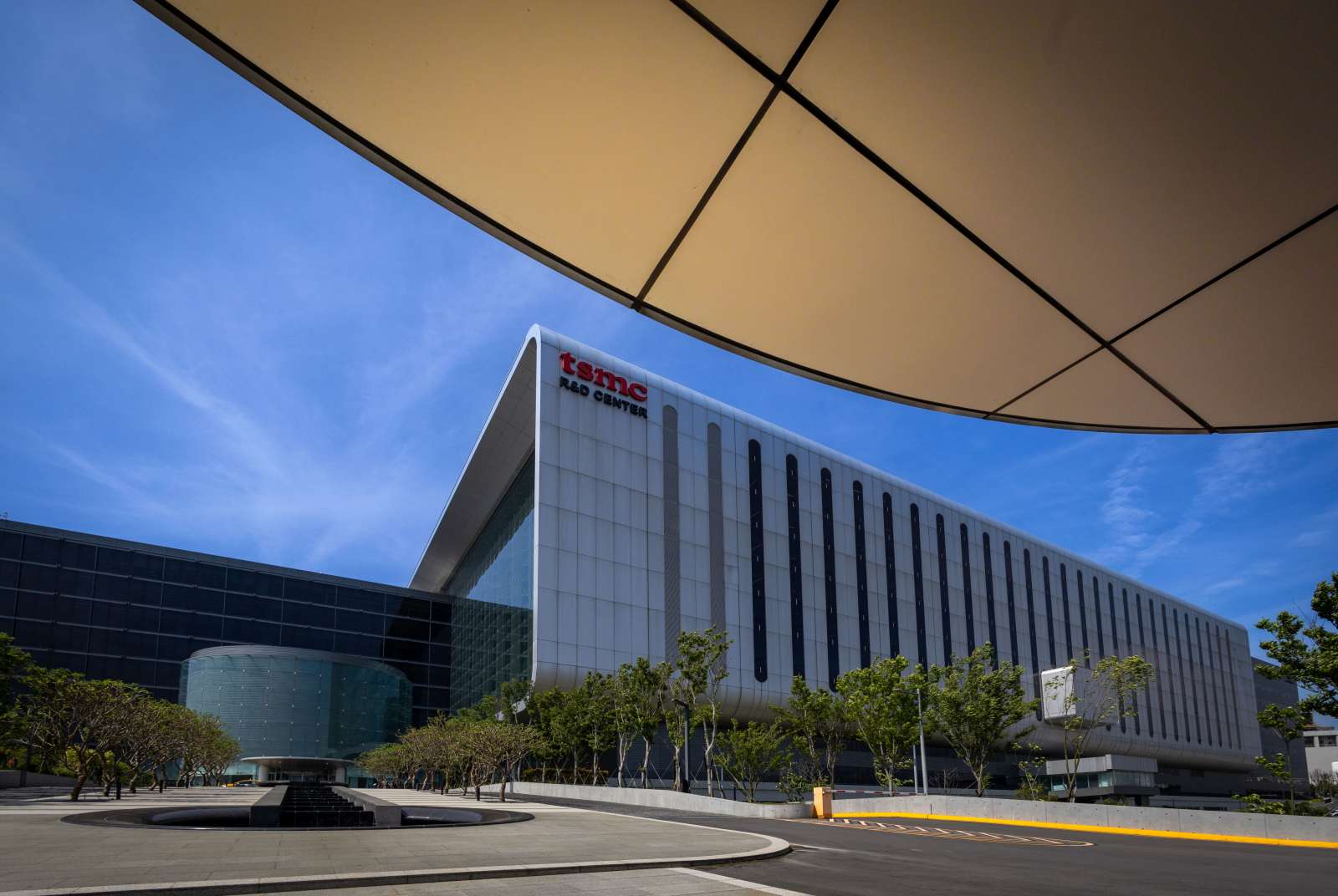
The most advanced panel-level packaging technology is CoPoS (chip-on-panel-on-substrate), a technology TSMC Chairman C.C. Wei (魏哲家) referenced at the company's July earnings call.
CoPoS replaces the round substrate typically used to carry chips during packaging with a square one, expanding usable surface area and cutting waste. The substrate separates from the chip once wafer processing is complete.
Wei stressed that CoWoS remains TSMC's primary advanced-packaging platform, but said a CoPoS pilot line is under construction, with the technology and yields expected to mature within roughly a year.
One person involved in the project said TSMC "wants all its equipment suppliers to move faster." But supply-chain sources said CoPoS substrates were being made of ceramic, not glass, meaning panel makers will have a limited opportunity to participate in this particular packaging project in the near term.
The other technology panel makers are pursuing, glass-core substrates, aims to solve a different problem.
Today's chip substrates — made from glass-fiber cloth, ABF(Ajinomoto Build-up Film) resin, and related materials — tend to warp under the heat generated by advanced chips. Adding a glasscore layer could ease that, but progress remains uncertain.
An executive in Taiwan’s substrate industry who has worked with foreign partners on glasscore substratest for years said the technology is still in its development stage, with the biggest obstacle being glass' tendency to become brittle. It is a problem the industry has already spent several years trying to solve.
A general manager at a foreign semiconductor equipment company suggested the more realistic path forward is for semiconductor or packaging companies to develop the underlying technology, with panel makers as manufacturing partners.
Neither panel-level packaging nor glass substrates is close to mass production. But with their core business under sustained pressure, Taiwan’s panel makers cannot afford to walk away from advanced packaging — even if the road to actually getting there looks far from smooth.
Have you read?
- How TSMC Lagged in Silicon Photonics But Won Over Nvidia and Broadcom
- Taiwanese American-Founded AOI Closes in on U.S. Laser Trio
- Why TSMC Is Letting Go of CoWoS—and Where Its Real Second Moat Lies
Edited by Luke Sabatier
Uploaded by Ian Huang
Views

Subscribe to CWE Newsletter (every Thursday)
Stay abreast of what's happening in Taiwan with our weekly digest.
Keywords: